
22 Best Editing Books
The best editing books, ranked by how many expert sources recommend each one, with notes for choosing fiction revision guides, copyediting manuals, and references.
Our take
Editing can mean reshaping a book's argument, strengthening a scene, improving a sentence, or checking the final details. The books here work at different points in that process. Novelists may want guidance on viewpoint, dialogue, and pacing, while a copyeditor needs reliable procedures for consistency and queries. Business writers often need a short, repeatable way to make a document easier to read.
Self-Editing for Fiction Writers and Revision and Self Editing for Publication address revising fiction. Developmental Editing moves outward to a manuscript's purpose and organization, while Line by Line stays close to sentence construction. For professional copyediting, pair The Copyeditor's Handbook with The Copyeditor's Workbook, then use a reference such as The Chicago Manual of Style for specific decisions. The Subversive Copy Editor adds the human side of working with authors. Start with the book that matches your current task, and check structure before polishing sentences that may later disappear.
22 books · 10 sources · Last updated
As an Amazon Associate, we earn from qualifying purchases (at no extra cost to you).
How to choose from this list
Skip to the full rankingIf you're revising fiction: Self-Editing for Fiction Writers → Revision and Self Editing for Publication
If you're reshaping a manuscript: Developmental Editing → The Artful Edit
If you want clearer sentences: On Writing Well → Line by Line
If you're learning copyediting: The Copyeditor's Handbook → The Copyeditor's Workbook → The Chicago Manual of Style
If you're copyediting novels: The Chicago Guide to Copyediting Fiction
If you want to work better with authors: What Editors Do → The Subversive Copy Editor
The 22 books, ranked
Ranked by how many expert sources name each book. Ties go to the book more people recommend.

The Elements of Style
For writers who want a compact reminder to make prose clearer and tighter. Its brevity makes principles easy to revisit, though some prescriptions are dated and should not substitute for judgment about context and voice.
What it's about
William Strunk Jr.’s concise writing guide presents principles for clearer prose alongside rules of usage and composition. It addresses common errors, word choice, and unnecessary language, offering a compact reference for writers seeking greater precision and economy.
Also recommended by
3 people Tobi Lütke recommended this book
Tobi Lütke
"[My] most frequently gifted book is [this book] because I like good writing." - Tobi Lütke
Tobi Lütke's recommendation of this book  Kara Swisher recommended this book
Kara Swisher
"I reread it every year. It’s a great book." - Kara Swisher
Kara Swisher's recommendation of this book  Bill Nye recommended this book
Bill Nye
"This is my guide. I accept that I’ll never write anything as good as the introductory essay by [the author]. It’s brilliant." - Bill Nye
Bill Nye's recommendation of this book

The Chicago Manual of Style
For editors who need consistent decisions across American book publishing. Its extensive coverage makes it a working reference for style and documentation, though the detail can overwhelm beginners and individual publishers may require different conventions.
What it's about
The University of Chicago Press provides a reference for writers, editors, and publishers working in American English. The manual covers style, grammar, usage, citations, indexes, and publication practices, offering conventions for preparing and presenting written material.
Also recommended by
1 person Guy Kawasaki recommended this book
Guy Kawasaki
"The definitive book on how to handle the tweaky issues that come up in writing." - Guy Kawasaki
Guy Kawasaki's recommendation of this book

For editors who know rules but need help applying them with people. Saller emphasizes judgment, cooperation, and manageable working habits, though it complements a technical reference rather than supplying a complete grammar or style course.
What it's about
Carol Fisher Saller examines the human side of copyediting, emphasizing cooperation, flexibility, and sound judgment. Advice on relationships with authors and colleagues accompanies practical strategies for managing workloads, freelancing, organizing files, and handling editorial disagreements.

For nonfiction writers editing toward clarity and a recognizable voice. Zinsser connects general principles with different kinds of nonfiction, though its conversational lessons offer less procedural detail than a professional copyediting manual.
What it's about
William Zinsser offers guidance on writing nonfiction with clarity and effective structure. He addresses common problems in style and wording, then applies his principles to interviews, travel, science, sports, criticism, and other forms of nonfiction.
Also recommended by
4 people Tim Ferriss recommended this book
Tim Ferriss
"I have read this book more than a dozen times, more often for thinking than for writing." - Tim Ferriss
Tim Ferriss's recommendation of this book  Matt Mullenweg recommended this book
Matt Mullenweg
"I love reading about writers and the process of writing." - Matt Mullenweg
Matt Mullenweg's recommendation of this book  Derek Sivers recommended this book
Derek Sivers
"Great blunt advice about writing better non-fiction. So inspiring." - Derek Sivers
Derek Sivers's recommendation of this book  Jodie Cook recommended this book
Jodie Cook
"A fascinating exploration of writing for different genres." - Jodie Cook
Jodie Cook's recommendation of this book

For writers who want to understand revision as a creative practice. Bell connects structural decisions with close attention to language through literary examples, though the reflective approach is less convenient than a quick rulebook.
What it's about
Susan Bell explores self-editing as both a discipline and a creative practice. Exercises, interviews, and literary examples address structure as well as sentence-level choices, including a close look at the development of F. Scott Fitzgerald's The Great Gatsby.

For aspiring copyeditors who want systematic instruction and experienced editors filling gaps. Its detailed explanations connect language decisions with professional procedures, though the density and American publishing context require patient, selective use.
What it's about
Amy Einsohn and Marilyn Schwartz explain copyediting procedures, editorial style, and grammar for publishing and corporate communications. This edition also addresses on-screen editing, digital formats, plain language, accessibility, global audiences, and the changing tools and responsibilities of professional editors.

For readers considering a publishing career or seeking to understand editorial roles. Multiple contributors reveal how work differs across sectors and stages, though the essay collection is less sequential than a hands-on training manual.
What it's about
Peter Ginna gathers essays from publishing professionals about the art, craft, and business of editing books. Contributors examine acquisitions, author relationships, different publishing sectors, and the editor's role from a manuscript's early development through publication.

For writers who want grammar and usage explained without a textbook tone. O'Conner makes troublesome distinctions approachable through humor, though it is a language reference rather than a guide to planning and managing an edit.
What it's about
Patricia O'Conner explains troublesome points of English grammar and usage in accessible language. Humorous examples address questions about pronouns, comparisons, verb forms, and punctuation, while considering how accepted usage changes over time.

For editors working on a book's argument, audience, and organization. Norton's case studies make large structural decisions concrete, though the emphasis on substantial manuscripts offers less help with quick sentence fixes or proofreading.
What it's about
Scott Norton explains how developmental editors help shape manuscripts into coherent books. Case studies, edited examples, and changes to tables of contents make the process visible, connecting collaboration with authors to decisions about structure, argument, audience, and the organization of material.

Revision and Self Editing for Publication
Techniques for Transforming Your First Draft into a Novel That Sells
For novelists who want a broad plan for revising a first draft. Bell joins big-picture story questions with exercises and checklists, though the publication-oriented framework is more prescriptive than the exploratory approach of The Artful Edit.
What it's about
This guide takes writers through revising a first draft, examining plot, structure, character, theme, and voice. Self-editing methods, exercises, and a revision checklist provide tools for strengthening a manuscript before approaching agents or publishers.

The Best Punctuation Book, Period
A Comprehensive Guide for Every Writer, Editor, Student, and Businessperson
For editors switching between publishing or academic styles. Casagrande distinguishes several rule systems instead of pretending one convention applies everywhere, though the punctuation focus makes this a supplement to broader editing instruction.
What it's about
June Casagrande answers punctuation questions while distinguishing the conventions of AP, MLA, APA, and Chicago styles. Organized explanations and visual indicators help writers compare rules across journalism, books, academic work, and other forms of written communication.

Copyediting and Proofreading For Dummies
For newcomers exploring what copyeditors and proofreaders actually do. Gilad combines basic techniques with workflow and freelance guidance, though the broad introduction needs supplementing with current tools and a style guide for professional assignments.
What it's about
Suzanne Gilad introduces the work and techniques of copyediting and proofreading, including style decisions, author queries, and proofreading symbols. Practical guidance covers electronic documents and different publication types, alongside advice on building skills, seeking work, and developing a freelance career.

For fiction writers revising a complete draft. Browne and King turn editorial concepts into examples and exercises, making narrative problems easier to diagnose, though this is a craft guide rather than a punctuation or publishing reference.
What it's about
Renni Browne and Dave King teach writers to apply professional editing techniques to their own fiction. Explanations, examples, and exercises address dialogue, point of view, narrative presentation, and voice, helping authors identify weaknesses and revise promising manuscripts.

Words into Type
For editors interested in the conventions behind preparing manuscripts for print. Its detailed treatment of text and production questions makes it useful for reference, though older workflows need translating into present-day digital practice.
What it's about
Marjorie Skillin, Robert Gay, and other contributors provide a reference for preparing written work for publication. The manual covers manuscript form, editorial marks, footnotes, bibliographies, tables, language and style, and practical details involved in turning text into printed books.
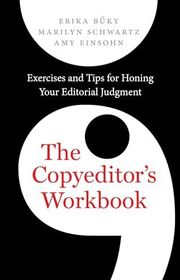
The Copyeditor's Workbook: Exercises and Tips for Honing Your Editorial Judgment
For learners who need to practice decisions rather than only read explanations. The exercises and answer discussions complement The Copyeditor's Handbook, though this works best as deliberate study and is less convenient for quick reference.
What it's about
Exercises ask readers to identify errors, make style decisions, and edit passages of increasing complexity. Answers and explanations help develop editorial judgment across grammar, punctuation, consistency, and workflow, supporting both independent practice and classroom use.
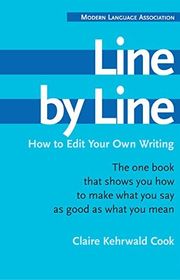
Line by Line: How to Edit Your Own Writing
For writers who can spot a clumsy sentence but struggle to repair it. Cook uses before-and-after examples to explain precise changes, though the close focus on syntax offers little guidance on a book's overall structure.
What it's about
Claire Kehrwald Cook examines how sentences become tangled, wordy, or unclear and shows ways to revise them. Numerous original and edited examples connect grammar and usage with practical choices about emphasis, precision, and readable prose.

Making Shapely Fiction
For fiction writers diagnosing why a scene or story lacks shape. Stern connects narrative patterns with a browsable vocabulary of craft, though the mix of short forms and reference entries is less linear than a revision program.
What it's about
Jerome Stern examines how fiction takes shape through momentum, tension, and immediacy. Advice on dialogue, action, beginnings, endings, and common pitfalls accompanies an alphabetical reference to writing concepts, helping writers understand the choices that make a story work.

For readers interested in the editor's influence on literary history. Berg's biography makes author relationships and manuscript struggles visible, though it provides inspiration and historical perspective rather than techniques arranged for immediate practice.
What it's about
A. Scott Berg explores the personal and professional life of Maxwell Perkins, the editor who worked with Fitzgerald, Hemingway, and Thomas Wolfe. Literary relationships and manuscript struggles reveal the often hidden influence of an editor on major American writing.

Missed Periods and Other Grammar Scares
How to Avoid Unplanned and Unwanted Grammar Errors
For writers who find formal grammar explanations intimidating. Baranick uses jokes and everyday examples to make common errors easier to recognize, though the deliberately cheeky tone may distract readers seeking a neutral professional reference.
What it's about
Jenny Baranick uses humor to explain common grammar and punctuation mistakes without technical jargon. Short lessons address apostrophes, capitalization, quotation marks, commas, and other frequently mishandled details, helping writers recognize errors that distract or confuse readers.

Quick Fixes for Business Writing
An Eight-Step Editing Process to Find and Correct Common Readability Problems
For writers revising workplace material under time pressure. Taylor organizes readability checks into a repeatable eight-step process, though its business focus offers less help with fiction's voice, character, and larger narrative structure.
What it's about
Jim Taylor breaks editing into an eight-step process for improving the readability of business writing. The guide turns intuitive editorial decisions into systematic tasks, offering techniques that both beginners and experienced editors can apply to their own material.
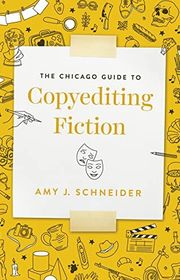
The Chicago Guide to Copyediting Fiction
For copyeditors who need to protect a novelist's voice while maintaining consistency. Schneider addresses fiction-specific decisions that general manuals can miss, though this assumes a copyediting task rather than teaching plot development or storytelling from scratch.
What it's about
Amy J. Schneider explains the practical work of copyediting fiction, including dialogue, character details, timelines, and consistency. The guide examines how editors can track a novel's invented world while respecting its author's choices and voice.

For writers testing whether a manuscript's opening invites closer reading. Lukeman turns an editor's early impressions into focused revision questions, though the attention to initial pages cannot replace checking the entire book's structure.
What it's about
Noah Lukeman explains how agents and editors assess manuscripts and how writers can avoid common weaknesses. Exercises accompany discussions of openings, descriptive language, dialogue, characterization, setting, and pacing, using close scrutiny of a few pages to improve an entire work.
Sources
- 1
Preparing for Editors Canada Professional Certification
editors.ca
- 2
19 Best Books To Learn Self-Editing for Fiction Writers
thebookdesigner.com
- 3
13 Editing Books for Beginner Freelance Writers - Elna Cain
elnacain.com
- 4
Editorial Resources - Northwest Editors Guild
edsguild.org
- 5
Must-Read Books for Copy Editors - Dragonfly Editorial
dragonflyeditorial.com
- 6
5 Essential Books on Editing – WRITERFUL BOOKS
writerfulbooks.com
- 7
100 Best Editing Books of All Time (Updated for 2026)
shortform.com
- 8
Best Books for Editors (90 books)
goodreads.com
- 9
Books on editing fundamentals? : r/writing
reddit.com
- 10
18 Books on Editing All Professionals Should Read
reedsy.com







Edited by
Software engineer whose passion for tracking book recommendations from podcasts inspired the creation of MRB.
Lead investor at 3one4 Capital whose startup expertise and love for books helped shape MRB and its growth.
Comments
Spotted a missing book, a wrong order or a mistake? Tell us and we'll fix this page.
We're a reading guide, not the author or publisher, so we can't send books or pass on messages.