
17 Best Electronics Books
The best electronics books, ranked by how many expert sources recommend each one, with notes for beginners, circuit builders, students and repair enthusiasts.
Our take
Electronics can mean building a first blinking light, understanding a circuit diagram or designing equipment that behaves reliably. These books cover different parts of that journey. Some teach through experiments, others explain the principles in a textbook sequence, and several are references to keep beside a workbench. Choosing by your immediate goal is more useful than starting with the thickest volume.
Getting Started in Electronics offers an illustrated introduction, while Make: Electronics puts experiments at the center of learning. Practical Electronics for Inventors gives growing builders a broad reference. The Art of Electronics goes further into the judgment behind circuit design, but moves quickly for a complete beginner. Readers interested in repair can turn to How to Diagnose and Fix Everything Electronic; those stuck on diagrams can focus on Beginner's Guide to Reading Schematics.
Start with Make: Electronics if you have room to build, or an introductory textbook if you prefer working through explanations and problems first.
17 books · 10 sources · Last updated
As an Amazon Associate, we earn from qualifying purchases (at no extra cost to you).
How to choose from this list
Skip to the full rankingIf you're starting from zero: Getting Started in Electronics → Make: Electronics
If you want more experiments: Make: Electronics → Make: More Electronics
If you want to design circuits: Practical Electronics for Inventors → The Art of Electronics
If you want to repair equipment: Beginner's Guide to Reading Schematics → How to Diagnose and Fix Everything Electronic
If you want a laboratory course: Learning the Art of Electronics
The 17 books, ranked
Ranked by how many expert sources name each book. Ties go to the book more people recommend.

The Art of Electronics
For readers with some foundations who want to understand practical design choices. It develops engineering judgment across analog and digital circuits, though its brisk pace makes it a demanding first encounter with electronics.
What it's about
Paul Horowitz and Winfield Hill explain electronic circuit design through practical examples and engineering judgment. The reference covers analog and digital electronics, including transistors, amplifiers, filters, oscillators, and power conversion, connecting component behavior with the choices involved in building circuits.

For beginners who learn by building and observing what happens. Experiments give components a physical meaning before expanding the theory, though you need parts, tools and time at a workbench to get the full benefit.
What it's about
Charles Platt teaches electronics through experiments that let readers build circuits and observe components in action. Illustrated projects develop an understanding of capacitors, transistors, breadboards, and microcontrollers, progressing toward Arduino and introductory programming.

Practical Electronics for Inventors
For hobbyists moving from copied circuits toward their own designs. It combines component explanations with a broad practical reference, though its size and denser sections can overwhelm readers who haven't yet built simple circuits.
What it's about
Paul Scherz and Simon Monk explain electronics for inventors, hobbyists, and students through an application-centered approach. Coverage moves from circuit components to semiconductors, amplifiers, power supplies, and digital electronics, connecting principles with the skills needed to design working devices.

Encyclopedia of Electronic Components Volume 1
Resistors, Capacitors, Inductors, Switches, Encoders, Relays, Transistors
For builders who keep asking what a component does and when to use it. Photos and diagrams make individual parts easier to compare, though this first volume is a reference rather than a complete learning course.
What it's about
Charles Platt explains what common electronic components do, how they work, and when to use them. Photographs, diagrams, and schematics illustrate resistors, capacitors, inductors, switches, encoders, relays, and transistors, with guidance on variants and practical applications.
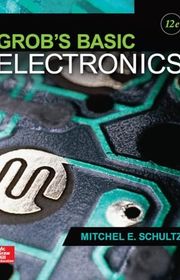
Grob's Basic Electronics
For students who need a steady foundation before moving into device design. Its textbook exercises give basic circuit principles more room than the hobby references, though readers seeking quick projects may find the pace deliberate.
What it's about
This introductory textbook develops the electrical and electronic principles needed to understand circuits. Explanations, diagrams and practice problems guide students through foundational concepts, building the knowledge required for later study of components, measurements and electronic applications.
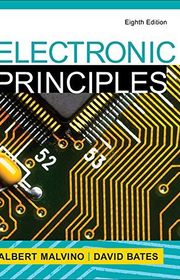
Electronic Principles
For students who want a textbook treatment of electronic devices and circuits. Explanations, illustrations and practice problems support systematic learning, though the classroom structure feels less immediate than building a project from the first chapter.
What it's about
Albert Malvino and David Bates explain electronic devices and the circuits built from them. The textbook develops foundational concepts before applying them to practical circuits, with illustrations, review questions and problems that help students check their understanding.
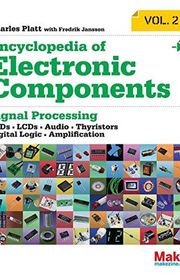
Encyclopedia of Electronic Components Volume 2
For builders ready to look beyond discrete components into displays, logic and amplification. It extends the first volume's illustrated lookup approach, though readers need basic circuit knowledge and won't find a sequential project course here.
What it's about
Charles Platt and Fredrik Jansson explain components used in signal processing, including LEDs, LCDs, audio devices, thyristors and digital logic. Illustrations and practical explanations help readers identify parts, understand their behavior and consider how to use them.
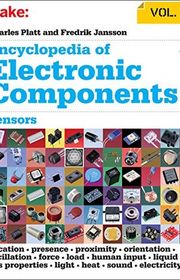
Encyclopedia of Electronic Components Volume 3
For project builders choosing sensors for physical measurements. It gives sensing devices a dedicated treatment beyond the earlier component volumes, though it works best as a reference after you've learned basic wiring and circuit behavior.
What it's about
Charles Platt and Fredrik Jansson survey electronic sensing components for light, sound, heat, movement and other physical conditions. The reference explains how different devices work and where they fit, helping builders connect real-world measurements with electronic projects.

Getting Started in Electronics
For beginners who want an illustrated overview before choosing a bigger course. Hand-drawn explanations make components and simple circuits feel approachable, though the compact, older presentation offers less guided practice than the experiment-led books.
What it's about
Forrest M. Mims III introduces electronic components, analog and digital principles, and circuit assembly through illustrated explanations. Numerous circuits and projects connect basic theory with practical applications, giving beginners a foundation for experimenting with electronics.

How to Diagnose and Fix Everything Electronic
For readers whose goal is repairing equipment rather than designing a new circuit. Its systematic troubleshooting approach develops useful diagnostic habits, though it assumes more patience with testing and disassembly than a beginner project book.
What it's about
Michael Geier teaches a systematic approach to troubleshooting and repairing electronic products, from analog equipment to digital devices. The guide covers workbench setup, test instruments, fault diagnosis, component replacement, and reassembly, emphasizing how to reason through problems rather than memorize repairs.
Learning the Art of Electronics
For readers who want a structured laboratory route into circuit design. Worked explorations bridge theory and real measurements more explicitly than a desk reference, though completing the course requires equipment, components and sustained study.
What it's about
Thomas C. Hayes and Paul Horowitz present a hands-on laboratory course in analog and digital electronics. Explanations and experiments develop circuit understanding through construction and measurement, providing a practical learning route alongside a broader circuit-design reference.

Teach Yourself Electricity and Electronics
For independent learners who want explanations followed by checks on their understanding. Its broad, stepwise coverage supports steady study, though readers who need experiments to stay engaged may prefer a project-led introduction first.
What it's about
Stan Gibilisco and Simon Monk introduce electricity and electronics through illustrated explanations and self-tests. The guide covers foundational principles alongside switching power supplies, amplifiers, batteries, microcontrollers, and Arduino, helping readers build knowledge step by step.

Beginner's Guide to Reading Schematics
For beginners who can recognize parts but struggle to follow a circuit diagram. Its focus on symbols and connections fills a specific gap, though you'll still need another book for broader theory and hands-on circuit building.
What it's about
Stan Gibilisco explains how to read and create electronic schematics, identify components, and understand their connections. The guide covers circuit symbols, component ratings, resistor color codes, and the differences between block, pictorial, and schematic diagrams.

Electronics All-in-One For Dummies
For newcomers who want several aspects of electronics explained in one place. Separate sections let you move between fundamentals, tools and projects, though the wide coverage offers less depth than the specialist design references.
What it's about
Doug Lowe combines electronics fundamentals with practical projects in a guide covering analog and digital circuits. Readers learn to interpret schematics, work safely with voltage, solder components, and explore applications involving Raspberry Pi and automotive electronics.

For young learners who want electricity explained through things they can build. Games and simple circuit experiments provide a clearer purpose than a reference manual, though collecting components and getting adult help may be necessary.
What it's about
Oyvind Nydal Dahl introduces young readers to electricity through hands-on experiments and simple circuits. Projects explain current, voltage, logic gates, and memory, leading to builds such as a secret-code checker, electronic coin flipper, and LED reaction game.

For readers ready to turn temporary circuits into soldered assemblies. The focused photographs and technique advice address a practical skill that broader books cover briefly, though it won't teach the theory behind the circuit you're assembling.
What it's about
Alan Winstanley explains the tools, materials, and techniques needed to solder electronic components. Photographs demonstrate soldering and desoldering, while practical guidance covers irons, solder, flux, common mistakes, and troubleshooting unsuccessful joints.

Understanding Basic Electronics
For beginners who prefer short learning units and want a foundation relevant to radio. Illustrations and simple experiments ease the theory, though its introductory scope means you'll need more depth before tackling complex circuit design.
What it's about
This introductory electronics guide uses short learning modules, illustrations, and simple experiments to explain electrical principles. Topics include alternating and direct current, impedance, resonant circuits, diodes, transistors, integrated circuits, and the interpretation of schematics.
Sources
- 1
Best Books for Learning Electronics in 2026
wirednwireless.ca
- 2
Best Books for Self-Learning Analog and Digital Electronics
industrialmonitordirect.com
- 3
15 Best Electronics Books For Beginners
electronicshub.org
- 4
Electronics Learning Book Recommendations (Follow Up)
reddit.com
- 5
Recommendations for Books on Electronics
reddit.com
- 6
Electronics Books
goodreads.com
- 7
Enginursday - On Self Taught Electronics
news.sparkfun.com
- 8
10 Best Electrical Engineers Reference Books of All Time
keysight.com
- 9
100 Best Electrical Engineering Books of All Time
shortform.com
- 10
Electronics
mathscitech.org




Edited by
Software engineer whose passion for tracking book recommendations from podcasts inspired the creation of MRB.
Lead investor at 3one4 Capital whose startup expertise and love for books helped shape MRB and its growth.
Comments
Spotted a missing book, a wrong order or a mistake? Tell us and we'll fix this page.
We're a reading guide, not the author or publisher, so we can't send books or pass on messages.