
11 Best Raspberry Pi Books
The best Raspberry Pi books, ranked by how many expert sources recommend each one, with notes for choosing beginner guides, Python lessons, electronics, and robotics.
Our take
Raspberry Pi books can teach you to use a small Linux computer, write programs, or connect software to physical components. The choices range from illustrated activities for children to engineering guides covering interfaces and embedded Linux. A general introduction helps if you are still exploring; a programming, electronics, or robotics book makes more sense once you know what you want to build.
The Official Raspberry Pi Beginner's Guide and Raspberry Pi For Dummies cover the first steps broadly. Programming the Raspberry Pi concentrates on Python, while Raspberry Pi Cookbook is better suited to finding solutions as projects develop. Younger learners have Adventures in Raspberry Pi and DK Workbooks: Raspberry Pi Projects, and Exploring Raspberry Pi offers greater technical depth. Check which board and software version an edition covers before following its instructions. Start with the official beginner's guide for an overview, then choose a project book that matches your interests and available equipment.
11 books · 7 sources · Last updated
As an Amazon Associate, we earn from qualifying purchases (at no extra cost to you).
How to choose from this list
Skip to the full rankingIf you're setting up your first Pi: The Official Raspberry Pi Beginner's Guide → Getting Started With Raspberry Pi
If you want a broad beginner reference: Raspberry Pi For Dummies
If you want to learn Python: Programming the Raspberry Pi → Raspberry Pi Cookbook
If you're choosing for a young learner: Adventures in Raspberry Pi
If you want to build robots: Learn Robotics with Raspberry Pi
If you want engineering depth: Exploring Raspberry Pi
The 11 books, ranked
Ranked by how many expert sources name each book. Ties go to the book more people recommend.

For beginners who want to learn Python while using their Pi. Monk links code with practical tasks and external electronics, though readers seeking a general desktop guide will get less help than from a broader introduction.
What it's about
Simon Monk teaches Python programming through practical Raspberry Pi examples. The guide connects hardware and software setup with writing and debugging programs, creating interfaces, and controlling external electronics, giving beginners a foundation for developing applications and projects on the computer.

Raspberry Pi For Dummies
For beginners who want setup, everyday use, programming, and electronics in one approachable guide. Its breadth helps you explore before choosing a direction, though that same breadth gives individual topics less depth than a specialist programming or engineering book.
What it's about
Sean McManus and Mike Cook guide beginners through Raspberry Pi setup, Linux, programming, and electronics. Projects use Scratch, Python, and Sonic Pi for games and music, with coverage of Raspberry Pi 4 and 400.

Adventures in Raspberry Pi
For young beginners who learn best by making games, music, and interactive projects. Philbin gives programming a playful structure, though examples tied to older hardware or software may need adaptation and younger readers may still need adult help.
What it's about
Carrie Anne Philbin introduces programming through Raspberry Pi 3 projects for young beginners. Step-by-step activities build stories, games, music, and Minecraft worlds while gradually developing familiarity with the computer and fundamental coding concepts.

For readers who want engineering depth beyond assembling a few projects. Molloy connects hardware interfaces with embedded Linux concepts, though the technical scope assumes more patience and background than the beginner guides and some implementation details have changed.
What it's about
Derek Molloy explains the engineering principles behind building Raspberry Pi projects with embedded Linux. The book progresses from hardware and software basics to interfacing, communication, control, multimedia, and kernel programming.

Raspberry Pi User Guide
For readers who want a broad account of the computer, its software, and its capabilities. The explanations connect setup with underlying ideas, though the edition's hardware and operating-system assumptions need checking against the equipment you actually use.
What it's about
Eben Upton and Gareth Halfacree introduce Raspberry Pi 3 setup, Linux administration, networking, and programming. The guide explains configuration and troubleshooting, then explores applications and add-on technologies that extend the computer's capabilities.

For newcomers who want a guided route from setup into coding and electronics. Its progressive activities make the first steps manageable, though you should match the edition to your board and software because the practical details change.
What it's about
Gareth Halfacree introduces Raspberry Pi setup, operating system installation, and everyday use, with coverage of Raspberry Pi 4 and 400. Guided projects teach Scratch and Python programming and show how to connect electronic components.
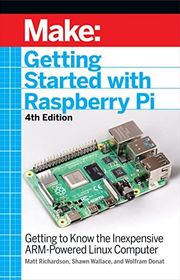
Getting Started With Raspberry Pi: Getting to Know the Inexpensive ARM-Powered Linux Computer
For readers who want a compact introduction before committing to a large reference. Its practical first projects connect basic computer use with programming and electronics, though the concise coverage leaves more advanced administration and engineering questions for other books.
What it's about
Shawn Wallace and Matt Richardson introduce the Raspberry Pi through setup, Linux basics, programming, and simple electronics. Practical examples show how the small computer can interact with software and external components, giving newcomers a foundation for further projects.

Learn Robotics with Raspberry Pi
Build and Code Your Own Moving, Sensing, Thinking Robots
For readers who want a focused progression toward building a working robot. Timmons-Brown connects movement, sensors, and computer vision through practical stages, though the hardware purchases and assembly make it a bigger commitment than learning Python alone.
What it's about
Matt Timmons-Brown teaches robotics by building a two-wheeled Raspberry Pi robot and programming it in Python. Projects introduce electronics and sensors, then develop obstacle avoidance, line following, camera-based object tracking, and additions such as lights and sound.

For readers who know the basics and want solutions to specific project problems. The recipe format makes it easier to find a useful example quickly, though it is less effective as a continuous first course and some instructions are version-sensitive.
What it's about
Simon Monk collects practical solutions to Raspberry Pi software and hardware problems. Recipes cover setup, Linux, networking, Python programming, sensors, motors, displays, and home automation, connecting worked examples with the basic principles needed to adapt them to individual projects.

Raspberry Pi Electronics Projects for the Evil Genius
For makers who want substantial electronics builds rather than general computer instruction. The materials lists and schematics give projects a concrete structure, though the parts, tools, and troubleshooting require a larger commitment than software-only exercises.
What it's about
Donald Norris presents ten Raspberry Pi electronics projects spanning robotics, communications, photography, and computing. Materials lists, schematics, and assembly and programming instructions support builds such as a robotic arm, radio, camera, and surveillance system.

For children who prefer short, illustrated activities and regular opportunities to review. Its visual workbook format makes basic concepts approachable, though the limited space and older software examples make it less suitable as a comprehensive or independent reference.
What it's about
This illustrated workbook introduces children to programming with a Raspberry Pi computer. Guided activities use Scratch, Python, and Sonic Pi to create games, designs, and music, with quizzes that help learners review computing vocabulary and coding concepts.
Sources
- 1
11 Best Raspberry Pi Books For Beginners in 2026 (Hand-picked)
etechnophiles.com
- 2
Best Raspberry Pi Books For Beginners 2020 - Maker Advisor
makeradvisor.com
- 3
100 Best Raspberry Pi Books of All Time (Updated for 2026)
shortform.com
- 4
Raspberry Pi Books
goodreads.com
- 5
20 Best Raspberry Pi Books For Beginners and Developers
ubuntupit.com
- 6
no idea where to start : r/RASPBERRY_PI_PROJECTS
reddit.com
- 7
Books about Robotics and Python for the Raspberry Pi – Pi Wars
piwars.org



Edited by
Software engineer whose passion for tracking book recommendations from podcasts inspired the creation of MRB.
Lead investor at 3one4 Capital whose startup expertise and love for books helped shape MRB and its growth.
Comments
Did we miss something? Have feedback?
Help us improve this page by sharing your thoughts