
19 Best Electrical Engineering Books
The best electrical engineering books, ranked by expert source recommendation counts, with guidance for beginners, practical electronics, and specialist study.
Our take
Electrical engineering covers circuits, electronics, signals, control, power systems, and the behavior of electromagnetic devices. No single book teaches all of those areas equally well. An introductory explanation can build intuition, a course textbook develops analytical methods through problems, and a professional handbook is usually most useful when you already know what you need to look up.
Electrical Engineering 101 offers a conceptual starting point, while Fundamentals of Electric Circuits provides more structured analysis. Practical Electronics for Inventors and The Art of Electronics move toward working designs. Signals and Systems supplies mathematical ideas shared across several specialties. Readers with the prerequisites can then turn to Modern Control Systems, Microwave Engineering, or Power System Analysis and Design. Trade references such as American Electricians' Handbook serve another purpose, with attention to installations and equipment.
Begin with your current mathematical background and the work you want to understand, then choose a focused text before attempting a large professional reference.
19 books · 7 sources · Last updated
As an Amazon Associate, we earn from qualifying purchases (at no extra cost to you).
How to choose from this list
Skip to the full rankingIf you want conceptual foundations: Electrical Engineering 101
If you need a circuit analysis course: Fundamentals of Electric Circuits
If you want to build electronic circuits: Practical Electronics for Inventors → The Art of Electronics
If you want to study signals: Signals and Systems → Discrete-Time Signal Processing
If you want power engineering: Power System Analysis and Design → Standard Handbook for Electrical Engineers
If you want semiconductor circuit analysis: Microelectronic Circuits
The 19 books, ranked
Ranked by how many expert sources name each book. Ties go to the book more people recommend.

Electrical Engineering 101
Everything You Should Have Learned in School...but Probably Didn't
For students and practical builders who want to connect familiar components with underlying electrical ideas. Its conversational explanations help bridge theory and bench work, though it does not replace the mathematics and coverage of a full engineering curriculum.
What it's about
Darren Ashby explains electronics through basic principles, components, and real-world examples, beginning with what electricity is. Discussions of tools and troubleshooting connect theory with practical design work, emphasizing how circuits function and how engineers can understand and maintain their projects.

Practical Electronics for Inventors
For hobbyists, inventors, and students who want a broad practical electronics reference. Its component coverage helps connect individual devices with working circuits, though the substantial size and uneven demands across topics reward selective reading and hands-on practice.
What it's about
Paul Scherz and Simon Monk explain electronics for inventors, hobbyists, and students through an application-centered approach. Coverage moves from circuit components to semiconductors, amplifiers, power supplies, and digital electronics, connecting principles with the skills needed to design working devices.

The Art of Electronics
For readers who want practical analog and digital circuit design explained through engineering judgment. Its design oriented approach makes it a valuable reference beyond coursework, though the large scope and assumed familiarity make it challenging for absolute beginners.
What it's about
Paul Horowitz and Winfield Hill explain electronic circuit design through practical examples and engineering judgment. The reference covers analog and digital electronics, including transistors, amplifiers, filters, oscillators, and power conversion, connecting component behavior with the choices involved in building circuits.

Modern Control Systems
For students who want feedback control developed through analysis and design examples. Its combination of time, frequency, and state based methods gives broad coverage, though mathematical prerequisites and software work make it a substantial course of study.
What it's about
Richard Dorf and Robert Bishop introduce feedback control through an integrated approach to analysis and design. The textbook develops time- and frequency-domain methods, state-variable models, and control system behavior, connecting theoretical concepts with engineering problems and computer-assisted analysis.

Microwave Engineering
For students moving into radio frequency and microwave analysis after introductory circuits and fields. Its systematic treatment connects electromagnetic ideas with practical components, though the mathematics and specialized scope make prior preparation important.
What it's about
David Pozar develops radio-frequency and microwave engineering from fundamental electrical principles to practical circuits and devices. The textbook connects theory with analysis and design, providing students a foundation for understanding the behavior and applications of systems operating at microwave frequencies.

Power System Analysis and Design
For students specializing in the analysis and modeling of electrical power networks. Its progression toward realistic engineering situations connects theory with system behavior, though circuit analysis and mathematical preparation are needed before the specialist material becomes useful.
What it's about
Duncan Glover and his collaborators introduce power systems through theory, modeling, and practical analysis tools. The textbook builds from basic concepts toward more complex engineering situations, showing students how to apply models and assess designs for electrical power systems.

Basic Electricity
For beginners who want illustrated explanations of electrical principles and electromechanical equipment. Its training manual approach gives fundamentals a practical setting, though the historical equipment and terminology limit its usefulness for modern electronics or installation requirements.
What it's about
Prepared as a U.S. Navy training text, this guide introduces electrical theory and its practical applications. Illustrated chapters cover direct- and alternating-current circuits, batteries, conductors, magnetism, motors, and generators, supported by reference tables, formulas, and explanations of technical terminology.

Delmar's Standard Textbook of Electricity
For students entering electrical trades who want theory connected to recognizable equipment and calculations. Its teaching format supports structured study, though the trade emphasis differs from an engineering degree and any code related material needs the appropriate current edition.
What it's about
Stephen L. Herman's seventh edition introduces electrical theory alongside practical applications for students entering the trade. Photographs, illustrations, and worked examples connect foundational concepts with the equipment and tasks electricians encounter, making the textbook both instructional and applied.
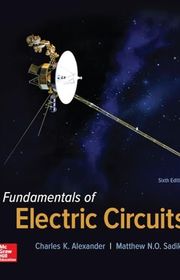
Fundamentals of Electric Circuits
For students who need a structured course in circuit analysis before choosing a specialty. Its worked examples and exercises support deliberate practice, though the textbook format and mathematical workload require more commitment than a conceptual electronics overview.
What it's about
Charles Alexander and Matthew Sadiku develop electrical circuit analysis through fundamental laws, network methods, and time and frequency behavior. Worked examples and exercises connect mathematical techniques with the analysis of circuits containing resistors, capacitors, inductors, and other elements.

How to Diagnose and Fix Everything Electronic
For readers who want a method for investigating faults rather than simply assembling circuits. Its emphasis on instruments and diagnostic reasoning makes repair more systematic, though hands-on work requires suitable equipment, practical experience, and understanding the devices involved.
What it's about
Michael Geier teaches a systematic approach to troubleshooting and repairing electronic products, from analog equipment to digital devices. The guide covers workbench setup, test instruments, fault diagnosis, component replacement, and reassembly, emphasizing how to reason through problems rather than memorize repairs.
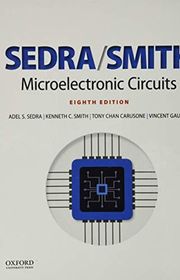
Microelectronic Circuits
For students progressing from circuit fundamentals into semiconductor devices and amplifier design. Its systematic textbook treatment gives device models a clear analytical role, though the mathematical detail and extensive exercises make it better suited to a course than casual reference.
What it's about
Adel Sedra, Kenneth Smith, Tony Chan Carusone, and Vincent Gaudet develop the analysis and design of microelectronic circuits. Device models support explanations of amplifiers, feedback, frequency response, and related circuit functions, connecting semiconductor behavior with practical electronic design.
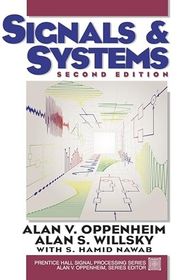
Signals and Systems
For students who want the mathematical language shared by communications, control, and signal processing. Its treatment of continuous and discrete systems provides a connecting foundation, though transforms and abstract reasoning demand sustained practice and suitable mathematics.
What it's about
Alan Oppenheim, Alan Willsky, and Hamid Nawab introduce the analysis of continuous and discrete signals and systems. The text develops system properties, convolution, transforms, sampling, and related methods that underpin later study in communications, control, and signal processing.

Standard Handbook for Electrical Engineers
For power engineers who need a broad professional reference across equipment and system operation. Its collected technical coverage supports targeted lookup, though its scale and assumed background make it unsuitable as a first textbook or a source for current requirements.
What it's about
Edited by Surya Santoso and H. Wayne Beaty, this reference covers electric power generation, transmission, distribution, and operation. Contributions from engineers address equipment, protection, insulation, and renewable generation, connecting theory and analysis with the design and application of power systems.

American Electricians' Handbook
For electricians and engineers who need applied reference material for installations and equipment. Its tables and practical calculations distinguish it from theory centered textbooks, though the US context and changing code requirements make edition and jurisdiction essential considerations.
What it's about
This professional reference explains the design, installation, operation, and maintenance of electrical systems and equipment. Practical coverage includes conductors, circuit calculations, transformers, motors, distribution, wiring, and lighting, with tables and technical information intended for electricians working across varied applications.

Basic Electrical Engineering
For early engineering students who need a foundation spanning circuits, instrumentation, and machines. Its broad introductory scope connects several areas of study, though readers pursuing electrical engineering in depth will need more specialized mathematical and design texts.
What it's about
K. Uma Rao and A. Jayalakshmi introduce electrical engineering through circuit analysis, basic instrumentation, and electrical machines. Written for early engineering students across disciplines, the textbook emphasizes essential concepts and connects them with the electrical applications encountered in everyday life.

Discrete-Time Signal Processing
For engineering students ready for a mathematical treatment of digital signal processing. Its systematic development of sampling, transforms, and filters builds a durable foundation, though comfort with signals, systems, and mathematical notation is needed before starting.
What it's about
Alan Oppenheim and Ronald Schafer develop the foundations of discrete-time signal processing for engineering students. The text examines linear systems, sampling, filtering, and Fourier analysis, connecting mathematical principles with the methods used to analyze and process digital signals.

For engineering students outside the electrical specialty who need a structured introduction to its main applications. Its breadth connects circuits, electronics, and electromechanics, though that general coverage offers less depth than a dedicated text in each area.
What it's about
Allan Hambley introduces electrical engineering concepts through their application to problems across engineering fields. The textbook covers circuit analysis, digital systems, electronics, and electromechanics, building a general foundation for understanding electrical technologies and applying them in practical settings.

Practical Electrical Engineering
For students across engineering disciplines who want circuits and electronics explained through function and application. Its practical orientation helps connect models with devices, though the broad coverage still requires mathematical work and cannot replace depth in each specialty.
What it's about
Sergey Makarov, Reinhold Ludwig, and Stephen Bitar introduce circuits and electronics with an emphasis on functionality and applications. Written for students across engineering disciplines, the textbook combines explanations, figures, and problems to develop practical analysis and design skills.

For readers who already use the main Art of Electronics and want deeper treatment of specialized design questions. Its focused extensions reward experienced circuit builders, though it is a companion volume and an unsuitable substitute for the main introduction.
What it's about
Paul Horowitz and Winfield Hill expand on the third edition of The Art of Electronics with advanced circuit-design topics. This companion develops discussions begun in the main volume, exploring component behavior and specialized techniques for readers seeking deeper practical electronics knowledge.
Sources
- 1
Best Electrical Engineering Books: Our Top 7 Reads of 2026 – Electrical4U
electrical4u.com
- 2
The 8 Best Electrical Engineering Textbooks [2026]
conqueryourexam.com
- 3
The 10 Best Electrical Engineering Reference Books of All Time - Used Keysight Equipment
keysight.com
- 4
Top 10 Electrical Engineering Books: Best Study Material, Recommended by Experts, and Tips
shiksha.com
- 5
100 Best Electrical Engineering Books of All Time (Updated for 2026)
shortform.com
- 6
Electrical Engineering Books
goodreads.com
- 7
Electrical engineering books : r/ElectricalEngineering
reddit.com




Edited by
Software engineer whose passion for tracking book recommendations from podcasts inspired the creation of MRB.
Lead investor at 3one4 Capital whose startup expertise and love for books helped shape MRB and its growth.
Comments
Did we miss something? Have feedback?
Help us improve this page by sharing your thoughts