
7 Best Ecology Books
The best ecology books, ranked by expert source recommendations, with notes to help readers choose field reporting, natural history, and conservation perspectives.
Our take
Ecology studies the relationships among organisms and their environments, from a patch of forest to the effects of losing a predator. Books for general readers approach those relationships through observation, scientific reporting, history, and arguments about conservation. These choices help you notice connections and ask better questions, though they offer different routes from a textbook's systematic treatment of ecological mechanisms.
The Sixth Extinction follows researchers examining human-driven loss, while Where the Wild Things Were concentrates on predators and the consequences of their disappearance. The Song of the Dodo connects extinction with island biogeography and the history of scientific ideas. For a slower encounter with a place, The Forest Unseen observes a small area through the seasons. Walden and A Sand County Almanac and Sketches Here and There connect nature observation with philosophical and ethical questions; Silent Spring offers an influential environmental argument.
Begin with The Forest Unseen for close observation, or The Sixth Extinction for reported science across many places.
7 books · 8 sources · Last updated
As an Amazon Associate, we earn from qualifying purchases (at no extra cost to you).
How to choose from this list
Skip to the full rankingIf you want an accessible scientific narrative: The Sixth Extinction → The Song of the Dodo
If you want to notice ecological connections nearby: The Forest Unseen
If you want predators and food webs: Where the Wild Things Were
If you want nature writing and ethics: Walden → A Sand County Almanac and Sketches Here and There
If you want environmental history: Silent Spring
The 7 books, ranked
Ranked by how many expert sources name each book. Ties go to the book more people recommend.

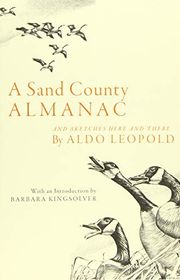
A Sand County Almanac and Sketches Here and There
For readers who want ecological observation connected with responsibility toward land and wildlife. The essays make ethics tangible through particular places, but their American settings and historical perspective cannot substitute for current ecological research.
What it's about
Aldo Leopold combines seasonal observations around his Wisconsin home with reflections on landscapes elsewhere. These essays explore wildlife, ecological relationships, and conservation, developing his land ethic as a call for responsibility toward the wider community of living things.
Also recommended by
1 person Mike Phillips recommended this book
Mike Phillips
"It speaks to the need for us to recognize we’re just as much a part of this planet as the wondrous diversity of life that still surrounds us." - Mike Phillips
Mike Phillips's recommendation of this book
Silent Spring
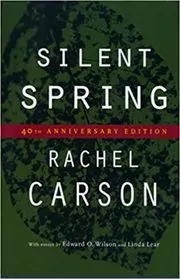
For readers who want to understand the historical argument linking pesticide use with wider environmental consequences. Its clear public-facing case remains instructive, but it addresses its own period rather than providing a current assessment of every chemical.
What it's about
Carson examines what widespread pesticide use, especially DDT, was doing to birds, waterways, and human health. It is a clear, unsettling case against chemical shortcuts and a turning point in environmental writing.

Walden
For readers interested in attentive observation and the philosophical case for living deliberately. Its seasonal perspective rewards slow reading, but the digressions and nineteenth-century prose make it a different undertaking from modern science reporting.
What it's about
Henry David Thoreau reflects on living in a small cabin beside Walden Pond, combining practical details with observations of nature. His account examines simplicity, work, solitude, and deliberate living, questioning the habits and material priorities of society.
Also recommended by
3 people Emma Watson recommended this book
Emma Watson
On the "books read" section of Emma Watson's GoodReads profile.
Emma Watson's recommendation of this book  Michael Pollan recommended this book
Michael Pollan
"For its bracing prose as much as anything else. I’ve been arguing with [the author] for most of my career." - Michael Pollan
Michael Pollan's recommendation of this book  Shane Parrish recommended this book
Shane Parrish
"A reflection on simplicity." - Shane Parrish
Shane Parrish's recommendation of this book
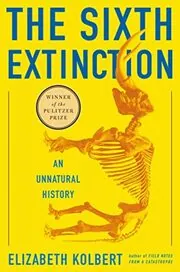
For general readers who want ecological change connected with field reporting and individual species. Its movement between places makes extinction concrete, but the focus on human impacts offers less systematic instruction than an ecology textbook.
What it's about
Kolbert travels with researchers to reefs, rain forests, and fossil sites to argue that humans are driving a new mass extinction. The book blends natural history, field reporting, and urgent questions about what disappears with each lost species.
Also recommended by
2 people Barack Obama recommended this book
Barack Obama
Barack Obama's "2016 Summer Reading List."
Barack Obama's recommendation of this book  Bill Gates recommended this book
Bill Gates
"Makes a compelling case that all this [human] activity is leading to the sixth mass extinction in the Earth’s history." - Bill Gates
Bill Gates's recommendation of this book

For readers who want ecological theory explained through scientific history and travel. Its account of island biogeography connects patterns of diversity with extinction, but the long, detailed narrative asks for more commitment than a brief introduction.
What it's about
David Quammen explores island biogeography through travel, scientific history, and encounters with researchers. Examining evolution and extinction in isolated habitats, he connects the vulnerability of island species with the wider consequences of breaking ecosystems into fragments.
Also recommended by
1 person Patrick O'Shaughnessy recommended this book
Patrick O'Shaughnessy
"If you are interested in evolution this is an amazing read." - Patrick O'Shaughnessy
Patrick O'Shaughnessy's recommendation of this book

Where the Wild Things Were
Life, Death, and Ecological Wreckage in a Land of Vanishing Predators
For readers curious about what changes when large predators disappear. Its focus on food webs makes ecological relationships concrete, but the examples support a particular conservation argument rather than a comprehensive survey of the discipline.
What it's about
William Stolzenburg investigates how ecosystems change when their largest predators disappear. Traveling through terrestrial and marine environments, he follows scientists studying the effects on prey, plants, and other species, and the wider consequences for ecological balance.
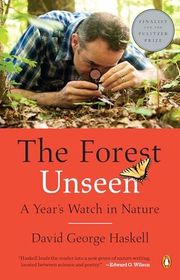
The Forest Unseen: A Year's Watch in Nature
For readers who learn best through careful attention to a particular place. Its small observational focus opens into wider biological relationships, but the reflective pace and Tennessee setting offer a selective view rather than a general textbook.
What it's about
David George Haskell returns to a small area of Tennessee forest throughout a year. His observations of its organisms and seasonal changes lead into explanations of ecology, evolution, and the connections among living things.
Sources
- 1
The Best Ecology Books Of All-Time
bookscrolling.com
- 2
23 Must-Read Science Books About the Environment, Chosen by Earthwatch Scientists
earthwatch.org
- 3
An ecology reading list for self-isolating environmentalists
greenpeace.org
- 4
Introductory Sources for Ecology
drpaulkeddy.com
- 5
Book recommendations?
reddit.com
- 6
Best Environmental Books (1133 books)
goodreads.com
- 7
100 Best Ecology Books of All Time
shortform.com
- 8
The Best Books on Ecology
fivebooks.com






Edited by
Software engineer whose passion for tracking book recommendations from podcasts inspired the creation of MRB.
Lead investor at 3one4 Capital whose startup expertise and love for books helped shape MRB and its growth.
Comments
Spotted a missing book, a wrong order or a mistake? Tell us and we'll fix this page.
We're a reading guide, not the author or publisher, so we can't send books or pass on messages.