
25 Best Climate Change Books
The best climate change books, ranked by how many expert sources recommend each one, with notes on science, justice, politics, solutions and where to start.
Our take
Climate change books can explain the physical problem, investigate delayed action or explore ways to respond. Those tasks need different kinds of reading. A broad introduction helps establish the connections between energy, consumption and emissions. Reporting makes impacts and political choices concrete, while books about justice ask whose experiences count and who has power to shape the response.
The Story of More offers a compact starting point, and How to Avoid a Climate Disaster organizes its approach around economic sectors and technology. Merchants of Doubt and Losing Earth examine different parts of the history of inaction. For responses, Drawdown surveys interventions and Regeneration connects climate with ecological and social repair. All We Can Save brings together many voices, while Saving Us concentrates on conversation across differences. Start with the question you most need answered, then pair a book about impacts or obstacles with one about possible responses; older examples and numerical estimates benefit from current information alongside them.
25 books · 7 sources · Last updated
As an Amazon Associate, we earn from qualifying purchases (at no extra cost to you).
How to choose from this list
Skip to the full rankingIf you want an accessible overview: The Story of More → How to Avoid a Climate Disaster
If you want to understand delayed action: Merchants of Doubt → Losing Earth → The New Climate War
If you want to explore responses: Drawdown → Regeneration → What If We Get It Right?
If you want justice and community perspectives: All We Can Save → As Long as Grass Grows → Revolutionary Power
If you want to understand impacts: The Uninhabitable Earth → The Heat Will Kill You First
If you want better climate conversations: Don't Even Think About It → Saving Us
The 25 books, ranked
Ranked by how many expert sources name each book. Ties go to the book more people recommend.
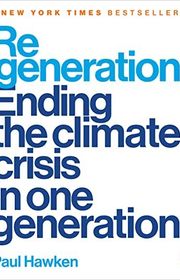
Regeneration
For readers who want climate action connected with living systems and social well-being. Hawken's wide-ranging framework links ecological repair with human needs, though its breadth and ambitious framing require more detailed evidence when evaluating a specific intervention.
What it's about
Hawken presents a framework for addressing climate change through ecological and social regeneration. Examples connect energy, food, ecosystems and community action, arguing that climate responses should also support biodiversity, equity and human well-being.

For readers who want a forceful account of the risks associated with further warming. Wallace-Wells connects environmental changes with social consequences, though the alarming emphasis needs careful reading of conditional scenarios rather than treating every outcome as inevitable.
What it's about
David Wallace-Wells examines possible consequences of climate change beyond rising seas, including food shortages, displacement and economic disruption. He considers how warming could reshape politics, technology and ideas of progress, alongside the choices needed to limit its effects.
Also recommended by
2 people Tim Urban recommended this book
Tim Urban
"[The author's] been scaring the shit out of me with this research for the past few years, and now it's a book I hope lots of people read/discuss/debate." - Tim Urban
Tim Urban's recommendation of this book  Vinod Khosla recommended this book
Vinod Khosla
"A look into the future and how global warming will impact everything." - Vinod Khosla
Vinod Khosla's recommendation of this book
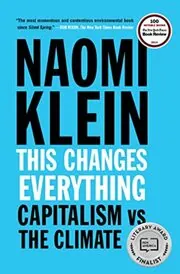
For readers who want the climate crisis examined through economic power and inequality. Klein connects emissions with the rules governing markets and growth, though this is a forceful political argument rather than an introductory explanation of climate science.
What it's about
Klein argues that climate change is not just an environmental issue but a challenge to the economic rules that produced it. The book links emission cuts, local rebuilding, and social justice in one sweeping case for change.
Also recommended by
1 person Brit Marling recommended this book
Brit Marling
"An urgent read." - Brit Marling
Brit Marling's recommendation of this book

For readers who want a broad catalogue of ways to reduce greenhouse-gas emissions. The cross-sector format makes unfamiliar solutions easy to explore, though the book's rankings and estimates reflect its publication period and need newer data alongside them.
What it's about
Edited by Paul Hawken, this collection presents researched practices and technologies intended to reduce greenhouse-gas concentrations. It brings together climate solutions across multiple sectors, examining their potential contribution to reaching a point where atmospheric greenhouse-gas levels begin declining.
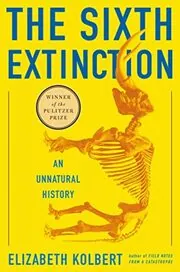
For readers who want climate change placed within the larger loss of biodiversity. Kolbert's field reporting connects individual species with planetary history, though the book covers several human pressures and is not a dedicated guide to decarbonization.
What it's about
Kolbert travels with researchers to reefs, rain forests, and fossil sites to argue that humans are driving a new mass extinction. The book blends natural history, field reporting, and urgent questions about what disappears with each lost species.
Also recommended by
2 people Barack Obama recommended this book
Barack Obama
Barack Obama's "2016 Summer Reading List."
Barack Obama's recommendation of this book  Bill Gates recommended this book
Bill Gates
"Makes a compelling case that all this [human] activity is leading to the sixth mass extinction in the Earth’s history." - Bill Gates
Bill Gates's recommendation of this book

Merchants of Doubt
How a Handful of Scientists Obscured the Truth on Issues from Tobacco Smoke to Global Warming
For readers who want to understand organized campaigns against scientific findings. Oreskes and Conway connect climate controversy with earlier disputes about tobacco and pollution, though the historical investigation offers less detail on present-day emissions solutions.
What it's about
Naomi Oreskes and Erik M. Conway investigate campaigns that cast doubt on scientific findings about tobacco, pollution, and climate change. They trace recurring figures and their connections to industry and politics across decades of public controversy.
Also recommended by
1 person Elon Musk recommended this book
Elon Musk
"Worth reading [this book]. Same who tried to deny smoking deaths are denying climate change." - Elon Musk
Elon Musk's recommendation of this book

For readers who want more productive climate conversations across differences in identity or belief. Hayhoe emphasizes shared values and personal connections, though the communication focus offers less detail on engineering or the design of specific policies.
What it's about
Climate scientist Katharine Hayhoe argues that meaningful climate conversations begin with shared values and personal connections. Drawing on her experience communicating across divisions, she explores how listening, trust, and everyday concerns can help move discussion toward collective action.
Also recommended by
1 person Margaret Atwood recommended this book
Margaret Atwood
"A must-read if we’re serious about enacting positive change from the ground up, in communities, and through human connections & human emotions." - Margaret Atwood
Margaret Atwood's recommendation of this book

For readers who want a compact account of how consumption connects with climate change. Jahren's everyday categories make the subject approachable, though the concise survey gives less depth to individual technologies, political conflicts and national circumstances.
What it's about
Hope Jahren explains connections between expanding human consumption and climate change, examining electricity, agriculture, and automobiles. Combining science with personal reflection, she describes greenhouse emissions, their consequences, and actions people can take to reduce their environmental impact.
Also recommended by
1 person Ann Patchett recommended this book
Ann Patchett
Ann Patchett recommended this book on the Parnassus Books website.
Ann Patchett's recommendation of this book

For readers who want a range of women's voices on climate action and leadership. The anthology brings science, art and justice into conversation, though its many contributors offer varied perspectives rather than one continuous argument or action plan.
What it's about
Edited by Ayana Elizabeth Johnson and Katharine K. Wilkinson, this anthology brings together essays, poetry, and art by women working on climate change. Scientists, activists, farmers, and other contributors connect environmental solutions with leadership, justice, and collective action.
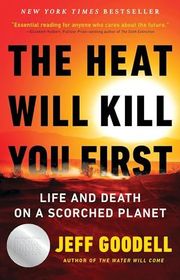
The Heat Will Kill You First
For readers who want climate risk made tangible through extreme heat. Goodell's reporting connects temperature with bodies, work and infrastructure, though the focus on dangers makes this a more unsettling read than the solutions-centered books here.
What it's about
Goodell investigates the effects of extreme heat on people, communities and ecosystems. Reporting from different settings examines vulnerability, adaptation and the ways rising temperatures challenge familiar assumptions about where and how people can live and work.
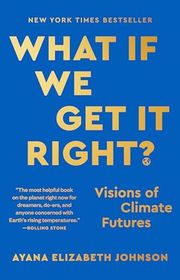
What If We Get It Right?
For readers who want to imagine concrete possibilities beyond climate despair. Johnson combines conversations, essays and creative work across several fields, though the varied formats provide an exploratory collection rather than a single technical roadmap.
What it's about
Johnson gathers conversations, essays, poetry and art about possible climate futures. Contributors from science, agriculture, finance, design and activism explore responses to the crisis and the kinds of communities and everyday lives those responses could help create.

For readers who want an accessible framework for thinking about emissions across economic sectors. Gates emphasizes technological change and scaling solutions, though the innovation-centered approach gives less space to political power and justice than several other books here.
What it's about
Bill Gates outlines his proposed route to eliminating greenhouse gas emissions. He examines existing technologies, areas needing breakthroughs and the challenges of bringing innovations to market, then considers policies and individual actions that could support the transition.
Also recommended by
2 people Luis von Ahn recommended this book
Luis von Ahn
"What an amazing individual." - Luis von Ahn
Luis von Ahn's recommendation of this book  David Friedberg recommended this book
David Friedberg
"[Shows] what we should do. [And] he's putting his money where his mouth is." - David Friedberg
David Friedberg's recommendation of this book
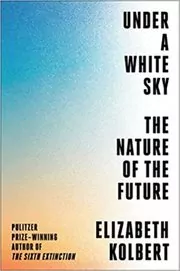
For readers interested in the dilemmas created by attempts to repair environmental damage. Kolbert's reporting makes technical interventions tangible, though the wider ecological scope and deliberately unsettled conclusions offer questions more often than a clear prescription.
What it's about
Kolbert follows scientists and engineers trying to repair environmental damage with even more intervention, from desert fish rescues to carbon turned into stone. It is a sharp, uneasy look at what managing nature may now require.
Also recommended by
2 people- Bill Gates recommended this book
Bill Gates
"About a number of the ways that people are intervening with nature, including gene drive and geoengineering." - Bill Gates
Bill Gates's recommendation of this book  Ezra Klein recommended this book
Ezra Klein
"An incredible book." - Ezra Klein
Ezra Klein's recommendation of this book

Hot, Flat, and Crowded
Why We Need a Green Revolution--and How It Can Renew America
For readers interested in an earlier argument linking clean energy with American renewal. Friedman connects environmental pressures with business and public policy, though the US focus and dated political examples require considerable context when reading it today.
What it's about
Thomas Friedman links America's need for renewal with the world's energy and environmental challenges. He argues that a green revolution could address those pressures while rebuilding the country's capacity for innovation and leadership.
Also recommended by
1 person- Bill Gates recommended this book
Bill Gates
List of books Bill Gates read in 2011.
Bill Gates's recommendation of this book

As Long as Grass Grows
The Indigenous Fight for Environmental Justice, from Colonization to Standing Rock
For readers who want environmental justice understood through Indigenous experience. Gilio-Whitaker connects land, sovereignty and resistance across history, though the US-centered account is broader than climate change and provides less direct coverage of emissions or energy technology.
What it's about
Dina Gilio-Whitaker traces Indigenous resistance to environmental injustice through treaty violations, threats to food and water, and struggles over sacred sites. Her account highlights women's leadership and proposes an approach to activism and policy grounded in Indigenous experiences of colonization.

Climate Crisis and the Global Green New Deal
The Political Economy of Saving the Planet
For readers interested in a global economic proposal for decarbonization and better livelihoods. Chomsky and Pollin connect climate policy with employment and public investment, though the interview format advocates a particular program rather than surveying all competing approaches.
What it's about
Noam Chomsky and Robert Pollin discuss climate change with C. J. Polychroniou, outlining a proposed global Green New Deal. They examine the political and economic changes needed to reduce fossil-fuel dependence while improving workers' opportunities and living standards.

For readers who wonder why knowing about climate change does not always lead to action. Marshall examines identity, communication and social behavior, though the older examples and broad psychological framing need complementing with current evidence and local context.
What it's about
George Marshall investigates why people can recognize climate change yet avoid acting on it. Conversations with scientists, psychologists, activists, and opponents inform his examination of identity, storytelling, threat perception, and the social forces shaping responses to a shared danger.

For readers interested in protecting biodiversity alongside addressing planetary change. Wilson's large-scale conservation proposal gives habitat loss a clear organizing idea, though the focus is species protection rather than the practical design of emissions-reduction policy.
What it's about
Edward O. Wilson examines threats to biodiversity and proposes protecting half the Earth’s surface as natural habitat. He argues that preserving sufficient space for other species is essential to resisting mass extinction and safeguarding the planet’s living systems.

For readers interested in how an opportunity for climate action was missed. Rich turns a decade of negotiations and advocacy into a focused narrative, though the narrow historical frame cannot by itself explain every later political obstacle.
What it's about
Nathaniel Rich reconstructs efforts during the decade after 1979 to turn knowledge of climate change into political action. Following scientists, campaigners, and policymakers, he examines missed opportunities, emerging denial campaigns, and the consequences of failing to confront the problem.

For readers interested in the political case for linking climate action with social reform. Klein's essays capture the urgency behind Green New Deal advocacy, though the collection reflects particular campaigns and moments rather than a single updated policy blueprint.
What it's about
This essay collection brings together Klein's climate reporting and political writing at a moment of deep urgency. She argues that a Green New Deal could tackle rising temperatures and inequality at the same time.

For younger readers who want an illustrated introduction to Greta Thunberg's activism. Winter makes the beginnings of a youth movement approachable, though the picture-book format offers a personal example rather than a detailed explanation of climate science.
What it's about
Jeanette Winter's picture book follows Greta Thunberg's response to learning about climate change and her call for action. Illustrations and a narrative for young readers show how a Swedish teenager's protest helped inspire a wider movement of student activists.

For readers who want energy transitions examined through community control and justice. Baker centers people harmed by existing systems and considers participation in change, though the US policy setting limits direct application to other legal and institutional contexts.
What it's about
Shalanda Baker argues that the transition to clean energy must change who holds power as well as how electricity is produced. Examples and guidance center communities harmed by existing systems, encouraging their participation in shaping local control and energy policy.

The Case for the Green New Deal
For readers who want the financing argument behind a Green New Deal. Pettifor connects decarbonization with monetary systems and public investment, though the compact political case assumes interest in economic reform rather than offering a neutral climate primer.
What it's about
Ann Pettifor explains the origins and aims of the Green New Deal and argues that reforming finance can help fund it. She links decarbonization with social justice, questioning economic assumptions that restrict the scope of possible responses to climate change.

For readers who want to recognize arguments that delay collective climate action. Mann shifts attention from outright denial toward obstruction and distraction, though the advocacy-driven account concentrates more on political conflict than on explaining physical climate processes.
What it's about
Michael Mann examines tactics he argues have delayed collective action on climate change, from denial to distraction and division. He makes a case for systemic solutions and cooperation, considering how climate advocates can respond to obstruction without surrendering to despair.

For readers curious about who expects to profit from a warming world. Funk's reporting gives adaptation and commercial opportunism concrete human settings, though the cases reflect an earlier period and should not be read as a current investment guide.
What it's about
McKenzie Funk investigates businesses and governments treating global warming as a financial opportunity. Reporting around the world, he follows efforts to profit from changing conditions and adaptation, examining how potential gains for some coexist with growing risks and losses for others.
Sources
- 1
28 Best Books About Climate Change
onetreeplanted.org
- 2
Books About Climate Change
penguinrandomhouse.com
- 3
A big Climate Change reading list - updated 2026
reddit.com
- 4
Annotated List of About 60 Books on Sustainability/Climate Change
scienceofconsequences.com
- 5
Climate Change Books
goodreads.com
- 6
Best Books on Climate Change
actnowbayarea.org
- 7
Climate Change Books
reddit.com







Edited by
Software engineer whose passion for tracking book recommendations from podcasts inspired the creation of MRB.
Lead investor at 3one4 Capital whose startup expertise and love for books helped shape MRB and its growth.
Comments
Spotted a missing book, a wrong order or a mistake? Tell us and we'll fix this page.
We're a reading guide, not the author or publisher, so we can't send books or pass on messages.