
24 Best Data Mining Books
The best data mining books, ranked by how many expert sources recommend each one, with notes for business beginners, programmers, and analytics students.
Our take
Data mining is about finding useful patterns in data and testing whether those patterns deserve your trust. That includes preparing records, choosing methods, evaluating results, and connecting the analysis to a question worth answering. Books approach the work from different directions: business reasoning, algorithms, statistical learning, or hands-on programming.
Data Science for Business helps readers frame analytical projects and judge their value. Introduction to Data Mining develops the main methods, while the books by Han, Witten, and Aggarwal offer alternative courses and reference material. Mining of Massive Datasets concentrates on the computational problems that appear at scale. Statistical-learning books explain prediction and model evaluation, and practical companions such as Python for Data Analysis and R for Data Science help with the preparation that comes before fitting a model.
Start with business questions if you are commissioning analysis, or with a core textbook if you want to implement methods. Then add the statistical or programming support your projects require.
24 books · 7 sources · Last updated
As an Amazon Associate, we earn from qualifying purchases (at no extra cost to you).
How to choose from this list
Skip to the full rankingIf you’re starting from business questions: Data Science for Business → Data Mining For Dummies
If you want algorithms with Tan and Han: Introduction to Data Mining → Data Mining
If you want to program in Python: Python for Data Analysis → A Programmer's Guide to Data Mining
If you want an R modeling workflow: R for Data Science → Applied Predictive Modeling
If you want statistical foundations: An Introduction to Statistical Learning → The Elements of Statistical Learning
If you need algorithms at scale: Mining of Massive Datasets
The 24 books, ranked
Ranked by how many expert sources name each book. Ties go to the book more people recommend.

For readers who want machine-learning ideas connected to the full process of preparing data and evaluating results. Witten and his coauthors provide a practical course, though the Weka connection is less direct for readers committed to other tools.
What it's about
Ian Witten and his coauthors explain machine learning concepts and their application to data mining. Practical discussions cover preparing inputs, evaluating results, and improving performance, with the Weka toolkit connecting the methods to hands on work.

For students who want a broad map of knowledge discovery, from preparing data to finding patterns. Han and his coauthors organize the main tasks systematically, though readers may need additional programming exercises to make the algorithms concrete.
What it's about
Jiawei Han and his coauthors explain the concepts and methods behind discovering knowledge in data. Preprocessing, frequent patterns, classification, and clustering form a foundation for understanding mining algorithms, with examples connecting theoretical principles to practical analytical problems.

Introduction to Data Mining
For students who want a structured introduction to the main mining tasks before specializing. Tan and his coauthors connect concepts with algorithms and examples, though the textbook format requires sustained work rather than quick recipe lookup.
What it's about
Pang-Ning Tan and his coauthors introduce core data mining methods, including classification, association analysis, clustering, and anomaly detection. Explanations and examples connect algorithmic ideas with analytical practice, while attention to statistical considerations helps readers assess patterns and potential false discoveries.

For mathematically prepared readers who want the statistical reasoning behind learning algorithms. The unified treatment supports deeper comparison of methods, though its demanding pace makes An Introduction to Statistical Learning a more approachable first step.
What it's about
Trevor Hastie, Robert Tibshirani, and Jerome Friedman present a statistical framework for supervised and unsupervised learning. This second edition covers regression, classification, neural networks, boosting, random forests, and other methods, illustrated through applications and graphics.
Also recommended by
1 person Nassim Taleb recommended this book
Nassim Taleb
"Very comprehensive, sufficiently technical to get most of the plumbing behind machine learning." - Nassim Taleb
Nassim Taleb's recommendation of this book

For analysts who need to connect mining methods with marketing and customer questions. The commercial examples make project choices concrete, though the customer-management focus is narrower than a general algorithms textbook and some examples show their age.
What it's about
Gordon Linoff and Michael Berry explain how data mining can address marketing, sales, and customer relationship problems. Practical examples connect analytical techniques with business questions, helping readers understand how to select methods and interpret patterns in customer and commercial data.

Data Science for Business
What You Need to Know about Data Mining and Data-Analytic Thinking
For managers and analysts who need to frame useful questions and judge proposed analytical work. Provost and Fawcett emphasize reasoning about business value, though readers seeking implementation exercises will need a programming companion.
What it's about
Foster Provost and Tom Fawcett explain the principles underlying data mining and data-analytic thinking. Business examples illustrate how to frame problems, evaluate solutions, communicate with data scientists, and treat organizational data as an asset requiring thoughtful investment.

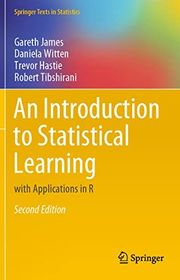
For readers who want a gentler statistical route into prediction before attempting The Elements of Statistical Learning. Explanations and R labs connect ideas with practice, though it is less focused on large-scale mining algorithms or database issues.
What it's about
Gareth James, Daniela Witten, Trevor Hastie, and Robert Tibshirani introduce statistical learning through accessible explanations, examples, and R tutorials. This second edition covers modeling and prediction, including regression, classification, resampling, deep learning, survival analysis, and multiple testing.

Applied Predictive Modeling
For analysts who know some R and want disciplined model-building on real datasets. Kuhn and Johnson emphasize preprocessing, tuning, and evaluation, though the extensive code depends on its software context and the scope favors prediction over other mining tasks.
What it's about
Max Kuhn and Kjell Johnson follow the predictive modeling process from preparing and splitting data to tuning and evaluating models. Regression and classification methods are explained through real data examples, R code, and chapter exercises.

For readers wanting a broad algorithmic reference that extends into text, sequences, and graphs. Aggarwal gives specialist data types more space than a short introduction, though the breadth and technical treatment make it a substantial course.
What it's about
Charu Aggarwal develops data mining foundations through classification, clustering, pattern discovery, and outlier analysis. The textbook extends these methods to specialized data, including text, sequences, graphs, and social networks, with explanations and exercises linking algorithms to varied analytical settings.
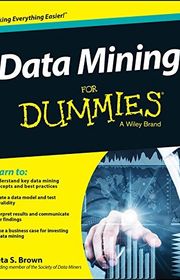
Data Mining For Dummies
For business beginners who need a clear picture of the mining workflow before studying algorithms. Brown connects model-building with interpretation and communication, though readers seeking mathematical derivations or advanced implementation details will need another book.
What it's about
Meta Brown introduces data mining as a process for finding useful patterns and testing models against business questions. The book discusses knowledge discovery, model validity, interpretation, communication, and the organizational case for investing in analytical work.

For R users who want an interface-led route through the mining workflow before writing every step themselves. Williams connects Rattle with underlying methods, though reproducing the software examples requires attention to the edition’s tools.
What it's about
Graham Williams introduces data mining using the Rattle interface and the R programming language. Practical examples follow the analytical process from preparing data to choosing and evaluating models, connecting accessible tools with the algorithms used to discover useful patterns.

For spreadsheet users who want to understand analytical methods through a familiar working environment. Foreman makes the computational steps visible without a large programming stack, though spreadsheets limit how directly the examples scale to production systems.
What it's about
John Foreman teaches data science through worked examples built in spreadsheets, making each stage of analysis visible. Topics include optimization, clustering, forecasting, graph analysis, and predictive models, followed by a transition from spreadsheets to the R programming language.
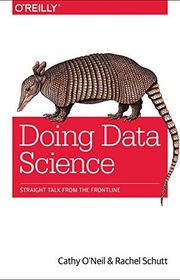
Doing Data Science
For readers with programming and statistics experience who want a range of applied problems rather than one continuous algorithm course. The multiple perspectives broaden the picture, though the lecture-based structure can feel uneven in depth.
What it's about
Cathy O’Neil and Rachel Schutt draw on a university data-science course and practitioners’ case studies. Topics include exploratory analysis, inference, algorithms, recommendation, causality, visualization, and data engineering, connecting methods with the kinds of questions encountered in applied work.

Mining the Social Web
Data Mining Facebook, Twitter, LinkedIn, Instagram, GitHub, and More
For Python users interested in text, connections, and activity on the web. The project examples connect collection with analysis, though platform access and interfaces need checking before attempting to reproduce the book’s code.
What it's about
Matthew Russell and Mikhail Klassen demonstrate how to analyze information from social platforms and other web sources using Python. Examples connect data collection with content and network analysis, giving readers practical methods for exploring relationships and patterns in online activity.
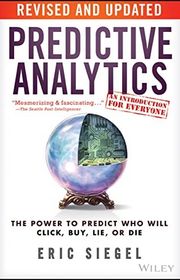
Predictive Analytics
For business readers who want to understand what predictive models can do and where they are used. Siegel’s examples make the field concrete, though this is a conceptual introduction rather than a manual for implementing algorithms.
What it's about
Eric Siegel explains predictive analytics through examples of organizations using data to anticipate behavior and events. The book introduces the role of machine learning in decisions across different fields, emphasizing applications and implications rather than detailed programming instruction.
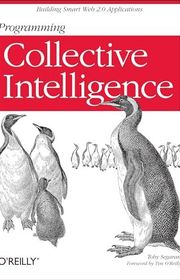
Programming Collective Intelligence
For programmers who want to build recommendation and ranking methods through understandable examples. Segaran makes algorithms approachable in application form, though the web services and programming context reflect an earlier generation of online development.
What it's about
Toby Segaran introduces machine-learning and statistical algorithms through web applications that use data about people’s preferences and behavior. Examples include recommendations, search ranking, and related tasks, explaining how to collect information and turn it into useful computational decisions.

For analysts who need dependable data preparation before trying mining algorithms. McKinney gives pandas and array operations practical context, though the emphasis is manipulating and exploring datasets rather than teaching a full range of predictive models.
What it's about
Wes McKinney demonstrates how to prepare and analyze data using Python, pandas, NumPy, and IPython. Practical examples cover loading datasets, handling missing values, combining and reshaping tables, plotting results, grouping data, and working with time series.
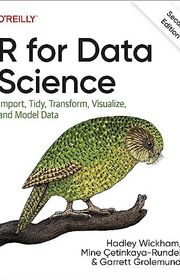
R for Data Science
For R users who need to prepare, explore, and communicate data before fitting models. The tidyverse workflow makes the preliminary work coherent, though it is a companion for mining projects rather than a textbook of mining algorithms.
What it's about
Hadley Wickham and coauthors introduce a workflow for working with data in R and the tidyverse. Examples and exercises cover importing, tidying, transforming and visualizing data, with guidance on communicating results and managing the practical stages of analysis.

For programmers who want to learn statistics through running experiments on data. Downey’s computational approach provides a useful foundation for judging mining results, though it assumes a willingness to code and does not replace a comprehensive mining text.
What it's about
Allen Downey introduces exploratory data analysis through Python programming and a continuing case study. This second edition follows the process from cleaning and summarizing data to examining relationships, testing hypotheses, using regression, and communicating results through visualization.

Mining of Massive Datasets
For readers whose data volume changes which algorithms are practical. The focus on streams, similarity, graphs, and scalable computation distinguishes it from introductory surveys, though comfort with algorithms and mathematics is needed to follow the analysis.
What it's about
Jure Leskovec, Anand Rajaraman, and Jeffrey Ullman examine algorithms for extracting information from very large datasets. Topics include data streams, graph analysis, clustering, and recommendation systems, connecting computational techniques with the practical constraints of processing data at scale.

A Programmer's Guide to Data Mining
For programmers who learn by implementing ideas and experimenting with examples. Zacharski’s gradual Python approach makes recommendation and classification tangible, though it offers less breadth and mathematical detail than a full data-mining textbook.
What it's about
Ron Zacharski introduces data mining through a sequence of practical programming exercises. Python examples encourage experimentation with techniques for finding patterns and building recommendation systems, allowing readers to develop their understanding gradually through a hands-on approach to learning.

Bayesian Methods for Hackers
Probabilistic Programming and Bayesian Inference
For programmers who want uncertainty and assumptions made explicit through computational examples. Davidson-Pilon offers a Bayesian complement to prediction-focused texts, though the software environment needs checking and it does not survey the whole data-mining field.
What it's about
Cameron Davidson-Pilon introduces Bayesian inference through computational examples and probabilistic programming. Python implementations connect modeling, simulation, and decision making, helping readers understand uncertainty and examine how assumptions, prior beliefs, and observed data affect the conclusions drawn from statistical models.

Big Data, Data Mining, and Machine Learning
Value Creation for Business Leaders and Practitioners
For readers who need to connect analytical methods, computing architecture, and organizational value. Dean addresses both leaders and practitioners, though the broad business framing provides less algorithmic depth than the dedicated mining textbooks.
What it's about
Jared Dean connects big data, data mining, and machine learning with business value. Explanations of computing architectures and analytical methods address both leaders and practitioners, offering context for choosing projects and understanding how technical capabilities support organizational decisions.

For scientific programmers who need numerical and data-handling tools alongside model-building ideas. Klemens makes implementation choices central, though the C-based workflow is less convenient for readers expecting a Python or R introduction.
What it's about
Ben Klemens introduces tools and methods for computationally intensive analysis of large datasets. The book connects scientific modeling with practical C programming, numerical libraries, and database tools, helping readers choose and implement methods suited to different research problems.
Sources
- 1
The 14 Best Data Mining Books Based on Real User Reviews
solutionsreview.com
- 2
Recommended books on Data Mining and Data Science
albionresearch.com
- 3
Data Mining Books
goodreads.com
- 4
There’s a lot of data science books out there, any recommendations for must-reads?
reddit.com
- 5
Bibliografía recomendada
data-mining.ikor.org
- 6
Books and resources
learn.datasociety.com
- 7
Foundations of Data Analytics
home.cse.ust.hk






Edited by
Software engineer whose passion for tracking book recommendations from podcasts inspired the creation of MRB.
Lead investor at 3one4 Capital whose startup expertise and love for books helped shape MRB and its growth.
Comments
Spotted a missing book, a wrong order or a mistake? Tell us and we'll fix this page.
We're a reading guide, not the author or publisher, so we can't send books or pass on messages.