
14 Best Big Data Books
The best big data books, ranked by how many expert sources recommend each one, with notes on who each suits, from beginners to managers and data engineers.
Our take
Big data books approach different parts of the same challenge: understanding information, deciding what to do with it, and building systems that can handle it. A business reader may need help defining a useful project, while an engineer needs to reason about storage, processing, reliability, and change. Social consequences matter too, particularly when data affects decisions about people.
Big Data at Work addresses organizational choices, and Data Science for Business develops the reasoning behind analytical projects. Numsense! offers a lighter introduction to algorithms, while Data Smart makes methods visible through spreadsheet examples. Weapons of Math Destruction examines the costs of poorly understood decision systems. For engineering, Fundamentals of Data Engineering gives a broad lifecycle view before the deeper systems discussion in Designing Data-Intensive Applications. Start with your role and question, keeping in mind that older books’ concepts may remain useful while their tools and company examples need updating.
14 books · 10 sources · Last updated
As an Amazon Associate, we earn from qualifying purchases (at no extra cost to you).
How to choose from this list
Skip to the full rankingIf you're new to analytical concepts: Numsense! → Data Science for Business
If you manage data projects: Big Data at Work → Analytics in a Big Data World
If you want visible worked methods: Data Smart
If you want to build data systems: Fundamentals of Data Engineering → Designing Data-Intensive Applications
If you want to question data-driven claims: Everybody Lies → Weapons of Math Destruction
The 14 books, ranked
Ranked by how many expert sources name each book. Ties go to the book more people recommend.

Designing Data-Intensive Applications
The Big Ideas Behind Reliable, Scalable, and Maintainable Systems
For engineers who want to understand why data systems make different tradeoffs. Kleppmann connects storage, distribution, and processing through underlying principles, though this first edition is conceptually demanding and is not a guide to configuring current products.
What it's about
Martin Kleppmann examines the design choices behind systems that store and process large amounts of data. He compares databases, replication, partitioning, transactions, batch processing and streams, explaining tradeoffs involving reliability, consistency, scalability and maintainability.

Everybody Lies
Big Data, New Data, and What the Internet Can Tell Us About Who We Really Are
For readers curious about what digital behavior might reveal beyond self-reported answers. Stephens-Davidowitz makes data-driven social questions approachable, though surprising associations require care about representation and should not automatically be read as causal explanations.
What it's about
Seth Stephens-Davidowitz explores what internet searches and other large datasets reveal about human fears, desires, and behavior. His examples contrast what people report about themselves with patterns in their digital activity, examining new possibilities for studying society.

For readers who want to question the consequences of automated decisions. O’Neil makes opacity and harmful feedback loops accessible through concrete examples, though this critical account does not provide a complete technical framework for auditing models.
What it's about
Cathy O'Neil examines mathematical models used in education, employment, lending, and other decisions affecting everyday life. She argues that opaque systems can amplify discrimination and inequality, showing how apparently objective data can hide assumptions and create damaging feedback loops.
Also recommended by
1 person Tom Peters recommended this book
Tom Peters
"Gives 'big data' a much-needed punch in the nose. Bravo! Big data can be invaluable but can do incalculable harm as well." - Tom Peters
Tom Peters's recommendation of this book

For general readers who want a broad argument about how large datasets change decision-making. Viktor Mayer-Schönberger and Kenneth Cukier connect many domains, though the early big-data framing needs comparison with later evidence and more technical accounts.
What it's about
Viktor Mayer-Schönberger and Kenneth Cukier explore how large-scale data analysis changes business, science, government, and everyday decisions. Their account examines the possibilities of detecting patterns and making predictions alongside concerns about privacy, regulation, and decisions made by algorithms.

For managers who need to connect data projects with staffing, costs, and organizational choices. Davenport gives business implementation more attention than algorithms, though the publication period limits its treatment of today’s platforms and operating practices.
What it's about
Thomas Davenport examines big data from technical, consumer, and management perspectives, distinguishing business opportunities from exaggerated claims. Company examples illustrate costs, staffing needs, project implementation, and the ways analytics can affect products, services, and customer relationships.
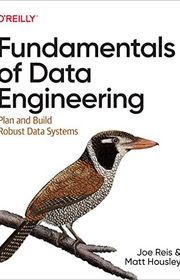
Fundamentals of Data Engineering: Plan and Build Robust Data Systems
For readers moving into data engineering who need to see how the pieces fit together. Reis and Housley connect lifecycle stages with organizational concerns, though the broad overview offers less implementation detail than a platform-specific manual.
What it's about
Joe Reis and Matt Housley explain the data engineering lifecycle, from source systems and ingestion to storage, transformation, and serving data. They connect architecture and technology choices with security, governance, operations, and the needs of an organization.

For business readers who want to understand why data capabilities deserve organizational attention. Simon makes the case through examples and practitioner perspectives, though the older company stories offer more strategic context than present-day implementation detail.
What it's about
Phil Simon makes the business case for capturing, organizing, analyzing, and visualizing large and varied sources of data. Case studies and interviews with practitioners illustrate how organizations approach these resources and use them to inform decisions.

Analytics in a Big Data World
For readers ready to connect analytical methods with business problems and evaluation. Baesens offers more technical substance than executive surveys, though the breadth and assumed quantitative familiarity make it demanding as a first introduction.
What it's about
Bart Baesens explains how organizations can apply analytics to business opportunities and problems. Case studies in credit risk, marketing, fraud detection, and customer relationships accompany discussions of analytical techniques, model evaluation, data quality, privacy, and governance.

For beginners who want a short orientation before choosing a technical or managerial path. Holmes connects basic concepts with applications and social questions, though the compressed format cannot teach implementation or develop the mathematics in depth.
What it's about
Dawn Holmes introduces the growth of big data, how it is stored and analyzed, and its uses in medicine and business. The survey also considers security, the Snowden case, and broader consequences for society.

Big Data in Practice
How 45 Successful Companies Used Big Data Analytics to Deliver Extraordinary Results
For business readers who learn through a range of organizational examples. Marr makes applications across sectors easy to browse, though selected successful cases give less insight into failed projects, measurement difficulties, and the work behind the results.
What it's about
Bernard Marr presents case studies of how forty-five companies and organizations use big data. Examples span technology, retail, media, sports, government, and financial services, examining practical applications and the resources involved in turning data into business results.

Data Science for Business
What You Need to Know about Data Mining and Data-Analytic Thinking
For managers and analysts who need a shared way to frame data problems. Foster Provost and Tom Fawcett emphasize evaluation and analytical thinking, though the conceptual focus offers less coding practice than a technical workbook.
What it's about
Foster Provost and Tom Fawcett explain the principles underlying data mining and data-analytic thinking. Business examples illustrate how to frame problems, evaluate solutions, communicate with data scientists, and treat organizational data as an asset requiring thoughtful investment.

For readers who want to see analytical steps rather than treat a model as a black box. Foreman uses spreadsheets to expose the process, though that teaching environment does not represent large-scale production infrastructure.
What it's about
John Foreman teaches data science through worked examples built in spreadsheets, making each stage of analysis visible. Topics include optimization, clustering, forecasting, graph analysis, and predictive models, followed by a transition from spreadsheets to the R programming language.

For beginners intimidated by technical terminology and mathematics. Annalyn Ng and Kenneth Soo use visual intuition to explain algorithms, though the intentionally light treatment needs later mathematical and practical study before independent technical work.
What it's about
Annalyn Ng and Kenneth Soo introduce data science algorithms through intuitive explanations, visuals, and real-world examples. Chapters cover testing, clustering, regression, neural networks, and other techniques, with summaries and reference sheets comparing their strengths and limitations.

Data Science and Big Data Analytics
Discovering, Analyzing, Visualizing and Presenting Data
For learners who prefer a structured analytics lifecycle to a collection of business stories. The institutional textbook connects methods, tools, and presentation, though the older software context and broad syllabus require additional practice and current technical references.
What it's about
EMC Education Services introduces the activities, methods, and tools used in data science through a structured analytics lifecycle. Practical examples using open-source software connect analysis with visualization, presenting findings, teamwork, and translating data into business action.
Sources
- 1
Big Data Books
goodreads.com
- 2
Best books for beginners?
reddit.com
- 3
Books to Start, Grow, or Deepen Your Knowledge as a Data Engineer
reddit.com
- 4
Further reading: Big Data Analytics with Python
seknewna.github.io
- 5
46 Best Resources to learn Big Data
mltut.com
- 6
54 of the Best Data Science Books (Vetted by Experts)
dataquest.io
- 7
7 great books about big data to read
tableau.com
- 8
100 Best Big Data Books of All Time
shortform.com
- 9
Top 10 Best Books On Big Data You Should Read
analyticsindiamag.com
- 10
30 Great Books on Data Science and Big Data
computersciencedegreehub.com





Edited by
Software engineer whose passion for tracking book recommendations from podcasts inspired the creation of MRB.
Lead investor at 3one4 Capital whose startup expertise and love for books helped shape MRB and its growth.
Comments
Did we miss something? Have feedback?
Help us improve this page by sharing your thoughts