
9 Best D-Day Books
The best D-Day books, ranked by how many expert sources recommend each one, with notes on invasion accounts, campaign histories, and the best place to start.
Our take
D-Day books can focus on the hours of 6 June 1944 or follow the longer struggle to break out of Normandy. Some reconstruct events through soldiers and civilians, while others compare armies, examine command decisions, or explain the preparations behind the invasion. Choosing the right scope helps: a book about the landing beaches answers different questions from a history extending to the liberation of Paris or Germany's defeat.
The Longest Day is a focused introduction to the invasion through the people who experienced it. Antony Beevor's D-Day and James Holland's Normandy '44 offer broader campaign narratives. Decision in Normandy concentrates more closely on Allied command, while Six Armies in Normandy compares the forces involved. The Bedford Boys narrows the view to one American community, and The Guns at Last Light places the invasion within the final year of war in Western Europe. Start with The Longest Day, then choose a campaign history or a more specialized study.
9 books · 9 sources · Last updated
As an Amazon Associate, we earn from qualifying purchases (at no extra cost to you).
How to choose from this list
Skip to the full rankingIf you're new to D-Day: The Longest Day → Normandy '44
If you want the campaign beyond the beaches: D-Day → The Guns at Last Light
If you want the invasion in detail: Sand and Steel
If you want to compare armies and decisions: Six Armies in Normandy → Decision in Normandy
If you want the human cost in one community: The Bedford Boys
The 9 books, ranked
Ranked by how many expert sources name each book. Ties go to the book more people recommend.

For readers wanting the landings placed within the wider battle for Normandy, Beevor combines operational history with attention to French civilians. Its broad narrative provides a useful introduction, though the campaign's many units and locations require concentration.
What it's about
Antony Beevor follows the Normandy campaign from the Allied landings through the fighting that led to Paris's liberation. Drawing on military records and personal accounts, he examines commanders' decisions alongside the experiences of soldiers and French civilians.

For readers interested in battlefield performance and the difficulties behind Allied victory, Hastings combines campaign analysis with combat experience. Its critical judgments make it distinctive, though the strong authorial perspective invites comparison with other histories.
What it's about
Max Hastings reconstructs the Normandy campaign through military records and accounts from Allied and German participants. Covering the landings and subsequent fighting, he examines command decisions, battlefield performance, and the experience of soldiers caught in the invasion.
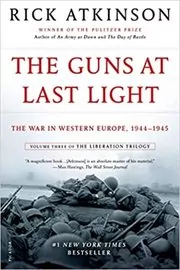
For readers who want to follow the invasion through to the end of the European war, Atkinson provides a much larger narrative. The strategic context gives D-Day perspective, though Normandy occupies only part of this substantial final trilogy volume.
What it's about
Completing the Liberation Trilogy, Atkinson follows the Allied campaign in Western Europe from D-Day through the war's final stages. Normandy, Paris, Market Garden, and the Battle of the Bulge frame an account of command decisions, combat, and human costs.

The Longest Day
For newcomers who want the drama of the landings before a detailed campaign study, Ryan offers a focused narrative built around participants. Its human scale makes the day understandable, though its early publication leaves later research outside its frame.
What it's about
Cornelius Ryan recreates the hours surrounding the Allied invasion of Normandy on D-Day. Accounts of preparation, uncertainty, combat, and civilian experience bring the operation into focus through the people caught in its unfolding events.

For readers already familiar with the campaign who want to examine Allied command disputes, D'Este concentrates on planning and Montgomery's decisions. The analytical detail supports closer study, though the older interpretation benefits from comparison with subsequent research.
What it's about
Carlo D'Este examines Allied command decisions during the Normandy campaign, concentrating on Bernard Montgomery's plans and their consequences. His military history revisits disputes over strategy and leadership, assessing how the campaign unfolded after the D Day landings.
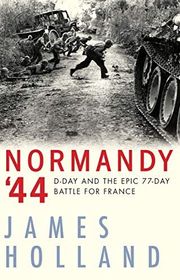
Normandy '44: D-Day and the Epic 77-Day Battle for France
For readers wanting to connect combat with equipment, resources, and supply, Holland offers a broad account of the Normandy campaign. That emphasis complements histories centered on commanders, though the many perspectives and operational details make it a substantial commitment.
What it's about
James Holland follows the Normandy campaign from the Allied landings through the fighting across northern France. Accounts of soldiers and commanders combine with analysis of weapons, logistics, and resources to examine how the battle developed.
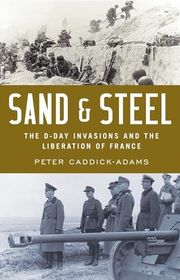
Sand and Steel: The D-Day Invasion and the Liberation of France
For readers seeking an extensive study of the invasion's preparation and execution, Caddick-Adams provides more depth than a short introduction. The detailed treatment rewards sustained interest, though its scale can overwhelm someone looking for a quick account of the beaches.
What it's about
Peter Caddick-Adams examines the planning, training, decisions, and fighting behind the Normandy invasion. His account draws together military preparations and individual experiences to reconstruct the operation and the forces that shaped the events of D-Day.
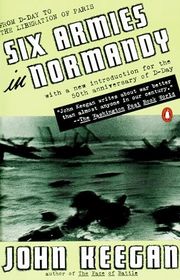
Six Armies in Normandy: From D-Day to the Liberation of Paris
For readers who know the broad campaign and want to compare military cultures and performance, Keegan offers a more analytical route through Normandy. Its selective studies sharpen contrasts, though they do not form a continuous narrative of every operation.
What it's about
John Keegan examines the Normandy campaign through the armies that fought it. Selected operations and national perspectives reveal differences in training, organization, command, and battlefield experience as Allied forces sought to expand their foothold in France.
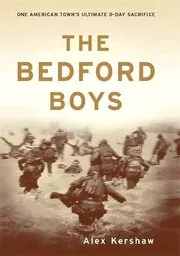
For readers who want to understand what military casualties meant at home, Kershaw connects the invasion with one Virginia community. The personal focus gives the losses emotional weight, though it provides a narrower military picture than a campaign history.
What it's about
Kershaw tells the story of Bedford, Virginia, where nineteen young men died in the first bloody minutes of D-Day and three more were later lost in Normandy. The book keeps one small town, and the families behind it, at the center.
Sources
- 1
Books on D-Day
fivebooks.com
- 2
WWII Reads: D-Day
nationalww2museum.org
- 3
D-Day +75 Exhibit Bibliography
pritzkermilitary.org
- 4
Best D-day books
goodreads.com
- 5
The best D-day books: our top 10
d-dayinfo.org
- 6
Travelling to Normandy soon and looking for a good book about the place maybe on D Day
reddit.com
- 7
Top Ten: Best Books on the Normandy Invasion
wwiimemorialfriends.org
- 8
Recommended Reading
ddayhistorian.com
- 9
James Holland: The Five Best Books About D-Day
bookmarks.reviews








Edited by
Software engineer whose passion for tracking book recommendations from podcasts inspired the creation of MRB.
Lead investor at 3one4 Capital whose startup expertise and love for books helped shape MRB and its growth.
Comments
Did we miss something? Have feedback?
Help us improve this page by sharing your thoughts