
21 Best World War 2 Books
The best World War II books, ranked by how many expert sources recommend each one, with notes on who they suit, from broad histories to memoirs and novels.
Our take
Books about the Second World War can provide a broad chronology, examine one campaign, preserve personal testimony, or imagine individual lives caught in the conflict. Those forms answer different questions. A novel can offer emotional recognition, but it does not serve the same purpose as a historical study or a survivor’s account. Choosing by form and scale helps readers build a fuller picture without expecting one book to cover everything.
The Second World War offers a broad starting point. Stalingrad and The Longest Day narrow the focus to major European campaigns, while The Splendid and the Vile examines Britain’s early wartime crisis. Night records Holocaust experience, and With the Old Breed gives a Marine’s account of Pacific combat. Readers seeking fiction can turn to All the Light We Cannot See, Code Name Verity, or the bitter comedy of Catch-22. Start with an overview if you need the chronology, then choose a more focused perspective.
21 books · 19 sources · Last updated
As an Amazon Associate, we earn from qualifying purchases (at no extra cost to you).
How to choose from this list
Skip to the full rankingIf you need a broad history first: The Second World War
If you want major European campaigns: Stalingrad → The Longest Day
If you want leadership and political context: Hitler → The Splendid and the Vile
If you want Holocaust testimony: Night
If you want the Pacific war through individual lives: Unbroken → With the Old Breed
If you want wartime fiction in different styles: All the Light We Cannot See → Code Name Verity → Catch-22
The 21 books, ranked
Ranked by how many expert sources name each book. Ties go to the book more people recommend.
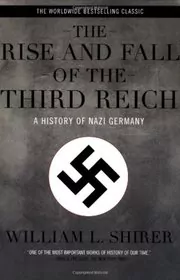
For readers ready for a long account of Nazi Germany's political and military trajectory. The combination of reporting experience and captured documents gives it historical importance, though later scholarship revises parts of its interpretation.
What it's about
Shirer's best-known history tracks the rise, rule, and destruction of Nazi Germany, from Hitler's climb to the regime's collapse in 1945. It combines captured documents with the perspective of a reporter who watched much of the story unfold.
Also recommended by
2 people Jordan Peterson recommended this book
Jordan Peterson
Recommended on Jordan Peterson's website.
Jordan Peterson's recommendation of this book  Lex Fridman recommended this book
Lex Fridman
"I've read it twice." - Lex Fridman
Lex Fridman's recommendation of this book

For readers ready to study one campaign in depth. Beevor brings military decisions and individual suffering into the same account, though the many units, movements, and severe violence require attention and some familiarity with the wider Eastern Front.
What it's about
Antony Beevor reconstructs the battle of Stalingrad using German and Soviet sources, moving between military strategy and individual experience. His account follows the brutal fighting, civilian suffering, encirclement, and collapse of the German forces during the 1942-1943 campaign.
Also recommended by
1 person Richard Branson recommended this book
Richard Branson
Richard Branson recommended this book on his "70 must-read books" blog post.
Richard Branson's recommendation of this book
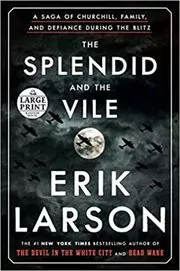
The Splendid and the Vile
A Saga of Churchill, Family, and Defiance During the Blitz
For readers who want Britain’s early wartime crisis seen through leadership and private life. Larson’s diaries and domestic details make the period accessible, though the narrow year and Churchill-centered perspective do not offer a general history of the war.
What it's about
Larson follows Winston Churchill's first year as prime minister as Britain endures the Blitz. Using diaries, letters, and private papers, he shows the war at cabinet level and inside Churchill's family circle.
Also recommended by
3 people Keith Rabois recommended this book
Keith Rabois
"Books on Churchill in 1940-1941 take on wholly different meanings during a crisis vs studying during times of peace & prosperity." - Keith Rabois
Keith Rabois's recommendation of this book  Bill Gates recommended this book
Bill Gates
"A great addition to the literature focused on that [World War II] tragic period." - Bill Gates
Bill Gates's recommendation of this book  Arnold Schwarzenegger recommended this book
Arnold Schwarzenegger
Arnold Schwarzenegger recommended this book in his newsletter.
Arnold Schwarzenegger's recommendation of this book

For readers who want a combatant’s direct account of fighting in the Pacific. Sledge gives battlefield routine, fear, and exhaustion more attention than strategic surveys, though the graphic violence and wartime hatred make it an especially difficult read.
What it's about
Marine Eugene Sledge recounts fighting at Peleliu and Okinawa during World War II. Drawing on notes kept during his service, he describes combat’s brutality, fear, exhaustion, and the bonds formed among men struggling to survive.
Also recommended by
3 people Jocko Willink recommended this book
Jocko Willink
Jocko Willink covered this book in "Jocko Podcast" Ep. 10
Jocko Willink's recommendation of this book  Paul Graham recommended this book
Paul Graham
"Read this book." - Paul Graham
Paul Graham's recommendation of this book  Howard Stern recommended this book
Howard Stern
"I didn’t understand the full impact of what these guys did at Okinawa fighting the Japanese. That had a big impact on me." - Howard Stern
Howard Stern's recommendation of this book
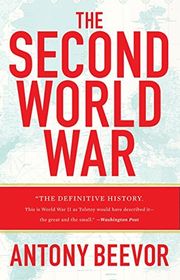
The Second World War
For readers who need a broad narrative before choosing a battle or theater. Beevor connects military events across the global conflict, though the scale makes it a long read and necessarily compresses individual campaigns and experiences.
What it's about
Antony Beevor traces the Second World War across its major theaters, connecting military operations with political decisions and human experience. The single-volume narrative places campaigns in a wider global sequence, helping readers understand how events in different regions interacted.
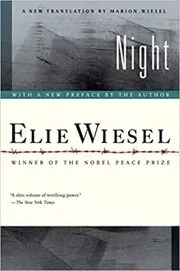
For readers who want a brief, firsthand account of persecution and survival during the Holocaust. Wiesel’s restraint gives the testimony great immediacy, though its concentrated suffering is emotionally demanding and needs wider history alongside it.
What it's about
Wiesel's memoir follows his teenage self from Sighet to Auschwitz and Buchenwald alongside his father. In stark, unsentimental prose, it records the destruction of family, faith, and ordinary human life.
Also recommended by
1 person Oprah Winfrey recommended this book
Oprah Winfrey
"Required reading for all of humanity." - Oprah Winfrey
Oprah Winfrey's recommendation of this book
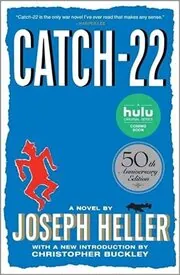
For readers who want a novel that attacks wartime bureaucracy through absurdity and dark comedy. Heller makes institutional logic feel nightmarish, though the nonlinear structure, repetition, and tonal shifts demand more patience than a conventional war story.
What it's about
On a small island off Italy during World War II, bombardier Yossarian tries to stay alive while military bureaucracy keeps inventing new reasons he has to keep flying. Funny, furious, and unsettling, it's a war novel about absurd rules and ordinary fear.
Also recommended by
4 people Shah Rukh Khan recommended this book
Shah Rukh Khan
"I am re reading now." - Shah Rukh Khan
Shah Rukh Khan's recommendation of this book  Larry Ellison recommended this book
Larry Ellison
"I think [Bill Gates] must be some kind of reincarnation of Milo Minderbinder from [this book]." - Larry Ellison
Larry Ellison's recommendation of this book  Mark Bittman recommended this book
Mark Bittman
"I used to buy [this book] for a lot of people because I just thought if you hadn’t read it, you had to but maybe that era is over." - Mark Bittman
Mark Bittman's recommendation of this book  Fred Wilson recommended this book
Fred Wilson
"A good one!" - Fred Wilson
Fred Wilson's recommendation of this book
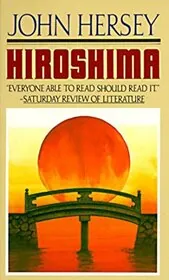
Hiroshima
For readers who want the atomic bombing understood through individual survivors. Its restrained reporting gives civilian experience unusual immediacy, though the concentrated human focus provides less military and diplomatic context than a broader history.
What it's about
Hersey tells the story of the atomic bombing through six survivors, starting on the morning the bomb falls and following the aftermath. The book's calm, close focus makes the scale of the disaster feel personal and unforgettable.
Also recommended by
1 person Alex Blumberg recommended this book
Alex Blumberg
"I had always been interested in this kind of [...] long form narrative nonfiction." - Alex Blumberg
Alex Blumberg's recommendation of this book
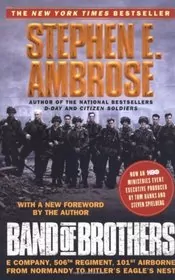
Band of Brothers
E Company, 506th Regiment, 101st Airborne from Normandy to Hitler's Eagle's Nest
For readers who want a unit history built around recognizable individuals. Following one airborne company makes training, combat, and relationships easier to connect, though its concentrated American perspective cannot represent the whole European war.
What it's about
Here Ambrose tells the story of Easy Company of the 506th Parachute Infantry Regiment, from training in Georgia through D-Day, the Ardennes, and into Germany, following a single group of soldiers as they endure combat, loss, and unexpected moments of camaraderie.

For readers who want a young-adult wartime novel centered on friendship and the uncertainty of an account told under pressure. Wein combines emotional stakes with narrative complexity, though captivity and torture make it far from a gentle introduction.
What it's about
Captured in occupied France, a British secret agent is forced to write a confession for the Gestapo. As her story unfolds, so does the bond between her and pilot Maddie, and the full cost of wartime loyalty.

For readers who want the Pacific war approached through one man’s life and survival. Hillenbrand gives the biography strong narrative momentum, though its exceptional individual experience should not stand in for the full range of wartime experiences.
What it's about
Laura Hillenbrand follows Olympic runner Louis Zamperini from a rough California boyhood to a plane crash, 47 days adrift in the Pacific, and brutal POW camps. It is a tense, deeply human survival story about endurance, trauma, and forgiveness.
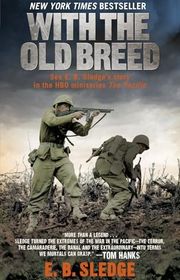
With the Old Breed: At Peleliu and Okinawa
For readers seeking an infantryman’s account of the Pacific fighting rather than a strategic overview. Sledge’s attention to daily conditions and psychological strain brings combat close, though the graphic detail and limited viewpoint make demanding reading.
What it's about
E.B. Sledge recalls his service as a US Marine in the battles of Peleliu and Okinawa. His memoir describes combat, exhaustion, fear, and relationships among the men, examining the lasting human effects of fighting in the Pacific.
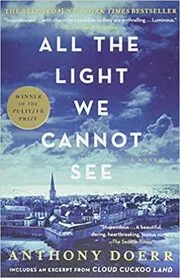
For readers who prefer an emotionally focused novel about lives shaped by occupation and military duty. Doerr gives sensory detail and interwoven perspectives unusual weight, though the short, shifting chapters and literary coincidences may feel deliberately constructed.
What it's about
Set in occupied France and Nazi Germany, this novel follows blind French girl Marie-Laure and German orphan Werner as war draws them toward the walled city of Saint-Malo, where radios, resistance work, and a legendary diamond intertwine their fates.
Also recommended by
2 people Barack Obama recommended this book
Barack Obama
Barack Obama's "2016 Summer Reading List."
Barack Obama's recommendation of this book  Mike Maples, Jr. recommended this book
Mike Maples, Jr.
"One of the best books of the last 10 years." - Mike Maples, Jr.
Mike Maples, Jr.'s recommendation of this book

For readers seeking a young person’s record of life under Nazi persecution. Frank’s attention to family, identity, and ordinary ambitions gives the diary unusual immediacy, though its unfinished perspective cannot explain the wider history or later events.
What it's about
Anne Frank records life in hiding with her family during the Nazi occupation of the Netherlands. Her diary combines fears of discovery and the strains of confinement with reflections on adolescence, relationships, and hopes for the future.
Also recommended by
1 person Alice Little recommended this book
Alice Little
"I remember being a fourth grader [and] going so far as to have my parents take it to the school board and petition for me to be allowed to read this book." - Alice Little
Alice Little's recommendation of this book

For readers who want a substantial account of Hitler’s rise and exercise of power in one volume. Kershaw connects the individual with political conditions, though the length and focus on the regime’s leadership offer less direct coverage of wartime life elsewhere.
What it's about
Ian Kershaw condenses his research into a one-volume biography spanning Hitler's early years and rise to power through the regime's collapse. He examines how Hitler acquired and exercised authority, placing the dictator within Germany's political and social history.
Also recommended by
1 person Brandon Stanton recommended this book
Brandon Stanton
Brandon Stanton mentioned this book on "The Tim Ferriss Show" podcast.
Brandon Stanton's recommendation of this book

The Book Thief
For readers who want historical fiction focused on childhood, language, and civilian choices in Nazi Germany. Zusak’s unusual narrator gives the story a distinctive perspective, though the stylized voice and frequent foreshadowing may interrupt immersion.
What it's about
In Nazi Germany, young Liesel Meminger steals books, learns the force of words, and finds fragile belonging with her foster family. Narrated by Death, the novel follows love, fear, and small acts of kindness in wartime.
Also recommended by
1 person Patrick Bet-David recommended this book
Patrick Bet-David
Patrick Bet-David recommended this book on his website.
Patrick Bet-David's recommendation of this book
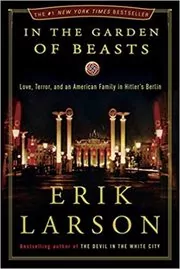
For readers interested in how the early Nazi regime appeared to outsiders in Berlin. The diplomatic and family perspective makes gradual recognition of danger compelling, though the focus is the prewar period rather than the fighting itself.
What it's about
In 1933 Berlin, Ambassador William E. Dodd and his daughter Martha watch Nazi power harden from spectacle into terror. Larson tells the story through dinners, affairs, warnings, and the slow recognition of danger.

The Longest Day
For readers who want D-Day reconstructed through participants rather than a broad strategic survey. Ryan makes the confusion and immediacy of the operation accessible, though later scholarship has expanded the picture beyond this older narrative.
What it's about
Cornelius Ryan recreates the hours surrounding the Allied invasion of Normandy on D-Day. Accounts of preparation, uncertainty, combat, and civilian experience bring the operation into focus through the people caught in its unfolding events.

For readers who want Soviet women's wartime experiences brought into view. The many voices reveal everyday details often absent from campaign histories, though the edited oral-history form favors remembered experience over a continuous military chronology.
What it's about
Svetlana Alexievich gathers the memories of women who served during World War II. Their accounts recover the everyday experiences of combat and its aftermath, revealing voices and details often excluded from official histories centered on men's experiences.

For readers drawn to a battle history shaped by interviews and individual recollections. The survivor-centered storytelling gives Stalingrad a different texture from later archival accounts, though the older research base should be read alongside more recent scholarship.
What it's about
William Craig reconstructs the battle for Stalingrad through documentary research and interviews with military and civilian survivors. German and Soviet experiences reveal the siege's human toll alongside the strategic struggle for control of the city.
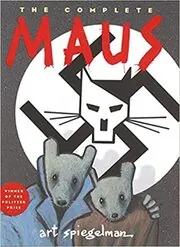
The Complete Maus
For readers who want a graphic memoir connecting survival with the later telling of it. The father-son frame exposes difficulties of memory and inheritance, though its layered timelines require attention beyond following the historical events alone.
What it's about
This collected graphic memoir recounts Vladek Spiegelman's survival during the Holocaust alongside his son's efforts to record it. Drawing Jews as mice and Nazis as cats, it examines family tensions and the lasting effects of trauma.
Sources
- 1
World War II Books
wwiifoundation.org
- 2
30 Best World War II Books That Examine Every Angle of the Conflict
explorethearchive.com
- 3
Best World War II History (nonfiction) (700 books)
goodreads.com
- 4
Suggest a WW2 must read
reddit.com
- 5
Anthony Read's top 10 books about Hitler and the Third Reich | Books | The Guardian
theguardian.com
- 6
Bookshoptitles.htm
historyplace.com
- 7
Revisiting The Rise and Fall of the Third Reich | History| Smithsonian Magazine
smithsonianmag.com
- 8
The greatest books ever written about the Second World War
penguin.co.uk
- 9
World War II Books
goodreads.com
- 10
The Best Books on World War II - Five Books Expert Recommendations
fivebooks.com
- 11
Best WWII Book
reddit.com
- 12
50 Best Books About WW2 For World Travelers
theuncorkedlibrarian.com
- 13
20 top nonfiction books about World War II
malwarwickonbooks.com
- 14
100 Best World War II Books of All Time
shortform.com
- 15
World War II History Books | Penguin Random House
penguinrandomhouse.com
- 16
Best World War 2 book/s ?
reddit.com
- 17
What is the best WW2 book you have read? : r/HistoryBooks
reddit.com
- 18
The Top 10 World War 2 Books of All Time | Booklist Queen
booklistqueen.com
- 19
The best World War II books?? : r/ww2
reddit.com





Edited by
Software engineer whose passion for tracking book recommendations from podcasts inspired the creation of MRB.
Lead investor at 3one4 Capital whose startup expertise and love for books helped shape MRB and its growth.
Comments
Spotted a missing book, a wrong order or a mistake? Tell us and we'll fix this page.
We're a reading guide, not the author or publisher, so we can't send books or pass on messages.