
22 Best Middle East History Books
The best Middle East history books, ranked by how many expert sources recommend each one, with notes for beginners and readers exploring a country or period.
Our take
Middle Eastern history stretches across changing empires, religious traditions, languages, and societies. A modern regional survey provides a different starting point from a history of Arab peoples, an account of Iran, or a study of the Ottoman Empire. These books also differ in approach: textbooks establish frameworks, narrative histories follow events and people, and interpretive works question how the region has been described.
A History of the Modern Middle East and The Modern Middle East offer broad foundations. The Arabs follows an Arab historical narrative, while The Fall of the Ottomans and A Peace to End All Peace concentrate on war and the imperial settlement. Women and Gender in Islam adds a social and intellectual perspective; Orientalism asks readers to examine the assumptions they bring to historical writing.
Begin with a survey that matches your period of interest, then choose a focused account to explore its questions in greater depth.
22 books · 9 sources · Last updated
As an Amazon Associate, we earn from qualifying purchases (at no extra cost to you).
How to choose from this list
Skip to the full rankingIf you want a modern regional foundation: A History of the Modern Middle East → The Modern Middle East
If you want a longer Arab historical perspective: A History of the Arab Peoples → The Arabs
If you want to understand the Ottoman collapse: The Fall of the Ottomans → A Peace to End All Peace → A Line in the Sand
If you want religious and cultural history: Islam: A Short History → Women and Gender in Islam
If you want to examine historical representation: Orientalism
If you want Iran and its regional connections: The Mantle of the Prophet → Black Wave
The 22 books, ranked
Ranked by how many expert sources name each book. Ties go to the book more people recommend.

A Peace to End All Peace
The Fall of the Ottoman Empire and the Creation of the Modern Middle East
Choose this for the diplomacy and imperial decisions surrounding the Ottoman collapse and the postwar settlement. Its detailed reconstruction provides more depth than a survey, though the emphasis on external decision makers leaves other perspectives less developed.
What it's about
David Fromkin examines how the Ottoman Empire's collapse and Allied decisions during and after World War I reshaped the Middle East. He follows competing ambitions and political miscalculations behind the creation of new states.
Also recommended by
1 person Larry Ellison recommended this book
Larry Ellison
"During a lively discussion over dinner one night, [Tony Blair] listened in wonder and remarked, 'Larry, you read too much history.' [Larry Ellison] had just finished quoting a section from [this book].” - Julian Guthrie
Larry Ellison's recommendation of this book
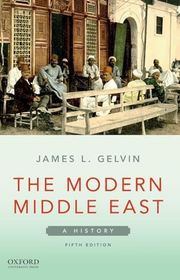
The Modern Middle East
Choose this for a thematic introduction linking the region to wider economic, political, and social change. Its organizing questions distinguish it from a simple chronology, though beginners still need patience with the many places and movements introduced.
What it's about
Gelvin surveys roughly five centuries of Middle Eastern history through the forces associated with global modernity. Imperial legacies, economic change, state formation, culture, authoritarianism, and resistance connect regional developments with broader international systems and transformations.

A History of the Arab Peoples
For readers who want a long view of Arab societies, institutions, and culture rather than one modern conflict. Its synthesis provides a useful foundation, though the broad timespan compresses local differences and the original narrative has an older endpoint.
What it's about
Albert Hourani traces Arab history from the emergence of Islam into the modern era. His broad account examines the development of societies, political structures, religious life, and culture, connecting major historical changes with the experiences of Arab peoples.

A History of the Modern Middle East
Choose this for a structured introduction to the region's modern political development with social and economic context. Its textbook organization helps establish a framework, though its breadth compresses country histories and makes edition choice important.
What it's about
William Cleveland and Martin Bunton survey the modern Middle East, introducing earlier Islamic history before concentrating on the past two centuries. Political developments provide the framework for discussions of reform, imperialism, nationalism, and social, cultural, and economic change.
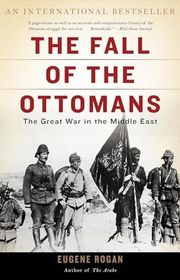
The Fall of the Ottomans
Choose this for the Middle Eastern theaters of the First World War and the empire's struggle to survive. Its military narrative complements accounts of the postwar settlement, though it is a focused conflict history rather than an Ottoman survey.
What it's about
Rogan recounts the Ottoman Empire's experience of the First World War across the Middle East. Military campaigns, leadership decisions, and the war's immediate aftermath explain how a regional struggle for survival became part of a wider catastrophe.

Orientalism
For readers who want to question how knowledge about the region has been shaped by power. Its cultural critique changes the questions brought to other histories, though dense argument and selective examples make it demanding and contested.
What it's about
Edward Said examines Western representations of the Middle and Near East and their connections with imperial power. His study argues that cultural and scholarly traditions constructed an imagined Orient, limiting the ability of its peoples to represent themselves.
Also recommended by
2 people Christopher Hitchens recommended this book
Christopher Hitchens
"A book that made one think." - Christopher Hitchens
Christopher Hitchens's recommendation of this book  Brad Delong recommended this book
Brad Delong
Brad Delong recommended this book in his website.
Brad Delong's recommendation of this book

For readers who want an engaging modern Arab history that makes substantial use of Arab accounts. Its narrative flow offers an alternative to a course textbook, though its Arab focus does not cover the entire Middle East.
What it's about
Eugene Rogan recounts five centuries of Arab history, beginning with Ottoman rule and following European imperial intervention and later struggles for independence. The narrative considers how foreign powers and regional movements have shaped Arab political experience.
Also recommended by
1 person Patrick Collison recommended this book
Patrick Collison
Patrick Collison labeled this book "substantially above average."
Patrick Collison's recommendation of this book
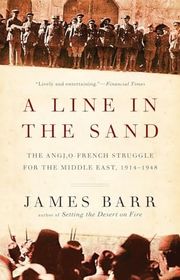
A Line in the Sand
Choose this for a closely focused account of Anglo-French rivalry and mandate-era power politics. Its archival narrative adds detail to general histories of partition, though the rivalry-centered frame gives local social experience less room.
What it's about
Barr follows Britain's and France's struggle for influence in the Middle East from wartime partition plans through the end of the mandates. Diplomacy, intelligence, and competing imperial ambitions shape the account of political conflict and changing control.
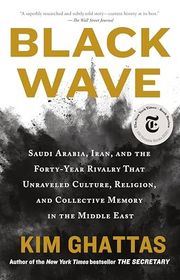
Black Wave
For readers who want to connect geopolitical rivalry with changes in religion and cultural life since 1979. Its reported stories give regional competition a human scale, though Iran and Saudi Arabia provide a deliberately selective explanatory lens.
What it's about
Ghattas traces the rivalry between Iran and Saudi Arabia and its effects on political, religious, and cultural life across several countries. Beginning with upheavals around 1979, the narrative combines reporting, historical research, and individual experiences.

The Crusades Through Arab Eyes
Choose this for an accessible Crusades narrative built from Arab chroniclers rather than a familiar European viewpoint. Its storytelling offers a useful change of perspective, though the selection and synthesis should be distinguished from reading the chronicles themselves.
What it's about
Amin Maalouf retells the Crusades using accounts by Arab chroniclers and participants. Their perspectives illuminate the invasions, rivalries, and responses of the medieval Muslim world, and the lasting place these events occupy in regional historical memory.
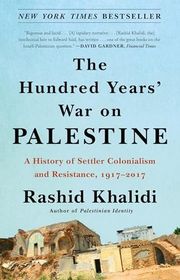
The Hundred Years' War on Palestine
Choose this for a Palestinian-centered interpretation linking major political turning points with family history. Its explicit settler-colonial framework makes the argument clear, though it is a focused, argued history rather than a comprehensive regional survey.
What it's about
Khalidi examines a century of Palestinian history through major episodes of conflict, diplomacy, and resistance. Family documents and personal connections accompany an argument about settler colonialism and the involvement of outside powers in Palestinian political experience.
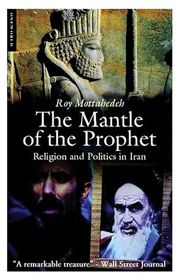
The Mantle of the Prophet
Choose this for a textured account of Iranian religious education and the intellectual world around the revolution. Its biographical thread makes ideas accessible, though it is less direct than a conventional chronological political history.
What it's about
Mottahedeh follows the education and experiences of an Iranian religious scholar while exploring Persian and Shiite intellectual traditions. Biography, cultural history, and politics intersect as the account approaches the upheaval of Iran's 1979 revolution.

Lawrence in Arabia
War, Deceit, Imperial Folly and the Making of the Modern Middle East
For readers who prefer an interwoven narrative of people, intelligence, and imperial ambition during the First World War. Its character focus makes complex events approachable, though individual adventures can overshadow broader social and institutional forces.
What it's about
Scott Anderson follows T. E. Lawrence and other foreign operatives in the Middle East during World War I. Their intertwined activities reveal how espionage, imperial ambitions, and wartime decisions helped shape the region's modern political divisions.
Also recommended by
1 person Nancy Pearl recommended this book
Nancy Pearl
"Wondeful." - Nancy Pearl
Nancy Pearl's recommendation of this book

Choose this for a substantial account of the Algerian independence war and its consequences for France. Its detailed political and military narrative gives the conflict depth, though the older perspective and graphic violence make a demanding reading experience.
What it's about
Alistair Horne examines the Algerian War of 1954 to 1962 and its effects on France and Algeria. His account explores nationalism, colonial rule, political crises, revolutionary violence, and repression within a complicated struggle for independence.

For readers who want a broad narrative that places Islamic societies near the center of world history. Its accessible storytelling challenges familiar geographical emphases, though the sweep necessarily simplifies differences within a large and varied historical world.
What it's about
Tamim Ansary recounts world history from the perspective of Islamic societies, beginning with Muhammad and continuing through empires, colonial encounters, and modern conflicts. He explores how this historical narrative differs from familiar accounts centered on Europe.

For readers who need a brief historical orientation to Islam before tackling specialized regional histories. Its sympathetic narrative makes a large subject approachable, though the compression leaves limited room for differences among places, communities, and interpretations.
What it's about
Karen Armstrong offers a concise history of Islam, tracing its beginnings and development into a diverse religious tradition. She examines beliefs, practices, and political changes while challenging simplified portrayals that reduce the faith to modern fundamentalism.

For readers willing to follow a long, strongly voiced account of war and foreign intervention. Its firsthand reporting gives the material immediacy, though the length, graphic suffering, and openly argumentative perspective make it a demanding introduction.
What it's about
Robert Fisk combines decades of reporting with a history of conflict in the Middle East. Accounts of revolutions, wars, and foreign intervention connect firsthand experiences with his examination of Western policy and the consequences for the region's people.
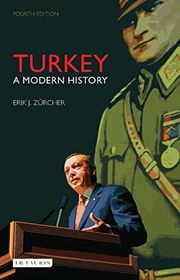
Turkey: A Modern History
For readers who want to follow the transition from the late Ottoman world into modern Turkey in detail. Its interpretation stresses institutional and political continuities, though the dense chronology and edition's endpoint require attention.
What it's about
Zürcher traces modern Turkey through late Ottoman transformations, the formation of the republic, and later political change. State modernization, economic integration, mass politics, military intervention, and relations with Europe and neighboring regions organize the account.

For readers who want a focused entry into Abbasid political and court life. Its narrative scale makes the early caliphate more tangible than a regional survey, though attention to dynastic personalities limits the view of everyday society.
What it's about
Hugh Kennedy explores the Abbasid dynasty during the eighth and ninth centuries, when Baghdad stood at the center of a powerful empire. Court politics, cultural life, and the influence of caliphs, viziers, and palace women animate his account.
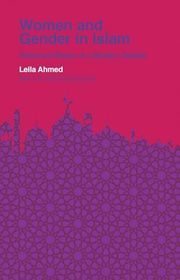
Women and Gender in Islam
Choose this to bring women's lives and arguments about gender into a history often organized around rulers and wars. Its historical framework broadens the discussion, though its regional emphasis and interpretive arguments do not represent every Muslim society.
What it's about
Ahmed investigates the historical roots of debates about women in Islamic societies. Her account moves from early Arabia and the classical period to modern Egypt, examining how religious discourse, social arrangements, and political change have shaped gender relations.

For readers who want an accessible account of Islam's development and debates over religious authority. Its narrative approach offers context missing from purely political histories, though the author's reform-oriented interpretation is not a consensus summary of every tradition.
What it's about
Reza Aslan traces Islam from Muhammad's early community through centuries of religious and political change. He examines diverse traditions within the faith and argues for understanding contemporary struggles over authority against the background of this history.
Also recommended by
1 person Jon Stewart recommended this book
Jon Stewart
"A fascinating book." - Jon Stewart
Jon Stewart's recommendation of this book

From Beirut to Jerusalem
Choose this for a journalist's personal account of reporting in Lebanon and Israel. Its scenes and observations make it more immediate than a textbook, though its period-specific perspective and interpretive generalizations need to be read critically.
What it's about
Drawing on his years reporting from Lebanon and Israel, Thomas Friedman explores the conflicts and political divisions of the Middle East. Personal experiences, historical context, and analysis illuminate the region's competing identities and tensions.
Sources
- 1
Additional Reading
pressbooks.palomar.edu
- 2
Middle East History Books
goodreads.com
- 3
I want to dive deep into the history of the middle east. What is the best book for that?
reddit.com
- 4
Best books for understanding last 100 years in Middle East
reddit.com
- 5
The 100 Best Middle Eastern History & Politics Books
listmuse.com
- 6
Suggested Reading
global.ucla.edu
- 7
Books
ncmideast.org
- 8
Books by Topic - History of the Modern Middle East
libguides.utsa.edu
- 9
The best books on The Middle East
fivebooks.com






Edited by
Software engineer whose passion for tracking book recommendations from podcasts inspired the creation of MRB.
Lead investor at 3one4 Capital whose startup expertise and love for books helped shape MRB and its growth.
Comments
Spotted a missing book, a wrong order or a mistake? Tell us and we'll fix this page.
We're a reading guide, not the author or publisher, so we can't send books or pass on messages.