
10 Best Sustainability Books
The best sustainability books, ranked by how many expert sources recommend each one, with notes on who each suits, from daily habits to systems thinking.
Our take
Sustainability reaches from household routines to the design of products, food systems, businesses, and economies. These books work at different scales. A practical guide can help you reconsider everyday waste, while a book about materials or economic goals asks what institutions and infrastructure make those choices possible. Writing about justice adds questions about who bears environmental costs and who gets to shape a response.
A Zero Waste Life offers a structured introduction to daily habits. Cradle to Cradle and The Upcycle examine design, while Doughnut Economics explores a wider economic framework. Drawdown surveys climate responses across sectors, with estimates that should be read in their publication context. All We Can Save and Climate Justice bring collective action and unequal impacts forward. Braiding Sweetgrass offers a more reflective approach to ecological relationships, and Farming While Black connects land, growing, and liberation. Start with the scale you can relate to, then choose a book that widens that perspective.
10 books · 8 sources · Last updated
As an Amazon Associate, we earn from qualifying purchases (at no extra cost to you).
How to choose from this list
Skip to the full rankingIf you want everyday household changes: A Zero Waste Life
If you want to rethink products and materials: Cradle to Cradle → The Upcycle
If you want an economic framework: Doughnut Economics
If you want climate responses and justice perspectives: Drawdown → All We Can Save → Climate Justice
If you want ecological relationships and land-based practice: Braiding Sweetgrass → Farming While Black
If you work on organizational change: Strategy for Sustainability
The 10 books, ranked
Ranked by how many expert sources name each book. Ties go to the book more people recommend.

For readers interested in products, materials, and circular design. Its foundational argument makes a useful starting point before The Upcycle, though the ambitious vision is a design philosophy rather than proof that every proposed system works at scale.
What it's about
William McDonough and Michael Braungart propose redesigning manufacturing so products provide materials for new uses after their working lives. Drawing on design projects, they challenge waste-producing industrial models and explore an approach in which production can support ecological systems.
Also recommended by
1 person Joe Gebbia recommended this book
Joe Gebbia
"Was hugely influential." - Joe Gebbia
Joe Gebbia's recommendation of this book
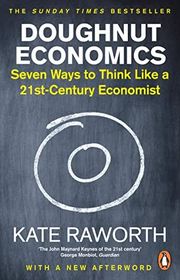
Doughnut Economics: Seven Ways to Think Like a 21st-Century Economist
For readers who want to examine economic goals alongside social needs and ecological limits. Raworth supplies a systems-level framework beyond the lifestyle guides here, though moving from the diagram to specific policies involves contested choices and local evidence.
What it's about
Kate Raworth proposes rethinking economics around meeting human needs within ecological limits. Through seven changes in perspective, she examines growth, markets, inequality, and economic design, presenting the doughnut as a framework for considering social foundations and environmental boundaries.

For readers who want a survey of climate responses across sectors. Its comparable solution profiles provide a different starting point from personal habit guides, though the original estimates and rankings depend on assumptions that require current checking.
What it's about
Edited by Paul Hawken, this collection presents researched practices and technologies intended to reduce greenhouse-gas concentrations. It brings together climate solutions across multiple sectors, examining their potential contribution to reaching a point where atmospheric greenhouse-gas levels begin declining.
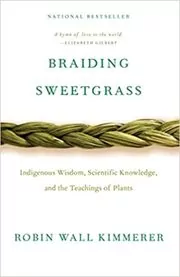
Braiding Sweetgrass
Indigenous Wisdom, Scientific Knowledge and the Teachings of Plants
For readers who want ecological thinking grounded in relationships rather than a checklist of habits. Kimmerer’s combination of personal experience, botany, and Potawatomi teachings broadens the practical guides here, though the reflective essays offer few sequential instructions.
What it's about
Kimmerer braids personal stories, botany, and Potawatomi teachings into essays about what plants can teach us about reciprocity, gratitude, and care. It asks readers to see the living world as kin, not backdrop.

For readers who want design to create benefits rather than only reduce damage. William McDonough and Michael Braungart develop the ideas of Cradle to Cradle through examples, though the optimistic proposals need scrutiny against implementation constraints.
What it's about
William McDonough and Michael Braungart extend their cradle-to-cradle design approach through examples developed over a decade. They argue for products, buildings, and systems that generate positive environmental benefits, exploring how design can move beyond reducing harm toward creating abundance.

For readers who want manageable household changes organized into a daily routine. Its concrete starting points are more immediately actionable than a systems-level manifesto, though access, cost, and local infrastructure affect which changes are realistic.
What it's about
Anita Vandyke organizes a month of changes intended to reduce everyday waste and plastic dependence. Her illustrated guide addresses shopping, food, travel, beauty, and household consumption, offering daily rules and practical alternatives for making more deliberate choices.

For readers who want varied perspectives on climate action, leadership, and justice. The anthology edited by Ayana Elizabeth Johnson and Katharine K. Wilkinson offers breadth beyond a single author’s argument, though its different voices provide no uniform action plan.
What it's about
Edited by Ayana Elizabeth Johnson and Katharine K. Wilkinson, this anthology brings together essays, poetry, and art by women working on climate change. Scientists, activists, farmers, and other contributors connect environmental solutions with leadership, justice, and collective action.

For readers interested in climate change as a question of rights and unequal exposure. Robinson’s grassroots stories make the human consequences more immediate than a technology survey, though they offer selected experiences rather than comprehensive policy evaluation.
What it's about
Mary Robinson connects climate change with human rights through stories of grassroots organizers, particularly women. Encounters with people in places including Mississippi and Uganda show how local responses to environmental disruption can inform a broader movement for climate justice.

For aspiring growers interested in farming skills alongside land access and racial justice. Penniman combines practical detail with historical context more directly than the broad sustainability surveys, though the agricultural focus makes it less relevant to many urban routines.
What it's about
Leah Penniman combines practical farming guidance with the history of African-heritage agriculture and racial injustice in the food system. Drawing on Soul Fire Farm's work, she addresses soil health, growing skills, land preservation, and community organizing for aspiring growers.

For readers trying to connect sustainability with an organization’s core decisions. Werbach’s business perspective addresses employees and institutional change beyond household choices, though the older corporate examples need reassessment rather than direct imitation.
What it's about
Adam Werbach argues that sustainability should shape business strategy rather than remain a peripheral initiative. Corporate examples illustrate his framework for organizational change, emphasizing employee participation, transparency, and networks as ways to connect commercial decisions with environmental and social concerns.
Sources
- 1
32 Best Books About Sustainability
goodgoodgood.co
- 2
27 Best Sustainability Books: From Silent Spring to Fire Weather
books.org
- 3
Sustainability Books
goodreads.com
- 4
Books about environmentalism but not climate change as a focus
reddit.com
- 5
Could you suggest books about sustainable development, environmental economics, renewables?
reddit.com
- 6
12 Best Sustainability Books To Inspire Change
thewellco.co
- 7
The Nine Best Climate and Sustainability Books to Read This Earth Day
vogue.com
- 8
13 Sustainability Books That Will Inspire You To Make Change This Earth Month
theurbanlist.com







Edited by
Software engineer whose passion for tracking book recommendations from podcasts inspired the creation of MRB.
Lead investor at 3one4 Capital whose startup expertise and love for books helped shape MRB and its growth.
Comments
Spotted a missing book, a wrong order or a mistake? Tell us and we'll fix this page.
We're a reading guide, not the author or publisher, so we can't send books or pass on messages.