
25 Best Chemical Engineering Books
The best chemical engineering books, ranked by how many expert sources recommend each one, with notes for students, new graduates, and working engineers.
Our take
Chemical engineering connects physical principles with the design and operation of processes that transform materials. Studying it involves balances, thermodynamics, transport, reactions, separations, and control. Working with it also calls for equipment data, practical judgment, and an understanding of how design choices behave in a real plant. The books here serve those different stages and purposes.
Basic Principles and Calculations in Chemical Engineering is a starting point for balances and problem formulation. Unit Operations of Chemical Engineering surveys processing operations, while Transport Phenomena develops a more unified mathematical treatment. Reaction and control texts address individual disciplines. For design projects, Chemical Engineering Design brings several subjects together; Perry's Chemical Engineers' Handbook is more useful as a reference than as a first course. Operational guides and case histories provide another perspective on equipment behavior and failures.
Begin with the subject your course or project requires, then add specialist depth. Use handbooks for consultation and preliminary checks, with current data and project requirements alongside older references.
25 books · 7 sources · Last updated
As an Amazon Associate, we earn from qualifying purchases (at no extra cost to you).
How to choose from this list
Skip to the full rankingIf you're beginning engineering calculations: Basic Principles and Calculations in Chemical Engineering → Unit Operations of Chemical Engineering
If you want deeper theoretical foundations: Introduction to Chemical Engineering Thermodynamics → Transport Phenomena
If you want to study reactors: Elements of Chemical Reaction Engineering → Chemical Reaction Engineering
If you have a process-design project: Chemical Engineering Design → Perry's Chemical Engineers' Handbook
If you work with distillation: Distillation Design → Distillation Operation → Distillation Troubleshooting
If you want operational lessons: A Working Guide to Process Equipment → What Went Wrong?
The 25 books, ranked
Ranked by how many expert sources name each book. Ties go to the book more people recommend.

Perry's Chemical Engineers' Handbook
For students and working engineers who need a wide-ranging desk reference. Its data and short technical treatments make it useful across disciplines, though it is designed for consultation rather than learning a subject from first principles.
What it's about
Edited by Don Green and Marylee Southard, this chemical engineering reference combines property data, calculations, and technical guidance. Coverage ranges from thermodynamics and transport processes to reactors, separation equipment, process control, safety, and waste management for industrial engineering work.

Chemical Reaction Engineering
For students who want reactor design developed through physical reasoning and mathematical models. Levenspiel's focused treatment builds an enduring foundation, though readers still need kinetics and calculation skills and should distinguish the core concepts from older examples.
What it's about
Octave Levenspiel explains the principles behind designing chemical reactors for commercial processes. Reaction kinetics and reactor behavior connect mathematical models with engineering choices, addressing different reaction types and ways to evaluate how operating conditions influence conversion and reactor performance.

Unit Operations of Chemical Engineering
For students seeking a broad course companion on processing operations and equipment. The combination of theory and worked examples links principles with engineering calculations, though the substantial coverage and assumed mathematical background call for steady study.
What it's about
Warren McCabe, Julian Smith, and Peter Harriott explain the operations and equipment used in chemical engineering. Theory and illustrative examples connect physical principles with qualitative and quantitative analysis, giving students a basis for understanding how common industrial processing operations work.
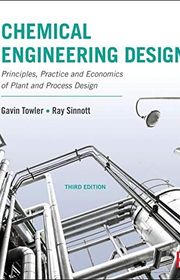
Chemical Engineering Design
For senior students and engineers bringing core subjects together in a design project. Towler and Sinnott connect equipment, economics, and process choices, though the US-focused edition's codes, costs, and assumptions need checking for your project and location.
What it's about
Gavin Towler and Ray Sinnott apply chemical-engineering principles to the design of processes and equipment. The third edition combines technical decisions with economics, operations, safety, and project examples, supporting capstone courses and professional design work.

Distillation Design
For engineers concentrating on distillation design rather than a general survey of separations. Kister connects calculations with equipment decisions and practical constraints, though the specialist depth assumes prior understanding of equilibrium, mass transfer, and column behavior.
What it's about
Henry Kister develops the principles and procedures used to design industrial distillation processes and equipment. Vapor-liquid equilibrium, fractionation, column calculations, energy use, and tray efficiency connect theoretical ideas with the practical decisions involved in selecting and designing distillation systems.
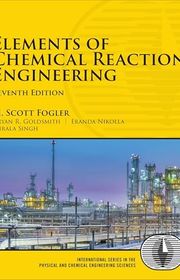
Elements of Chemical Reaction Engineering
For students who learn reaction engineering through worked problems and computational exploration. Its organized progression connects kinetics with reactor design, though the quantitative treatment requires mathematical preparation and benefits from doing the exercises alongside the reading.
What it's about
H. Scott Fogler's textbook develops chemical kinetics and reactor design through models, examples, and computation. The seventh edition, coauthored by Bryan Goldsmith, Eranda Nikolla, and Nirala Singh, expands material on electrochemical reactors and other contemporary topics.
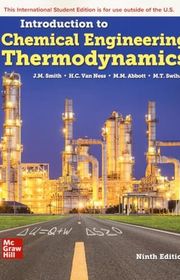
Introduction to Chemical Engineering Thermodynamics
For students who want thermodynamic principles tied to chemical-process calculations. The alternating theory and application give it a clear course structure, though the equations, property relationships, and problem sets demand more than casual reading.
What it's about
J. M. Smith, Hendrick Van Ness, Michael Abbott, and Mark Swihart explain thermodynamics from a chemical-engineering perspective. The text connects fundamental principles with properties and process applications, using examples and problems to develop quantitative understanding.
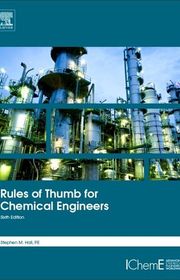
Rules of Thumb for Chemical Engineers
For working engineers who want quick preliminary estimates and checks. Hall's concise calculations make a useful companion to detailed references, though shortcuts depend on their assumptions and should not replace full analysis or current design requirements.
What it's about
Stephen Hall brings together estimates, calculation methods, typical values, and practical heuristics used in process engineering. The sixth edition covers topics including physical properties, heat transfer equipment, separation processes, filtration, and biotechnology in short reference sections.
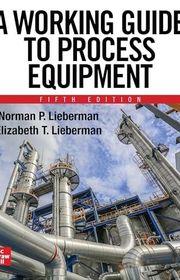
A Working Guide to Process Equipment
For engineers who want to understand operating problems through observation and field measurements. The practical explanations provide a useful counterpoint to equation-led texts, though interpreting examples still requires plant knowledge and appropriate procedures for the equipment involved.
What it's about
Norman and Elizabeth Lieberman explain how process equipment behaves and how engineers investigate operating problems. The fifth edition uses measurements, observations, illustrations, and practical calculations across distillation, heat exchange, steam systems, and other plant operations.
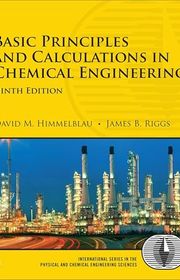
Basic Principles and Calculations in Chemical Engineering
For beginning students who need practice formulating material and energy balances. Its introductory problem-solving emphasis is more approachable than the specialist references here, though building fluency requires working calculations rather than relying on explanations alone.
What it's about
David M. Himmelblau and James B. Riggs introduce material and energy balances, process variables, and the behavior of gases, liquids, and vapors. The ninth edition adds contemporary applications and computational problems while developing a consistent approach to engineering calculations.
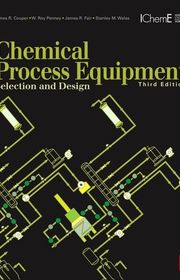
Chemical Process Equipment: Selection and Design
For engineers comparing and specifying common process equipment. The schematics, data, and rating approaches make it more directly consultable than a general textbook, though preliminary selection methods still need current vendor information and detailed project-specific analysis.
What it's about
James R. Couper, W. Roy Penney, and James R. Fair present a reference for selecting, sizing, and operating process equipment. Worked examples, diagrams, performance information, and rating forms connect equipment choices with practical engineering considerations.
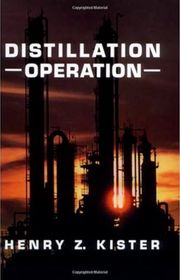
Distillation Operation
For engineers dealing with commissioning and day-to-day column behavior. Kister complements the design volume with operational concerns and common failures, though the specialist detail assumes familiarity with distillation and the surrounding plant systems.
What it's about
Henry Kister examines the commissioning and operation of industrial distillation columns. The reference addresses equipment internals, controls, operating difficulties, and practical details around a column, connecting design decisions with the behavior engineers encounter in an operating plant.
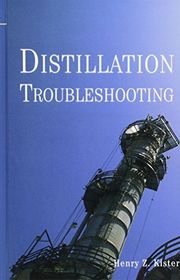
Distillation Troubleshooting
For experienced engineers investigating column malfunctions and recurring operating problems. Its extensive cases make practical symptoms easier to compare, though selecting an applicable lesson requires process knowledge and careful attention to differences between operating situations.
What it's about
Henry Kister collects case histories of distillation and absorption problems, diagnoses, and operating lessons. The book examines equipment damage, fouling, commissioning, abnormal operation, and mismatches between simulations and plant behavior, organizing experience for technical reference and study.
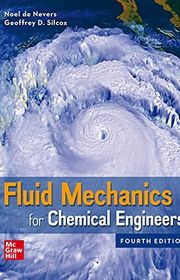
Fluid Mechanics for Chemical Engineers
For chemical-engineering students who want fluid mechanics connected to the processes they study elsewhere. The focused perspective complements a general operations text, though quantitative analysis and mathematical derivations require more sustained work than a quick hydraulics handbook.
What it's about
Noel de Nevers presents fluid mechanics for chemical-engineering study. The textbook examines the behavior of fluids and the principles used to analyze flow, connecting physical ideas and mathematical descriptions with problems relevant to chemical processes and equipment.

Mass-Transfer Operations
For students ready to study diffusion and separation operations in depth. Treybal connects physical principles with equipment analysis, though the mathematical treatment and older notation reward systematic study rather than use as a brief introduction.
What it's about
Robert Treybal explains mass-transfer operations and the principles behind designing their equipment. Discussions of diffusion and separation processes connect underlying physical behavior with engineering techniques, giving students and practicing engineers a framework for analyzing operations that move substances between phases.
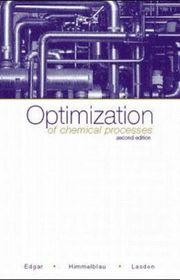
Optimization of Chemical Processes
For students and engineers who want to move from analyzing a process to comparing improved choices. The combination of methods and applications gives optimization an engineering setting, though the mathematics and older software context require preparation and adaptation.
What it's about
Thomas F. Edgar and his coauthors explain optimization methods and their application to chemical processes. The textbook links mathematical techniques with engineering case studies, including process choices and computational approaches, while providing references for deeper theoretical study.
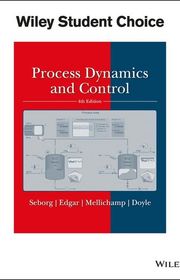
Process Dynamics and Control
For students who want a course-based introduction to process modeling and control. Its connection between dynamic behavior and control decisions complements equipment texts, though the quantitative models require comfort with mathematics and sustained practice.
What it's about
Dale Seborg and his coauthors examine how chemical processes change over time and how control systems respond. The textbook connects dynamic models, feedback, and modern control methods with the design and operation of processing plants.
Process Heat Transfer
For readers who want a classic engineering treatment centered on heat-transfer equipment and calculations. Its practical design emphasis complements unified transport theory, though the older presentation, units, and methods need comparison with current references and standards.
What it's about
Donald Q. Kern develops heat-transfer principles in the context of industrial process equipment. The text connects thermal calculations with engineering applications and equipment design, giving students and practitioners a detailed historical reference for process heat-transfer work.

Shreve's Chemical Process Industries
For readers who want to connect engineering principles with the manufacture of familiar products. Its industry survey provides context missing from equation-led courses, though older process descriptions are better used as background than current operating guidance.
What it's about
George Austin surveys the industries and manufacturing processes that turn raw materials into chemical products. Coverage spans fuels, industrial gases, inorganic chemicals, ceramics, food processing, and other sectors, connecting production methods with the work and concerns of chemical engineers.

Transport Phenomena
For students who want momentum, heat, and mass transfer developed through one mathematical framework. The unifying treatment supports deeper understanding, though vector notation and differential equations make it more demanding than an introductory unit-operations text.
What it's about
R. Byron Bird, Warren Stewart, and Edwin Lightfoot develop a unified treatment of momentum, heat, and mass transport. Mathematical explanations and examples connect fluid behavior, energy transfer, and diffusion, including convective processes and transport in more complex systems.
What Went Wrong?
For students and engineers who want to learn from documented process-plant incidents. The cases connect technical choices with organizational failures, though lessons from individual events complement rather than replace a systematic process-safety course and current procedures.
What it's about
Trevor Kletz and Paul Amyotte examine process-plant accidents through case histories and analysis. The sixth edition considers design, operation, and management causes, with questions and exercises that invite readers to examine how incidents developed and what might be learned.

For students who want an overview of the industries and processes behind chemical products. The sector-by-sector survey complements more mathematical texts, though the older technology descriptions and broad scope need supplementing for contemporary plant detail.
What it's about
Edited by M. Gopala Rao and Marshall Sittig, this survey introduces chemical technology across major industrial sectors. Inorganic, organic, natural-product, polymer, and metallurgical processes sit alongside discussions of computing and pollution control, offering an overview of industrial chemical production.

Process Systems Analysis and Control
For students learning how process behavior connects with feedback control. The progression from simple models to more advanced systems supports course study, though the mathematical treatment and computational examples require active work rather than reading alone.
What it's about
Donald Coughanowr and Steven LeBlanc introduce process dynamics and control through models, examples, and problems. Simple control systems lead into more advanced topics, including nonlinear behavior and computerized controllers, with computational tools used to explore how processes respond over time.

For engineers who want condensed guidance connecting design and simulation with working practice. The experience-based format suits refreshers and practical questions, though the short treatments and older examples offer less depth than a dedicated course textbook.
What it's about
John Edwards draws on process engineering experience to present practical guidance on design, simulation, and operations. Condensed explanations, data, and examples from real engineering situations provide working engineers with refreshers that connect technical topics to the problems encountered in practice.

Phase Equilibria in Chemical Engineering
For engineers who need a focused reference on phase-equilibrium calculations and their thermodynamic basis. Its practical calculation emphasis complements broad thermodynamics courses, though the older methods and data should be compared with current property models and documentation.
What it's about
Stanley Walas explains the thermodynamic foundations and practical calculation of phase equilibria in chemical engineering. Equations of state, fugacity, activity, and interactions between phases connect theory with the conditions encountered in processes, including situations involving simultaneous chemical and phase equilibrium.
Sources
- 1
The First Five Books Every Chemical Engineer Should Get Right Out of College | AIChE
chenected.aiche.org
- 2
Top 8 Chemical Engineers Books Recommendation - Chemical Tweak
chemicaltweak.com
- 3
Chemical Engineering Books
goodreads.com
- 4
Chemical Engineering Books for 2nd Year B.Tech Students 📚
reddit.com
- 5
Establish a Good Reference Library | Chemical Processing | Chemical Processing
chemicalprocessing.com
- 6
That frequently asked question: Books for each chemical engineering discipline/topic.
reddit.com
- 7
Chemical Engineering - Engineering Resources - LibGuides @ URI at University of Rhode Island
uri.libguides.com




Edited by
Software engineer whose passion for tracking book recommendations from podcasts inspired the creation of MRB.
Lead investor at 3one4 Capital whose startup expertise and love for books helped shape MRB and its growth.
Comments
Spotted a missing book, a wrong order or a mistake? Tell us and we'll fix this page.
We're a reading guide, not the author or publisher, so we can't send books or pass on messages.