
12 Best Aerospace Engineering Books
The best aerospace engineering books, ranked by how many expert sources recommend each one, with notes for students, engineers, and curious general readers.
Our take
Aerospace engineering connects the forces acting on a vehicle with the structures, propulsion, and control needed to keep it flying. Aircraft and spacecraft share some foundations, but their operating environments lead to different problems. The books here range from technical study to accounts of the people and teams who developed aircraft and ran space missions, so it helps to choose the kind of understanding you want.
Introduction to Flight provides a broad engineering starting point. Aircraft Structures develops stress analysis, and Airframe Structural Design serves readers ready for practical design information. For propulsion, The Jet Engine offers an illustrated introduction to gas turbines, while Rocket Propulsion Elements requires more technical preparation. Orbital Mechanics for Engineering Students focuses on spacecraft motion and calculations. Readers seeking history can begin with The Wright Brothers, Skunk Works, or Failure Is Not an Option. Start with the broad introduction for coursework, or a memoir for an accessible view of engineering practice.
12 books · 6 sources · Last updated
As an Amazon Associate, we earn from qualifying purchases (at no extra cost to you).
How to choose from this list
Skip to the full rankingIf you want an engineering introduction: Introduction to Flight
If you want aircraft structures: Aircraft Structures → Airframe Structural Design
If you want propulsion: The Jet Engine → Rocket Propulsion Elements
If you want spacecraft trajectories: Orbital Mechanics for Engineering Students
If you want aircraft development stories: The Wright Brothers → Skunk Works
If you want spaceflight operations: Failure Is Not an Option → An Astronaut's Guide to Life on Earth
The 12 books, ranked
Ranked by how many expert sources name each book. Ties go to the book more people recommend.

For readers with an interest in chemistry who want the history behind rocket fuels. Clark’s firsthand stories explain the messy development process vividly, though the historical focus and specialized vocabulary make it different from a modern propulsion textbook.
What it's about
John Drury Clark recounts the hazardous development of liquid rocket propellants through firsthand experience in the field. Combining scientific history with memoir, he describes rival laboratories, experimental fuels, and the search for reliable propulsion into space.
Also recommended by
1 person Elon Musk recommended this book
Elon Musk
One of Elon Musk's favorite books about space.
Elon Musk's recommendation of this book

For readers interested in how complex missions are managed under pressure. Kranz offers an inside view of coordination and decision-making, though the memoir reflects one participant’s perspective and does not replace a technical study of spacecraft systems.
What it's about
Gene Kranz recounts his work in NASA's Mission Control during the Mercury, Gemini, and Apollo programs. His memoir follows the decisions, teamwork, and pressure behind space missions, including the effort to bring Apollo 13's astronauts safely back to Earth.
Also recommended by
1 person Dominic D'Agostino recommended this book
Dominic D'Agostino
"The level of detail he goes into describing mission control is fantastic." - Dominic D'Agostino
Dominic D'Agostino's recommendation of this book

For readers interested in aircraft development as a collaborative organizational challenge. Rich connects engineering decisions with constraints, testing, and management, though his personal perspective and emphasis on particular military programs limit the breadth of the account.
What it's about
Ben R. Rich recalls his years leading Lockheed's secretive Skunk Works aerospace operation. Engineering stories, personal anecdotes, and accounts from pilots and intelligence personnel illuminate the development of aircraft including the U-2 and the stealth fighter.
Also recommended by
1 person Sam Altman recommended this book
Sam Altman
This book was on Sam Altman's bookshelf.
Sam Altman's recommendation of this book
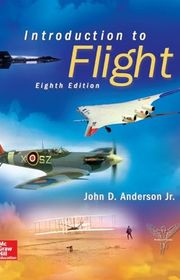
Introduction to Flight
For students who want an overview before specializing in structures, propulsion, or flight mechanics. Its blend of historical context and engineering principles gives the field a coherent shape, though the quantitative sections still require mathematical effort.
What it's about
John D. Anderson Jr. introduces the principles and history of aeronautical and aerospace engineering. Discussions of the atmosphere, aerodynamic forces, airfoils, aircraft performance, propulsion, and spaceflight connect physical ideas with the development of flying vehicles.
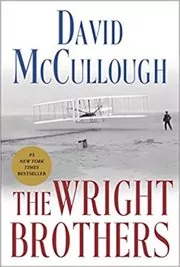
The Wright Brothers
For readers who want an accessible account of experimentation behind early powered flight. Its human focus makes the development process approachable without equations, though it offers biography and history rather than a systematic treatment of aerodynamics.
What it's about
McCullough follows Wilbur and Orville Wright from their bicycle shop in Ohio to the windswept dunes of Kitty Hawk and the first sustained flights. The book highlights their quiet persistence, close‑knit family, and the skeptical world they had to convince.
Also recommended by
6 people Bob Iger recommended this book
Bob Iger
Bob Iger told Variety this book was on his Reading List.
Bob Iger's recommendation of this book  Brian Armstrong recommended this book
Brian Armstrong
"A worthwhile read for all builders." - Brian Armstrong
Brian Armstrong's recommendation of this book  Ed Zschau recommended this book
Ed Zschau
"A fabulous book." - Ed Zschau
Ed Zschau's recommendation of this book  Austen Allred recommended this book
Austen Allred
"The slow, iterative process to breakthrough invention." - Austen Allred
Austen Allred's recommendation of this book  Lloyd Blankfein recommended this book
Lloyd Blankfein
Lloyd Blankfein recommended this book on the "Exchanges at Goldman Sachs" podcast.
Lloyd Blankfein's recommendation of this book  Ali Abdaal recommended this book
Ali Abdaal
"Contains timeless themes relevant to any and all forms of human endeavour." - Ali Abdaal
Ali Abdaal's recommendation of this book

An Astronaut's Guide to Life on Earth
What Going to Space Taught Me About Ingenuity, Determination, and Being Prepared for Anything
For aspiring aerospace students interested in preparation, teamwork, and the working life of an astronaut. Hadfield’s first-person experience makes operational discipline concrete, though the practical life lessons occupy more space than engineering calculations.
What it's about
Drawing on decades as a test pilot and astronaut, Chris Hadfield shares how he chased an impossible dream and what spaceflight taught him about preparation, teamwork, risk and perspective, turning behind-the-scenes stories into practical lessons for everyday life.
Also recommended by
1 person Satya Nadella recommended this book
Satya Nadella
"Great read!" - Satya Nadella
Satya Nadella's recommendation of this book

Airframe Structural Design
Practical Design Information and Data on Aircraft Structures
For engineers who need practical airframe design information rather than an introductory narrative. Its connection between structural concepts and manufacturing decisions makes it useful at the desk, though the reference format assumes prior engineering knowledge.
What it's about
Michael Niu presents practical information for selecting and developing aircraft structural concepts. The reference addresses manufacturing considerations and aircraft loads, connecting design data with the engineering decisions involved in creating an airframe.

Orbital Mechanics for Engineering Students
For engineering students ready to study spacecraft motion through worked problems and computational methods. Its applied teaching supports calculation and implementation, though readers need mathematical preparation and should not expect a general history of space exploration.
What it's about
Howard Curtis introduces the mechanics of spacecraft motion through explanations, worked examples, and computational methods. Topics connect orbital geometry and the two-body problem with orbit determination, maneuvers, rendezvous, interplanetary trajectories, and spacecraft dynamics for engineering students.
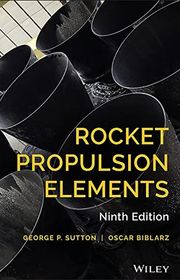
Rocket Propulsion Elements
For engineering students ready for a quantitative study of rocket propulsion. Its systematic treatment connects performance with engine and propellant choices, though the technical detail makes it a substantial step beyond an illustrated overview or historical account.
What it's about
George P. Sutton and Oscar Biblarz explain rocket propulsion through performance analysis, thermodynamics, and the characteristics of different engine systems. Liquid, solid, and other propulsion approaches connect theoretical principles with the engineering choices behind rocket design.

The Jet Engine
For students and technically curious readers who want to understand gas turbines through diagrams and component explanations. Its visual approach makes engine operation approachable, though it offers less mathematical depth than a full propulsion analysis text.
What it's about
Rolls-Royce specialists explain how gas turbine jet engines work through accessible text, diagrams, cutaways, and photographs. The book connects the principles behind propulsion with engine components and their operation, providing an illustrated introduction for engineering students and interested general readers.

For readers interested in the business setting around private spaceflight and ambitious technology projects. Vance provides a biographical route into that world, though the book covers several industries and its 2015 perspective is not a current technical reference.
What it's about
Ashlee Vance traces Elon Musk's life from childhood in South Africa to his entrepreneurial work in the United States. The biography examines the ambitions and challenges behind his involvement with PayPal, Tesla, SpaceX, and SolarCity.
Also recommended by
6 people Anthony Pompliano recommended this book
Anthony Pompliano
"Found it even better than I anticipated." - Anthony Pompliano
Anthony Pompliano's recommendation of this book - Austen Allred recommended this book
Austen Allred
"Was written in 2015 and already feels like you could have another full book as an update." - Austen Allred
Austen Allred's recommendation of this book  Mr. Money Mustache recommended this book
Mr. Money Mustache
"I’m a big fan [of this book]." - MMM
Mr. Money Mustache's recommendation of this book  Tim Urban recommended this book
Tim Urban
"A great biography on Musk." - Tim Urban
Tim Urban's recommendation of this book  Casey Neistat recommended this book
Casey Neistat
"One of the people that I find most interesting. I'm fascinated by Elon Musk." - Casey Neistat
Casey Neistat's recommendation of this book  John Collison recommended this book
John Collison
"A good read." - John Collison
John Collison's recommendation of this book

Aircraft Structures
For students who want a mechanics-based foundation for aircraft stress analysis. Its focus on structural principles remains useful for working through fundamentals, though the older examples and construction context need supplementing for contemporary materials and design practice.
What it's about
David Peery applies elementary mechanics and structural theory to aircraft stress analysis. The text examines forces, load factors, shear, bending, joints, and deflection, developing the principles needed to analyze the behavior of aircraft structures.
Sources


Edited by
Software engineer whose passion for tracking book recommendations from podcasts inspired the creation of MRB.
Lead investor at 3one4 Capital whose startup expertise and love for books helped shape MRB and its growth.
Comments
Spotted a missing book, a wrong order or a mistake? Tell us and we'll fix this page.
We're a reading guide, not the author or publisher, so we can't send books or pass on messages.