
16 Best Branding Books
The best branding books, ranked by how many expert sources recommend each, with notes to help founders, marketers, and designers choose a useful starting point.
Our take
Branding connects what a business promises with what people recognize, remember, and experience. That work includes positioning, language, visual identity, and the everyday choices that make a company feel consistent. Founders, marketers, and designers often approach the subject from different directions, so a useful book should match the decision you are trying to make.
The Brand Gap gives a short introduction to the connection between strategy and design. Building a StoryBrand concentrates on making a message clear, while Positioning asks what place an offer can occupy in a customer's mind. For visual projects, Designing Brand Identity provides a broad process reference, and Branding: In Five and a Half Steps connects investigation with creative work. Identity Designed offers a closer look at studio projects and client relationships. Start with the strategic question if your business is still unclear, then move into an identity guide when you can explain what the design needs to express.
16 books · 7 sources · Last updated
As an Amazon Associate, we earn from qualifying purchases (at no extra cost to you).
How to choose from this list
Skip to the full rankingIf you need an introduction to branding: The Brand Gap
If you need a clearer customer message: Building a StoryBrand
If you want to define a competitive position: Positioning → Zag
If you're planning a visual identity project: Branding → Designing Brand Identity
If you want to study logo development: Logo Design Love → Identity Designed
If you want to examine buying behavior: How Brands Grow
The 16 books, ranked
Ranked by how many expert sources name each book. Ties go to the book more people recommend.

For business owners whose message is difficult for customers to follow. Its storytelling framework turns abstract positioning into clearer marketing language, though fitting every offer into the same narrative can simplify a more complicated buying decision.
What it's about
Donald Miller introduces a seven-part storytelling framework for clarifying a business's message. Positioning the customer as the hero and the brand as a guide, he explains how problems, plans, and calls to action shape effective marketing.
Also recommended by
1 person Dave Ramsey recommended this book
Dave Ramsey
Recommended on Dave Ramsey's website.
Dave Ramsey's recommendation of this book

For teams coordinating a complete identity project from research to rollout. Its organized process gives designers and business colleagues a shared reference, though the breadth makes it more substantial than a quick introduction to brand strategy.
What it's about
Alina Wheeler presents a structured process for creating, implementing, and maintaining brand identities. Combining design principles with examples and case studies, the guide moves from research and strategy through visual development, application, launch, and ongoing management.
Also recommended by
5 people Patrick Bet-David recommended this book
Patrick Bet-David
Patrick Bet-David recommended this book on his website.
Patrick Bet-David's recommendation of this book  Jack Ma recommended this book
Jack Ma
Jack Ma always carries a copy of this book.
Jack Ma's recommendation of this book  John Collison recommended this book
John Collison
John Collison recommended this book.
 Patrick Collison recommended this book
Patrick Collison
"It's excellent: exceptionally data-rich and comprehensive." - Patrick Collison
Patrick Collison's recommendation of this book  David Friedberg recommended this book
David Friedberg
David Friedberg recommended this book.

For designers who want to connect strategic questions with visual decisions. Johnson's staged approach makes the transition from words to identity easier to examine, though the illustrated project work asks for more attention than a brief business primer.
What it's about
Michael Johnson explains how brands develop from initial investigation and strategic language into visual identities and implementation. Illustrated case studies, questions, and working templates explore positioning, names, typography, and the decisions that connect a business’s purpose with its public expression.

The Brand Gap
For founders and designers who need a shared understanding of what branding involves. Its concise visual format connects strategy with creative execution, though it leaves implementation detail to more substantial identity and management guides.
What it's about
Marty Neumeier examines the relationship between business strategy and creative execution in building a brand. His visual guide introduces disciplines for connecting a company's purpose, differentiation, design, and customer experience into a coherent approach shared across an organization.

For leaders trying to articulate the purpose behind their organization. Its memorable framework can start useful internal conversations, though examples and a clear purpose statement do not by themselves establish customer demand or a complete brand strategy.
What it's about
Start with Why introduces the Golden Circle, Simon Sinek's simple model for leading with purpose rather than manipulation. Drawing on stories of companies and leaders, he shows how clearly communicating why you do something can inspire loyalty and lasting success.
Also recommended by
9 people Richard Branson recommended this book
Richard Branson
Richard Branson recommended this book on his "70 must-read books" blog post.
Richard Branson's recommendation of this book  Robert Rodriguez recommended this book
Robert Rodriguez
"I realized better what I was doing when I read [this book], and I gave it to people to show them how to clarify what they’re doing right and what they’re doing wrong." - Robert Rodriguez
Robert Rodriguez's recommendation of this book  Tony Hsieh recommended this book
Tony Hsieh
One of 4 books Tony Hsieh recommended in Inc.com
Tony Hsieh's recommendation of this book  Julie Rice recommended this book
Julie Rice
"So important, because people understanding why you do something, not what you are doing, is really what makes or breaks a brand." - Julie Rice
Julie Rice's recommendation of this book  Kathryn Minshew recommended this book
Kathryn Minshew
Most Recommended Books reached out to Kathryn Minshew directly.
Kathryn Minshew's recommendation of this book  Tom Bilyeu recommended this book
Tom Bilyeu
Tom Bilyeu recommended this book on his website.
Tom Bilyeu's recommendation of this book +3
More recommendations
- Jim Kwik
"Explains how great leaders and organizations use this superpower of motivation to achieve success." - Jim Kwik
- Michael Hyatt
Michael Hyatt recommended this book on his website.
- Patrick Bet-David
Patrick Bet-David recommended this book on his website.
- Jim Kwik

For marketers deciding what customers should associate with an offer. Its emphasis on existing perceptions sharpens competitive thinking, though the older examples and firm prescriptions need judgment when applied to different markets.
What it's about
Al Ries and Jack Trout explain how brands establish a distinctive place in consumers' minds. Their approach considers existing perceptions and competing products, showing why a clear position matters in a crowded communications environment.
Also recommended by
3 people Ev Williams recommended this book
Ev Williams
On the "books read" section of Ev Williams' GoodReads profile.
Ev Williams's recommendation of this book  Patrick O'Shaughnessy recommended this book
Patrick O'Shaughnessy
"A really great book about communication." - Patrick O'Shaughnessy
Patrick O'Shaughnessy's recommendation of this book  Michael Hyatt recommended this book
Michael Hyatt
Michael Hyatt recommended this book on his website.
Michael Hyatt's recommendation of this book

The 22 Immutable Laws of Branding
For readers who prefer concise principles illustrated by familiar companies. Its focus on names, categories, and consistency gives clear questions for evaluating a brand, though treating the laws as universal can overlook differences between markets and business models.
What it's about
Al and Laura Ries present principles for developing a recognizable product or service brand. Examples from established companies illustrate how branding decisions influence a business's ability to distinguish itself in a competitive market.
Also recommended by
1 person Ramit Sethi recommended this book
Ramit Sethi
"Awesome." - Ramit Sethi
Ramit Sethi's recommendation of this book

For founders and designers working together on a new visual identity. Its project examples make collaboration and creative decisions approachable, though readers seeking detailed brand measurement or large-company portfolio strategy will need a different reference.
What it's about
Radim Malinic explains the process of creating a visual identity for a new business or personal venture. Case studies and advice from his design work show how collaboration, creative decisions, and brand strategy connect during the development of an identity.

For design students who want exercises linking research with finished identity work. Its structured activities make the process easier to practice, though professional teams needing a detailed implementation reference may outgrow the introductory treatment.
What it's about
Catharine Slade-Brooking follows the design process from audience research and competitor analysis through naming, logos, client presentations, and launch. Exercises and illustrated case studies connect graphic design decisions with marketing and consumer behaviour, including situations that call for rebranding.
How Brands Grow
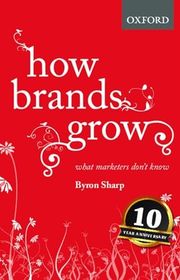
For marketers who want to question branding assumptions against patterns in buying behavior. Its emphasis on evidence offers a useful counterpoint to purpose and differentiation frameworks, though it is more analytical than the design and messaging guides here.
What it's about
Byron Sharp examines patterns in how people buy and how brands grow, challenging familiar marketing assumptions. The book discusses customer acquisition, loyalty, recognition, and availability, using research to connect brand management decisions with observed purchasing behavior.

For designers who want to compare how different studios approach identity projects and clients. The international case studies reveal varied working processes, though it is less direct than a workbook when you need a sequence of exercises.
What it's about
David Airey explores visual branding through case studies from sixteen design practices around the world. Their accounts trace identity projects and client relationships, revealing the research, creative decisions, and working processes behind distinctive brands built for lasting use.

For designers who want to understand the decisions behind an effective logo and the client work surrounding it. Its examples connect concept development with practice, though a mark is only one part of a complete brand identity.
What it's about
David Airey follows the creation of logo-based brand identities from the initial brief to finished designs. Client examples, sketches, and practical guidance explore idea generation, pricing, collaboration, and the decisions that turn a visual concept into a recognizable identity.

Sticky Branding
12.5 Principles to Stand Out, Attract Customers & Grow an Incredible Brand
For smaller businesses looking for practical ways to stand out through customer experience and behavior. Its stories and exercises make the ideas approachable, though broad principles still require testing against your own market and resources.
What it's about
Jeremy Miller draws on interviews with business leaders to present 12.5 principles for building a distinctive brand. Stories and exercises explore ways companies can challenge industry conventions and serve customers differently, translating research into decisions readers can apply to their businesses.

For teams that understand basic branding but struggle to offer a meaningful alternative. Its focused questions push differentiation further than a general introduction, though finding an unusual position still requires evidence that customers value it.
What it's about
Marty Neumeier argues that brands need radical differentiation to stand out in crowded markets. His compact guide presents a sequence of questions and exercises for identifying a distinctive position, expressing it clearly, and managing the brand as competition changes.

Branding For Dummies
For owners who want a broad, accessible explanation of branding tasks. It connects positioning, visual elements, and communication in one overview, though the breadth offers less depth on design practice than the specialist visual-identity books here.
What it's about
Bill Chiaravalle and Barbara Findlay Schenck guide readers through defining, positioning, and managing a brand. Advice covers customer perceptions, logos, taglines, advertising, and protection, connecting the business's intended identity with the practical work needed to communicate it consistently.

Build Your Brand Mania
How to Transform Yourself Into an Authoritative Brand That Will Attract Your Ideal Customers
For consultants and service providers who want their expertise to support customer trust. Its focus on authority and reputation is more personal than a corporate identity guide, though it offers less help with visual design or managing several product brands.
What it's about
Matt Bertram explains how personal expertise can support an authoritative brand and attract suitable customers. The book focuses on credibility, reputation, and content positioning, offering a framework for becoming a trusted adviser in a market crowded with competing businesses.
Sources
- 1
The best branding books: 8 books for brand inspiration
creativebloq.com
- 2
Top Branding Books [2026]
thebrandingjournal.com
- 3
Top 18 Brand Strategy Books For Ambitious Branding Pros In 2025
brandmasteracademy.com
- 4
The Best Books on Branding
reddit.com
- 5
Top 10 branding books to transform your business
knowledgeenthusiast.com
- 6
Branding Books
goodreads.com
- 7
Our top branding books: Strategy and Identity
adozeneggs.co.uk




Edited by
Software engineer whose passion for tracking book recommendations from podcasts inspired the creation of MRB.
Lead investor at 3one4 Capital whose startup expertise and love for books helped shape MRB and its growth.
Comments
Spotted a missing book, a wrong order or a mistake? Tell us and we'll fix this page.
We're a reading guide, not the author or publisher, so we can't send books or pass on messages.