
13 Best Logo Design Books
The best logo design books, ranked by how many expert sources recommend each one, with notes on who each book suits and where different designers can start.
Our take
Logo design involves more than drawing a recognizable symbol. It includes understanding a brief, developing ideas, making visual choices, and seeing how a mark works within a wider identity. The books here approach those tasks in different ways. Some explain a process, some document projects, and others collect examples that reward close comparison rather than continuous reading.
Start with Logo Design Love if you want briefs, sketches, and client work connected in an approachable guide. Principles of Logo Design concentrates on simple forms, while The Logo Design Idea Book offers short visual lessons. For a wider branding process, choose Designing Brand Identity. Logo Modernism, Logo, and Symbol are better suited to studying patterns across many examples. Logotype focuses that attention on lettering, and Logo Life shows how recognizable marks change. Choose a process book first, then use a collection to sharpen your judgment rather than copy a finished solution.
13 books · 6 sources · Last updated
As an Amazon Associate, we earn from qualifying purchases (at no extra cost to you).
How to choose from this list
Skip to the full rankingIf you're starting a logo project: Logo Design Love → The Logo Design Idea Book
If you want to build simple marks: Principles of Logo Design → Symbol
If you want historical visual references: Logo Modernism → Marks of Excellence
If you want lettering-based identities: Logotype
If you want a broader branding process: Designing Brand Identity → Identity Designed
If you want to study changes over time: Logo Life
The 13 books, ranked
Ranked by how many expert sources name each book. Ties go to the book more people recommend.

Logo Modernism
For designers who want to study simple marks across a defined historical period. The organized collection makes visual comparison rewarding, though browsing modernist examples provides inspiration rather than a complete method for developing new identities.
What it's about
Jens Muller documents modernist corporate identity through thousands of logos created between 1940 and 1980. Visual categories, designer profiles, essays, and project case studies examine how geometric forms and typography shaped the period's distinctive approach to branding.
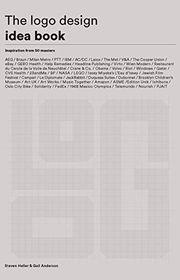
The Logo Design Idea Book
For beginners who want short lessons tied to specific logo examples. Anderson and Heller make visual ideas easy to compare and revisit, though the compact format offers less help with managing a complete client project.
What it's about
Gail Anderson and Steven Heller examine fifty logos to introduce ideas behind memorable visual identities. Examples explore lettering, symbols, humor, and other devices, helping readers recognize how concise design choices communicate the character of a brand.

Logo
For designers who want to compare many visual solutions by form. The black-and-white presentation keeps attention on shape and structure, though the collection gives less explanation of each project's brief or development process.
What it's about
Michael Evamy collects more than 1,600 logos in a visual reference organized by shared forms and themes. Black-and-white examples show how designers use symbols and lettering to create identities for companies and organizations across different industries.

For designers who want to understand the work around a logo as well as its final appearance. Airey makes briefs, sketches, and client decisions approachable, though it offers less historical breadth than the large visual collections.
What it's about
David Airey follows the creation of logo-based brand identities from the initial brief to finished designs. Client examples, sketches, and practical guidance explore idea generation, pricing, collaboration, and the decisions that turn a visual concept into a recognizable identity.

For readers curious about how familiar logos change over time. The historical sequences make revision and continuity visible, though the focus on established brands provides less direct guidance for a first identity project.
What it's about
Ron van der Vlugt traces the visual evolution of 100 famous logos. Historical versions and accompanying accounts show how familiar brand marks changed over time, revealing the design decisions behind identities that became widely recognized.

For designers working with a wider branding team. Its structured process connects the logo with strategy, implementation, and ongoing management, though the broad scope gives less concentrated attention to drawing an individual mark.
What it's about
Alina Wheeler presents a structured process for creating, implementing, and maintaining brand identities. Combining design principles with examples and case studies, the guide moves from research and strategy through visual development, application, launch, and ongoing management.
Also recommended by
5 people Patrick Bet-David recommended this book
Patrick Bet-David
Patrick Bet-David recommended this book on his website.
Patrick Bet-David's recommendation of this book  Jack Ma recommended this book
Jack Ma
Jack Ma always carries a copy of this book.
Jack Ma's recommendation of this book  John Collison recommended this book
John Collison
John Collison recommended this book.
 Patrick Collison recommended this book
Patrick Collison
"It's excellent: exceptionally data-rich and comprehensive." - Patrick Collison
Patrick Collison's recommendation of this book  David Friedberg recommended this book
David Friedberg
David Friedberg recommended this book.

For readers who want to study one studio's identity practice in depth. The case studies provide more context than a bare logo collection, though the concentration on a single firm limits the range of working approaches.
What it's about
This monograph surveys sixty years of identity design by Chermayeff & Geismar & Haviv. More than one hundred case studies examine work for clients including NBC, Chase and PBS, alongside interviews and contributions exploring the firm's design practice.

Logotype
For designers concentrating on lettering-based identities. Evamy's focused collection makes typographic comparisons easier than a mixed logo survey, though readers looking for symbol construction or a step-by-step process will need another book.
What it's about
Michael Evamy surveys typographic brand identities through more than 1,300 examples from international design studios. Logotypes, monograms, and other lettering-based marks provide a reference for studying how typography communicates the character of a business or organization.

For readers who want a compact view of one design firm's marks. The stripped-back presentation encourages close attention to shape and lettering, though the limited project context leaves much of the reasoning behind each design unexplained.
What it's about
This collection presents 400 symbols and logotypes designed by Pentagram's partners. Reproduced as individual black-and-white marks, the examples form a visual record of the design firm's approach to creating identities for clients across many fields.
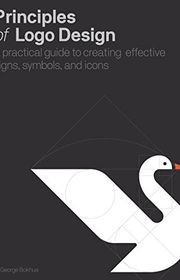
Principles of Logo Design: A Practical Guide to Creating Effective Signs, Symbols, and Icons
For designers who want to construct clear marks from simple forms. Bokhua makes geometric reasoning and visual refinement central, though the strong preference for minimal, monochromatic solutions represents one approach rather than every possible logo style.
What it's about
George Bokhua explains a process for developing logos through simple shapes, grids, and careful refinement. Examples connect visual economy with recognizability, showing how designers can turn initial concepts into coherent signs, symbols, and icons.

Symbol
For designers exploring pictorial marks and visual shorthand. Grouping symbols by form encourages useful comparisons, though the dense reference format offers less instruction on research, client relationships, or the practical development of a new identity.
What it's about
Angus Hyland and Steven Bateman collect more than 1,300 graphic symbols, grouping them by visual characteristics. An index and selected case studies supply context about designers, clients, and industries, making the book a reference for identity design.

For designers who want to see how whole identities emerge from different practices. Airey's project accounts broaden the discussion beyond standalone marks, though the detailed case studies take more time than a quick visual reference.
What it's about
David Airey explores visual branding through case studies from sixteen design practices around the world. Their accounts trace identity projects and client relationships, revealing the research, creative decisions, and working processes behind distinctive brands built for lasting use.

For designers interested in why trademarks take different forms and how they can be classified. Mollerup offers a deeper conceptual framework than a gallery book, though the historical and taxonomic approach is less immediately practical.
What it's about
Per Mollerup examines the history and classification of trademarks, drawing on examples from different cultures and periods. His taxonomy explores relationships among pictorial marks, names, abbreviations, and other forms, showing how organizations communicate identity through visual signs.
Sources











Edited by
Software engineer whose passion for tracking book recommendations from podcasts inspired the creation of MRB.
Lead investor at 3one4 Capital whose startup expertise and love for books helped shape MRB and its growth.
Comments
Did we miss something? Have feedback?
Help us improve this page by sharing your thoughts