
13 Best Biochemistry Books
The best biochemistry books, ranked by expert source recommendations, with notes to help you choose full textbooks, medical reviews, and visual study companions.
Our take
Biochemistry explains how living systems work through molecules, chemical reactions, and the control of energy and information. A full course brings together proteins, enzymes, metabolism, membranes, and genetics. The right book depends on whether you need that broad scientific framework, a medical perspective, or a concise way to review material you have already studied. Some chemistry background helps with all three.
Lehninger Principles of Biochemistry offers a substantial general course. Berg’s Biochemistry and Fundamentals of Biochemistry also connect molecular structure with biological function. Medical students can turn to Marks' Basic Medical Biochemistry for patient-centered explanations or Harper's Illustrated Biochemistry for clinically focused coverage. Lippincott Illustrated Reviews and BRS Biochemistry, Molecular Biology, and Genetics favor revision, while Color Atlas of Biochemistry provides a visual companion. Start with one main text suited to your course, then use a review book or atlas to test and reinforce your understanding.
13 books · 10 sources · Last updated
As an Amazon Associate, we earn from qualifying purchases (at no extra cost to you).
How to choose from this list
Skip to the full rankingIf you want a broad first course: Lehninger Principles of Biochemistry
If you want structure and chemical mechanisms: Fundamentals of Biochemistry → Biochemistry (Donald Voet)
If you want a patient-centered course: Marks' Basic Medical Biochemistry → Principles of Medical Biochemistry
If you want medical revision: Harper's Illustrated Biochemistry → Lippincott Illustrated Reviews → BRS Biochemistry, Molecular Biology, and Genetics
If you want visual reinforcement: Netter's Essential Biochemistry → Color Atlas of Biochemistry
If you want a detailed clinical reference: Textbook of Biochemistry with Clinical Correlations
The 13 books, ranked
Ranked by how many expert sources name each book. Ties go to the book more people recommend.

For medical students who learn through diagrams and organized review. The illustrated outlines make pathways and relationships easier to revisit, though the concise format works better with a course foundation than as a comprehensive scientific reference.
What it's about
Emine Abali and colleagues review essential biochemistry through an outline format, illustrations, tables, and study questions. Clinical applications and integrated case studies connect molecular concepts with other basic sciences and the interpretation of medical scenarios.

Harper's Illustrated Biochemistry
For medical students who want biochemical principles consistently connected to disease. The compact clinical orientation helps organize a demanding syllabus, though readers seeking a wider treatment of nonhuman biology will need a more general textbook.
What it's about
This illustrated textbook reviews biochemistry in relation to clinical medicine, connecting foundational molecular concepts with disease. Explanations, diagrams, tables, summaries, and review questions help students study the biochemical principles underlying medical coursework.

Lehninger Principles of Biochemistry
For students who want a full course connecting molecular structures, reactions, and regulation. The broad development supports sustained study across the subject, though its scale makes it less convenient for a quick medical-exam review.
What it's about
David Nelson and Michael Cox explain biochemistry through molecular structure, catalysis, metabolism, and genetic information. The textbook connects proteins, enzymes, membranes, and energy pathways with the regulation of living systems and the experimental foundations of the field.

For students who want patient cases to give biochemical mechanisms a purpose. The clinical situations connect molecular explanations with physiology and disease, though the medical focus narrows the range compared with a general biochemistry course.
What it's about
Michael Lieberman and Alisa Peet connect biochemical concepts with physiology and disease through hypothetical patient cases. The textbook organizes molecular explanations around clinical contexts, supported by illustrations, summaries, and questions that reinforce the relationships between basic science and medicine.

Biochemistry
For students who want a broad course organized around molecular structure and biological function. The connections among mechanisms, regulation, and experiments support conceptual learning, though the substantial coverage calls for steady work rather than rapid revision.
What it's about
Jeremy Berg and colleagues examine the molecular foundations of life, from proteins and enzymes to metabolism and genetic information. The textbook connects biochemical structures and reactions with cellular regulation, signaling, and the experimental study of biological processes.

Color Atlas of Biochemistry
For visual learners who want to compare molecules, pathways, and cellular processes on compact plates. The consistent visual organization makes it a useful companion, though the small format and brief text limit step-by-step explanation.
What it's about
Jan Koolman and Klaus-Heinrich Röhm explain human and mammalian biochemistry through color plates and accompanying text. The atlas connects chemical structures with biological functions, using consistent visual coding to clarify molecules, cellular components, and information pathways.

Biochemistry
For students who want biochemical ideas connected to recognizable questions and applications. The balance of graphics and explanatory text supports a first course, though a comprehensive textbook still requires chemistry preparation and active problem solving.
What it's about
Roger Miesfeld and Megan McEvoy introduce biochemistry through explanations, graphics, and examples drawn from everyday life. The textbook balances biological and chemical perspectives, using questions and applications to develop understanding and critical thinking about molecular processes.

For students who want a structured account of the chemistry behind molecular life. The integration of structure and function provides a coherent course, though the chemical detail asks for more preparation than an illustrated review guide.
What it's about
Donald Voet, Judith Voet, and Charlotte Pratt explain living systems through the chemistry of biological structures and reactions. The textbook develops foundations in biochemistry while connecting molecular concepts with structural biology, bioinformatics, and questions of human health and disease.

Netter's Essential Biochemistry
For health-science students who want concise explanations tied to clinical illustrations. The visual presentation helps connect molecular ideas with disease, though its essential coverage offers less depth than a full undergraduate biochemistry textbook.
What it's about
Peter Ronner presents essential biochemical principles through concise explanations, diagrams, and illustrations from the Netter collection. Clinical examples connect molecular processes with disease, while chapter summaries and review questions support study of the underlying concepts.
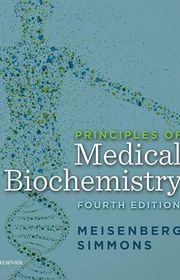
Principles of Medical Biochemistry
For medical students who want a continuous explanation connecting biochemistry with genetics and cell biology. The integration helps link basic science to clinical questions, though its medical emphasis makes it less broad than a general life-science text.
What it's about
Gerhard Meisenberg and William Simmons explain molecular processes in relation to human biology and medicine. The textbook connects biochemistry with cell biology and genetics, using illustrations and clinical applications to show how mechanisms contribute to health and disease.
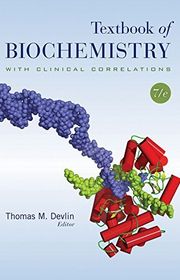
Textbook of Biochemistry with Clinical Correlations
For students and instructors who want a substantial reference linking biochemical detail with clinical examples. The breadth supports looking beyond a review outline, though its extensive treatment is less convenient for fast exam preparation.
What it's about
Edited by Thomas Devlin, this textbook presents biochemical structures, reactions, and regulation alongside their clinical significance. Contributions connect molecular mechanisms with human physiology and disease, giving students a detailed reference for understanding the biochemical basis of medical problems.

Biochemistry
For readers with a strong chemistry background who want substantial molecular detail. The integrated treatment supports deeper study and reference, though its density and scope make it a demanding choice for a first independent introduction.
What it's about
Donald and Judith Voet explain biochemical concepts through an integrated account of molecular life and evolution. The textbook connects biological processes, experimental discoveries, and chemical principles, using illustrations and problems to explore the organization of living systems.

BRS Biochemistry, Molecular Biology, and Genetics
For medical students who have studied the material and need efficient retrieval practice. The outline and questions make gaps easier to identify, though the compressed explanations are less suitable for learning difficult concepts from scratch.
What it's about
Michael Lieberman and Rick Ricer review biochemistry, molecular biology, and genetics in an outline format for medical students. Figures, tables, clinical correlations, and practice questions connect foundational concepts with clinical applications and preparation for examinations.
Sources
- 1
10 Best Biochemistry Textbooks (2023) Don't Miss Out
wellcometreeoflife.org
- 2
BASIC SCIENCES: Biochemistry
guides.library.illinois.edu
- 3
MRC Year 1 Recommended Resources: Biochemistry
libguides.siumed.edu
- 4
Biochemistry Books
goodreads.com
- 5
Medical Student Bookshelf: DNA, Organelles and Cells
hslguides.med.nyu.edu
- 6
Best Biochemistry Books and Resources for Medical School and the Biochemistry NBME Shelf Exam 2023
medschooladvice.com
- 7
Recommended literature
ubeo.lf1.cuni.cz
- 8
Health Sciences Textbooks: Biochemistry / Molecular Biology
libraryguides.missouri.edu
- 9
Best biochemistry textbook – Top 5 textbooks of 2021
geometryofmolecules.com
- 10
Good fundamental Biochemistry books?
reddit.com






Edited by
Software engineer whose passion for tracking book recommendations from podcasts inspired the creation of MRB.
Lead investor at 3one4 Capital whose startup expertise and love for books helped shape MRB and its growth.
Comments
Spotted a missing book, a wrong order or a mistake? Tell us and we'll fix this page.
We're a reading guide, not the author or publisher, so we can't send books or pass on messages.