
7 Best Electromagnetism Books
The best electromagnetism books, ranked by how many expert sources recommend each one, with notes for undergraduate students, graduate study, and conceptual review.
Our take
Electromagnetism connects electric charge, magnetic fields, circuits, and light within a common theory. Learning it involves both physical intuition and mathematical tools, especially vector calculus and differential equations. These books range from first undergraduate courses to graduate references, with a shorter companion for readers who need help interpreting the central equations. They are intended for active study rather than a mathematics-free introduction.
Introduction to Electrodynamics is a practical starting point for an undergraduate course. Purcell and Morin's Electricity and Magnetism gives particular attention to physical reasoning and the connection with relativity. A Student's Guide to Maxwell's Equations can help clarify notation and meaning alongside either text. For a second perspective, The Feynman Lectures on Physics, Vol. II offers distinctive explanations. Jackson's Classical Electrodynamics and Zangwill's Modern Electrodynamics suit readers ready for more advanced mathematical work.
Start with Griffiths or Purcell, work through problems, and move to a graduate text once the foundations feel secure.
7 books · 8 sources · Last updated
As an Amazon Associate, we earn from qualifying purchases (at no extra cost to you).
How to choose from this list
Skip to the full rankingIf you're taking a first undergraduate course: Introduction to Electrodynamics
If you want a physically motivated introduction: Electricity and Magnetism
If Maxwell's notation feels opaque: A Student's Guide to Maxwell's Equations → Introduction to Electrodynamics
If you want a complementary explanation: The Feynman Lectures on Physics, Vol. II
If you're ready for graduate study: Modern Electrodynamics → Classical Electrodynamics
The 7 books, ranked
Ranked by how many expert sources name each book. Ties go to the book more people recommend.
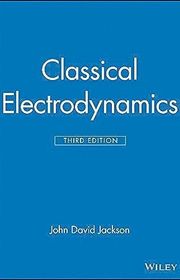
Classical Electrodynamics
For graduate students who already know undergraduate electromagnetism and mathematical methods. Its demanding problems build depth beyond the introductory books, though compressed derivations and a steep workload make it a difficult choice for a first encounter.
What it's about
John David Jackson develops advanced electromagnetic theory through mathematical analysis and extensive problems. The text treats electrostatics, boundary-value methods, radiation, relativity, and related topics, connecting classical fields with techniques used in graduate physics and research.

Introduction to Electrodynamics
For undergraduate physics students who want a clear main textbook. Its explanations and graduated exercises provide a more manageable first route than Jackson, though vector calculus is essential and advanced graduate topics require another reference.
What it's about
Griffiths introduces electromagnetic theory for undergraduate physics students, connecting mathematical methods with physical reasoning. Worked examples and exercises develop the subject while applications show its relevance to antennas, transmission lines, plasmas and optics.

Electricity and Magnetism
For students who want physical intuition alongside mathematical development. Its connection between electricity, magnetism, and relativity offers a distinctive first course, though the substantial problems and intertwined vector calculus require active study rather than casual reading.
What it's about
Edward Purcell and David Morin develop introductory electricity and magnetism through electrostatics, circuits, fields, induction, and electromagnetic waves. The text connects magnetism with relativity and macroscopic behavior with microscopic physics, using worked examples and extensive exercises.
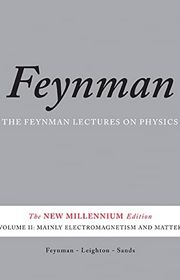
The Feynman Lectures on Physics, Vol. II: Mainly Electromagnetism and Matter
For readers who want a second explanation that emphasizes physical ideas. Its original arguments can make familiar material feel newly connected, though it works better beside a structured problem-solving textbook than as your only course guide.
What it's about
The second volume of the Feynman lectures explores electric and magnetic fields, electromagnetic waves, and the behavior of matter. The lectures develop physical reasoning through examples, connecting mathematical descriptions with the mechanisms and principles behind observed phenomena.
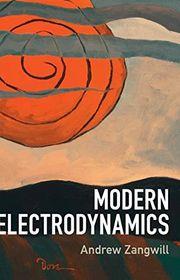
Modern Electrodynamics
For advanced students who want a broad graduate treatment with physical explanation. Its discussion of vacuum and material media provides an alternative route to Jackson, though its size and mathematical demands still call for a solid undergraduate foundation.
What it's about
Andrew Zangwill presents classical electrodynamics through fields in vacuum and continuous media. Mathematical development and physical examples cover electrostatics, magnetism, electromagnetic waves, radiation, scattering, conservation laws, and relativistic field theory within a graduate-level framework.
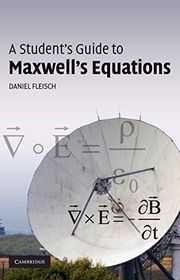
A Student's Guide to Maxwell's Equations
For students who can manipulate formulas but want to understand what Maxwell's equations mean. Its focused explanations make a useful supplement to Griffiths, though the short scope cannot replace a complete electromagnetism course or its exercises.
What it's about
Daniel Fleisch explains Maxwell's four equations in integral and differential form, unpacking their symbols and physical meaning. The guide develops the vector-calculus ideas needed to interpret the equations and connects them with electromagnetic waves and practical examples.

Electromagnetism
For readers interested in an older, systematic development of electromagnetic theory. Its combination of physics and engineering topics gives it useful historical breadth, though notation, presentation, and examples are less convenient than those in a modern course text.
What it's about
John Slater and Nathaniel Frank develop electromagnetic theory from electrostatics and magnetostatics. Chapters cover field equations, dielectrics, induction, Maxwell's equations, waves, waveguides, resonators, and diffraction, with practice problems linking theory to physics and electrical engineering.
Sources
- 1
The 15 Best Electromagnetism Books for All Levels
celsiuselements.com
- 2
Electromagnetism: Recommended Books and Resources
damtp.cam.ac.uk
- 3
Recommended books for advanced undergraduate electrodynamics
physics.stackexchange.com
- 4
Good electromagnetism textbooks?
reddit.com
- 5
Can you recommend me a good book on electromagnetics?
reddit.com
- 6
Electromagnetism Books
goodreads.com
- 7
100 Best Electromagnetism Books of All Time
shortform.com
- 8
Electromagnetism (2026)
digitalcommons.uri.edu







Edited by
Software engineer whose passion for tracking book recommendations from podcasts inspired the creation of MRB.
Lead investor at 3one4 Capital whose startup expertise and love for books helped shape MRB and its growth.
Comments
Spotted a missing book, a wrong order or a mistake? Tell us and we'll fix this page.
We're a reading guide, not the author or publisher, so we can't send books or pass on messages.