
18 Best Software Design Books
The best software design books, ranked by how many expert sources recommend each one, with notes for choosing code, architecture, modeling, and maintenance guides.
Our take
Software design involves deciding where responsibilities belong, how parts communicate, and how a system can change without becoming harder to understand. The relevant decisions appear at several scales, from a function or class to a business model or distributed service. These books help with different parts of that work, so a strong choice depends on the problems you already encounter.
A Philosophy of Software Design offers a compact way to think about complexity. Refactoring and Working Effectively with Legacy Code address improving systems that already exist. For object-oriented patterns, Head First Design Patterns provides a guided introduction before the more formal Design Patterns. Domain-Driven Design connects software structure with business understanding, while Designing Data-Intensive Applications examines storage and distributed-system decisions. The broader books on construction, teams, and delivery add context around those choices. Start with complexity and small design changes, then choose a specialist book when its problems match the software you are building.
18 books · 9 sources · Last updated
As an Amazon Associate, we earn from qualifying purchases (at no extra cost to you).
How to choose from this list
Skip to the full rankingIf you want a framework for complexity: A Philosophy of Software Design → The Pragmatic Programmer
If you need to improve existing code: Working Effectively with Legacy Code → Refactoring
If you're learning object-oriented patterns: Head First Design Patterns → Design Patterns
If you need to model a business domain: Domain-Driven Design → Patterns of Enterprise Application Architecture
If you're designing data-heavy systems: Designing Data-Intensive Applications
If you want a broad construction reference: Code Complete
The 18 books, ranked
Ranked by how many expert sources name each book. Ties go to the book more people recommend.

For developers comfortable with object-oriented code who want a shared vocabulary for recurring designs. The catalog explains intent and consequences systematically, though the formal presentation and older examples make it a demanding first introduction.
What it's about
Erich Gamma and his coauthors catalog reusable solutions to recurring object-oriented design problems. Organized into creational, structural, and behavioral patterns, the book explains when each approach applies, its consequences, and trade-offs within a larger software design.
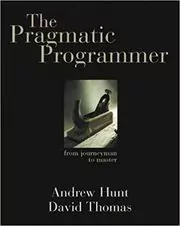
For developers who want a broad set of habits for making better technical decisions. The short, practical sections connect design with everyday work, though the range of topics gives any single design technique less depth than a specialist book.
What it's about
Andrew Hunt and David Thomas present practical guidance on programming as a craft. They explore making informed choices, understanding requirements, communicating clearly, and producing software that others can maintain and build upon across different technologies.
Also recommended by
2 people Ev Williams recommended this book
Ev Williams
On the "books read" section of Ev Williams' GoodReads profile.
Ev Williams's recommendation of this book  Jeff Atwood recommended this book
Jeff Atwood
"Instead of worrying about code, the authors boiled down all the practical approaches that they've found to work in the real world into this one book." - Jeff Atwood
Jeff Atwood's recommendation of this book
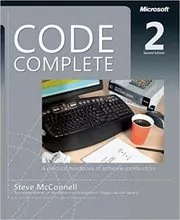
For developers who want a substantial reference on the decisions involved in constructing software. The combination of evidence, examples, and practical checklists supports broad study, though its length and older technologies call for selective, context-aware reading.
What it's about
Steve McConnell assembles practical guidance on software construction from research and commercial programming experience. Using code examples and design principles, he explores how developers can reduce complexity and approach the work of building software across different projects and environments.
Also recommended by
1 person- Jeff Atwood recommended this book
Jeff Atwood
"The very act of reading this book already sets you apart from probably ninety percent of your fellow developers. In a good way." - Jeff Atwood
Jeff Atwood's recommendation of this book
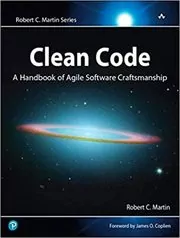
For programmers who want concrete ways to discuss readability and maintainability. The examples make naming and function design easy to examine, though the strong prescriptions and language-specific cases work best as prompts for judgment rather than universal rules.
What it's about
Martin presents principles and practices for writing understandable, maintainable code. Examples and case studies examine naming, functions, classes, formatting, error handling, and testing, while a catalog of heuristics and code smells helps readers recognize and improve troublesome code.

For developers who want to improve structure while preserving existing behavior. The named transformations turn design improvement into small, reviewable steps, though the catalog is most useful when paired with tests and a concrete codebase to work on.
What it's about
Fowler explains how to improve the internal structure of existing code through refactoring. This revised edition uses JavaScript examples and extends its attention beyond class-based designs, presenting techniques for continually reshaping code as a software system evolves.

Head First Design Patterns
Building Extensible and Maintainable Object-Oriented Software
For readers who want to understand object-oriented patterns through guided practice. The visual explanations and Java exercises make the motivations easier to follow than a reference catalog, though the playful presentation and repetition may feel slow to experienced readers.
What it's about
Eric Freeman and Elisabeth Robson teach object-oriented design patterns through Java examples, visual explanations, and exercises. The second edition connects recurring design solutions with underlying principles, emphasizing understanding and applying patterns to extensible, maintainable software.

Working Effectively with Legacy Code
For developers who need to change a system without reliable tests or clear boundaries. The dependency-breaking techniques address obstacles that cleaner examples avoid, though the dense, older-language cases require adapting the ideas to your own environment.
What it's about
Michael Feathers explains how to change existing software when tests and clear structure are missing. Examples develop techniques for breaking dependencies, introducing test seams, and gaining feedback before altering code that is difficult to understand or isolate.

A Philosophy of Software Design
For developers who want a compact framework for reasoning about complexity and interfaces. The emphasis on module design connects local decisions with a system’s overall clarity, though the deliberately opinionated principles still require testing against your own constraints.
What it's about
John Ousterhout examines software design as a problem of managing complexity. He explains how to divide systems into modules, presents principles for making design decisions, and identifies warning signs that reveal problems in the structure of a growing codebase.

Patterns of Enterprise Application Architecture
For developers designing business applications that connect domain logic, databases, and presentation. The catalog makes common structural choices easier to compare, though its enterprise focus and older implementation examples provide less help with newer distributed architectures.
What it's about
Fowler catalogs recurring design patterns for enterprise software, explaining their uses and tradeoffs. The book addresses layered architecture, domain logic, database access, object-relational mapping, web presentation, concurrency, and distributed systems, helping developers choose structures suited to their applications.

For readers interested in how team organization and communication affect software design. Brooks connects technical work with project constraints, though the historical setting and essay format offer fewer directly applicable code examples than a construction handbook.
What it's about
Frederick Brooks examines the difficulties of managing software projects in a collection of essays. He considers team organization, system design, planning, and communication, offering reflections on the limits and complexities of large-scale programming work.
Also recommended by
5 people Jeff Bezos recommended this book
Jeff Bezos
Part of "Jeff's Reading List."
Jeff Bezos's recommendation of this book  Larry Ellison recommended this book
Larry Ellison
"Larry [Ellison] had given this book to every software executive whom he met within the company." - Marc Benioff
Larry Ellison's recommendation of this book  Marc Benioff recommended this book
Marc Benioff
"Had a huge impact on me." - Marc Benioff
Marc Benioff's recommendation of this book  Alan Kay recommended this book
Alan Kay
"An early look and experience with timeless truths (and gotchas) from systems building with teams" - Alan Kay
Alan Kay's recommendation of this book - Jeff Atwood recommended this book
Jeff Atwood
"Arguably the only classic book in our field. If you haven't read it, shame on you." - Jeff Atwood
Jeff Atwood's recommendation of this book
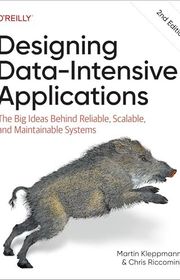
Designing Data-Intensive Applications: The Big Ideas Behind Reliable, Scalable, and Maintainable Systems
For developers who need to compare storage and distributed-system choices rather than memorize a product stack. The focus on guarantees and tradeoffs supports architectural reasoning, though the conceptual density is better suited to readers with some backend experience.
What it's about
Martin Kleppmann and Chris Riccomini explain the principles behind reliable data systems. The book compares data models, storage, replication, partitioning, transactions, and processing approaches, connecting technical choices with the requirements and tradeoffs involved in building applications.

For developers working with complex business rules who need a better model of the problem. The shared language and modeling practices connect software with domain knowledge, though the conceptual depth assumes experience and offers little immediate payoff for simple applications.
What it's about
Eric Evans explains how domain models can guide software design and communication. Using examples from real projects, he examines modeling building blocks, refactoring, and strategic design, showing how to keep implementation aligned with complex business concepts.

Introduction to Algorithms
For readers who want rigorous foundations for choosing and analyzing algorithms. The mathematical explanations and exercises support deeper reasoning than a pattern catalog, though the scope and prerequisite knowledge make it a demanding route into everyday software design.
What it's about
This textbook develops algorithm design and analysis through mathematical explanations, pseudocode, and exercises. Chapters cover data structures, sorting, graphs, and broader design techniques, presenting individual topics as units that can support coursework or professional reference.

For technical leads who want to understand the working conditions behind productive design and development. The attention to teams and interruptions gives organizational context, though it addresses the environment around software more than architectural or coding techniques.
What it's about
Tom DeMarco and Tim Lister examine the human side of software projects, emphasizing teams, workplace conditions, and management. This third edition considers how organizational habits, interruptions, and social dynamics can help or hinder productive technical work.
Also recommended by
2 people Kevin Kelly recommended this book
Kevin Kelly
"A hugely underappreciated book. I remember all kinds of things from it." - Kevin Kelly
Kevin Kelly's recommendation of this book - Jeff Atwood recommended this book
Jeff Atwood
"If you've ever seen the performance of an all-star sports team suffer due to poor coaching, you'll appreciate this book." - Jeff Atwood
Jeff Atwood's recommendation of this book

Programming Pearls
For programmers who enjoy learning through carefully chosen problems. Bentley shows how representation and reasoning can simplify a solution, though the algorithm-centered essays provide less coverage of module boundaries, business modeling, and large-system organization.
What it's about
Jon Bentley uses concrete programming problems to explain algorithms, data structures, and design principles. His essays and examples explore correctness, performance, sorting, searching, and memory use, showing how careful reasoning can lead to workable solutions.
Also recommended by
1 person- Jeff Atwood recommended this book
Jeff Atwood
"The collective wisdom of many journeyman coders distilled into succinct, digestible columns." - Jeff Atwood
Jeff Atwood's recommendation of this book

For developers considering the professional commitments surrounding technical work. Martin’s discussion of communication and responsibility makes the human consequences explicit, though its strongly stated personal approach offers less direct design instruction than the code-focused books here.
What it's about
Martin describes the professional responsibilities of software developers, from making commitments and estimating work to communicating under pressure. The book discusses coding, testing, refactoring, time management, and difficult decisions, including when to say yes and when to say no.
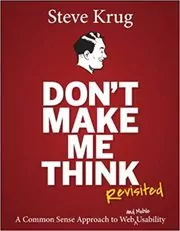
For developers who want the software they build to be easier for people to use. The short explanations make navigation and usability testing approachable, though the focus on interface experience offers little guidance on internal code structure.
What it's about
Steve Krug explains how to design websites people can navigate and understand with little effort. Using practical examples, he examines information design, scanning, usability testing, and mobile experiences, emphasizing clarity in everyday interactions.
Also recommended by
5 people- Ev Williams recommended this book
Ev Williams
On the "books read" section of Ev Williams' GoodReads profile.
Ev Williams's recommendation of this book  Brian Armstrong recommended this book
Brian Armstrong
"A framework to simulate how customers experience your product, especially the moments of confusion." - Brian Armstrong
Brian Armstrong's recommendation of this book - Jeff Atwood recommended this book
Jeff Atwood
"The single best book on usability I've ever read." - Jeff Atwood
Jeff Atwood's recommendation of this book  Nick Ganju recommended this book
Nick Ganju
"About usability and making software and user interfaces that are friendly to people." - Nick Ganju
Nick Ganju's recommendation of this book  Garry Tan recommended this book
Garry Tan
"The simplest book I recommend everyone to read when they want to do design." - Garry Tan
Garry Tan's recommendation of this book

The DevOps Handbook
How to Create World-Class Agility, Reliability, and Security in Technology Organizations
For readers who want design decisions connected with how software is delivered and operated. The organizational practices broaden attention beyond implementation, though the handbook focuses more on delivery systems and collaboration than detailed application design.
What it's about
Gene Kim, Jez Humble, Patrick Debois, and John Willis explain practices for improving collaboration across software development, operations, and security. Case studies illustrate approaches to work flow, feedback, and continual learning that support more reliable technology delivery.
Also recommended by
1 person Changpeng Zhao recommended this book
Changpeng Zhao
"A must-read for tech teams." - Changpeng Zhao
Changpeng Zhao's recommendation of this book
Sources
- 1
Top 5 Books to Enhance Your Software Design Skills
itechguides.com
- 2
20 Best Programming Books 2026, Ranked by Level | ComputingForGeeks
computingforgeeks.com
- 3
10 BEST Software Engineering Books (2026 Update)
guru99.com
- 4
18 Best Software Engineering Books | Built In
builtin.com
- 5
Best Software Development Books: 20 Most-Recommended Books for Software Developers - DEV Community
dev.to
- 6
Software Design Books
goodreads.com
- 7
The Greatest Software Development Books of All Time
dzone.com
- 8
[Megathread] Software Architecture Books & Resources : r/softwarearchitecture
reddit.com
- 9
What are the best books to learn how to think like a software engineer? : r/SoftwareEngineering
reddit.com


Edited by
Software engineer whose passion for tracking book recommendations from podcasts inspired the creation of MRB.
Lead investor at 3one4 Capital whose startup expertise and love for books helped shape MRB and its growth.
Comments
Spotted a missing book, a wrong order or a mistake? Tell us and we'll fix this page.
We're a reading guide, not the author or publisher, so we can't send books or pass on messages.