
15 Best Acting Books
The best acting books, ranked by how many expert sources recommend each one, with notes for beginners, working performers, and actors developing stage or screen skills.
Our take
Acting books offer different kinds of help. Some teach a way to analyze a scene, others develop voice or responsiveness, and a few address the professional work of finding representation and preparing auditions. The most useful choice depends on the problem you can take into rehearsal and test.
Respect for Acting and An Actor Prepares introduce approaches to truthful performance, while Sanford Meisner on Acting follows training built around a partner’s behavior. Actions is a smaller tool you can consult during scene work. For group exploration, Improvisation for the Theater offers games and exercises that need room for other people’s contributions.
Screen work and career preparation have their own demands. Acting in Film focuses on the camera, Audition helps sharpen choices under pressure, and Acting as a Business addresses professional relationships. Start with one technique book that fits your current training, then use a focused reference for the next task you face.
15 books · 9 sources · Last updated
As an Amazon Associate, we earn from qualifying purchases (at no extra cost to you).
How to choose from this list
Skip to the full rankingIf you are new to scene work: A Practical Handbook for the Actor → Respect for Acting
If you want to respond more freely: Sanford Meisner on Acting → The Actor and the Target
If you are preparing auditions: Audition → Actions
If you are moving to screen acting: Acting in Film → Acting for the Camera
If you want to develop your voice: Freeing the Natural Voice
If you need career guidance: Acting as a Business
The 15 books, ranked
Ranked by how many expert sources name each book. Ties go to the book more people recommend.

For actors who need to make stronger choices quickly in an audition. Its guideposts turn brief scenes into playable relationships, though the examples come from an earlier casting world and do not cover today’s self tape logistics.
What it's about
Casting director Michael Shurtleff presents guideposts for preparing and performing auditions. Advice on relationships, humor, style, pacing, risk, and handling distractions helps actors interpret material and make distinctive choices when competing for a role.

An Actor Prepares
For students who want to understand the foundations behind many modern acting approaches. The training narrative connects imagination with purposeful action, though its older translation and fictional classroom format can feel slower than a direct handbook.
What it's about
Constantin Stanislavsky introduces the foundations of his acting system through a narrative of training and discovery. He explores imagination, attention, relaxation, objectives, emotional memory, and the inner creative state as elements of preparing for believable performance.

Respect for Acting
For actors who want a disciplined approach to truthful stage behavior. Its practical questions and exercises make preparation concrete, though the personal work asks for sustained practice rather than a quick set of performance tricks.
What it's about
Uta Hagen explains her approach to developing truthful stage performances through practical exercises and close attention to character actions. Her guide addresses actors' recurring problems, connecting personal experience with the disciplined preparation needed to sustain a role.
Also recommended by
1 person John Leguizamo recommended this book
John Leguizamo
"Of upmost importance to read if you want to be a gr8 actor!" - John Leguizamo
John Leguizamo's recommendation of this book

Sanford Meisner on Acting
For students who want to understand acting through responsiveness to a partner. The classroom progression makes the training process tangible, though reading the exchanges cannot replace the feedback and practice that the exercises require.
What it's about
Meisner and Dennis Longwell follow an acting class across fifteen months, from foundational exercises to developed scenes from American plays. Classroom exchanges reveal how Meisner challenges students, encourages emotional responsiveness, and helps them build the practical craft of performance.
Also recommended by
1 person- John Leguizamo recommended this book
John Leguizamo
"Of upmost importance to read if you want to be a gr8 actor!" - John Leguizamo
John Leguizamo's recommendation of this book

For actors who want to build performances through imagination and a wider understanding of the world. The lesson format preserves a teacher’s forceful voice, though the material benefits from studio discussion rather than passive reading.
What it's about
Howard Kissel gathers Stella Adler's acting instruction into twenty-two lessons drawn from her teaching experience. The volume preserves her classroom voice and approach to the actor's craft, making her guidance available to students and performers beyond the original studio.
Also recommended by
1 person- John Leguizamo recommended this book
John Leguizamo
"Of upmost importance to read if you want to be a gr8 actor!" - John Leguizamo
John Leguizamo's recommendation of this book

A Challenge for the Actor
For actors ready to revisit familiar habits and deepen their preparation. Hagen’s later exercises extend the questions raised in Respect for Acting, though the sustained demands make it a better practice companion than a quick introduction.
What it's about
Uta Hagen revisits the actor’s craft through observations, examples, and exercises. She examines preparation, behavior, imagination, and the responsibilities of performance, offering a later development of her ideas for students and working actors seeking a disciplined practice.

For actors who get stuck making vague emotional choices in a scene. Its verb lists offer a quick rehearsal tool for finding playable intentions, though a thesaurus cannot do the script analysis or listening for you.
What it's about
Marina Caldarone and Maggie Lloyd-Williams compile active verbs that actors can use to define playable actions in a scene. Instructions and examples show how selecting precise action words can clarify choices, shape line readings, and support rehearsal.

For actors who want substantial preparation exercises across script, character, and physical work. Its range makes it a useful continuing reference, though the amount of material rewards selective practice rather than rushing through every technique.
What it's about
Larry Moss explains how careful preparation can support spontaneous, convincing acting. Script analysis, character development, sensory work, and physical expression are explored through exercises and examples, alongside ways to address fear and inhibition in stage and screen performance.

For stage actors moving toward the camera and beginners curious about film sets. Its concrete attention to screen behavior makes the medium’s demands accessible, though the anecdotes reflect Caine’s experience rather than a complete training system.
What it's about
Michael Caine shares practical lessons from his screen career, explaining how film acting differs from stage performance. He discusses preparing scripts, shaping characters, working with directors, and adapting voice, movement, and concentration to the camera.
Also recommended by
1 person Patrick Bet-David recommended this book
Patrick Bet-David
Patrick Bet-David recommended this book on his website.
Patrick Bet-David's recommendation of this book

For actors who feel physical tension limits their vocal expression. Its imagery connects breath and language with the whole body, though the exercises need patient repetition and are often easier to explore with a trained teacher.
What it's about
Kristin Linklater presents exercises designed to release physical and psychological barriers to vocal expression. Using imagery and imagination, she connects breath, voice, language, and emotional impulse in a progression intended for actors, teachers, and other speakers.

For teachers, ensemble leaders, and actors who learn by playing together. Its theater games provide concrete group problems instead of abstract advice, though many activities require other people and space to work effectively.
What it's about
Viola Spolin presents theater games and improvisational exercises as tools for teaching, directing, and developing performers. Her approach uses practical workshop problems to strengthen awareness, physical expression, speech, character work, and collaborative creativity in rehearsal and performance.

A Practical Handbook for the Actor
For beginners who want a short, usable approach to scene analysis. Its focus on actions gives rehearsal a clear structure, though its particular training philosophy is more useful as one approach than as a universal rulebook.
What it's about
Six actors trained with David Mamet and William H. Macy present an approach to analyzing scenes and choosing playable actions. The handbook links preparation with practical exercises, aiming to give performers a repeatable way into their work.

For actors who need to manage representation, contacts, and professional communication. Its career focus fills a gap left by technique manuals, though market practices change and the guidance is rooted mainly in the American industry.
What it's about
Brian O’Neil explains the business side of an acting career, from finding representation to communicating with agents and casting directors. Practical guidance covers interviews, correspondence, researching opportunities, and using the internet and social media to support professional progress.
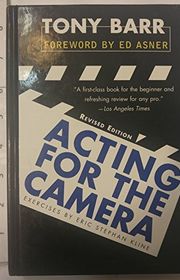
Acting for the Camera
For actors who want a structured explanation of screen performance. Its exercises connect listening and response with the practical demands of filming, though the older production context leaves current audition technology and distribution outside its scope.
What it's about
Tony Barr explains the craft of acting for film and television through practical instruction and exercises. He examines listening, reaction, character, and the camera’s demands, helping performers connect acting choices with the working conditions of screen production.

The Actor and the Target
For actors whose attention gets trapped in self monitoring and anxiety. Its outward focus offers a different route through performance blocks than introspective preparation, though the conceptual argument takes experimentation before it becomes a reliable rehearsal habit.
What it's about
Declan Donnellan examines the blocks that can leave actors feeling unable to perform. He proposes directing attention toward targets outside the self, using theatrical examples to explore imagination, action, and an actor’s relationship with the surrounding scene.
Sources
- 1
7 of the Best Acting Books to Have on Your Shelf
backstage.com
- 2
7 Books Every Actor Needs To Read
nyfa.edu
- 3
11 Books All Actors Should Read
actingstudiochicago.com
- 4
Books for Actors
workingactorsguide.com
- 5
Recommended Reading
auditioncoach.co.uk
- 6
Best Acting Books: Books on Acting
actingcoachscotland.co.uk
- 7
Best Acting Books
goodreads.com
- 8
If you could recommend only one book on screen acting, what would it be?
reddit.com
- 9
Book Recommendations?
reddit.com





Edited by
Software engineer whose passion for tracking book recommendations from podcasts inspired the creation of MRB.
Lead investor at 3one4 Capital whose startup expertise and love for books helped shape MRB and its growth.
Comments
Spotted a missing book, a wrong order or a mistake? Tell us and we'll fix this page.
We're a reading guide, not the author or publisher, so we can't send books or pass on messages.