
11 Best Data Warehouse Books
The best data warehouse books, ranked by how many expert sources recommend each, with notes on skill level, design approach, and where to start learning.
Our take
A data warehouse book can help you understand more than where to store analytical data. The useful questions include how to describe business events, keep definitions consistent, prepare reliable inputs, and deliver information people can use. Different books emphasize modeling, architecture, data preparation, or the coordination of a complete project.
The Data Warehouse Toolkit concentrates on facts, dimensions, and recurring design patterns. Agile Data Warehouse Design brings stakeholders into that modeling work, while Building the Data Warehouse offers a broader architectural perspective. Building a Scalable Data Warehouse with Data Vault 2.0 develops a distinct integration methodology. For delivery, the lifecycle and ETL books extend the reading beyond schemas. Many examples reflect older technology, so separate lasting design ideas from platform-specific instructions. Start with an overview if the field is new to you, then choose a modeling book that fits the decisions your project actually faces.
11 books · 12 sources · Last updated
As an Amazon Associate, we earn from qualifying purchases (at no extra cost to you).
How to choose from this list
Skip to the full rankingIf you're new to warehouse projects: Data Warehousing Fundamentals for IT Professionals → The Data Warehouse Toolkit
If you need stakeholder-led modeling: Agile Data Warehouse Design
If you're planning the whole delivery: The Data Warehouse Lifecycle Toolkit
If you're designing data preparation: The Data Warehouse ETL Toolkit
If you're evaluating Data Vault: Building a Scalable Data Warehouse with Data Vault 2.0
If you want an enterprise architecture perspective: Building the Data Warehouse
The 11 books, ranked
Ranked by how many expert sources name each book. Ties go to the book more people recommend.

For practitioners who need to design facts and dimensions around business processes. Its repeated industry examples make it a substantial modeling reference, though readers seeking a guide to one cloud platform will need implementation material alongside it.
What it's about
Ralph Kimball and Margy Ross explain dimensional modeling through business examples and recurring design patterns. The book shows how facts and dimensions organize analytical data, connecting warehouse structures with the reporting questions and processes they are meant to support.

Agile Data Warehouse Design
Collaborative Dimensional Modeling, from Whiteboard to Star Schema
For teams that struggle to turn stakeholder conversations into usable models. Its collaborative examples connect requirements with star schemas more directly than a conventional reference, though the workshop approach requires active participation rather than solitary reading.
What it's about
Lawrence Corr and Jim Stagnitto introduce collaborative dimensional modeling through business events and concrete data examples. Their BEAM approach turns conversations and whiteboard sessions with stakeholders into warehouse requirements, shared dimensions, and star schemas that support iterative development.

For engineers who want to understand a batch-and-real-time architecture beyond a conventional warehouse. Its systems perspective broadens the discussion here, though the Lambda approach and older tool examples do not replace dimensional modeling instruction.
What it's about
Nathan Marz and James Warren explain the Lambda Architecture for processing large volumes of data through combined batch and real-time systems. The book connects architectural principles with implementations using distributed tools, including Hadoop, Storm, and NoSQL databases.

Building a Scalable Data Warehouse with Data Vault 2.0
For architects evaluating Data Vault as a warehouse integration approach. Its connected treatment of architecture, modeling, and delivery provides a substantial alternative perspective, though it is more demanding than a general introduction and follows one specific methodology.
What it's about
Daniel Linstedt and Michael Olschimke explain how Data Vault 2.0 supports the design and implementation of scalable data warehouses. An end-to-end example connects modeling, architecture, and incremental development, showing how warehouse layers can accommodate changing business requirements.
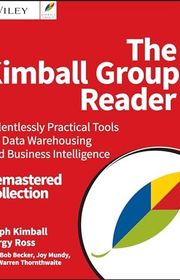
The Kimball Group Reader
For practitioners who already understand dimensional modeling and want advice on specific design problems. Its collected articles make a useful browsing reference, though the shorter pieces do not provide the continuous teaching sequence of a textbook.
What it's about
This collection brings together the Kimball Group's articles, design tips, and practical essays on data warehousing and business intelligence. Topics connect project planning, dimensional modeling, data preparation, and delivery, offering focused discussions of recurring professional problems.

Building the Data Warehouse
For readers who want an architectural foundation before selecting detailed modeling techniques. Its enterprise perspective complements the business-process focus of The Data Warehouse Toolkit, though the linked edition's storage and operational examples reflect an earlier technology landscape.
What it's about
W. H. Inmon explains the foundations of data warehouse architecture and the decisions involved in building and operating one. Discussions connect planning, data organization, storage approaches, testing, and monitoring with the warehouse's role in supporting business information needs.
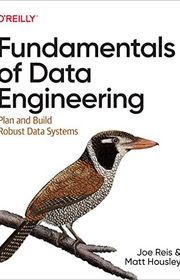
Fundamentals of Data Engineering: Plan and Build Robust Data Systems
For developers who need to place a warehouse within a wider data system. Its lifecycle perspective connects architecture, ingestion, storage, and operations, though readers seeking detailed dimensional models or a particular platform tutorial need a companion text.
What it's about
Joe Reis and Matt Housley explain the data engineering lifecycle, from source systems and ingestion to storage, transformation, and serving data. They connect architecture and technology choices with security, governance, operations, and the needs of an organization.
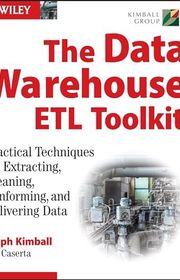
The Data Warehouse ETL Toolkit
For engineers responsible for turning inconsistent source data into reliable warehouse inputs. Its dedicated treatment of extraction, cleaning, and conformance goes deeper than a general project guide, though its older implementation context needs adapting to current tooling.
What it's about
Ralph Kimball and Joe Caserta explain the design of systems that extract, clean, transform, and deliver warehouse data. They connect requirements, architecture, data quality, and operational processes to the practical work of maintaining trustworthy analytical information.
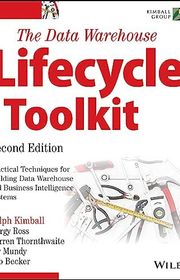
The Data Warehouse Lifecycle Toolkit
For project leaders and developers who need modeling connected with an entire delivery process. Its wider view of requirements, design, and deployment fills gaps left by a schema reference, though the linked edition predates modern cloud workflows.
What it's about
The Kimball team follows a warehouse and business intelligence project from planning and requirements through design, development, and deployment. Guidance connects technical decisions with business participation, team responsibilities, and the work needed to sustain a useful system.

For students who need warehousing connected with data mining methods. Its classroom-style coverage gives analytical techniques more attention than the warehouse design books, though practitioners focused only on building reporting models may find that breadth distracting.
What it's about
Parteek Bhatia introduces data warehousing and the methods used to discover patterns in large datasets. Explanations of classification, clustering, association rules, and related concepts are paired with practical techniques and examples using tools such as R and Weka.

Data Warehousing Fundamentals for IT Professionals
For IT professionals who need an overview of a complete warehouse project. Its progression from requirements through delivery makes a useful orientation, though the linked edition requires newer material for current cloud tools and deployment practices.
What it's about
Paulraj Ponniah follows a data warehouse project from requirements and architecture through data extraction, cleaning, transformation, and delivery. The guide connects technical infrastructure with planning, deployment, and ongoing maintenance, giving IT professionals a structured introduction to the complete development process.
Sources
- 1
Data Warehousing Books
goodreads.com
- 2
Books to Start, Grow, or Deepen Your Knowledge as a Data Engineer
reddit.com
- 3
What are the best books to read and grow as a data engineer?
reddit.com
- 4
Data Warehouse and Business Intelligence Toolkit Books
decisionworks.com
- 5
Books
danmccreary.com
- 6
The Best Data Warehousing Books of 2026
conqueryourexam.com
- 7
The 12 Best Data Warehousing Books on Our 2023 Reading List
solutionsreview.com
- 8
Book suggestions
blog.moderndataengineering.com
- 9
Data Warehouse and Business Intelligence Toolkit Books
kimballgroup.com
- 10
10 Best Data Warehouse books You Should Read in 2023
educba.com
- 11
Are there any good alternatives to The Data Warehouse Toolkit?
reddit.com
- 12
Best Data Engineering Books for 2026: 10 Picks by Stage
computingforgeeks.com








Edited by
Software engineer whose passion for tracking book recommendations from podcasts inspired the creation of MRB.
Lead investor at 3one4 Capital whose startup expertise and love for books helped shape MRB and its growth.
Comments
Spotted a missing book, a wrong order or a mistake? Tell us and we'll fix this page.
We're a reading guide, not the author or publisher, so we can't send books or pass on messages.