
13 Best Hedge Funds Books
The best hedge fund books, ranked by how many expert sources recommend each one, with notes for newcomers, curious readers and aspiring fund professionals.
Our take
Hedge funds bring together investment strategies that can differ sharply in what they trade, how they use borrowed money and how they manage risk. These books approach that world from several directions: explaining fund mechanics, examining managers’ decisions, investigating misconduct and tracing the effects of financial crises. Some help with industry vocabulary; others make more sense once you already understand markets.
For a broad history, More Money Than God connects the industry’s development with its influential figures. Hedge Funds For Dummies explains the basic structures, while The Hedge Fund Book concentrates on the business of operating and financing a fund. Hedge Fund Market Wizards lets traders describe their own approaches. For the limits and dangers of those approaches, When Genius Failed and Black Edge offer sharply different case studies. Start with fund mechanics if the terminology is unfamiliar, or Mallaby’s history if you prefer to learn through people and events.
13 books · 8 sources · Last updated
As an Amazon Associate, we earn from qualifying purchases (at no extra cost to you).
How to choose from this list
Skip to the full rankingIf you're learning the basics: Hedge Funds For Dummies → More Money Than God
If you want to compare traders’ approaches: Hedge Fund Market Wizards
If you want to understand a fund collapse: When Genius Failed
If you're interested in quantitative investing: The Man Who Solved the Market
If you're considering an industry career: Bite the Ass Off a Bear → The Hedge Fund Book
If you want an investigation of misconduct: Black Edge
The 13 books, ranked
Ranked by how many expert sources name each book. Ties go to the book more people recommend.

For readers who want to understand the industry through its history and personalities. Its broad span connects different managers and market crises, though it is an interpretive narrative rather than a guide to fund operations.
What it's about
Sebastian Mallaby traces the history of hedge funds through their influential managers, investment strategies, and confrontations with financial crises. The book examines how these firms gained power and considers their role in risk-taking, innovation, and market instability.
Also recommended by
2 people Tim Ferriss recommended this book
Tim Ferriss
"A fantastic book." - Tim Ferriss
Tim Ferriss's recommendation of this book  Trung Phan recommended this book
Trung Phan
"About the Hedge Funds industry." - Trung Phan
Trung Phan's recommendation of this book

For readers with some market knowledge who want to compare how different traders manage risk. The interview format preserves contrasting methods and personalities, though successful managers’ recollections do not amount to a reproducible trading system.
What it's about
Jack Schwager interviews hedge fund traders about their methods, formative experiences, successes, and mistakes. Their varied approaches illuminate risk management, adapting strategies to personality, and the decisions behind sustained trading performance.

For readers who want to see how sophisticated investment methods can unravel under pressure. Its detailed account connects leverage, liquidity and human judgment, though one fund’s collapse cannot explain every source of hedge fund risk.
What it's about
Roger Lowenstein examines Long-Term Capital Management through interviews and internal records. The account explores the hedge fund's investment methods, its partners' confidence in mathematical models, and the Wall Street culture surrounding its enormous exposure to risk.
Also recommended by
4 people Max Levchin recommended this book
Max Levchin
One of Max Levchin's answers to "what's your favourite business book you'd advise to young entrepreneurs?"
Max Levchin's recommendation of this book  Barry Silbert recommended this book
Barry Silbert
"For crypto traders." - Barry Silbert
Barry Silbert's recommendation of this book  Shane Parrish recommended this book
Shane Parrish
"It was great to re-read this." - Shane Parrish
Shane Parrish's recommendation of this book  David Friedberg recommended this book
David Friedberg
"A great story." - David Friedberg
David Friedberg's recommendation of this book

Black Edge
Inside Information, Dirty Money, and the Quest to Bring Down the Most Wanted Man on Wall Street
For readers who want a reported investigation of incentives, insider information and enforcement. Its close attention to SAC Capital makes the ethical pressures concrete, though it examines a particular scandal rather than the whole industry.
What it's about
Sheelah Kolhatkar investigates the rise of Steven Cohen's hedge fund SAC Capital and the government's pursuit of insider trading. Her reported account follows traders, investigators, and prosecutors while examining competitive pressure, privileged information, wealth, and accountability on Wall Street.
Also recommended by
2 people Peter Attia recommended this book
Peter Attia
Peter Attia mentioned reading this book on an interview for thereadinglists.com
Peter Attia's recommendation of this book - Max Levchin recommended this book
Max Levchin
"Documents the SEC’s investigation into hedge fund SAC Capital Advisors and several individuals including Steven Cohen." - Max Levchin
Max Levchin's recommendation of this book

Hedge Funds For Dummies
For newcomers who need fund structures, fees and strategy names explained before reading specialist accounts. Its accessible organization makes it easy to consult, though legal and tax details need checking against current rules.
What it's about
Ann C. Logue explains hedge-fund structures, strategies, and their potential place within an investment portfolio. Discussions of risk, fees, performance, management, and broker selection introduce the questions investors face when evaluating these pooled investment vehicles.

The Hedge Fund Book
A Training Manual for Professionals and Capital-Raising Executives
For aspiring fund professionals who want to study operations and capital raising through cases. Review questions make it useful for structured learning, though the business focus offers less help with developing a trading strategy.
What it's about
Richard Wilson examines hedge fund management through case studies of funds at different stages of development. The book covers investment processes, operations, marketing, and capital raising, with review questions designed for professionals learning how the industry works.
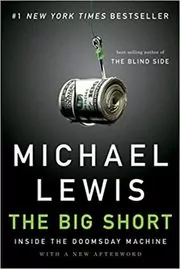
For readers who learn financial mechanisms best through people making consequential decisions. Its character-driven account clarifies the mortgage crisis, though its focus on a few contrarian bets makes it a narrow introduction to hedge funds.
What it's about
This book follows a handful of outsiders who realized the subprime mortgage market was doomed, used credit default swaps to bet against it, and watched as the 2008 financial crisis exposed how fragile and reckless Wall Street had become.
Also recommended by
3 people David Heinemeier Hansson recommended this book
David Heinemeier Hansson
"A good one." - DHH
David Heinemeier Hansson's recommendation of this book  Malcolm Gladwell recommended this book
Malcolm Gladwell
Malcolm Gladwell recommended this book in the "Tools of Titans" book.
Malcolm Gladwell's recommendation of this book  Sheryl Sandberg recommended this book
Sheryl Sandberg
"[The author takes on] the 2008 Wall Street crash." - Sheryl Sandberg
Sheryl Sandberg's recommendation of this book

For readers curious about how quantitative investing developed at Renaissance Technologies. Its biographical reporting makes the people behind systematic trading accessible, though it does not disclose a usable version of the firm’s proprietary models.
What it's about
Gregory Zuckerman traces mathematician Jim Simons's development of a data-driven approach to investing at Renaissance Technologies. Interviews with Simons and colleagues reveal the discoveries, personalities, and conflicts behind a firm whose algorithms transformed quantitative trading.
Also recommended by
2 people Andrew Wilkinson recommended this book
Andrew Wilkinson
Andrew Wilkinson recommended this book on Twitter.
Andrew Wilkinson's recommendation of this book  Barry Ritholtz recommended this book
Barry Ritholtz
"Fascinating book that tells the tale of a enigmatic hedge fund, it’s secretive founder, and the team of brilliant data scientists who managed to 'solve the market.'" - Barry Ritholtz
Barry Ritholtz's recommendation of this book

Hedgehogging
For readers interested in the psychology and daily uncertainty of managing money. Biggs’s personal anecdotes bring an insider’s voice to investment judgment, though the loose structure is less useful for learning concepts in sequence.
What it's about
Barton Biggs recounts investment decisions, hedge fund culture, and the pressures of managing money. Anecdotes from his financial career explore market judgment, manager psychology, setbacks, and the challenges of launching and running a hedge fund.

For readers who want a systematic introduction connecting hedge fund strategies with portfolio theory. It offers more conceptual scaffolding than a narrative history, though its older operational examples need to be read in context.
What it's about
Robert Jaeger introduces hedge funds, their main strategies and their place within investment portfolios. His guide explains the industry's background, operating issues and distinctive risks, considering how these alternative investments relate to other financial options.

For people considering work on a trading floor who want the human demands explained. Its emphasis on reliability, teamwork and stress complements technical study, though it provides less detail on investment analysis or fund structures.
What it's about
Garth Friesen explains the professional skills needed on a hedge-fund trading floor. Drawing on industry experience, he emphasizes teamwork, reliability, integrity, persistence and managing stress alongside the mathematical and technical abilities associated with trading.

For finance professionals who want a reference organized around strategies and investment evaluation. Contributions from multiple specialists offer useful depth, though the technical level and older industry setting make it less suitable as a first introduction.
What it's about
The Investment Management Consultants Association gathers guidance from investment advisers and hedge-fund specialists, edited by Kenneth Phillips and Ronald Surz. The book examines common strategies and techniques, helping financial professionals understand this alternative investment class.

The Little Book of Hedge Funds
What You Need to Know about Hedge Funds But the Managers Won't Tell You
For readers seeking a compact overview of hedge fund history, strategies and investor questions. Its conversational approach makes industry vocabulary approachable, though its insider perspective benefits from being read alongside a more skeptical account.
What it's about
Anthony Scaramucci introduces hedge funds, their history, and their role in financial markets. He explains fees, transparency, risk, and strategies such as leverage, short selling, and hedging for readers seeking to understand this investment industry.
Sources
- 1
Hedge Funds Books
goodreads.com
- 2
The best hedge fund books, organized by what you want to learn
moneyscience.org
- 3
Hedge Fund Books - 10 Best Books to Read [Updated 2026]
wallstreetmojo.com
- 4
46 Best Hedge Funds Books of All Time (Updated for 2026)
shortform.com
- 5
FAQ: Recommended Reading - Hedge Funds
wallstreetoasis.com
- 6
The Best Hedge Fund Books to Buy 2026 • Benzinga
benzinga.com
- 7
Any good book about hedge funds?
reddit.com
- 8
The best hedge fund books of all time
bookdna.com





Edited by
Software engineer whose passion for tracking book recommendations from podcasts inspired the creation of MRB.
Lead investor at 3one4 Capital whose startup expertise and love for books helped shape MRB and its growth.
Comments
Spotted a missing book, a wrong order or a mistake? Tell us and we'll fix this page.
We're a reading guide, not the author or publisher, so we can't send books or pass on messages.