
17 Best Computer Science Books
The best computer science books, ranked by how many expert sources recommend each one, with notes for beginners, students and experienced programmers.
Our take
Computer science asks how computation works, what problems it can solve and how to use limited resources well. Programming is one way to explore those questions, but the subject also includes hardware, operating systems, algorithms and the principles behind programming languages. These books range from approachable explanations to textbooks that require substantial work with code and mathematics. Choose according to the gap you want to fill rather than trying to read everything in order.
Code is a welcoming route into the machinery beneath software. Programmers seeking deeper foundations can turn to Structure and Interpretation of Computer Programs, while Algorithms connects standard techniques with Java implementations and Introduction to Algorithms offers a more mathematical reference. Computer Systems links running programs to the machine. For professional practice, Code Complete and The Pragmatic Programmer address construction and judgment. The books on usability, AI and economic change widen the perspective further. Start with one technical foundation and practice its ideas before moving into another layer.
17 books · 9 sources · Last updated
As an Amazon Associate, we earn from qualifying purchases (at no extra cost to you).
How to choose from this list
Skip to the full rankingIf you want to understand the machine: Code → Computer Systems
If you want deeper programming foundations: Structure and Interpretation of Computer Programs
If you want algorithms with code: Algorithms → Introduction to Algorithms
If you want stronger software construction: Code Complete → The Pragmatic Programmer
If you want to study operating systems: Modern Operating Systems
If you want ideas without a programming course: Algorithms to Live By
The 17 books, ranked
Ranked by how many expert sources name each book. Ties go to the book more people recommend.

Introduction to Algorithms
For students who want a rigorous algorithms reference with analysis and proofs. Its breadth supports repeated use across courses, though mathematical density and substantial exercises make it a difficult first encounter without guidance.
What it's about
This textbook develops algorithm design and analysis through mathematical explanations, pseudocode, and exercises. Chapters cover data structures, sorting, graphs, and broader design techniques, presenting individual topics as units that can support coursework or professional reference.
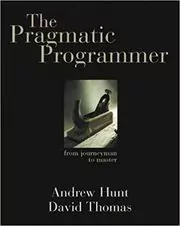
For programmers who want better judgment about requirements, maintainability and professional habits. Its short, broadly applicable discussions are easy to revisit, though the original edition’s examples are dated and it is not a structured programming course.
What it's about
Andrew Hunt and David Thomas present practical guidance on programming as a craft. They explore making informed choices, understanding requirements, communicating clearly, and producing software that others can maintain and build upon across different technologies.
Also recommended by
2 people Ev Williams recommended this book
Ev Williams
On the "books read" section of Ev Williams' GoodReads profile.
Ev Williams's recommendation of this book  Jeff Atwood recommended this book
Jeff Atwood
"Instead of worrying about code, the authors boiled down all the practical approaches that they've found to work in the real world into this one book." - Jeff Atwood
Jeff Atwood's recommendation of this book
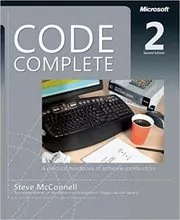
For working developers who want a detailed reference on construction, debugging and maintainability. Its research-backed explanations and checklists help teams discuss practice, though its length and older examples make selective reading more useful than rushing through.
What it's about
Steve McConnell assembles practical guidance on software construction from research and commercial programming experience. Using code examples and design principles, he explores how developers can reduce complexity and approach the work of building software across different projects and environments.
Also recommended by
1 person- Jeff Atwood recommended this book
Jeff Atwood
"The very act of reading this book already sets you apart from probably ninety percent of your fellow developers. In a good way." - Jeff Atwood
Jeff Atwood's recommendation of this book
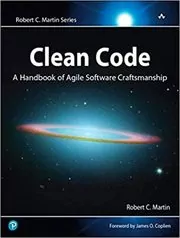
For developers who want to improve naming, functions and the readability of existing code. Its concrete examples make style decisions discussable, though the Java-centered guidance works best when treated critically rather than applied as universal rules.
What it's about
Martin presents principles and practices for writing understandable, maintainable code. Examples and case studies examine naming, functions, classes, formatting, error handling, and testing, while a catalog of heuristics and code smells helps readers recognize and improve troublesome code.

For beginners who want to understand how simple signals become a working computer. Its gradual explanations make hardware approachable without much prior knowledge, though it builds understanding rather than teaching you to write applications.
What it's about
Charles Petzold explains how computers work by building from familiar communication systems, including Morse code and Braille. Everyday examples lead into bits, bytes, and hardware, tracing how simple mechanisms combine to support complex information processing.
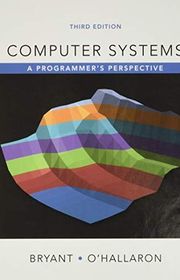
Computer Systems: A Programmer's Perspective
For programmers who want to understand the performance and behavior of their running code. Its connection between software and machine details strengthens debugging intuition, though C, assembly and substantial exercises require patient technical study.
What it's about
Bryant and O’Hallaron examine computer systems from the viewpoint of a programmer. Data representation, machine code, memory, linking, processes and networking show how hardware and system software influence the behavior and performance of applications.

Structure and Interpretation of Computer Programs
For programmers who want to understand abstraction and build richer ways of expressing computation. Its interpreters and exercises develop conceptual depth, though Scheme and demanding problems make it less immediately practical than a modern language tutorial.
What it's about
Harold Abelson and Gerald Jay Sussman introduce computational ideas through programs written in Scheme. The textbook explores abstraction, data, state, interpreters, and compilers, using exercises and progressively richer models to explain how programs are constructed.
Also recommended by
3 people Patrick Collison recommended this book
Patrick Collison
"In the aggregate [with other programming books] hugely shaped me." - Patrick Collison
Patrick Collison's recommendation of this book  Paul Graham recommended this book
Paul Graham
"This is one of the great classics of computer science. I bought my first copy 15 years ago, and I still don't feel I have learned everything the book has to teach." - Paul Graham
Paul Graham's recommendation of this book  Max Levchin recommended this book
Max Levchin
"Easier to read [than "The Art of Computer Programming"] end-to-end quickly." - Max Levchin
Max Levchin's recommendation of this book

Modern Operating Systems
For students ready to study how an operating system manages resources and competing programs. Its wide coverage supports a full course, though the textbook density and assumed technical background make it less welcoming than an introductory overview.
What it's about
Tanenbaum and Herbert Bos explain operating-system design through processes, memory management, file systems, and related concepts. Combining theory with practical examples and exercises, this textbook introduces the mechanisms that coordinate hardware resources and support the execution of software.
Also recommended by
1 person- Patrick Collison recommended this book
Patrick Collison
"In the aggregate [with other programming books] hugely shaped me." - Patrick Collison
Patrick Collison's recommendation of this book

Algorithms
For programmers who want algorithms they can implement and examine in Java. Its practical connection between code and analysis makes the subject concrete, though readers seeking extensive mathematical proofs may prefer a more theoretical reference.
What it's about
Robert Sedgewick and Kevin Wayne present fundamental algorithms and data structures through Java implementations and analysis. The fourth edition connects practical programming with algorithm design, giving students and practitioners methods for approaching varied computational problems.

For readers interested in the philosophical and strategic problems raised by powerful AI. Its sustained focus on control makes the arguments worth examining, though the scenarios are speculative and do not teach current machine-learning techniques.
What it's about
Nick Bostrom examines the possibility that machines could surpass humans in general intelligence. He considers how such systems might become powerful, the dangers they could pose, and whether their initial design could help make an intelligence explosion survivable.
Also recommended by
6 people Elon Musk recommended this book
Elon Musk
"Worth reading [this book]. We need to be super careful with AI. Potentially more dangerous than nukes." - Elon Musk
Elon Musk's recommendation of this book  Naval Ravikant recommended this book
Naval Ravikant
"I wouldn’t just read [this book] breathless and wide-eyed and believe everything." - Naval Ravikant
Naval Ravikant's recommendation of this book  Sam Harris recommended this book
Sam Harris
"Made me worry that machine knowledge could ruin everything." - Sam Harris
Sam Harris's recommendation of this book  Sam Altman recommended this book
Sam Altman
"Best thing I’ve seen on this topic." - Sam Altman
Sam Altman's recommendation of this book  Will MacAskill recommended this book
Will MacAskill
"Very important book." - Will MacAskill
Will MacAskill's recommendation of this book  Marc Goodman recommended this book
Marc Goodman
One of Marc Goodman's most-gifted or recommended books.
Marc Goodman's recommendation of this book

For curious readers who want computational ideas without learning to program. Its everyday examples make tradeoffs in searching and scheduling approachable, though the analogies offer intuition rather than a substitute for mathematical study.
What it's about
Brian Christian and Tom Griffiths connect computer algorithms with everyday decisions constrained by time and information. They explore questions of searching, organizing, scheduling, and choosing between familiar options and new possibilities, showing how computational ideas illuminate human judgment.
Also recommended by
1 person Anthony Pompliano recommended this book
Anthony Pompliano
"[One of the] best books I read in 2017." - Anthony Pompliano
Anthony Pompliano's recommendation of this book

Types and Programming Languages
For advanced students interested in why programming languages accept some expressions and reject others. Its formal treatment develops tools for reasoning about language design, though proofs and notation demand more preparation than the practical programming books.
What it's about
Benjamin Pierce introduces type systems and the theory of programming languages, connecting formal foundations with practical design concerns. The text explains how classifying program expressions helps detect erroneous behavior and informs language implementation, compilers, and software engineering.
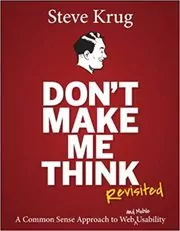
For developers who want to recognize confusion in interfaces and make navigation clearer. Its practical usability perspective complements the coding books, though its web examples and design focus do not address the mathematical foundations of computing.
What it's about
Steve Krug explains how to design websites people can navigate and understand with little effort. Using practical examples, he examines information design, scanning, usability testing, and mobile experiences, emphasizing clarity in everyday interactions.
Also recommended by
5 people- Ev Williams recommended this book
Ev Williams
On the "books read" section of Ev Williams' GoodReads profile.
Ev Williams's recommendation of this book  Brian Armstrong recommended this book
Brian Armstrong
"A framework to simulate how customers experience your product, especially the moments of confusion." - Brian Armstrong
Brian Armstrong's recommendation of this book - Jeff Atwood recommended this book
Jeff Atwood
"The single best book on usability I've ever read." - Jeff Atwood
Jeff Atwood's recommendation of this book  Nick Ganju recommended this book
Nick Ganju
"About usability and making software and user interfaces that are friendly to people." - Nick Ganju
Nick Ganju's recommendation of this book  Garry Tan recommended this book
Garry Tan
"The simplest book I recommend everyone to read when they want to do design." - Garry Tan
Garry Tan's recommendation of this book

The Search
How Google and Its Rivals Rewrote the Rules of Business and Transformed Our Culture
For readers interested in the business and cultural history of internet search. Its account connects information technology with commercial incentives, though it describes an earlier industry and does not provide a technical course in search algorithms.
What it's about
John Battelle traces Google's rise and the development of internet search as an industry. He explores how search technology reshapes advertising, media, commerce, and culture, and considers the wider implications of organizing information about human intentions.
Also recommended by
2 people Gary Vaynerchuk recommended this book
Gary Vaynerchuk
Gary Vaynerchuk mentioned reading this book in one of his videos.
Gary Vaynerchuk's recommendation of this book  Keith Rabois recommended this book
Keith Rabois
"For a good historical perspective on the evolution of the consumer Internet world." - Keith Rabois
Keith Rabois's recommendation of this book

The Second Machine Age
Work, Progress, and Prosperity in a Time of Brilliant Technologies
For readers who want to connect digital progress with employment and economic change. Its broad perspective adds context beyond the technical textbooks, though its historical moment and future-facing arguments require comparison with later evidence.
What it's about
Erik Brynjolfsson and Andrew McAfee examine how digital technology is changing work and the economy. They explore advances in computing, software and networks, considering the opportunities created as machines take on tasks previously associated with human intelligence.
Also recommended by
2 people Tim O’Reilly recommended this book
Tim O’Reilly
Tim O’Reilly mentioned this book on "The Tim Ferriss Show" podcast.
Tim O’Reilly's recommendation of this book  Michael Dell recommended this book
Michael Dell
"[Makes] a case for a future world that is better, not worse, than the one we inherited."- Michael Dell
Michael Dell's recommendation of this book

Explain the Cloud Like I'm 10
For nontechnical readers who want everyday examples to explain cloud computing. Its gradual approach lowers the barrier to understanding online services, though it is an orientation rather than a guide to designing or operating cloud systems.
What it's about
Todd Hoff explains cloud computing through pictures, examples, and one concept at a time. Everyday services such as Netflix, Kindle, and Google Maps illustrate how cloud applications work, introducing nontechnical readers to the internet, providers, and underlying computing ideas.

Intro to Python for Computer Science and Data Science
Learning to Program with AI, Big Data and The Cloud
For beginners who want Python programming connected to data science and AI applications. Its broad selection of examples shows possible directions early, though the range is harder to absorb than a course devoted only to programming fundamentals.
What it's about
Paul and Harvey Deitel combine introductory Python programming with data science, artificial intelligence, and big data case studies. Interactive examples and exercises develop core programming skills while a modular structure supports different mixes of computing and analytical topics.
Sources
- 1
20 Best Programming Books 2026, Ranked by Level
computingforgeeks.com
- 2
The Best Books for Computer Science Students
compscicentral.com
- 3
What are your "must read" book recommendations on Computer Science?
reddit.com
- 4
Essential Books of Computer Science
goodreads.com
- 5
Computer Science Reading List
koioseducation.com
- 6
The Best Computer Science Books
thebooksreview.com
- 7
100 Best Computer Science Books of All Time
shortform.com
- 8
The Best Books on Computer Science and Programming
fivebooks.com
- 9
Teach Yourself Computer Science
teachyourselfcs.com




Edited by
Software engineer whose passion for tracking book recommendations from podcasts inspired the creation of MRB.
Lead investor at 3one4 Capital whose startup expertise and love for books helped shape MRB and its growth.
Comments
Spotted a missing book, a wrong order or a mistake? Tell us and we'll fix this page.
We're a reading guide, not the author or publisher, so we can't send books or pass on messages.