
7 Best Aerodynamics Books
The best aerodynamics books, ranked by how many expert sources recommend each one, with notes for beginners, pilots, technicians, and engineering students.
Our take
Aerodynamics explains how moving air produces forces and how those forces affect flying vehicles. A useful book might build physical intuition, connect airflow with handling and performance, or develop the equations an engineer needs. These are different goals, and the mathematical demands vary substantially across this list. Readers should choose a starting point according to both their background and what they want to understand.
Flight Without Formulae and The Illustrated Guide to Aerodynamics offer conceptual routes in. Aerodynamics for Naval Aviators connects the theory with operational questions, while Introduction to Flight places aerodynamics within a wider aerospace course. Fundamentals of Aerodynamics is the more focused engineering textbook; Theory of Wing Sections is a reference for readers ready to work with airfoil theory and data. Aircraft Engineering Principles supplies broader technical foundations for maintenance students. Start with a visual or conceptual guide if the subject is new, then move to Anderson when you are ready for mathematical analysis.
7 books · 8 sources · Last updated
As an Amazon Associate, we earn from qualifying purchases (at no extra cost to you).
How to choose from this list
Skip to the full rankingIf you are starting with limited mathematics: Flight Without Formulae → The Illustrated Guide to Aerodynamics
If you want to connect theory with flying: The Illustrated Guide to Aerodynamics → Aerodynamics for Naval Aviators
If you are entering aerospace engineering: Introduction to Flight → Fundamentals of Aerodynamics
If you need airfoil theory and reference data: Fundamentals of Aerodynamics → Theory of Wing Sections
If you are studying aircraft maintenance: Aircraft Engineering Principles
The 7 books, ranked
Ranked by how many expert sources name each book. Ties go to the book more people recommend.

Fundamentals of Aerodynamics
For engineering students ready to connect physical intuition with equations. Anderson develops airfoil, wing, and flow theory in a sustained sequence, though calculus and prior mathematical confidence matter more here than in the pilot-oriented guides.
What it's about
John Anderson develops the principles and equations of aerodynamics for engineering students. The textbook connects fundamental concepts with incompressible and compressible flow, airfoils, wings, and aircraft behavior, using a direct explanatory style to guide readers through the subject.

Introduction to Flight
For students exploring aerospace engineering before narrowing to aerodynamics. The combination of history, performance, propulsion, and spaceflight gives the subject context, though that breadth leaves less room for detailed aerodynamic derivations than Fundamentals of Aerodynamics.
What it's about
John Anderson and Mary Bowden introduce aerospace engineering through aerodynamics, flight dynamics, propulsion, and astronautics. Historical material accompanies explanations of aircraft performance, stability, control, and space flight, showing how the principles behind flying vehicles developed.

Aerodynamics for Naval Aviators
For pilots who want aerodynamic principles connected to aircraft performance and handling. The operational focus gives stability, speed, and limitations a practical setting, though the military examples and older presentation need historical context.
What it's about
Originally prepared for U.S. Navy pilots, this textbook explains applied aerodynamics and engineering principles relevant to flight operations. Topics include aircraft performance, high-speed flight, stability and control, operating strength limits, and aerodynamic issues encountered in flying.

The Illustrated Guide to Aerodynamics
For pilots and technicians who learn better from diagrams than lengthy derivations. Smith connects aerodynamic ideas with aircraft behavior in accessible language, though the visual introduction cannot replace the mathematical development needed for engineering analysis.
What it's about
Hubert Smith explains aerodynamic principles for pilots and aviation technicians using illustrations and accessible language. The guide covers lift, drag, thrust, performance, stability, control, high-speed flight, and aircraft design, connecting flight behavior with the engineering behind it.
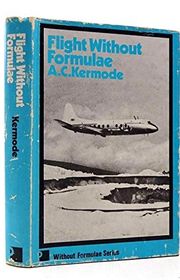
Flight Without Formulae
For curious beginners who want a conceptual explanation before tackling engineering mathematics. Kermode emphasizes physical understanding of flight, though avoiding equations necessarily limits what readers can calculate or use in detailed design work.
What it's about
A. C. Kermode introduces the physical principles of flight through explanations intended to avoid heavy mathematics. The book explores aerodynamic phenomena and aircraft behavior, giving readers a conceptual starting point before more technical study of aeronautical engineering.

Theory of Wing Sections: Including a Summary of Airfoil Data
For engineering readers who need airfoil theory alongside experimental reference data. Its detailed treatment supports closer study of wing sections than a broad introductory text, though the historical data and calculus prerequisites limit its usefulness as a first book.
What it's about
Ira Abbott and Albert von Doenhoff combine airfoil and wing theory with experimental data, including extensive NACA airfoil information. The reference explains how section characteristics can inform wing analysis and design, serving readers who already understand elementary mechanics and calculus.

Aircraft Engineering Principles
For aircraft-maintenance students who need the mathematics and physical principles surrounding flight. Its broad technical coverage links aerodynamics with other engineering foundations, though much of the book addresses electrical and maintenance topics rather than airflow itself.
What it's about
Lloyd Dingle and Mike Tooley introduce the mathematical, physical, electrical, electronic, and aerodynamic principles needed in aircraft maintenance engineering. The textbook links foundational knowledge with aviation applications and includes questions for students preparing for technical qualifications.
Sources
- 1
Readings | Aerodynamics | Aeronautics and Astronautics | MIT OpenCourseWare
ocw.mit.edu
- 2
Aerodynamics Engineering Books - Engineers Bookshop
engineersbookshop.com
- 3
10 Best Aerodynamics Books | Beverly House Estate
beverlyhouseestate.com
- 4
What are good books to learn basic aerodynamics in plane design? - Aviation Stack Exchange
aviation.stackexchange.com
- 5
Aerodynamics Books
goodreads.com
- 6
11 best books for aeronautical engineering students
interestingengineering.com
- 7
Good "popular" basic aerodynamics books? : r/aerospace
reddit.com
- 8
Dan Raymer’s Aircraft Design Bookstore – AircraftDesign.com
aircraftdesign.com











Edited by
Software engineer whose passion for tracking book recommendations from podcasts inspired the creation of MRB.
Lead investor at 3one4 Capital whose startup expertise and love for books helped shape MRB and its growth.
Comments
Spotted a missing book, a wrong order or a mistake? Tell us and we'll fix this page.
We're a reading guide, not the author or publisher, so we can't send books or pass on messages.