
The Gulag Archipelago 1918-1956 Books in Order
Part ofAleksandr Solzhenitsyn Books in OrderExplore The Gulag Archipelago 1918-1956 by Aleksandr Solzhenitsyn with the three volumes in order, short overviews of each, and guidance on how to approach this full literary investigation of the Soviet Gulag.
Last updated:
As an Amazon Associate, we earn from qualifying purchases (at no extra cost to you).
The Gulag Archipelago 1918-1956 books in publication order
3 books
An Experiment in Literary Investigation, Volume 1
by Aleksandr Solzhenitsyn
1973
The first volume of Solzhenitsyn’s Gulag chronicle opens with arrest and interrogation, tracing how ordinary people are swept into the prison system. Drawing on his own experience and many testimonies, he shows how fear, lies, and small choices feed a vast machinery of repression.
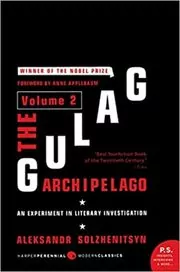
An Experiment in Literary Investigation, Volume 2
by Aleksandr Solzhenitsyn
1973
The second volume of Solzhenitsyn’s Gulag work moves deep inside the camp network, describing daily routines, punishments, and the informal hierarchies among prisoners and guards. It shows how forced labor, hunger, and fear were used to control millions, while still leaving space for acts of solidarity and small moral choices.
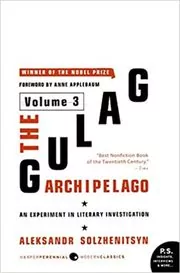
An Experiment in Literary Investigation, Volume 3
by Aleksandr Solzhenitsyn
1974
This final volume of the trilogy traces camp uprisings, escapes, and the long shadow of exile after formal release. Solzhenitsyn reflects on what years in the Gulag did to individuals and to the country as a whole, and on how truth telling might serve as a form of justice when legal redress is unlikely.
The Gulag Archipelago 1918-1956 books in chronological order
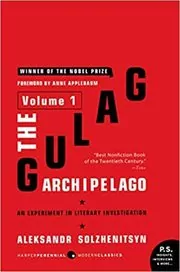
An Experiment in Literary Investigation, Volume 1
by Aleksandr Solzhenitsyn
1973The Gulag Archipelago 1918-1956, Book 1
An Experiment in Literary Investigation, Volume 2
by Aleksandr Solzhenitsyn
1973The Gulag Archipelago 1918-1956, Book 2
An Experiment in Literary Investigation, Volume 3
by Aleksandr Solzhenitsyn
1974The Gulag Archipelago 1918-1956, Book 3
Series background & context
Under the full title The Gulag Archipelago 1918 1956, An Experiment in Literary Investigation, this three volume work gathers Solzhenitsyn’s massive inquiry into the origin, growth, and everyday reality of the Soviet camp system. The dates in the title mark the period he traces, from the first postrevolutionary decrees to the partial thaw after Stalin’s death.
Volume 1 concentrates on arrest and interrogation. It describes how people were seized in cities and villages, what charges were commonly used, and how interrogators broke down prisoners with sleep deprivation, threats, and offers of small favors. Short scenes and portraits are mixed with reflections on fear, guilt, and complicity, making the opening volume feel at once documentary and philosophical.
Volume 2 plunges into the world of the camps themselves. Solzhenitsyn lays out the geography of the "archipelago," from the far northern timber camps to central transit prisons, and shows how the system depended on exhausting labor, strict quotas, and a constant flow of new bodies. He also pays close attention to the stratified society inside the camps, where criminal and political prisoners, guards, informers, and administrators all learn to survive in different ways.
Volume 3 looks at revolt, cooperation, and internal exile. It tells of uprisings and hunger strikes, but also of gradual spiritual shifts in which some prisoners come to see suffering as a kind of moral test. The final sections follow released prisoners into "eternal settlement" in remote regions, where formal freedom still means living under surveillance and restriction.
For readers who want the fullest picture of Solzhenitsyn’s Gulag project, this three volume edition is the core text. It rewards slow reading and reflection, and its structure makes it possible to pause between volumes while still following the larger arc from arrest to release.
Although demanding, the series is less about statistics than about giving individual voices to those who passed through the camps. Each volume adds another layer to that composite portrait, building a record of how a modern state tried to rule through fear and how ordinary people responded under almost unimaginable pressure.












Edited by
Software engineer whose passion for tracking book recommendations from podcasts inspired the creation of MRB.
Lead investor at 3one4 Capital whose startup expertise and love for books helped shape MRB and its growth.
Comments
Did we miss something? Have feedback?
Help us improve this page by sharing your thoughts