
Aleksandr Solzhenitsyn Books in Order
See all Aleksandr Solzhenitsyn books in order, with summaries, series guides, background on his life, and clear ideas on where to start with his Gulag works and epics.
Last updated:
As an Amazon Associate, we earn from qualifying purchases (at no extra cost to you).
Aleksandr Solzhenitsyn books in publication order
41 books
Candle in the Wind
by Aleksandr Solzhenitsyn
1960
Written while he was teaching mathematics, this play is set among scientists and engineers whose work has far reaching consequences. As ambitious projects collide with questions of conscience, Solzhenitsyn uses the stage to explore the ethical burden that comes with technical power in a modern state.
One Day in the Life of Ivan Denisovich
by Aleksandr Solzhenitsyn
1962
This short novel follows a single winter day in the life of Ivan Denisovich Shukhov, a prisoner in a Soviet labor camp. Through his work, small trades, and narrow escapes from punishment, Solzhenitsyn shows how dignity and decency can survive in an environment designed to crush both.
Matryona's House and Other Stories
by Aleksandr Solzhenitsyn
1963
This collection gathers some of Solzhenitsyn’s finest early stories, including the classic "Matryona’s House." Through schoolteachers, soldiers, and villagers, he portrays ordinary Soviet lives marked by poverty, quiet endurance, and small acts of goodness, offering a more intimate counterpart to his large scale historical works.
Stories and Prose Poems
by Aleksandr Solzhenitsyn
1963
A varied collection of short fiction and brief lyrical pieces, this volume showcases Solzhenitsyn’s range in a compact form. Longer tales such as "For the Good of the Cause" sit beside concentrated prose poems that distill memories, landscapes, and moral insights into a few vivid pages.
For The Good Of The Cause
by Aleksandr Solzhenitsyn
1964
In this novella, students and staff at a provincial technical school proudly help build a new campus building, only to see it reassigned at the last moment to a research institute "for the good of the cause." The story exposes bureaucratic cynicism and the cost of decisions made far above local life.
Cancer Ward
by Aleksandr Solzhenitsyn
1967
Set in a cancer hospital in Tashkent in 1955, this novel follows patients and staff as they confront illness, memory, and the shadow of Stalinism. Former prisoners, party loyalists, and ordinary citizens share the same ward, and their conversations turn the hospital into a miniature portrait of post Stalin Soviet society.
Recommended by
1 person Jordan Peterson recommended this book
Jordan Peterson
Recommended on Jordan Peterson's website.
Jordan Peterson's recommendation of this book
In the First Circle
by Aleksandr Solzhenitsyn
1968
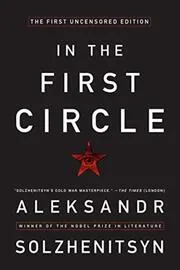
This semi autobiographical novel is set in a secret research prison near Moscow where imprisoned scientists work for the security services. As they wrestle with conscience, privilege, and fear of being sent back to harsher camps, Solzhenitsyn explores questions of loyalty, truth, and what it means to remain human.
The Love-Girl and The Innocent: A Play
by Aleksandr Solzhenitsyn
1969
Set in a Stalin era labor camp, this four act play centers on Nemov, an honest prisoner, and Lyuba, who has learned to compromise to survive. Their relationship unfolds amid camp politics, privileged positions, and brutal conditions, raising hard questions about love, integrity, and the price of staying alive.
Victory Celebrations, Prisoners & The Love-Girl & The Innocent
by Aleksandr Solzhenitsyn
1969
Bringing together three plays, this volume presents Solzhenitsyn’s dramatic trilogy about the year 1945. From a victory feast to front line captivity to life inside a labor camp, the plays use sharply drawn characters and dark humor to examine power, fear, and moral compromise at the close of the war.
August 1914
by Aleksandr Solzhenitsyn
1971
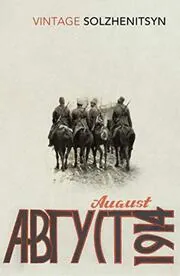
The opening novel of The Red Wheel focuses on Russia’s disastrous defeat at the Battle of Tannenberg in 1914. Through officers, staff officers, and officials, Solzhenitsyn shows how misjudgments and systemic weaknesses in the imperial army foreshadow the wider collapse of the old order a few years later.
Nobel Lecture
by Aleksandr Solzhenitsyn
1971
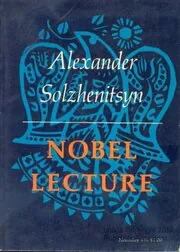
Here Solzhenitsyn reflects on the nature of art, truth, and moral responsibility in his Nobel Prize lecture. He argues that literature can carry the lived experience of one person or nation to another, confront lies without violence, and help societies see themselves more clearly in times of political distortion.
An Experiment in Literary Investigation, Volume 1
by Aleksandr Solzhenitsyn
1973
The first volume of Solzhenitsyn’s Gulag chronicle opens with arrest and interrogation, tracing how ordinary people are swept into the prison system. Drawing on his own experience and many testimonies, he shows how fear, lies, and small choices feed a vast machinery of repression.
An Experiment in Literary Investigation, Volume 2
by Aleksandr Solzhenitsyn
1973
The second volume of Solzhenitsyn’s Gulag work moves deep inside the camp network, describing daily routines, punishments, and the informal hierarchies among prisoners and guards. It shows how forced labor, hunger, and fear were used to control millions, while still leaving space for acts of solidarity and small moral choices.
Vol. 2
by Aleksandr Solzhenitsyn
1973
The second volume of The Gulag Archipelago examines forced labor and everyday survival within Soviet prison camps. Accounts of hunger, dangerous work, and arbitrary authority lead into reflections on moral corruption, spiritual endurance, and the effects of captivity.
Vol. 3
by Aleksandr Solzhenitsyn
1973
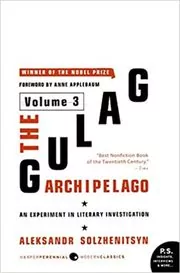
The concluding volume of The Gulag Archipelago explores resistance, escape attempts, and uprisings within Soviet camps. Solzhenitsyn also examines exile, his release after eight years, and the changes in the prison system following Stalin's death.
An Experiment in Literary Investigation, Volume 3
by Aleksandr Solzhenitsyn
1974
This final volume of the trilogy traces camp uprisings, escapes, and the long shadow of exile after formal release. Solzhenitsyn reflects on what years in the Gulag did to individuals and to the country as a whole, and on how truth telling might serve as a form of justice when legal redress is unlikely.
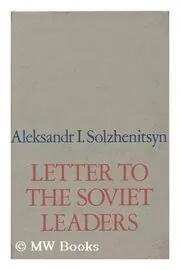
Letter to the Soviet Leaders
by Aleksandr Solzhenitsyn
1974
In this open letter, composed just before his expulsion, Solzhenitsyn addresses the Kremlin leadership directly. He urges them to abandon ideological lies, release political prisoners, and turn toward a smaller, freer, morally grounded Russia, warning that the country’s future depends on honest self appraisal.
Prussian Nights: A Poem
by Aleksandr Solzhenitsyn
1974
Composed in verse, this long poem draws on Solzhenitsyn’s service with the Red Army as it advanced into East Prussia in 1945. In taut, rhythmic lines he recalls the chaos, brutality, and revenge he witnessed, questioning what victory means when it unleashes new waves of violence against civilians.
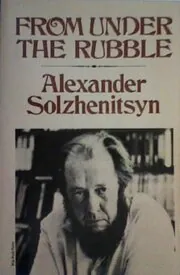
From Under the Rubble
by Aleksandr Solzhenitsyn
1975
This collection gathers essays by Solzhenitsyn and fellow dissident thinkers written while they still lived under Soviet rule. The pieces call for spiritual renewal, personal responsibility, and repentance rather than ideological slogans, arguing that without inner change no political reform can rescue Russia from its crises.
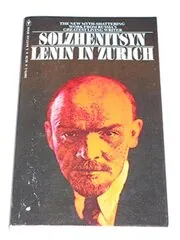
Lenin in Zürich
by Aleksandr Solzhenitsyn
1975
Drawing on historical research, this novel follows Vladimir Lenin during his wartime exile in Switzerland. Solzhenitsyn portrays the future revolutionary as driven yet often isolated, preoccupied with money, quarrels, and strategy, as he waits for the chance to return to Russia and seize a revolution already under way.
The Oak And The Calf
by Aleksandr Solzhenitsyn
1975
Subtitled "Sketches of Literary Life in the Soviet Union," this memoir recounts Solzhenitsyn’s struggle to write and publish under censorship. He describes the surprise success of *One Day in the Life of Ivan Denisovich*, the tightening political climate, surveillance and harassment, and the risky samizdat campaign around his later works.
Detente, Democracy and Dictatorship
by Aleksandr Solzhenitsyn
1976
Gathering major speeches and a late interview, this book captures Solzhenitsyn’s critique of both communist dictatorship and naive Western ideas of détente. Addressing American audiences in the 1970s and reflecting again decades later, he warns about the dangers of confusing slogans with reality and of ignoring the moral dimension of politics.
Warning to the West
by Aleksandr Solzhenitsyn
1976
A collection of major speeches and interviews from the mid 1970s, this book captures Solzhenitsyn’s message to American and British audiences soon after his expulsion. He urges the West not to ignore the nature of communist power, and challenges easy optimism about progress, comfort, and moral compromise.
A World Split Apart
by Aleksandr Solzhenitsyn
1978
This slim volume prints Solzhenitsyn’s 1978 Harvard commencement address, in which he argues that the world’s divisions run deeper than a simple East West standoff. He criticizes Soviet oppression, but also warns that Western materialism and legalism can sap courage, spiritual life, and the ability to face evil honestly.
Victory Celebrations: A Comedy in Four Acts
by Aleksandr Solzhenitsyn
1983
Part of Solzhenitsyn’s 1945 dramatic trilogy, this play takes place at a feast prepared by Red Army officers celebrating victory in East Prussia. The arrival of a suspicious counterintelligence officer turns the party sour, exposing fear, opportunism, and the uneasy moral climate behind official triumph.
November 1916
by Aleksandr Solzhenitsyn
1985
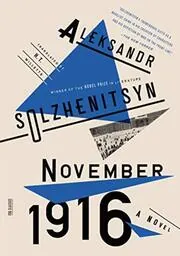
Set in the late autumn of 1916, this Red Wheel novel portrays Russia before the storm. In Petrograd, on the front, and in the countryside, politicians, officers, workers, and peasants argue, scheme, and worry, unaware of how close they stand to the revolutions that will overturn their world.
Rebuilding Russia
by Aleksandr Solzhenitsyn
1990
Composed as the Soviet Union was weakening, this essay outlines Solzhenitsyn’s vision for a post communist Russia. He urges shedding imperial burdens, strengthening local self government, curbing unchecked power, and encouraging small scale private enterprise, all in the hope of creating a more just and humane civic life.
The Russian Question at the End of the Twentieth Century
by Aleksandr Solzhenitsyn
1994
Written after his return to Russia, this short book surveys several centuries of Russian history and the wreckage left by Soviet rule. Solzhenitsyn reflects on national failures and strengths, arguing that any future worth having must rest on moral renewal, local responsibility, and a realistic sense of Russia’s limits.
Invisible Allies
by Aleksandr Solzhenitsyn
1995
Solzhenitsyn pays tribute to the friends, typists, couriers, and sympathizers who secretly safeguarded his manuscripts inside the Soviet Union. Through vivid portraits he shows how this loose network copied, hid, and smuggled his work, often at great personal risk, making books like The Gulag Archipelago possible.
We Never Make Mistakes
by Aleksandr Solzhenitsyn
2004
This slim volume pairs two powerful stories, "An Incident at Krechetovka Station" and "Matryona’s House." In one, a well meaning officer must decide the fate of a suspicious traveler during the war; in the other, a poor peasant woman’s quiet goodness is only fully seen after her death.
Between Two Millstones, Book 1
by Aleksandr Solzhenitsyn
2006
In this first volume of his exile memoirs, Solzhenitsyn recounts his abrupt expulsion from the Soviet Union in 1974, his first years in Switzerland, and the family’s move to Vermont. He describes the pressures of fame, the practical struggle to protect his archive, and the difficulty of life between hostile systems.
Apricot Jam: And Other Stories
by Aleksandr Solzhenitsyn
2008
Written in the 1990s, these later stories often come in "binary" pairs that echo or contrast with one another. Solzhenitsyn revisits episodes from revolution, war, and the Soviet decades, following characters across time to show how power, betrayal, and small choices echo through individual lives.
Voices from the Gulag
by Aleksandr Solzhenitsyn
2009
Selected and introduced by Solzhenitsyn, this collection presents memoirs from a wide range of Gulag survivors. Circus performers, teenage boys, soldiers, and professionals recount their arrests, transport, and camp years, adding many distinct voices to the broader picture he first drew in The Gulag Archipelago.
March 1917: The Red Wheel, Node III, Book 1
by Aleksandr Solzhenitsyn
2017
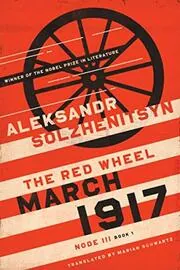
Set over March 8 to 12, 1917, this novel drops readers into Petrograd as bread shortages erupt into mass protests. Soldiers, workers, ministers, and the imperial family respond in different ways as the authority of the old regime begins to crumble and the first shock of revolution spreads.
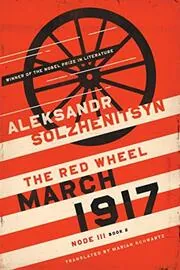
March 1917: The Red Wheel, Node III, Book 2
by Aleksandr Solzhenitsyn
2017
Covering March 13 to 15, 1917, this volume follows news of the Petrograd uprising as it races across rail lines and telegraph wires. Troops are ordered to restore order, the Duma debates power, and a new soviet appears, creating a confusing double rule at the very moment the Tsarist system falters.
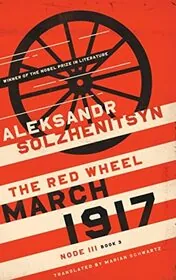
March 1917: The Red Wheel, Node III, Book 3
by Aleksandr Solzhenitsyn
2017
Book 3 spans March 16 to 22, when the monarchy’s fate is sealed and the revolution rolls outward from Petrograd. Solzhenitsyn intercuts scenes at military headquarters, in the capital’s committees, and on the front lines, showing how orders, rumors, and fear reshape loyalties across Russia.
Between Two Millstones, Book 2
by Aleksandr Solzhenitsyn
2020
Picking up in 1978, this memoir follows Solzhenitsyn through his later years in the West, from the aftermath of his Harvard address to the approach of his return to Russia. He recalls public controversy, private family life, and the exhausting work of finishing his historical and literary projects.
The Gulag Archipelago
by Aleksandr Solzhenitsyn
2021
This single volume edition presents Solzhenitsyn’s landmark "literary investigation" into the Soviet camp system, blending memoir, history, and reflection. It follows prisoners from arrest to hard labor and exile, giving voice to those who endured the Gulag and asking how such a system could arise.

March 1917: The Red Wheel, Node III, Book 4
by Aleksandr Solzhenitsyn
2024
The final volume of the March 1917 node covers March 23 to 31, as revolutionary unrest spreads from Petrograd to the provinces, the army, and the Cossack regions. Competing centers of power jostle for authority while ordinary people struggle to understand what the new slogans and committees will mean for their lives.

April 1917: The Red Wheel, Node IV, Book 1
by Aleksandr Solzhenitsyn
2025
Opening the April 1917 node, this volume follows events from April 11 to May 5. The Provisional Government is attacked from the left for its "bourgeois" character and continued war effort, Lenin returns to Petrograd with his April Theses, and tensions sharpen between gradual reformers and those calling for a second, more radical revolution.
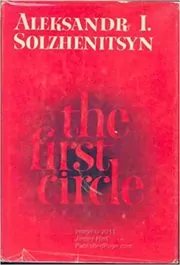
The First Circle
by Aleksandr Solzhenitsyn
In a privileged Soviet prison research institute near Moscow, mathematician Gleb Nerzhin and fellow inmates work on state projects. Over several days in December 1949, their competing beliefs and personal loyalties expose the moral compromises demanded by Stalin's regime.
Recommended by
1 person- Jordan Peterson recommended this book
Jordan Peterson
Recommended on Jordan Peterson's website.
Jordan Peterson's recommendation of this book
Where to start with Aleksandr Solzhenitsyn
If you want his essential Gulag books first: One Day in the Life of Ivan Denisovich → The Gulag Archipelago → Voices from the Gulag
If you prefer the big novels: Cancer Ward → In the First Circle → August 1914 → November 1916
If you are drawn to the Revolution epic: August 1914 → November 1916 → March 1917: The Red Wheel, Node III, Book 1 → March 1917: The Red Wheel, Node III, Book 2
If you like memoir and reflection: The Oak And The Calf → Between Two Millstones, Book 1 → Between Two Millstones, Book 2 → Rebuilding Russia
If you want a shorter introduction: One Day in the Life of Ivan Denisovich → Matryona's House and Other Stories → Stories and Prose Poems
Aleksandr Solzhenitsyn sub-series and character series
The Gulag Archipelago books in order
Explore this series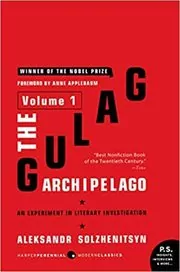
An Experiment in Literary Investigation, Volume 1
by Aleksandr Solzhenitsyn
1973The Gulag Archipelago 1918-1956, Book 1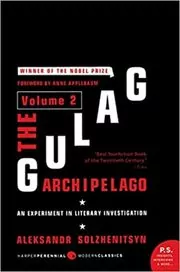
The Gulag Archipelago 1918-1956 books in order
Explore this seriesAn Experiment in Literary Investigation, Volume 1
by Aleksandr Solzhenitsyn
1973The Gulag Archipelago 1918-1956, Book 1
An Experiment in Literary Investigation, Volume 2
by Aleksandr Solzhenitsyn
1973The Gulag Archipelago 1918-1956, Book 2
An Experiment in Literary Investigation, Volume 3
by Aleksandr Solzhenitsyn
1974The Gulag Archipelago 1918-1956, Book 3
The Gulag Archipelago 1918-1956 books in chronological order
An Experiment in Literary Investigation, Volume 1
by Aleksandr Solzhenitsyn
1973The Gulag Archipelago 1918-1956, Book 1An Experiment in Literary Investigation, Volume 2
by Aleksandr Solzhenitsyn
1973The Gulag Archipelago 1918-1956, Book 2An Experiment in Literary Investigation, Volume 3
by Aleksandr Solzhenitsyn
1974The Gulag Archipelago 1918-1956, Book 3
Standalone Aleksandr Solzhenitsyn books







by Aleksandr Solzhenitsyn
1978Commencement Address Delivered At Harvard University, June 8, 1978



Author bio
Aleksandr Solzhenitsyn was born on December 11, 1918, in Kislovodsk, in the south of Russia, and grew up in modest circumstances with his widowed mother. His father had died before he was born, and that absence, together with family memories of prerevolutionary Russia, shaped much of his inner world.
He studied mathematics and physics at Rostov State University while quietly nurturing a passion for Russian literature. By correspondence he took courses in history and writing in Moscow, learning his craft far from the centers of literary life. When the Second World War came, he served as an artillery officer on the Eastern Front, was twice decorated for bravery, and saw the Red Army’s advance across Eastern Europe at close range.
In 1945 a private letter that criticized Joseph Stalin brought his arrest. Solzhenitsyn spent eight years in prisons and labor camps, including time in a special research prison for scientists and engineers, followed by internal exile in Kazakhstan. There he battled a serious cancer diagnosis, taught school, and began to test the stories that would later become his best known works.
After his formal rehabilitation in the mid 1950s, he settled in Ryazan and worked as a mathematics teacher while writing in secret. In 1962 his short novel One Day in the Life of Ivan Denisovich appeared in a Soviet literary journal and caused a sensation, offering readers an unvarnished day in a labor camp based on his own experience. Further novels such as Cancer Ward and In the First Circle deepened his portrait of Soviet life, even as official tolerance for his work quickly evaporated.
Through the 1960s Solzhenitsyn’s manuscripts were barred from publication at home and circulated underground, then smuggled abroad. He continued to write, turning his years in the camps and the testimonies of fellow prisoners into The Gulag Archipelago, a vast "experiment in literary investigation" that traced the Soviet system of arrest, interrogation, transport, forced labor, and internal exile from 1918 to 1956.
In 1970 he was awarded the Nobel Prize in Literature but did not travel to accept it, fearing he would not be allowed back into the Soviet Union. After the first volume of The Gulag Archipelago appeared in the West, he was arrested, charged with treason, stripped of his citizenship, and expelled from his homeland in 1974.
Solzhenitsyn first lived in Switzerland and then moved with his family to rural Vermont in the United States. There he led a secluded life focused on writing, finishing The Gulag Archipelago and working on The Red Wheel, his multi volume cycle about Russia’s road to revolution. He also published essays and speeches, including the collections Warning to the West and the Harvard address later issued as A World Split Apart, in which he criticized both communist oppression and what he saw as spiritual exhaustion in the West.
After the collapse of the Soviet Union his citizenship was restored, and in 1994 he returned to Russia. In later works such as Rebuilding Russia and The Russian Question at the End of the Twentieth Century he reflected on Russian history, national identity, and the moral demands of rebuilding civic life. Memoirs like Between Two Millstones looked back on his years in exile.
Solzhenitsyn spent his final years in Moscow with his wife Natalia and their family, occasionally granting interviews and receiving visitors but largely devoted to revising and arranging his collected works. He died of heart failure on August 3, 2008, leaving behind novels, histories, memoirs, and speeches that continue to shape how readers understand the Soviet century and the moral choices it forced on individuals.





Edited by
Software engineer whose passion for tracking book recommendations from podcasts inspired the creation of MRB.
Lead investor at 3one4 Capital whose startup expertise and love for books helped shape MRB and its growth.
Comments
Did we miss something? Have feedback?
Help us improve this page by sharing your thoughts