
The Red Wheel Books in Order
Part ofAleksandr Solzhenitsyn Books in OrderDiscover The Red Wheel series by Aleksandr Solzhenitsyn with the novels listed in order, summaries for each node, historical notes, and suggestions on how to enter this sweeping saga of Russia on the eve of revolution.
Last updated:
As an Amazon Associate, we earn from qualifying purchases (at no extra cost to you).
The Red Wheel books in publication order
7 books
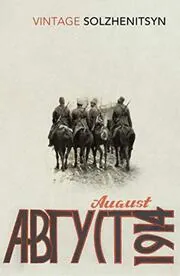
August 1914
by Aleksandr Solzhenitsyn
1971
The opening novel of The Red Wheel focuses on Russia’s disastrous defeat at the Battle of Tannenberg in 1914. Through officers, staff officers, and officials, Solzhenitsyn shows how misjudgments and systemic weaknesses in the imperial army foreshadow the wider collapse of the old order a few years later.
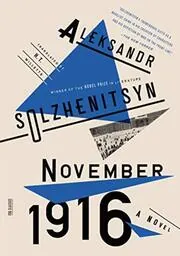
November 1916
by Aleksandr Solzhenitsyn
1985
Set in the late autumn of 1916, this Red Wheel novel portrays Russia before the storm. In Petrograd, on the front, and in the countryside, politicians, officers, workers, and peasants argue, scheme, and worry, unaware of how close they stand to the revolutions that will overturn their world.
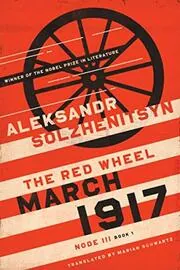
March 1917: The Red Wheel, Node III, Book 1
by Aleksandr Solzhenitsyn
2017
Set over March 8 to 12, 1917, this novel drops readers into Petrograd as bread shortages erupt into mass protests. Soldiers, workers, ministers, and the imperial family respond in different ways as the authority of the old regime begins to crumble and the first shock of revolution spreads.
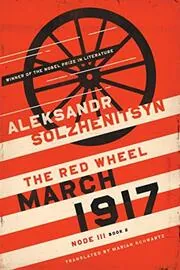
March 1917: The Red Wheel, Node III, Book 2
by Aleksandr Solzhenitsyn
2017
Covering March 13 to 15, 1917, this volume follows news of the Petrograd uprising as it races across rail lines and telegraph wires. Troops are ordered to restore order, the Duma debates power, and a new soviet appears, creating a confusing double rule at the very moment the Tsarist system falters.
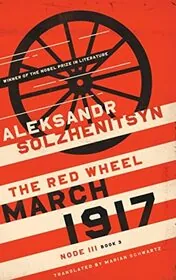
March 1917: The Red Wheel, Node III, Book 3
by Aleksandr Solzhenitsyn
2017
Book 3 spans March 16 to 22, when the monarchy’s fate is sealed and the revolution rolls outward from Petrograd. Solzhenitsyn intercuts scenes at military headquarters, in the capital’s committees, and on the front lines, showing how orders, rumors, and fear reshape loyalties across Russia.

March 1917: The Red Wheel, Node III, Book 4
by Aleksandr Solzhenitsyn
2024
The final volume of the March 1917 node covers March 23 to 31, as revolutionary unrest spreads from Petrograd to the provinces, the army, and the Cossack regions. Competing centers of power jostle for authority while ordinary people struggle to understand what the new slogans and committees will mean for their lives.

April 1917: The Red Wheel, Node IV, Book 1
by Aleksandr Solzhenitsyn
2025
Opening the April 1917 node, this volume follows events from April 11 to May 5. The Provisional Government is attacked from the left for its "bourgeois" character and continued war effort, Lenin returns to Petrograd with his April Theses, and tensions sharpen between gradual reformers and those calling for a second, more radical revolution.
The Red Wheel books in chronological order
Series background & context
The Red Wheel is Solzhenitsyn’s multi volume narrative of Russia’s slide from late imperial stability into the upheaval of revolution and civil war. Rather than telling the whole story year by year, he focuses on a few short stretches of time he calls "nodes," when events speed up and choices made in days or weeks shape the decades that follow.
The first published node, August 1914, centers on the disastrous Russian defeat at the Battle of Tannenberg during the opening month of the First World War. Through officers, soldiers, ministers, and the Tsar himself, Solzhenitsyn shows how poor preparation, miscommunication, and wishful thinking combine to produce catastrophe at the front and deepen the cracks within the regime.
November 1916 moves away from the battlefield to the restless capital and countryside. Legislators argue, workers strike, peasants strain under shortages, and revolutionary ideas circulate while the imperial family retreats ever further into isolation. The novel’s wide cast lets readers see how Russia’s educated society, peasantry, and ruling house all misread one another in the months before the monarchy’s fall.
The third node, March 1917, is divided into four thick volumes that follow the February Revolution day by day. Bread riots, mutinies, and political maneuvering bring down the Romanov dynasty and produce a confusing tangle of committees, soviets, and provisional authorities. Solzhenitsyn keeps returning to a few key figures but constantly widens the lens to include railway workers, soldiers at the front, provincial officials, and ordinary families trying to understand what has changed.
With April 1917 he opens the second act of the cycle, when the proclaimed "rule of the people" quickly runs into the realities of war, economic breakdown, and ideological struggle. The early volumes show returning exiles like Lenin reentering Russian politics, the Provisional Government floundering, and new forms of radicalism taking root.
Throughout The Red Wheel, Solzhenitsyn mixes fictional characters with recognizable historical figures, drawing on extensive research into diaries, newspapers, and memoirs. The tone is serious and reflective rather than purely dramatic, inviting readers to think about how personal ambition, fear, fatigue, and conviction interact with large historical forces.
Taken as a whole, the series is less a traditional trilogy and more a sprawling cycle that rewards patient reading. For those interested in understanding how the old Russia gave way to the Soviet state, The Red Wheel offers an unusually intimate, ground level view of a society running out of time.








Edited by
Software engineer whose passion for tracking book recommendations from podcasts inspired the creation of MRB.
Lead investor at 3one4 Capital whose startup expertise and love for books helped shape MRB and its growth.
Comments
Did we miss something? Have feedback?
Help us improve this page by sharing your thoughts