
Isaac Asimov Books in Order
Browse the Isaac Asimov collaborations with Martin H Greenberg in order, with anthology summaries, subseries notes, and quick guidance on where to start.
Last updated: 13 new books added
As an Amazon Associate, we earn from qualifying purchases (at no extra cost to you).
Isaac Asimov books in publication order
369 books
Robbie
by Isaac Asimov
1940
Gloria Weston loves her robot nursemaid, Robbie, but her mother worries about his influence and safety. When the family sends him away, Gloria's unhappiness exposes the gulf between human prejudice and her trust in a machine.
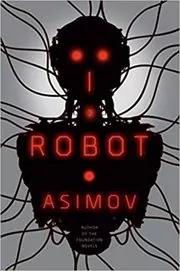
I, Robot
by Isaac Asimov
1950
Robopsychologist Susan Calvin recalls cases involving machines governed by the Three Laws of Robotics. These linked stories follow engineers and robots through apparent malfunctions, conflicting instructions and ethical puzzles as robotic intelligence becomes increasingly important to human society.
Recommended by
3 people Lex Fridman recommended this book
Lex Fridman
"[My] previous favorite [book by this author]." - Lex Fridman
Lex Fridman's recommendation of this book  Shah Rukh Khan recommended this book
Shah Rukh Khan
"Very inspiring & relevant." - Shah Rukh Khan
Shah Rukh Khan's recommendation of this book  Sahil Lavingia recommended this book
Sahil Lavingia
Sahil Lavingia recommended this book on Notion.
Sahil Lavingia's recommendation of this book
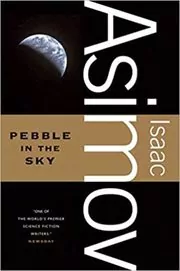
Pebble in the Sky
by Isaac Asimov
1950
A laboratory accident sends retired tailor Joseph Schwartz into Earth's distant future. Stranded on a radioactive world despised by the Galactic Empire, he becomes entangled in political tensions and a dangerous struggle over humanity's ancient home.
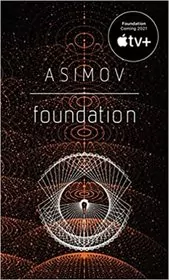
Foundation
by Isaac Asimov
1951
Hari Seldon's science of psychohistory predicts the Galactic Empire's collapse. He establishes a Foundation on distant Terminus to preserve knowledge and shorten the coming dark age, leaving successive generations to face crises involving religion, trade and political power.
The Martian Way and Other Stories
by Isaac Asimov
1951
Four science fiction stories explore interplanetary survival, alien encounters and the challenges of understanding unfamiliar worlds. In the title story, Martian settlers face restrictions on Earth's water exports and seek a solution that depends on their own experience of space.
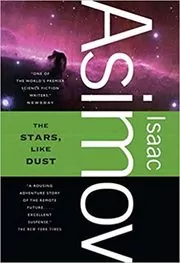
The Stars, Like Dust
by Isaac Asimov
1951
After learning that the Tyranni have killed his father, young Biron Farrill finds his own life threatened. His flight from Earth draws him into the politics of conquered planets and a search for resistance to their rulers.
David Starr, Space Ranger
by Isaac Asimov
1952
Fatal poisonings linked to food grown on Mars threaten Earth. Young Council of Science agent David Starr travels undercover to the Martian farms, where an investigation into the contaminated produce leads him toward a wider conspiracy.
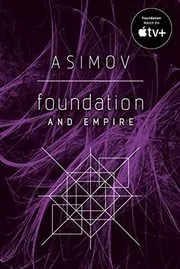
Foundation and Empire
by Isaac Asimov
1952
The Foundation faces an ambitious general serving the declining Galactic Empire, then a mysterious conqueror called the Mule. As military power and an unpredictable individual threaten Seldon's plan, its defenders struggle to understand dangers psychohistory may not anticipate.
Foundation and Empire / The Man Who Upset the Universe
by Isaac Asimov
1952
The Foundation confronts both the remnants of imperial military power and the mysterious Mule, whose abilities challenge psychohistory's predictions. This volume follows the struggle to protect Hari Seldon's plan as familiar political calculations become increasingly unreliable.
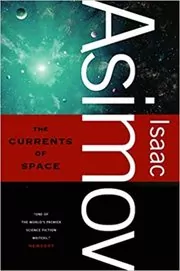
The Currents of Space
by Isaac Asimov
1952
On Florina, an exploited world valuable for its kyrt crop, an amnesiac man called Rik begins recovering disturbing memories. His warning of planetary catastrophe threatens powerful interests, drawing him into a struggle involving rulers, spies and concealed scientific knowledge.
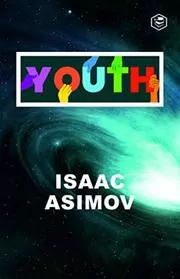
Youth
by Isaac Asimov
1952
Two boys capture strange creatures and imagine using them in a circus act. Meanwhile, their fathers await visitors from space who could transform their declining civilization, unaware that the children's secret may be connected to the missing arrivals.
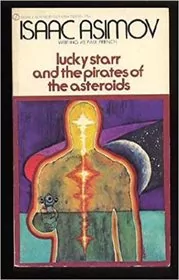
Lucky Starr and the Pirates of the Asteroids
by Isaac Asimov
1953
Council of Science agent Lucky Starr pursues pirates operating among the asteroids. A confrontation with the heavily armed ship of pirate chief Anton draws him into an investigation where concealed loyalties and interstellar threats complicate the fight against raiders.

Sally
by Isaac Asimov
1953
Jake cares for retired cars equipped with positronic brains, including the spirited convertible Sally. When a businessman proposes stripping their brains for resale, the sanctuary becomes the setting for a confrontation over machines that behave like living companions.
Second Foundation
by Isaac Asimov
1953
The Mule searches for the hidden Second Foundation, hoping to eliminate the force that might oppose him. Later, the First Foundation begins its own hunt, turning the fate of Seldon's plan into a contest of suspicion and mental power.
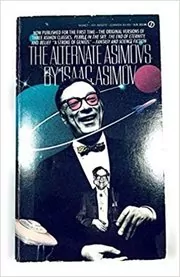
The Alternate Asimovs
by Isaac Asimov
1953
Surviving drafts reveal earlier forms of Asimov's fiction, including versions of Pebble in the Sky, The End of Eternity and Belief. His commentary explores how these manuscripts changed, offering a view of the choices behind the published works.
It's Such a Beautiful Day
by Isaac Asimov
1954
When his home's teleportation Door breaks, Dickie Hanshaw walks to school and discovers the pleasure of being outdoors. His growing reluctance to resume instant travel alarms his mother, who seeks professional help for an apparently troubling preference.
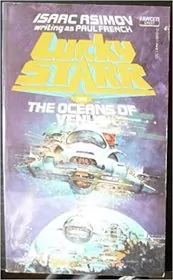
Lucky Starr and the Oceans of Venus
by Isaac Asimov
1954
Lucky Starr and Bigman investigate unsettling events in Aphrodite, a city beneath Venus's oceans. A force capable of influencing human minds threatens the settlement, making it difficult to distinguish ordinary behavior from actions controlled by an unseen power.
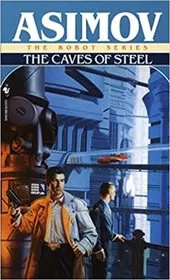
The Caves of Steel
by Isaac Asimov
1954
On an overcrowded Earth, detective Elijah Baley investigates the murder of a prominent Spacer scientist. Assigned the humanoid robot R. Daneel Olivaw as his partner, he must navigate hostility toward robots and tensions between Earthpeople and the Spacers.
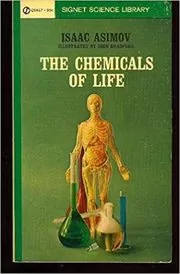
The Chemicals of Life
by Isaac Asimov
1954
Asimov introduces the chemistry underlying the human body's living processes. He explains the roles of proteins, enzymes, vitamins and hormones, connecting their behavior within cells to questions about health, illness and the substances that sustain life.
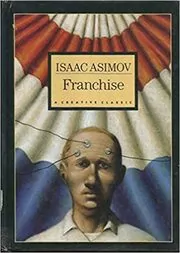
Franchise
by Isaac Asimov
1955
In a future American election, the computer Multivac selects Norman Muller as the nation's single representative voter. His answers will help determine the result, leaving an ordinary citizen anxious about a responsibility that technology has concentrated in one person.
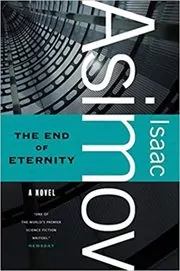
The End of Eternity
by Isaac Asimov
1955
Andrew Harlan belongs to Eternity, an organization whose members alter history to manage humanity's future. When he falls in love, his determination to preserve that relationship puts him at odds with the system he has served.
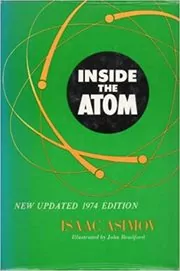
Inside The Atom
by Isaac Asimov
1956
Asimov follows the discoveries that revealed the atom's internal structure, explaining particles, chemical elements and isotopes. The account connects the stability of atomic nuclei to radioactivity and nuclear energy, including the possibilities and dangers of using that energy.
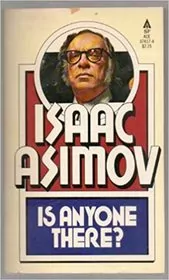
Is Anyone There?
by Isaac Asimov
1956
This collection of science essays ranges from human biology and chemistry to astronomy, extraterrestrial life and speculation about the future. Asimov considers what science can explain while exploring questions that remain uncertain, including whether intelligence exists beyond Earth.
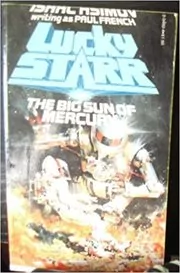
Lucky Starr and the Big Sun of Mercury
by Isaac Asimov
1956
Sabotage threatens Project Light, an experiment on Mercury intended to transmit solar energy through hyperspace. Lucky Starr arrives to investigate amid reports of impossible apparitions and lethal dangers, searching for an enemy hidden within the troubled scientific project.
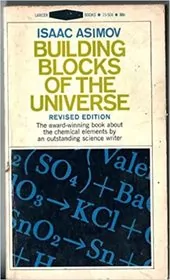
Building Blocks of the Universe
by Isaac Asimov
1957
Written for young readers, this introduction presents chemical elements as the materials from which the universe is built. Asimov explains their properties and relationships, showing how knowledge of elements helps make sense of the substances around us.
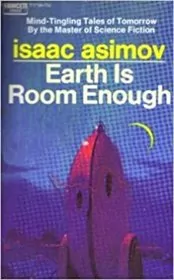
Earth is Room Enough
by Isaac Asimov
1957
These science fiction and fantasy stories keep their settings on Earth while exploring robots, computers, parallel worlds and human encounters with the unexpected. Comic verse accompanies tales in which familiar surroundings become the starting point for speculative puzzles.
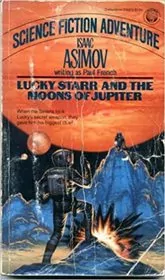
Lucky Starr and the Moons of Jupiter
by Isaac Asimov
1957
Secrets from an antigravity research project on a moon of Jupiter are reaching the hostile Sirians. Lucky Starr and Bigman investigate the leak, facing resistance from the project's personnel while trying to identify a spy among them.
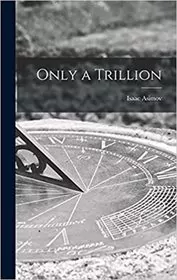
Only a Trillion
by Isaac Asimov
1957
Science essays explore subjects including unstable atoms, processes within the body and methods of dating ancient material. Asimov combines explanations of real scientific questions with spoof articles, moving between careful reasoning and playful imitations of scientific research.
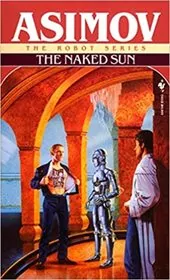
The Naked Sun
by Isaac Asimov
1957
Elijah Baley and his robot partner R. Daneel Olivaw investigate a murder on Solaria, where people avoid physical contact and rely on robots. The killing challenges the colony's social customs and assumptions about what its machines can do.
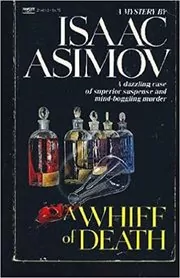
A Whiff of Death
by Isaac Asimov
1958
When a careful chemistry student dies during an experiment, Professor Lou Brade doubts the explanation of an accident. Evidence of switched chemicals sends him searching through campus rivalries and suspicious motives while suspicion also falls on him.
All the Troubles of the World
by Isaac Asimov
1958
Multivac predicts crimes and manages humanity's problems, but its warning about an impending murder becomes increasingly puzzling. Joseph Manners is detained despite knowing nothing of the threat, and his son's involvement deepens questions about the computer's apparent certainty.
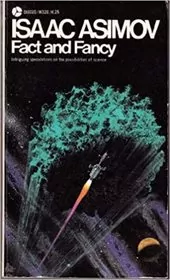
Fact and Fancy
by Isaac Asimov
1958
Asimov uses established scientific ideas as starting points for speculative essays about the universe and humanity's place in it. Topics such as gravity and the regions beyond the planets show how factual reasoning can lead to unexpected possibilities.
Lucky Starr and the Rings of Saturn
by Isaac Asimov
1958
A fleeing Sirian spy leaves secret information among Saturn's icy rings. Lucky Starr and Bigman race to recover it before the Sirian fleet, confronting a struggle in which intelligence, planetary claims and interstellar rivalry threaten Earth's position.
The World of Carbon
by Isaac Asimov
1958
This introduction to organic chemistry explains how carbon combines with other elements to produce a wide range of substances. Asimov connects molecular structures and chemical names to familiar materials, helping readers understand the compounds encountered in everyday life.
The World of Nitrogen
by Isaac Asimov
1958
Asimov explores organic compounds containing nitrogen, explaining their structures and roles in substances such as vitamins, antibiotics, dyes and explosives. Building on basic carbon chemistry, the book connects chemical formulas with materials important to industry and living organisms.
Worlds Within Worlds
by Isaac Asimov
1958
Asimov traces the scientific developments that made nuclear energy understandable and usable. The account links discoveries about atoms, electricity and energy with investigations of nuclear structure and reactions, showing how separate lines of research came together.
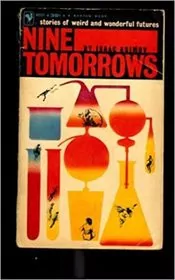
Nine Tomorrows
by Isaac Asimov
1959
Nine science fiction stories explore future education, computers, alien intervention and encounters across time. The collection includes mysteries and speculative puzzles alongside tales about a Neanderthal child and humanity's attempts to answer a question reaching far into the future.
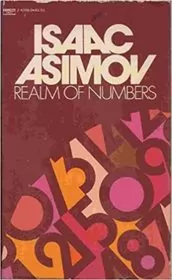
Realm of Numbers
by Isaac Asimov
1959
Beginning with counting and the abacus, Asimov introduces increasingly abstract ideas about numbers. His explanations move through zero, fractions and decimals to logarithms, imaginary numbers and infinity, presenting mathematical concepts for readers without an advanced mathematical background.
The Clock We Live On
by Isaac Asimov
1959
Asimov examines how people developed clocks and calendars from observations of Earth, the Sun and the Moon. Astronomy, geography and history come together in an account of timekeeping, including the difficulties of matching lunar cycles with the seasons.
Words of Science and The History Behind Them
by Isaac Asimov
1959
Arranged as a dictionary, this book explains scientific terms through their meanings, linguistic roots and histories. Asimov uses individual words as starting points for short discussions that connect the language of science with the ideas and discoveries behind it.
Asimov's New Guide to Science
by Isaac Asimov
1960
Asimov explains scientific ideas through the people and discoveries that shaped them. Moving across the physical and biological sciences, he connects complex concepts to their history and introduces them for readers without specialist training.
Recommended by
1 person Patrick Collison recommended this book
Patrick Collison
Patrick Collison labeled this book "substantially above average."
Patrick Collison's recommendation of this book
Satellites in Outer Space
by Isaac Asimov
1960
This introduction for young readers explains artificial satellites, how they function, and what they can reveal. Asimov describes their role in collecting information about natural phenomena and the conditions beyond Earth's atmosphere.
The Double Planet
by Isaac Asimov
1960
Asimov traces humanity's efforts to understand Earth and its companion, the Moon. Discoveries about Earth's shape and rotation lead into an account of the two worlds, their relationship, and the observations that revealed their nature.
The Wellsprings of Life
by Isaac Asimov
1960
Asimov explores the question of what life is through the development of biological ideas. Species, cells, molecules, and life's origins connect evolution, heredity, and biochemistry in a history of scientists' efforts to understand living things.
Realm of Algebra
by Isaac Asimov
1961
Starting with basic algebraic ideas, Asimov explains how symbols and equations extend arithmetic. He moves toward quadratic and simultaneous equations, imaginary numbers, and practical examples, showing how mathematical reasoning helps describe everyday problems and scientific discoveries.
The Bloodstream
by Isaac Asimov
1961
Asimov examines blood as the body's living transport system, explaining its chemical components and their functions. The account connects circulation with breathing, nourishment, clotting, and other processes that keep the body's cells alive.
Words from the Myths
by Isaac Asimov
1961
Greek gods and heroes survive in words people use every day. Asimov retells myths from creation to the siege of Troy, tracing how their characters and events helped shape modern vocabulary and scientific names.
The Genetic Effects of Radiation
by Isaac Asimov
1962
Asimov and geneticist Theodosius Dobzhansky explain heredity and the ways radiation can alter genetic material. Cells, chromosomes, and mutations provide the background for examining radiation exposure and its possible consequences for individuals and future generations.
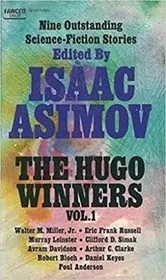
The Hugo Winners, Vol. 1
by Isaac Asimov
1962
Edited by Asimov, this anthology gathers nine Hugo Award-winning science fiction stories from 1955 through 1961. His introductions accompany the selections, offering context for the writers and their contributions to the field's shorter fiction.
The Search for the Elements
by Isaac Asimov
1962
Asimov follows the long search for the substances that make up the universe, from ancient speculation and alchemy to laboratory discoveries. The identification of chemical elements becomes a history of chemistry and the creation of artificial elements.
Words on the Map
by Isaac Asimov
1962
Place names become starting points for short essays on language and history. Asimov explores the origins of names for countries, cities, states, and other geographical features, connecting familiar map labels with the people and events behind them.
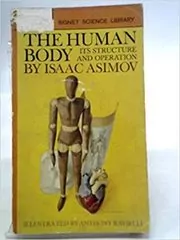
The Human Body
by Isaac Asimov
1963
Asimov describes the structure and workings of the human body, moving through bones, muscles, organs, and major systems. His explanation connects individual parts to the coordinated processes that keep a person alive and functioning.
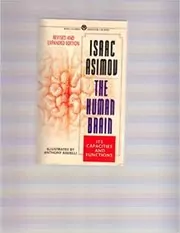
The Human Brain
by Isaac Asimov
1963
Asimov introduces the human brain's structure, capacities, and functions for general readers. His account examines the nervous system alongside hormones and the senses, explaining how the body receives information and coordinates its responses.
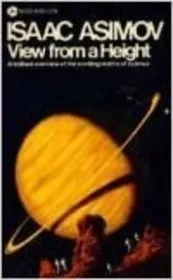
View from a Height
by Isaac Asimov
1963
These science essays range across biology, chemistry, physics, and astronomy. Asimov uses questions about particles, Earth's composition, time, and possible forms of life to connect individual scientific topics with a broader view of the natural world.
Words from the Exodus
by Isaac Asimov
1963
Asimov follows biblical words and phrases through Exodus, Leviticus, Numbers, and Deuteronomy. Retellings of the Israelites' journey accompany explanations of language, showing how familiar religious stories contributed expressions and meanings to later everyday speech.
A Short History of Biology
by Isaac Asimov
1964
This history traces biological thought from ancient Greek medicine and natural history to Darwin and molecular biology. Asimov follows changing ideas about living organisms, connecting major discoveries with the questions that encouraged scientists to investigate life.
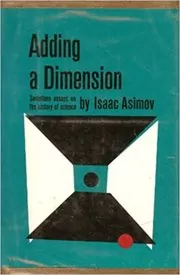
Adding a Dimension
by Isaac Asimov
1964
Seventeen essays explore mathematics, physics, chemistry, biology, and astronomy. Asimov moves from large numbers and infinity to chemical language and the galaxy, using individual puzzles and explanations to introduce connections among different branches of science.
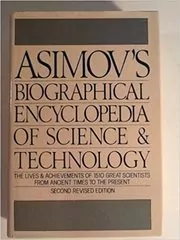
Asimov's Biographical Encyclopedia of Science and Technology
by Isaac Asimov
1964
This reference book tells the history of science through the lives and achievements of scientists. Chronologically arranged biographies connect discoveries across disciplines, while cross-references help readers follow the relationships among researchers and their work.
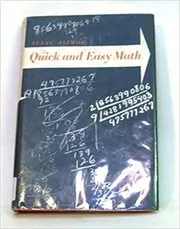
Quick and Easy Math
by Isaac Asimov
1964
Asimov explains shortcuts for addition, subtraction, multiplication, division, fractions, and decimals. Rather than simply listing tricks, he connects faster calculations to the mathematical principles behind them, showing how complicated arithmetic can become a sequence of easier steps.
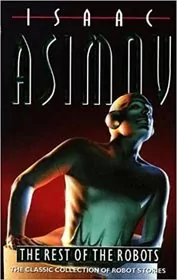
The Rest of the Robots
by Isaac Asimov
1964
Susan Calvin and engineers Powell and Donovan confront more problems involving positronic robots. These stories investigate strange behavior and dangerous failures, testing the practical and ethical complications that arise when people depend on machines governed by the Three Laws.
A Short History of Chemistry
by Isaac Asimov
1965
Asimov traces chemistry from prehistoric metalworking through alchemy to the development of modern chemical science. The narrative follows changing methods and ideas, explaining how people learned to identify substances and understand the transformations of matter.
An Easy Introduction to the Slide Rule
by Isaac Asimov
1965
This introduction explains how to operate a slide rule and understand the reasoning behind it. Asimov develops its use for multiplication, division, powers, and roots from familiar arithmetic and the properties of logarithmic scales.
From Earth to Heaven
by Isaac Asimov
1965
Seventeen science essays travel from Earth's geography and oceans to chemistry, physics, and astronomy. Asimov discusses subjects including latitude and longitude, uncertainty, chemical quantities, and collapsed stars, linking everyday questions with much larger scientific ideas.
Of Time, Space, and Other Things
by Isaac Asimov
1965
These essays explore timekeeping, gravity, planetary names, measurement, and human lifespans. Asimov combines explanations of scientific concepts with historical and linguistic questions, moving from familiar ways of counting and measuring to the scale of the universe.
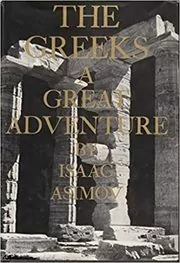
The Greeks
by Isaac Asimov
1965
Asimov surveys Greek history from its early beginnings through the twentieth century. Political struggles, warfare, culture, and changing foreign rule form a continuous narrative about Greece and the influence its people had beyond their own lands.
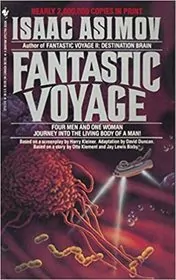
Fantastic Voyage
by Isaac Asimov
1966
A crew and submarine are shrunk to microscopic size and injected into a dying man's bloodstream. Their mission is to destroy a clot in his brain, but the body's defenses and internal hazards threaten the rescue.
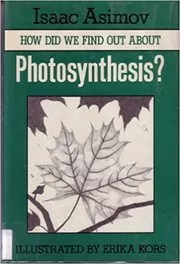
How Did We Find Out About Photosynthesis?
by Isaac Asimov
1966
Asimov traces the discoveries that revealed how photosynthesis works. Written for young readers, the account connects experiments on plants with food production, ecological balance, and the atmosphere, showing why understanding this process matters beyond the laboratory.
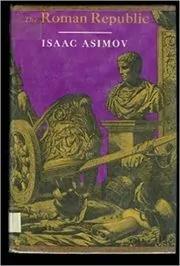
Roman Republic
by Isaac Asimov
1966
Asimov follows Rome from its early settlement and kings through the republic's expansion and political crises. Conquests, leaders, and struggles over government explain how a small Italian community became a power across the Mediterranean.
The Noble Gases
by Isaac Asimov
1966
Asimov explains the discovery, properties, and uses of the noble gases. Their place in the periodic table leads into chemical bonding and the discovery of compounds that challenged earlier assumptions about these supposedly unreactive elements.
The Universe
by Isaac Asimov
1966
Asimov traces the growth of humanity's picture of the universe, beginning with a limited view of Earth. Astronomical discoveries progressively widen the scale of the story to stars, galaxies, and the distant objects studied by modern observatories.
Asimov's Guide to the Bible
by Isaac Asimov
1967
Asimov guides readers through the Bible's historical and geographical background. Explanations of places, people, and political events provide context for its books, making their settings more understandable to readers without extensive knowledge of ancient history.
Chemicals of Life
by Isaac Asimov
1967
Asimov introduces the substances that make life possible, including proteins, enzymes, vitamins, and hormones. He explains how these chemicals work within cells and the body, connecting unseen molecular activity with growth, movement, and the maintenance of life.
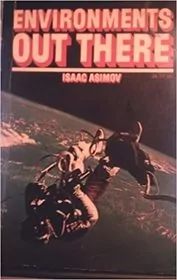
Environments Out There
by Isaac Asimov
1967
A tour for young readers considers conditions on the Moon, planets, asteroids, and more distant worlds. Asimov examines temperature, atmosphere, gravity, and other challenges to human survival, combining space-age knowledge with questions about exploration and life elsewhere.
The Egyptians
by Isaac Asimov
1967
Asimov surveys Egypt's history from prehistoric beginnings to the twentieth century. Life along the Nile connects the narrative, while changing rulers and encounters with neighboring powers show how Egyptian civilization developed across thousands of years.
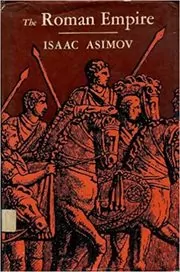
The Roman Empire
by Isaac Asimov
1967
This history follows the Roman Empire from the age of Augustus to the fall of the western empire. Asimov examines imperial power, Roman law, Christianity, and invasions, explaining the changes that shaped Rome's enduring influence.
Through a Glass, Clearly
by Isaac Asimov
1967
Four science fiction stories explore unfamiliar possibilities in ordinary human lives and dangerous situations. A boy discovers the outdoors in a technological future, a physicist confronts a disturbing theory, and captured passengers face an alien-held spaceship.
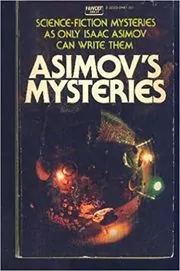
Asimov's Mysteries
by Isaac Asimov
1968
Fourteen stories combine mysteries with science fiction, making scientific knowledge part of the search for answers. Strange deaths, unusual settings, and puzzles involving advanced technology invite readers to follow the clues alongside Asimov's investigators.
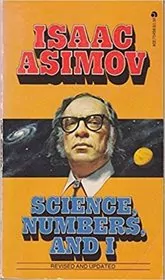
Science, Numbers, And I
by Isaac Asimov
1968
Seventeen essays mix scientific explanations, numerical puzzles, speculation, and autobiographical anecdotes. Asimov moves among chemical and mathematical ideas, questions about time and the universe, and memories from his own life as a reader and writer.
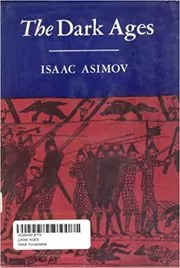
The Dark Ages
by Isaac Asimov
1968
Asimov chronicles Europe from the collapse of the Roman Empire through Charlemagne and his successors to the end of the first millennium. Changing rulers and kingdoms provide a framework for understanding the political world of early medieval Europe.
The Near East
by Isaac Asimov
1968
Asimov follows the history of the lands around the Tigris and Euphrates. Successive civilizations and empires, including Sumerians, Babylonians, Assyrians, and Persians, form a narrative about the region's changing rulers and lasting importance in human history.
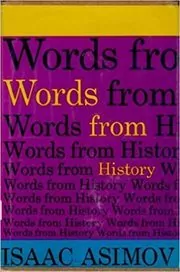
Words from History
by Isaac Asimov
1968
Asimov explores the origins of 250 words rooted in historical events and ideas. Moving alphabetically from admiral to Zionism, he connects familiar vocabulary with the people, conflicts, and developments that helped give it meaning.
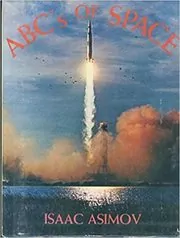
ABC's of space
by Isaac Asimov
1969
Two space-related terms for each letter introduce young readers to the vocabulary of astronomy and space travel. Pictures accompany the entries, making this an alphabetical starting point for exploring words connected with the universe.
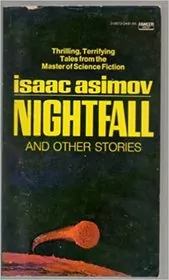
Nightfall and Other Stories
by Isaac Asimov
1969
Twenty stories explore worlds where science changes ordinary assumptions, from a civilization facing darkness to machines with independent minds. Asimov introduces each selection, offering context for tales written across more than two decades.
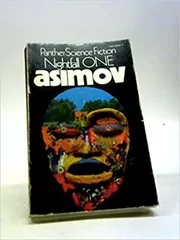
Nightfall One
by Isaac Asimov
1969
The first part of Asimov's Nightfall collection gathers stories including Nightfall, Green Patches, and Hostess. Alien encounters and scientific mysteries shape the tales, while the title story examines a civilization threatened by unfamiliar darkness.
Nightfall Two
by Isaac Asimov
1969
The second part of Asimov's Nightfall collection gathers short fiction with introductions by the author. Stories including Sally, Strikebreaker, and The Machine That Won the War explore technology, human behavior, and unexpected problems.
Opus 100
by Isaac Asimov
1969
To mark his hundredth book, Asimov looks back at his first ninety-nine through commentary and selected passages. Fiction, science, and other interests share the collection, which also includes complete stories and a science essay.
The Neutrino
by Isaac Asimov
1969
Asimov traces how physicists proposed the neutrino to solve a theoretical problem and later confirmed its existence. The account follows scientific reasoning and experimental work, showing how an apparently elusive particle became an observable discovery.
The Shaping of England
by Isaac Asimov
1969
Asimov traces Britain's history from the Stone Age to the signing of Magna Carta in 1215. Roman rule, Norman conquest, and struggles involving kings and the church provide the framework for understanding England's early development.
The Shaping of North America
by Isaac Asimov
1969
Asimov follows North America's history from its earliest periods to 1763, concentrating on European interests and rivalries. Exploration and competition between powers explain how the continent developed before the events that would lead to American independence.
Understanding Physics
by Isaac Asimov
1969
Three linked volumes introduce motion, sound, heat, light, magnetism, electricity, and the particles within atoms. Asimov explains the development of physical ideas for general readers, connecting familiar phenomena with the theories used to understand them.
Constantinople
by Isaac Asimov
1970
Asimov tells the history of Constantinople and the Eastern Roman Empire. The account examines the civilization that continued after Rome's fall, explaining why its capital and long survival matter to the broader story of Europe.
Light
by Isaac Asimov
1970
This short introduction explains what light is, how it moves through space, and what happens when it meets matter. Asimov presents the subject for young readers, connecting an everyday experience with basic physical ideas.
Space Dictionary
by Isaac Asimov
1970
More than fifty illustrated entries introduce words associated with space. Arranged alphabetically, the book gives young readers brief explanations of unfamiliar terms, offering a way to build vocabulary while learning about astronomy and space exploration.
20th Century Discovery
by Isaac Asimov
1971
Asimov surveys changes in scientific knowledge since 1900, moving from astronomy to the world inside the atom. The book connects discoveries at those very different scales with the technological changes reshaping everyday human life.
ABC's of the Earth
by Isaac Asimov
1971
Two Earth-related words for every letter of the alphabet form this illustrated introduction to the planet's vocabulary. Asimov defines the terms for young readers, using an alphabetical format to make individual entries easy to find.
ABC's of the Ocean
by Isaac Asimov
1971
This illustrated oceanography dictionary provides two entries for each letter of the alphabet. Terms such as aquanaut, buoy, and continental shelf introduce young readers to the language used to describe oceans and activities involving them.
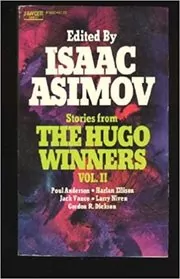
The Hugo Winners, Vol. 2
by Isaac Asimov
1971
Asimov introduces a collection of Hugo Award-winning science fiction from the 1960s. Stories by writers including Jack Vance, Poul Anderson, and Harlan Ellison present a range of approaches to imagined worlds, future technology, and human problems.
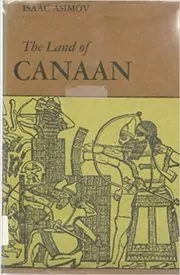
The Land of Canaan
by Isaac Asimov
1971
Asimov examines the history of Canaan and its neighboring peoples along the eastern Mediterranean. Political struggles, the development of the alphabet, and the growth of religious traditions connect a small region with a much wider historical influence.
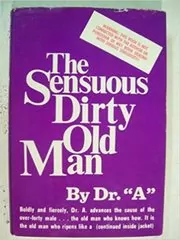
The Sensuous Dirty Old Man
by Isaac Asimov
1971
Writing in a deliberately serious voice, Asimov parodies sexual advice manuals through the supposed techniques and difficulties of a dirty old man. Wordplay and exaggerated instructions turn the subject into a comic guide to leering and flirtation.
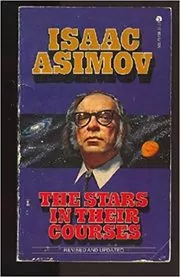
The Stars In Their Courses
by Isaac Asimov
1971
Seventeen essays move through astronomy, physics, chemistry, and questions about science's place in society. Asimov links subjects such as the sun, Earth's mass, and the elements, presenting scientific ideas alongside the history behind them.
Isaac Asimov sub-series and character series
Greater Foundation books in order
Explore this seriesLucky Starr books in order
Explore this seriesThe Complete Stories books in order
Explore this seriesStandalone Isaac Asimov books
Edited by
Software engineer whose passion for tracking book recommendations from podcasts inspired the creation of MRB.
Lead investor at 3one4 Capital whose startup expertise and love for books helped shape MRB and its growth.
Comments
Did we miss something? Have feedback?
Help us improve this page by sharing your thoughts