
Isaac Asimov Books in Order
Browse the Isaac Asimov collaborations with Martin H Greenberg in order, with anthology summaries, subseries notes, and quick guidance on where to start.
Last updated: 13 new books added
As an Amazon Associate, we earn from qualifying purchases (at no extra cost to you).
Isaac Asimov books in publication order
369 books

Exploring The Earth And The Cosmos
by Isaac Asimov
1982
Asimov follows the ways people have extended their physical limits through exploration, invention and measurement. Journeys across Earth and into space connect with investigations of time, matter and energy, forming a history of expanding human knowledge.

Foundation's Edge
by Isaac Asimov
1982
Exiled councilman Golan Trevize joins a historian in a search for the legendary planet Earth. Their journey also tests rumors that the Second Foundation survives, while another force appears to be influencing the galaxy’s future.

How Did We Find Out About Life in the Deep Sea?
by Isaac Asimov
1982
Asimov explains how explorers discovered living creatures in ocean depths once thought unable to support life. This introduction to oceanography follows investigations beneath the reach of sunlight and describes how deep-sea organisms survive in their unusual surroundings.

How Did We Find Out About the Beginning of Life?
by Isaac Asimov
1982
Scientists’ attempts to explain life’s beginnings form the subject of this introduction for young readers. Asimov traces experiments and changing ideas about spontaneous generation and evolution, showing how evidence gradually reshaped questions about the origin of living things.

How We Found Out About Numbers
by Isaac Asimov
1982
Asimov traces the origin of numbers and the development of Roman, Egyptian and Hindu numeral systems. This introduction for young readers follows the ways people learned to represent quantities, turning familiar counting into a history of mathematical ideas.

More... Would You Believe?
by Isaac Asimov
1982
This collection gathers little-known facts from human and natural history for young readers. Asimov presents short pieces of information rather than a continuous narrative, inviting readers to explore unfamiliar details about people and the world around them.

Counting the Eons
by Isaac Asimov
1983
Seventeen essays explore Earth’s age, deep oceans, stars and the physical structure of the universe. Asimov moves between geological time and questions of matter and energy, explaining how scientists investigate scales far beyond ordinary experience.

How Did We Find Out About Genes?
by Isaac Asimov
1983
Asimov follows the study of heredity from Gregor Mendel’s plant-breeding experiments to research on mutations. Written for young readers, the book explains how changing knowledge of genes helped scientists understand inherited traits and the evolution of species.

How Did We Find Out About the Universe?
by Isaac Asimov
1983
This introduction follows discoveries that changed humanity’s view of the universe, from ancient astronomy to telescopes and distant galaxies. Asimov explains expanding space and the Big Bang through the observations and reasoning that led scientists toward these ideas.

Norby, the Mixed-Up Robot
by Isaac Asimov
1983
Space Academy cadet Jeff Wells buys a teaching robot and discovers that Norby is far more unusual than expected. The robot’s strange abilities draw the pair into a conspiracy threatening the Solar System, with Jeff’s future caught in the danger.

The Golden Years of Science Fiction
by Isaac Asimov
1983
This anthology gathers science fiction stories originally published in 1939 and 1940, selected by Isaac Asimov and Martin H. Greenberg. It brings together two annual collections, offering a sample of the ideas and storytelling of the period.

The Golden Years of Science Fiction
by Isaac Asimov
1983
The second Golden Years anthology combines selections from science fiction published in 1941 and 1942. Edited by Isaac Asimov and Martin H. Greenberg, its stories and novellas offer readers a cross-section of the field during those years.

The Measure of the Universe
by Isaac Asimov
1983
Asimov uses familiar comparisons to explain measurements ranging from atoms to stars. Moving through length, mass, temperature, time and other quantities, he shows how metric units and powers of ten help readers picture sizes beyond everyday experience.

The Robots of Dawn
by Isaac Asimov
1983
Detective Elijah Baley travels to Aurora to investigate the destruction of an advanced humanoid robot. Working with R. Daneel Olivaw, he must examine evidence against a roboticist while political tensions place Earth’s future expansion into space at risk.

The Roving Mind
by Isaac Asimov
1983
These essays examine creationism, censorship, technological progress and the distinction between science and pseudoscience. Asimov connects scientific questions with social consequences, adding reflections on writing and personal experience to a collection concerned with how people assess knowledge.

The Sun Shines Bright
by Isaac Asimov
1983
Seventeen science essays range from the Sun and nearby planets to cloning, chemical elements and the lives of scientists. Asimov connects questions about the physical universe with human concerns, including population growth and the possibilities opened by biological research.

The Union Club Mysteries
by Isaac Asimov
1983
Conversations among members of the Union Club prompt Griswold to recount mysteries he claims to have solved. Thirty short puzzles involve people ranging from spies to lovers, giving readers the clues before revealing how the storyteller reached his answers.

The Winds of Change
by Isaac Asimov
1983
Twenty-one stories mix science fiction, satire and wordplay through problems involving altered history, alien visitors and unusual abilities. A levitating scientist, a memory-enhancing drug and a threatening black hole are among the ideas Asimov explores through these short narratives.

X Stands for Unknown
by Isaac Asimov
1983
Seventeen essays investigate questions in physics, chemistry, astronomy and mathematics. Asimov moves from light and matter to planetary orbits and the wider universe, using the history of scientific discovery to explain how researchers approach what they do not yet understand.

Bakers Dozen
by Isaac Asimov
1984
Thirteen short science fiction novels bring together writers including Isaac Asimov, Larry Niven and Robert Silverberg. The anthology ranges across time travel, alien invasion, space warfare and a future consumer society, giving readers several different approaches to speculative storytelling.

Banquets of the Black Widowers
by Isaac Asimov
1984
The Black Widowers gather over dinner to hear problems posed by their guests. Twelve mysteries turn on riddles, overlooked facts and misunderstood words, with the club’s discussions and waiter Henry’s observations guiding the search for explanations.

Great Tales of the Golden Age of Science Fiction
by Isaac Asimov
1984
This anthology brings together short science fiction novels from the 1940s, including Theodore Sturgeon’s Killdozer! and Asimov’s The Big and the Little. Its varied selections offer readers a view of the stories and ideas associated with the genre’s Golden Age.

How Did We Find Out About Computers?
by Isaac Asimov
1984
Asimov traces computing from counting on fingers and using an abacus to mechanical calculators and electronic machines. Written for young readers, the history explains how successive inventions led toward silicon chips and computers capable of storing and processing information.

How Did We Find Out About Robots?
by Isaac Asimov
1984
Clockwork toys, automatic machines and industrial robots mark the stages of this history for young readers. Asimov explains how computers and microchips expanded robotic capabilities, while considering the influence of science fiction and the effects of automation on work.

Isaac Asimov's Limericks for Children
by Isaac Asimov
1984
Forty-eight limericks introduce children to Asimov’s humorous verse, accompanied by Wally Neibart’s illustrations. The collection uses the short poem’s familiar rhythm and rhyme, offering a change of pace from the author’s science writing and fiction.
Neptune
by Isaac Asimov
1984
Young readers learn about Neptune’s characteristics and movements, alongside the observations that established knowledge of this distant planet. Asimov connects its place in the solar system with the methods astronomers used to find and study it.

Norby's Other Secret
by Isaac Asimov
1984
Scientists want to dismantle Norby to uncover the source of his antigravity abilities. The robot and Jeff Wells flee to Jamya, where intelligent dragons and angry robots surround a mystery about Norby’s origins and additional powers.

Science Fiction
by Isaac Asimov
1984
This anthology collects science fiction from the genre’s Golden Age, including work by Asimov, Theodore Sturgeon and C. L. Moore. The short novels explore speculative worlds and technological possibilities through stories such as Killdozer! and No Woman Born.

The Golden Years of Science Fiction
by Isaac Asimov
1984
The third Golden Years volume brings together science fiction from 1943 and 1944, drawn from two annual anthologies. Isaac Asimov and Martin H. Greenberg select stories that let readers explore the genre through work first published in those years.

The Golden Years of Science Fiction
by Isaac Asimov
1984
The fourth Golden Years anthology combines stories and novellas from 1945 and 1946. Edited by Isaac Asimov and Martin H. Greenberg, it includes work by Arthur C. Clarke, Ray Bradbury and other writers active during the period.

The History of Physics
by Isaac Asimov
1984
Asimov traces the development of physics from ancient ideas to modern investigations of matter and energy. Discussions of motion, gravitation, electrons and radioactivity connect changing theories with the discoveries that gave scientists new ways to describe the physical world.

The Mammoth Book of Golden Age
by Isaac Asimov
1984
Ten short science fiction works from the 1940s appear in this anthology edited by Isaac Asimov and Martin H. Greenberg. Selections include The Weapons Shop, Nerves and No Woman Born, presenting different writers’ visions from the genre’s Golden Age.

Asimov's Guide to Halley's Comet
by Isaac Asimov
1985
Asimov explains comets through the history of observation and the science of their paths around the Sun. Focusing on Halley’s Comet, he connects its predicted returns with earlier fears and the evidence astronomers use to understand these objects.

How Did We Find Out About DNA?
by Isaac Asimov
1985
Asimov explains how scientists discovered DNA’s role in carrying inherited information. This introduction for young readers follows research into genes, cell nuclei and proteins, showing how investigators gradually connected reproduction with the molecular structure underlying heredity.

How Did We Find Out About the Atmosphere?
by Isaac Asimov
1985
Air pressure, the gases around Earth and the discovery of noble gases form the core of this introduction. Asimov follows experiments that revealed the atmosphere’s nature, then compares it with information gathered about the air surrounding other planets.

Isaac Asimov on the Human Body and the Human Brain
by Isaac Asimov
1985
This volume explains human ancestry, the structure of the body and the organization of the brain. Asimov connects anatomy with function, introducing readers to the physical systems that support human life and the workings of its central nervous system.

Living In the Future
by Isaac Asimov
1985
Futurists consider how information technology, nuclear conflict and environmental damage might shape life ahead. With Isaac Asimov among the contributors, the book examines possible social changes and asks how choices in the present could alter undesirable future trends.

Norby and the Invaders
by Isaac Asimov
1985
Jeff Wells and Norby set out to rescue Jamya’s Grand Dragon from blimplike aliens called the Hleno. The mission puts the friends in danger as the invaders’ hostility toward technology threatens to leave Jeff stranded and Norby unable to act.

Norby and the Lost Princess
by Isaac Asimov
1985
Jeff and Norby reach the planet Izz and are pressed into searching for a missing princess. Their journey takes them to a muddy world inhabited by creatures that communicate through music, where captivity complicates their attempt to complete the rescue.
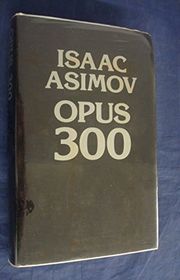
Opus 300
by Isaac Asimov
1985
Asimov looks back over his third hundred books through selections spanning astronomy, physics, biology, history, humor, and science fiction. Background pieces explain how the works began and connect their varied subjects to his wider career as a writer.

Robots and Empire
by Isaac Asimov
1985
Settler traders encounter deadly robots on Solaria after its human population disappears. Gladia travels there with Daneel and Giskard, drawing the robots into a conflict between human societies and a conspiracy threatening Earth that challenges their governing laws.

The Disappearing Man
by Isaac Asimov
1985
Young sleuth Larry solves five cases that have baffled professional police officers, including the disappearance of a jewel thief. These short mysteries give readers clues to examine alongside him, making observation and reasoning central to each investigation.

The Earth's Moon
by Isaac Asimov
1985
This introduction examines the Moon’s phases, eclipses, possible origins and exploration. Asimov links familiar sights in the night sky with the discoveries that revealed more about Earth’s companion, while considering questions about its history and future prospects.

The Edge of Tomorrow
by Isaac Asimov
1985
Science essays and fictional stories examine scientists, their discoveries, and the consequences of new ideas. Moving between historical research and imagined experiments, Asimov explores how curiosity can transform understanding while creating unexpected moral and practical problems.

The Hugo Winners, Vol. 4
by Isaac Asimov
1985
This anthology collects thirteen Hugo-winning stories from 1976 through 1979, edited by Asimov. Contributions from Roger Zelazny, James Tiptree Jr., and other writers offer a range of science-fiction approaches, including Asimov's own The Bicentennial Man.

Foundation and Earth
by Isaac Asimov
1986
Uncertain about his decision concerning humanity's future, Golan Trevize searches for the long-lost planet Earth. Accompanied by historian Janov Pelorat and Bliss, he travels among unfamiliar worlds, seeking evidence that could explain his choice.

How Did We Find Out About the Speed of Light?
by Isaac Asimov
1986
Asimov traces attempts to measure the speed of light, beginning with Galileo's experiments and continuing through later astronomical and laboratory methods. The book connects those discoveries with relativity and explains why this measurement matters to understanding the universe.

Norby and the Queen's Necklace
by Isaac Asimov
1986
A necklace resembling Marie Antoinette's sends Norby, Jeff, and their friends into the French Revolution. Its malfunctioning time-travel technology draws them through different eras and an altered future, complicating their efforts to set things right.

Robot Dreams
by Isaac Asimov
1986
This collection brings together robot stories and other science fiction, including a robot's unsettling dream and a machine determined to remain hidden. Asimov uses technological puzzles to explore human judgment, invention, and the limits of understanding.

The Best Science Fiction of Isaac Asimov
by Isaac Asimov
1986
Asimov selects twenty-eight favorite short stories from his own science-fiction writing. The collection gives readers a broad sampling of his shorter work, bringing several independently readable stories together in a single volume chosen by their author.

The Dangers of Intelligence
by Isaac Asimov
1986
These short science essays consider developments in technology, environmental problems, and possible futures for humanity. Originally written as magazine columns, they range across scientific questions and speculate about how discoveries might affect daily life and the wider world.

The Hugo Winners, Vol. 5
by Isaac Asimov
1986
Asimov introduces nine Hugo-winning stories from 1980 through 1982, written by authors including Barry B. Longyear, George R. R. Martin, and Roger Zelazny. The anthology brings together shorter fiction rather than a single continuous narrative.

Beginnings
by Isaac Asimov
1987
Beginning with humanity and working backward, Asimov explores the origins of life, Earth, the solar system, and the universe. The book connects familiar questions about our beginnings with increasingly distant stages of natural and cosmic history.
Best Mysteries of Isaac Asimov
by Isaac Asimov
1987
Thirty-one short mysteries feature the Black Widowers, the Union Club, and other investigators, including young detective Larry. The collection gathers several of Asimov's approaches to puzzle solving, giving readers clues to consider across distinct, self-contained cases.
Beyond the Stars
by Isaac Asimov
1987
This volume collects the first half of The Hugo Winners, Volume Four, with an introduction by Asimov. Stories include Home Is the Hangman, Houston, Houston, Do You Read?, and The Bicentennial Man, offering several different science-fiction premises.

Did Comets Kill the Dinosaurs?
by Isaac Asimov
1987
Asimov examines possible causes of the dinosaurs' extinction, including explanations involving comets and other objects from space. Written for younger readers, the book introduces the evidence and ideas scientists used to investigate a major prehistoric mystery.

Fantastic Voyage II
by Isaac Asimov
1987
Kidnapped and taken to the Soviet Union, scientist Albert Morrison is forced into a miniature expedition inside a dying researcher's body. His team must reach the man's brain and recover crucial knowledge before their limited time expires.

Far as Human Eye Could See
by Isaac Asimov
1987
These science essays move through physical chemistry, biochemistry, Earth's interior, and astronomy. Asimov connects questions about matter and living processes with investigations of space, giving readers a collection of explanations that range from small-scale reactions to cosmic possibilities.

How Did We Find Out About Sunshine?
by Isaac Asimov
1987
Asimov examines the Sun's composition, age, and role as a source of energy. The book follows scientific efforts to understand sunshine, introducing radioactivity and fusion as part of the explanation for the star that sustains Earth.

How Did We Find Out About the Brain?
by Isaac Asimov
1987
This introduction follows the study of the brain, its cells, and the transmission of nerve impulses. Asimov also discusses the brain's different sides and sleep, presenting the questions and discoveries that helped explain this protected organ.

Norby Finds a Villain
by Isaac Asimov
1987
Jeff and his mixed-up robot Norby travel backward and forward through time, then become prisoners on an alien planet in another universe. Their unusual abilities bring complications as they try to escape their latest predicament.

Ancient Astronomy
by Isaac Asimov
1988
Ancient observers studied the Sun, Moon, planets, and stars to create calendars, sundials, and maps of the sky. Asimov explains how their observations began a longer effort to understand the cosmos, following developments toward the Copernican revolution.

Asimov's Annotated Gilbert and Sullivan
by Isaac Asimov
1988
The complete librettos of Gilbert and Sullivan's fourteen operettas appear alongside Asimov's explanatory notes. He clarifies unfamiliar words and references, supplies historical background, and discusses the productions, helping readers follow the humor and circumstances behind the works.

Asimov's Galaxy
by Isaac Asimov
1988
Collected editorials from Asimov's science-fiction magazine reflect on the genre, its writers, and its readers. Personal anecdotes accompany discussions of broader subjects, offering a view of science fiction through the experiences and opinions of a longtime participant.

Azazel
by Isaac Asimov
1988
George tells a writer about the favors he obtains from Azazel, a tiny demon with unusual powers. These comic fantasy stories follow attempts to help friends that go wrong, turning apparently convenient wishes into unexpected problems.

Earth
by Isaac Asimov
1988
Asimov introduces younger readers to Earth's movement, interior geology, atmosphere, and other features. The book looks at the planet we inhabit as an object of scientific study, explaining characteristics that shape its place in the solar system.

Ghosts
by Isaac Asimov
1988
Fourteen ghost stories by different writers explore hauntings driven by love, revenge, and unfinished business. Edited by Asimov and his collaborators, the anthology gathers separate supernatural tales that consider what might linger after a person's death.

How Did We Find Out About Superconductivity?
by Isaac Asimov
1988
Following efforts to measure temperature and reach extreme cold, Asimov explains the discovery of superconductivity. This introduction traces how experiments revealed materials that conduct electricity without resistance and considers the search for superconductors that work at higher temperatures.

How Was the Universe Born?
by Isaac Asimov
1988
Asimov introduces questions about the universe's beginning, expansion, and possible ending. Written for younger readers, the book explains how looking into distant space reveals the past and considers competing ideas about the course of cosmic history.

Isaac Asimov's Guide to Earth and Space
by Isaac Asimov
1988
More than one hundred questions guide this introduction to Earth and the wider universe. Asimov moves from basic ideas about our planet toward planetary orbits, stars, galaxies, and black holes, explaining how astronomical understanding developed.

Norby Through Time and Space
by Isaac Asimov
1988
This omnibus combines Norby and the Queen's Necklace with Norby Finds a Villain. Jeff and his unusual robot encounter time-travel mishaps, the French Revolution, and captivity in another universe across two separate adventures collected in one volume.

Our Milky Way and Other Galaxies
by Isaac Asimov
1988
Asimov introduces the Milky Way and other galaxies, explaining their composition and behavior. Written for young readers, the book considers what happens when galaxies collide or explode and places our own stellar neighborhood within a much larger universe.

Our Solar System
by Isaac Asimov
1988
Asimov introduces the Sun, the solar system, and its rocky inner planets for younger readers. Questions about planetary formation, exploration, and possible life beyond Earth connect the familiar worlds nearby with larger ideas about the universe.

Prelude to Foundation
by Isaac Asimov
1988
Hari Seldon arrives on Trantor to present his theory of psychohistory, which might predict humanity's future. Imperial interest in his work turns the young mathematician into a wanted man as he seeks to understand his theory's possibilities.

Rockets, Probes, and Satellites
by Isaac Asimov
1988
Tracing rocketry from its early origins, Asimov explains how rockets made satellites and space probes possible. This introduction examines communication and weather satellites alongside missions that expanded knowledge of Earth, nearby planets, and the wider universe.

Saturn
by Isaac Asimov
1988
This introduction to Saturn describes the planet, its moons, and the spacecraft sent to study it. Asimov guides younger readers through the features of the solar system's second-largest planet and the discoveries that revealed more about it.
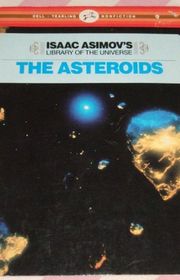
The Asteroids
by Isaac Asimov
1988
This book introduces young readers to the asteroids of our solar system and considers their possible importance in the future. Asimov examines these smaller worlds as part of understanding the objects that share our neighborhood in space.
The Mammoth Book of Classic Science Fiction
by Isaac Asimov
1988
Ten short novels and longer stories from the 1930s offer a sampling of early science fiction. With an introduction by Asimov, the anthology includes works by H. P. Lovecraft, John W. Campbell Jr., and Murray Leinster.

The Relativity of Wrong
by Isaac Asimov
1988
Seventeen science essays examine how knowledge develops, including the argument that mistaken ideas can differ greatly in accuracy. Asimov connects scientific progress with topics such as isotopes, showing how better explanations can replace earlier accounts without erasing their value.

The Space Spotter's Guide
by Isaac Asimov
1988
This guide helps younger readers identify sights in the solar system and galaxy and choose a telescope. Alongside practical observing advice, it discusses astronomical questions and facts, linking a view of the night sky with scientific understanding.

UFOs
by Isaac Asimov
1988
This brief introduction discusses facts and fantasies surrounding unidentified flying objects. It gives younger readers a starting point for considering reports of strange sights in the sky and the questions such accounts raise about what people observe.

Uranus
by Isaac Asimov
1988
Asimov introduces Uranus through its discovery, nearly sideways rotation, dark moons, and rings. Information from Voyager 2's visit helps explain features of this distant planet, giving younger readers a picture of a world long difficult to study.

Asimov on Science
by Isaac Asimov
1989
Thirty-one selected columns mark thirty years of Asimov's science writing, with one drawn from each year of the period. The retrospective ranges across science and related subjects, showing the questions that caught his attention over time.

Asimov's Chronology of the World
by Isaac Asimov
1989
Asimov arranges events from the universe's beginnings through the end of the Second World War in chronological order. The book connects people, discoveries, and historical developments, placing individual events within a much longer account of the world's past.

Astronomy Today
by Isaac Asimov
1989
Asimov explains how professional and amateur astronomers study the universe, using instruments from binoculars to radio telescopes. This introduction looks at their equipment, methods, and discoveries, showing younger readers how observations become evidence about the sky.

Colonizing the Planets and Stars
by Isaac Asimov
1989
Asimov considers how people might settle other planets and stars, including the practical problems of choosing colonists and keeping communities alive. Written for younger readers, the book explores the possibilities and consequences of making homes beyond Earth.

How Did We Find Out About Microwaves?
by Isaac Asimov
1989
Asimov traces the discovery of electromagnetic waves beyond visible light, beginning with experiments on color and the spectrum. He explains how invisible waves became tools for cooking, communication, observation, and investigating the origins of the universe.

Is There Life on Other Planets?
by Isaac Asimov
1989
This illustrated introduction examines the possibility of life elsewhere in the solar system and around distant stars. Asimov considers whether other worlds could support living organisms, including forms of life different from those familiar on Earth.

Jupiter, the Spotted Giant
by Isaac Asimov
1989
Asimov introduces Jupiter through its cloudy atmosphere, colored bands, thin ring, and Great Red Spot. This illustrated guide also explores the giant planet's family of moons, giving younger readers a closer look at Earth's largest planetary neighbor.

Little Library of Dinosaurs
by Isaac Asimov
1989
This collection of small books introduces children to prehistoric animals, from giant and armored dinosaurs to meat eaters and smaller species. Separate volumes also explore the reptiles that lived in ancient seas or flew through prehistoric skies.
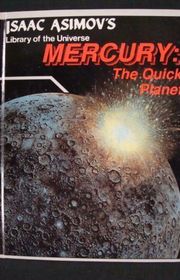
Mercury, the Quick Planet
by Isaac Asimov
1989
Asimov introduces the small planet closest to the Sun, exploring the characteristics that distinguish it from its neighbors. Young readers learn about Mercury’s unusual relationship between day and year while considering its place in the solar system.

Mythology and The Universe
by Isaac Asimov
1989
Asimov explores the myths and legends people have attached to the sky, planets, and constellations. This illustrated introduction connects astronomy with ancient beliefs, showing how different observers gave the universe meanings drawn from their own cultures.

Nemesis
by Isaac Asimov
1989
The space colony Rotor leaves the solar system to settle near a red star called Nemesis. When a teenage girl discovers that the star threatens both Earth and her new home, she struggles to warn others.

Norby and Yobo's Great Adventure
by Isaac Asimov
1989
Jeff Wells and his robot Norby accompany Admiral Yobo on a journey into prehistoric times. What begins as a chance for the admiral to research his family history becomes a dangerous adventure for the time travelers.

Norby Down to Earth
by Isaac Asimov
1989
Jeff Wells and Norby return to Earth to help Jeff's brother Fargo investigate attacks on robots and stolen computer parts. Their search brings Norby into contact with descendants of his creator, making the mystery unexpectedly personal.

Piloted Space Flights
by Isaac Asimov
1989
Asimov introduces the history of piloted spaceflight, from early trips around Earth to landing on the Moon. He examines the equipment, people, risks, and possible futures involved in sending human explorers beyond their home planet.
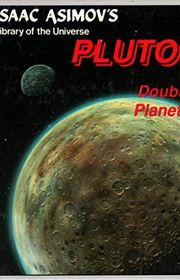
Pluto
by Isaac Asimov
1989
This introduction surveys Pluto’s discovery, unusual orbit, and recently identified companion, presenting the questions surrounding a distant world. Written for young readers, it reflects the knowledge available when astronomers were still investigating Pluto’s distinctive place in the solar system.

Science Fiction, Science Fact
by Isaac Asimov
1989
This illustrated introduction compares science fiction's imagined technologies with scientific achievements, including space travel, robots, and lasers. Asimov considers where writers anticipated real developments and where their predictions missed, asking how far fiction can foresee the future.

Space Garbage
by Isaac Asimov
1989
Asimov examines the debris left behind by human activity in space, explaining where it comes from and why it matters. Written for younger readers, the book explores the dangers of space pollution and efforts to track and remove it.

The Birth and Death of Stars
by Isaac Asimov
1989
Asimov follows the lives of stars from clouds of gas and dust through stages of growth and decline. This illustrated introduction explains stellar nurseries, stars like the Sun, red giants, and the dense objects left after collapse.