
Greater Foundation Books in Order
Part ofIsaac Asimov Books in OrderExplore Isaac Asimov's Greater Foundation books in order, connecting his Robot, Galactic Empire, and Foundation stories with short summaries of each book.
Last updated:
As an Amazon Associate, we earn from qualifying purchases (at no extra cost to you).
Greater Foundation books in publication order
18 books
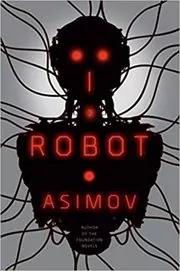
I, Robot
by Isaac Asimov
1950
Robopsychologist Susan Calvin recalls cases involving machines governed by the Three Laws of Robotics. These linked stories follow engineers and robots through apparent malfunctions, conflicting instructions and ethical puzzles as robotic intelligence becomes increasingly important to human society.
Recommended by
3 people Lex Fridman recommended this book
Lex Fridman
"[My] previous favorite [book by this author]." - Lex Fridman
Lex Fridman's recommendation of this book  Shah Rukh Khan recommended this book
Shah Rukh Khan
"Very inspiring & relevant." - Shah Rukh Khan
Shah Rukh Khan's recommendation of this book  Sahil Lavingia recommended this book
Sahil Lavingia
Sahil Lavingia recommended this book on Notion.
Sahil Lavingia's recommendation of this book
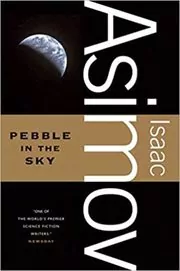
Pebble in the Sky
by Isaac Asimov
1950
A laboratory accident sends retired tailor Joseph Schwartz into Earth's distant future. Stranded on a radioactive world despised by the Galactic Empire, he becomes entangled in political tensions and a dangerous struggle over humanity's ancient home.
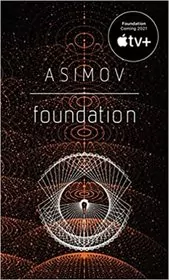
Foundation
by Isaac Asimov
1951
Hari Seldon's science of psychohistory predicts the Galactic Empire's collapse. He establishes a Foundation on distant Terminus to preserve knowledge and shorten the coming dark age, leaving successive generations to face crises involving religion, trade and political power.
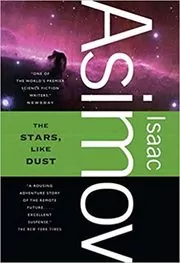
The Stars, Like Dust
by Isaac Asimov
1951
After learning that the Tyranni have killed his father, young Biron Farrill finds his own life threatened. His flight from Earth draws him into the politics of conquered planets and a search for resistance to their rulers.
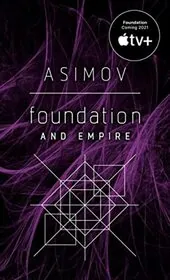
Foundation and Empire / The Man Who Upset the Universe
by Isaac Asimov
1952
The Foundation confronts both the remnants of imperial military power and the mysterious Mule, whose abilities challenge psychohistory's predictions. This volume follows the struggle to protect Hari Seldon's plan as familiar political calculations become increasingly unreliable.
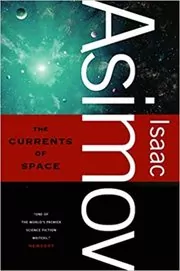
The Currents of Space
by Isaac Asimov
1952
On Florina, an exploited world valuable for its kyrt crop, an amnesiac man called Rik begins recovering disturbing memories. His warning of planetary catastrophe threatens powerful interests, drawing him into a struggle involving rulers, spies and concealed scientific knowledge.

Second Foundation
by Isaac Asimov
1953
The Mule searches for the hidden Second Foundation, hoping to eliminate the force that might oppose him. Later, the First Foundation begins its own hunt, turning the fate of Seldon's plan into a contest of suspicion and mental power.
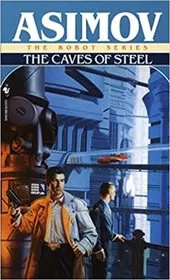
The Caves of Steel
by Isaac Asimov
1954
On an overcrowded Earth, detective Elijah Baley investigates the murder of a prominent Spacer scientist. Assigned the humanoid robot R. Daneel Olivaw as his partner, he must navigate hostility toward robots and tensions between Earthpeople and the Spacers.
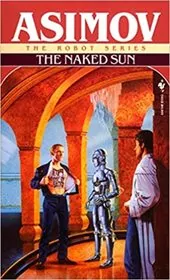
The Naked Sun
by Isaac Asimov
1957
Elijah Baley and his robot partner R. Daneel Olivaw investigate a murder on Solaria, where people avoid physical contact and rely on robots. The killing challenges the colony's social customs and assumptions about what its machines can do.
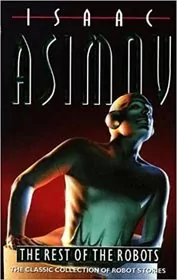
The Rest of the Robots
by Isaac Asimov
1964
Susan Calvin and engineers Powell and Donovan confront more problems involving positronic robots. These stories investigate strange behavior and dangerous failures, testing the practical and ethical complications that arise when people depend on machines governed by the Three Laws.
Foundation's Edge
by Isaac Asimov
1982
Exiled councilman Golan Trevize joins a historian in a search for the legendary planet Earth. Their journey also tests rumors that the Second Foundation survives, while another force appears to be influencing the galaxy’s future.
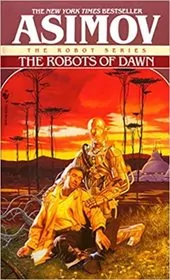
The Robots of Dawn
by Isaac Asimov
1983
Detective Elijah Baley travels to Aurora to investigate the destruction of an advanced humanoid robot. Working with R. Daneel Olivaw, he must examine evidence against a roboticist while political tensions place Earth’s future expansion into space at risk.
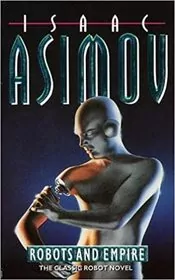
Robots and Empire
by Isaac Asimov
1985
Settler traders encounter deadly robots on Solaria after its human population disappears. Gladia travels there with Daneel and Giskard, drawing the robots into a conflict between human societies and a conspiracy threatening Earth that challenges their governing laws.
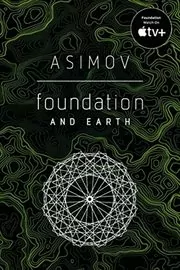
Foundation and Earth
by Isaac Asimov
1986
Uncertain about his decision concerning humanity's future, Golan Trevize searches for the long-lost planet Earth. Accompanied by historian Janov Pelorat and Bliss, he travels among unfamiliar worlds, seeking evidence that could explain his choice.
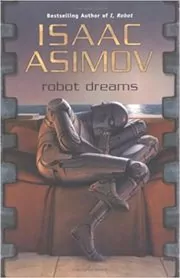
Robot Dreams
by Isaac Asimov
1986
This collection brings together robot stories and other science fiction, including a robot's unsettling dream and a machine determined to remain hidden. Asimov uses technological puzzles to explore human judgment, invention, and the limits of understanding.

Prelude to Foundation
by Isaac Asimov
1988
Hari Seldon arrives on Trantor to present his theory of psychohistory, which might predict humanity's future. Imperial interest in his work turns the young mathematician into a wanted man as he seeks to understand his theory's possibilities.
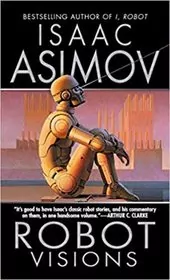
Robot Visions
by Isaac Asimov
1990
This collection combines robot stories with essays about robots, gathering work written across five decades. Asimov explores relationships between people and machines through fictional dilemmas and nonfiction reflections, including a title story that brings robots into time travel.
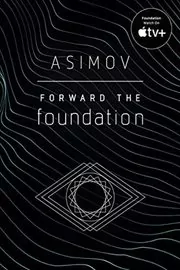
Forward the Foundation
by Isaac Asimov
1993
On Trantor, Hari Seldon works to turn psychohistory into a tool for predicting humanity's future as the Galactic Empire weakens. Political upheaval and personal losses complicate his effort to establish the foundations of a plan that could outlast him.






Edited by
Software engineer whose passion for tracking book recommendations from podcasts inspired the creation of MRB.
Lead investor at 3one4 Capital whose startup expertise and love for books helped shape MRB and its growth.
Comments
Did we miss something? Have feedback?
Help us improve this page by sharing your thoughts