
Isaac Asimov Books in Order
Browse the Isaac Asimov collaborations with Martin H Greenberg in order, with anthology summaries, subseries notes, and quick guidance on where to start.
Last updated: 13 new books added
As an Amazon Associate, we earn from qualifying purchases (at no extra cost to you).
Isaac Asimov books in publication order
369 books
Treasury of Humor
by Isaac Asimov
1971
Asimov gathers favorite jokes, anecdotes, puns, and limericks, then explains what makes them work. His commentary considers delivery, different audiences, and personal variations, giving readers both a collection to enjoy and advice on telling it.

What Makes the Sun Shine?
by Isaac Asimov
1971
Asimov explains the sun's chemical and physical nature, its formation, and the energy that reaches Earth. Written for young readers, the book connects the structure of the solar system with the light and warmth people experience.
ABC's of Ecology
by Isaac Asimov
1972
Two ecological terms for each letter create an alphabetical introduction to the subject. Moving from additives and algae to zoology and zonation, Asimov gives young readers short definitions for words used in studying living environments.
Asimov's Guide to Science
by Isaac Asimov
1972
Asimov surveys the physical and biological sciences through their ideas and discoveries. Astronomy, matter, energy, and living systems connect in an account that explains scientific knowledge by following the questions and investigations that shaped it.
How Did We Find Out About Lasers?
by Isaac Asimov
1972
Asimov follows the discoveries that made lasers possible, connecting ideas about light and atoms with the creation of a concentrated beam. Examples of practical uses help young readers understand how the same technology serves very different tasks.
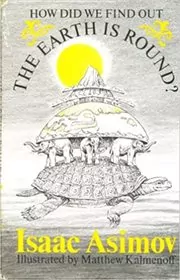
How Did We Find Out the Earth is Round?
by Isaac Asimov
1972
Asimov explains how observers concluded that Earth was round long before Columbus. Changing views of stars and ships disappearing over the horizon show young readers how everyday evidence helped challenge an older picture of the world.
More Words of Science
by Isaac Asimov
1972
Alphabetically arranged essays explain scientific words and the ideas behind them. Asimov adds terms such as laser, clone, and black hole to his earlier vocabulary survey, making unfamiliar language an entry point into scientific subjects.
The Biological Sciences
by Isaac Asimov
1972
Asimov surveys the biological sciences for general readers, moving through matter, human beings, the mind, and machines. The book explains underlying ideas rather than assuming specialist knowledge, offering a broad introduction to the study of life.
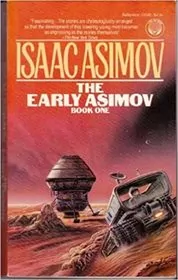
The Early Asimov, Book 1
by Isaac Asimov
1972
Thirteen early stories range across alien societies, interplanetary dangers, and encounters with unfamiliar minds. This first volume includes The Callistan Menace and Homo Sol, showing Asimov exploring the possibilities of science fiction at the beginning of his career.
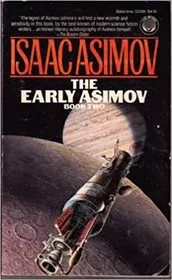
The Early Asimov, Book 2
by Isaac Asimov
1972
Asimov gathers more early fiction and reflects on writing during his twenties, alongside study, marriage, military service, and employment. His commentary follows the challenges of developing a career while continuing to produce science fiction stories.
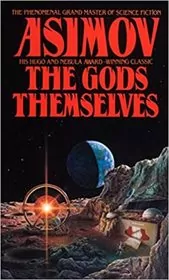
The Gods Themselves
by Isaac Asimov
1972
An exchange of matter with a parallel universe appears to offer Earth unlimited clean energy. A few people begin to suspect the process could have catastrophic consequences, confronting resistance from those invested in its success.
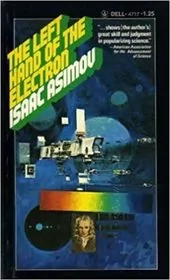
The Left Hand of the Electron
by Isaac Asimov
1972
Seventeen science essays examine subjects including the difference between left and right in particles and organic compounds. Asimov uses questions about symmetry and molecular structure as part of a broader exploration of scientific ideas.
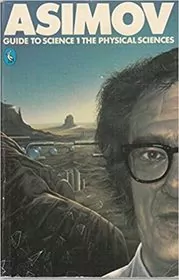
The Physical Sciences
by Isaac Asimov
1972
Asimov surveys the physical sciences for readers without specialist training. Beginning with the universe and the solar system, he moves through Earth, matter, particles, and energy, explaining the discoveries and principles used to understand the physical world.
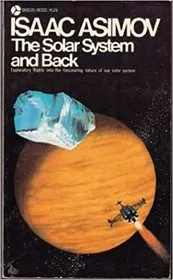
The Solar System and Back
by Isaac Asimov
1972
Collected science essays range across the solar system and subjects closer to Earth. Planets, satellites, metals, chromosomes, and dinosaurs share the volume, as Asimov connects scientific questions with explanations of how researchers approach them.
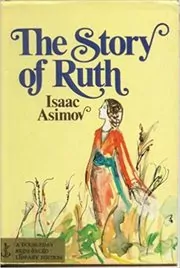
The Story of Ruth
by Isaac Asimov
1972
Asimov retells the biblical story of Ruth, the Moabite widow who accompanies her mother-in-law Naomi to Bethlehem. Historical commentary connects the family narrative with the society and circumstances of the period in which it takes place.
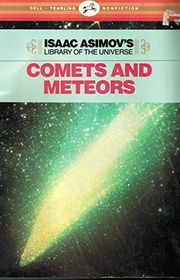
Comets and Meteors
by Isaac Asimov
1973
Asimov introduces the characteristics of comets and meteors, drawing on famous appearances and questions that remained unresolved. Written for young readers, the book connects familiar sights in the night sky with the objects and processes behind them.
How Did We Find Out About Dinosaurs?
by Isaac Asimov
1973
Asimov follows the discovery of fossils and the attempts to understand what they reveal about dinosaurs. The account introduces young readers to the evidence behind changing ideas about Earth's history and the development of life.
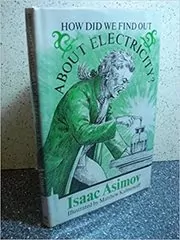
How Did We Find Out About Electricity?
by Isaac Asimov
1973
Asimov traces the study of electricity from ancient Greek observations to Volta's battery and Faraday's work on electromagnetism. Young readers follow the experiments and ideas that gradually turned a puzzling phenomenon into something people could use.
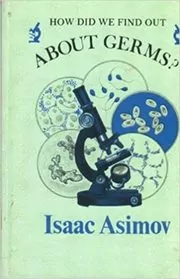
How Did We Find Out About Germs?
by Isaac Asimov
1973
The invention of the microscope made germs visible and opened questions about their role in disease. Asimov follows the development of microbiology, including Pasteur's work, to explain how investigations of tiny organisms changed medicine.
How Did We Find Out About Numbers?
by Isaac Asimov
1973
Asimov traces counting and written numbers from early systems to the development of positional notation and zero. Comparing different ways of representing quantities, he shows young readers why some methods made calculation easier than others.
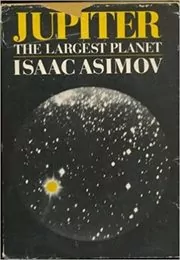
Jupiter
by Isaac Asimov
1973
Asimov traces the study of Jupiter from early measurements of its size and distance to investigations of its atmosphere and Great Red Spot. The book also considers its satellites, presenting the largest planet through successive discoveries.
Please Explain
by Isaac Asimov
1973
Asimov answers scientific questions ranging from pulsars and the universe's future to dinosaur extinction and the differences between brains and computers. The question-and-answer format connects everyday curiosity with explanations drawn from several branches of science.
The Birth Of The United States
by Isaac Asimov
1973
Covering 1763 to 1816, Asimov follows the causes of the American Revolution, the struggle for independence, and the formative years of the republic. This history continues his account of North America into the creation of the United States.
The Sun
by Isaac Asimov
1973
Asimov introduces young readers to the Sun's origins, physical composition, and distinctive features. The illustrated account also explains how scientists study our nearest star with instruments and satellites, connecting observations to an understanding of the solar system's center.
The Tragedy of the Moon
by Isaac Asimov
1973
Seventeen science essays connect astronomy, chemistry, and biology with questions about human society. In the title essay, Asimov speculates about how Earth's history and the development of civilization might have differed if our planet had no Moon.
Today and Tomorrow and ...
by Isaac Asimov
1973
Asimov surveys biology, astronomy, chemistry, and physics before turning to possible futures in space and on Earth. Essays on lunar exploration, computers, and science fiction lead into questions about prediction and the responsibilities of scientists.
Asimov on Astronomy
by Isaac Asimov
1974
This collection brings together Asimov's earlier astronomy essays, organizing explanations of stars, the solar system, and the wider universe. Topics include tides, asteroids, and the relationships between celestial bodies, with scientific reasoning guiding each discussion.
Asimov on Chemistry
by Isaac Asimov
1974
Seventeen essays explore inorganic, nuclear, organic, and biological chemistry through explanations drawn from Asimov's earlier work. Subjects include the abandoned phlogiston theory, the names of organic compounds, and speculative possibilities for life based on unfamiliar chemistry.
Before the Golden Age 1
by Isaac Asimov
1974
Asimov introduces science fiction from the pulp magazines of his youth, combining selections with autobiographical commentary. This first volume includes Edmond Hamilton's The Man Who Evolved and Neil R. Jones's The Jameson Satellite among its early stories.
Before the Golden Age 2
by Isaac Asimov
1974
Asimov's anthology continues with science fiction from the early 1930s, accompanied by his personal recollections. Selections include Charles R. Tanner's two Tumithak stories, Jack Williamson's The Moon Era, and Laurence Manning's The Man Who Awoke.
Before the Golden Age 3
by Isaac Asimov
1974
This volume continues Asimov's selection of science fiction from the pulp magazines of the 1930s, linking the stories with autobiographical commentary. Murray Leinster's Sidewise in Time and Proxima Centauri are among the works collected here.
How Did We Find Out About Vitamins?
by Isaac Asimov
1974
Asimov traces the experiments that revealed the importance of small quantities of vitamins in food. The history follows investigations of scurvy and vitamin C, then considers how evidence accumulated about other vitamins and their roles.
Tales of the Black Widowers
by Isaac Asimov
1974
Six men meet regularly for dinner at the Milano restaurant, inviting guests whose puzzling experiences become subjects of debate. As the Black Widowers test competing explanations, their waiter Henry contributes the observations that the diners overlook.
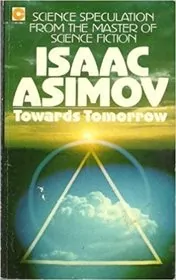
Towards Tomorrow
by Isaac Asimov
1974
This collection gathers Asimov's factual articles on space, Earth and science fiction from several magazines. The pieces offer a range of scientific discussions for readers interested in how real knowledge connects with imagined futures.
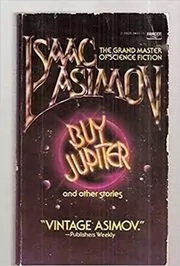
Buy Jupiter and Other Stories
by Isaac Asimov
1975
Asimov collects science fiction stories with autobiographical introductions explaining their origins and his life when he wrote them. In the title story, Earth's officials negotiate with mysterious aliens who want to purchase Jupiter without explaining their intentions.
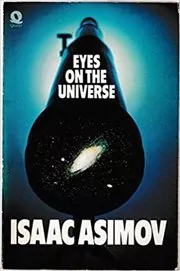
Eyes on the Universe
by Isaac Asimov
1975
Asimov traces the telescope's development from early lenses to reflecting instruments and radio astronomy. The account shows how successive improvements in observing equipment changed what astronomers could discover about objects far beyond the naked eye's reach.
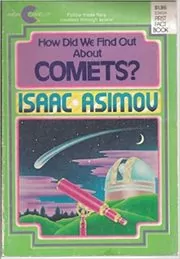
How Did We Find Out About Comets?
by Isaac Asimov
1975
Asimov follows the changing understanding of comets, from ominous portents to objects whose movements can be calculated. Discoveries associated with Brahe, Kepler, Newton, and Halley connect their orbits with wider questions about meteors and the solar wind.
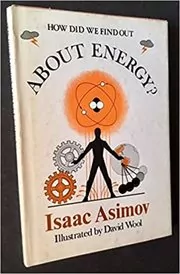
How Did We Find Out About Energy?
by Isaac Asimov
1975
Asimov explains how scientists came to understand energy, its changing forms, and the principles governing those changes. The historical account introduces conservation and the laws of thermodynamics, connecting scientific discoveries with the ways people use energy.
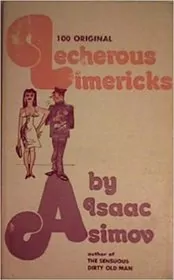
Lecherous Limericks
by Isaac Asimov
1975
Asimov offers one hundred limericks for adult readers, using sexual situations and verbal surprises as material for five-line comic verse. His accompanying comments provide context for the poems and their deliberately bawdy approach to wordplay.

Of Matters Great and Small
by Isaac Asimov
1975
Seventeen essays move between astronomy, energy, and questions about scientific prediction. Asimov discusses the North Star, the precession of the equinoxes, eclipses, and asteroids while considering why science fiction writers acquire reputations for foreseeing the future.
Our Federal Union
by Isaac Asimov
1975
Asimov follows United States history from 1816 through the Civil War, examining the political conflicts that strained the federal union. Expansion, slavery, and growing divisions between North and South form the background to the country's struggle over unity.
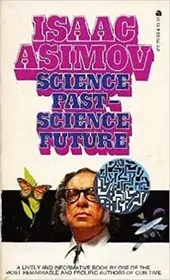
Science Past, Science Future
by Isaac Asimov
1975
Forty-three essays range across science and its connections with society. Asimov considers technological development, changing views of the universe, and subjects including atomic energy and inventions, bringing historical explanations together with discussions of possible future developments.
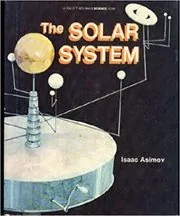
The Solar System
by Isaac Asimov
1975
Asimov introduces very young readers to the solar system and the distinctive characteristics of its planets. This illustrated beginning science book presents the nine-planet classification used when it was written, offering a short overview of our planetary neighborhood.
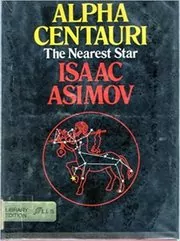
Alpha Centauri, The Nearest Star
by Isaac Asimov
1976
Asimov explains how astronomers measure stellar distances and examines Alpha Centauri as a system of three stars. The account compares its brightest component with the Sun and considers questions about planetary life and travel beyond our solar system.
Asimov on Physics
by Isaac Asimov
1976
Seventeen updated essays explain physical laws through discussions of waves, gravity, temperature, kinetic energy, and entropy. Asimov also turns to subatomic physics, connecting familiar phenomena with the theories used to describe matter at much smaller scales.
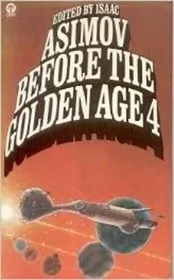
Before the Golden Age 4
by Isaac Asimov
1976
Asimov's anthology reaches later stories from the 1930s, continuing the personal commentary linking his reading with his early life. The selections include John W. Campbell's The Brain Stealers of Mars and Other Eyes Watching from the pulp era.
How Did We Find Out About Atoms?
by Isaac Asimov
1976
Asimov traces the development of the atomic idea, following the movement from ancient speculation to scientific evidence about matter's smallest units. This illustrated introduction emphasizes how successive observations and experiments established an understanding of atoms.
How Did We Find Out About Nuclear Power?
by Isaac Asimov
1976
Asimov follows more than a century of discoveries revealing the energy held within atomic nuclei. The account connects the work of Becquerel, the Curies, Rutherford, Meitner, Fermi, and other scientists in an introduction written for younger readers.
Life and Energy
by Isaac Asimov
1976
Asimov connects the behavior of living organisms with the physical laws governing energy. Moving from thermodynamics into biochemistry, he explains how cells, enzymes, and metabolism depend on energy transfers rather than a separate force unique to life.
More Lecherous Limericks
by Isaac Asimov
1976
A second collection presents one hundred more adult limericks, building short comic episodes around sexual situations and verbal twists. Asimov returns to the five-line verse form, pairing bawdy humor with the compact setup and surprise of each poem.
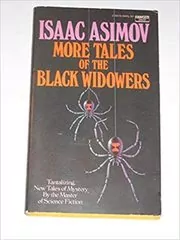
More Tales of the Black Widowers
by Isaac Asimov
1976
The Black Widowers return to their regular dinner meetings, where invited guests bring mysteries that resist ordinary explanations. Twelve stories follow the members' competing theories and the quiet intervention of Henry, the waiter who helps untangle them.
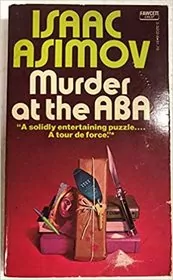
Murder at the ABA
by Isaac Asimov
1976
Writer Darius Just investigates when a former protege dies during an American Booksellers Association convention. Doubting the official explanation, he searches among publishers and authors for evidence of murder, with a fictional Isaac Asimov joining the proceedings.
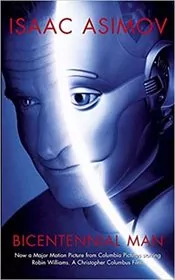
The Bicentennial Man
by Isaac Asimov
1976
This collection combines robot stories and other science fiction with Asimov's commentary on their creation. The title story follows Andrew, a household robot whose unusual creativity leads him to seek freedom and recognition beyond his programmed role.
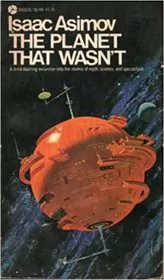
The Planet That Wasn't
by Isaac Asimov
1976
Seventeen essays range from planetary astronomy to chemistry, biology, and arguments about science and belief. Asimov examines the supposed planet Vulcan, the imagined canals of Mars, ozone, and intelligence while questioning explanations that outrun their evidence.
To the Ends of the Universe
by Isaac Asimov
1976
Starting with the ground beneath our feet, Asimov expands the scale of inquiry through Earth, the solar system, and the Milky Way. The journey continues toward distant cosmic phenomena, introducing young readers to the universe's immense dimensions.
Astronauts and Androids
by Isaac Asimov
1977
This anthology collects fiction, poetry, and a science essay first published in Asimov's Science Fiction Magazine. Contributors include Arthur C. Clarke, A. Bertram Chandler, Poul Anderson, and Asimov himself, whose Good Taste appears among the selections.
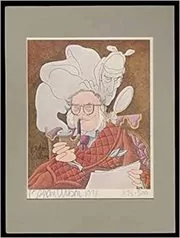
Sherlockian Limericks
by Isaac Asimov
1977
Asimov turns each of the sixty Sherlock Holmes stories into a limerick, revisiting Doyle's cases through concise comic verse. Gahan Wilson's illustrations accompany these playful summaries, giving familiar detective adventures a different rhythm and visual setting.
Still More Lecherous Limericks
by Isaac Asimov
1977
Asimov's third collection adds one hundred adult limericks about love, sex, and comic misunderstandings. Each five-line poem compresses its situation into a brief setup and verbal turn, continuing the bawdy humor of the earlier volumes.
The Beginning and the End
by Isaac Asimov
1977
Asimov moves between scientific history and imagined futures in essays on interplanetary tourism, monsters, and solar power. Other discussions consider Cyrano de Bergerac as a scientific prophet and speculate about a cosmic empire linked through black holes.
The Collapsing Universe
by Isaac Asimov
1977
Asimov explains black holes by tracing the behavior of matter and gravity through stellar evolution. Discussions of white dwarfs, neutron stars, and supernovae build toward the conditions under which a star can collapse beyond ordinary escape.
The Exploding Suns
by Isaac Asimov
1977
Asimov explains novas and supernovas through the history of astronomical observation and theories of stellar evolution. He connects exploding stars with the formation of elements, later stars and planets, while considering what a nearby explosion could mean.
The Golden Door
by Isaac Asimov
1977
Asimov traces American history from the Civil War's aftermath to the end of World War I. Immigration and rapid growth shape his account of how the United States changed into a major international power.
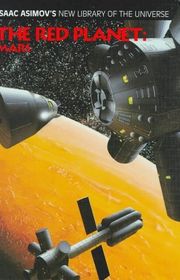
The Red Planet
by Isaac Asimov
1977
This introduction for young readers surveys Mars and the features astronomers have observed from Earth. It explains the planet’s distinctive characteristics and considers what studying its visible surface can reveal about a neighboring world in the solar system.
The Tyrannosaurus Prescription
by Isaac Asimov
1977
These essays range across science, science fiction, archaeology and personal experience. Discussions of planets, atomic nuclei and scientific pioneers sit alongside reflections on writing and the past, offering short explorations of widely different subjects.
Animals of the Bible
by Isaac Asimov
1978
Asimov introduces animals mentioned, or possibly mentioned, in the Bible through brief descriptions and illustrations. Their behavior and history help explain biblical comparisons, while uncertain translations raise questions about which creatures the original passages describe.
Asimov on Numbers
by Isaac Asimov
1978
Seventeen essays explore numbers through computing, calculation, very large quantities and the measurement of time. Asimov connects practical numerical questions with mathematical history, giving readers different ways to think about familiar and unfamiliar number systems.
How Did We Find Out About Black Holes?
by Isaac Asimov
1978
Asimov follows the clues that led scientists to propose and investigate black holes. Written for younger readers, the book explains what these objects are, how they form and how astronomers seek evidence for something invisible.
How Did We Find Out About Earthquakes?
by Isaac Asimov
1978
Asimov traces explanations of earthquakes from early beliefs to seismographs and plate tectonics. The history shows how evidence changed understanding of tremors, with discussion of their causes and the difficulty of responding to possible quakes.
Life and Time
by Isaac Asimov
1978
Essays on life's past, present and future explore evolution, the brain, genes and the meaning of life itself. Asimov also considers water resources, computers, space settlement and catastrophes, connecting biological questions with humanity's possible future.
Limericks
by Isaac Asimov
1978
Isaac Asimov and John Ciardi each contribute 144 limericks to this collection of bawdy verse. The poems use the short form's rhythm and wordplay for adult humor, with the title adding another joke about the total.
Quasar, Quasar, Burning Bright
by Isaac Asimov
1978
Asimov's essays move from technology's influence on history to atomic elements, ice ages and the cosmos. The title piece follows attempts to map and measure the heavens, placing distant quasars within a wider history of astronomy.
A Choice of Catastrophes
by Isaac Asimov
1979
Asimov examines natural and human-made disasters that could end civilization, humanity or life on a larger scale. He groups threats by their reach, using scientific evidence and estimates to consider how different catastrophes might unfold.
Extraterrestrial Civilizations
by Isaac Asimov
1979
Asimov investigates the possibility of intelligent life elsewhere in the galaxy by examining the conditions needed for it to develop. Starting with stars and planets, he progressively narrows the possibilities toward technological civilizations and possible contact.
How Did We Find Out About Antarctica?
by Isaac Asimov
1979
This introduction follows explorers searching for the southern continent and eventually reaching the South Pole. Asimov explains how successive journeys expanded knowledge of Antarctica, with a closing look at life in and around its frozen environment.
How Did We Find Out About Our Human Roots?
by Isaac Asimov
1979
Asimov explains how fossil discoveries helped scientists investigate human origins. The book follows evidence about earlier human forms, connecting bones, upright walking and tools with the effort to understand the evolution of modern people.
In Memory Yet Green
by Isaac Asimov
1979
Asimov's first autobiographical volume follows his life through 1954, beginning with his family's move from Russia to Brooklyn. Childhood reading, education and early writing show how his interests in science and fiction developed together.
Opus 200
by Isaac Asimov
1979
Marking his two-hundredth book, Asimov reflects on earlier works through extracts of fiction and nonfiction. Complete stories, essays, and personal commentary connect the range of subjects he explored with the development of his career as a writer.
Saturn and Beyond
by Isaac Asimov
1979
Asimov recounts discoveries about Saturn and the worlds beyond it, from early telescopic observations of the rings to later findings about distant planets and moons. Tables and explanations connect their properties with the methods used to investigate them.
The Book of Facts
by Isaac Asimov
1979
This reference collection brings together thousands of short facts across subjects including science, history, mathematics, food and famous people. Organized into many categories, it offers brief items to browse rather than a single continuous account.
The Hugo Winners, Vol. 3
by Isaac Asimov
1979
This anthology collects Hugo-winning science fiction with introductions and author sketches by Asimov. Its featured writers include Ursula K. Le Guin, Poul Anderson, Frederik Pohl and Cyril Kornbluth, presenting award-recognized stories across different lengths.
The Intelligent Man's Guide to the Physical Sciences
by Isaac Asimov
1979
Asimov surveys the physical sciences from the universe and Earth to atoms, particles, waves and machines. The book connects the development of scientific knowledge with explanations of phenomena and technologies, including electricity and nuclear energy.
The Key Word And Other Mysteries
by Isaac Asimov
1979
Young detective Larry helps his father solve five mysteries through close attention to words and clues. The short cases turn everyday information into puzzles, including a criminal code linked to a newspaper crossword.
About Black Holes
by Isaac Asimov
1980
Asimov presents the history of black-hole research for younger readers, following the clues behind objects astronomers cannot see directly. The book explains their formation and the evidence used to investigate one of astronomy's unusual problems.
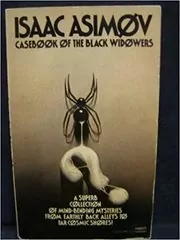
Casebook of the Black Widowers
by Isaac Asimov
1980
The Black Widowers discuss twelve puzzles over club dinners, drawing on observation and apparently unrelated knowledge. Asimov adds commentary to the stories, whose solutions turn on details ranging from astronomy to letters and names.
How Did We Find Out About Coal?
by Isaac Asimov
1980
Asimov traces how people discovered that coal could burn and become a source of power. The book explains its formation and uses while considering its economic role and environmental problems, including the greenhouse effect.
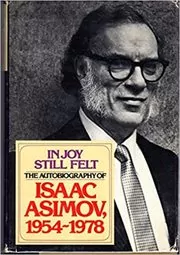
In Joy Still Felt
by Isaac Asimov
1980
The second volume of Asimov's autobiography covers 1954 through 1978, following his established writing career and personal life. Teaching, literary work and growing public demands form a chronological account of his expanding role beyond science fiction.
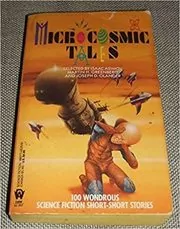
Microcosmic Tales
by Isaac Asimov
1980
This anthology collects one hundred very short science fiction stories by writers including Asimov, Arthur C. Clarke and Joanna Russ. Alien encounters, inventions and unexpected futures unfold in compact pieces often built around a sudden turn.
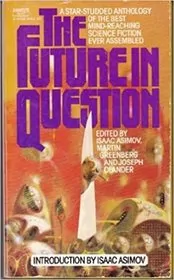
The Future in Question
by Isaac Asimov
1980
This anthology brings together science fiction stories whose titles ask questions, from Who Goes There? to The Last Question. Its different authors explore speculative possibilities through short fiction, making the question itself a link between the selections.
Asimov on Science Fiction
by Isaac Asimov
1981
Asimov gathers essays about science fiction's history, writers and craft, including pieces adapted from magazine editorials. His discussions connect his own experience with advice about writing and reflections on the genre's changing ideas and audience.
Change!
by Isaac Asimov
1981
Seventy-one short essays consider possible changes in technology, health, space travel and everyday life. Asimov uses the knowledge of his time to speculate about future developments, inviting readers to examine possibilities rather than follow one narrative.
How Did We Find Out About Outer Space?
by Isaac Asimov
1981
Asimov traces humanity's progress toward space exploration, beginning with early attempts at flight and continuing to journeys to the Moon. The historical approach connects successive developments with the effort to travel beyond Earth's atmosphere.
How Did We Find Out About Solar Power?
by Isaac Asimov
1981
Asimov follows the use of sunlight as an energy source from ancient experiments to solar cells. The book explains devices that collect the Sun's power and considers larger projects that might extend its use.
How Did We Find Out About Volcanoes?
by Isaac Asimov
1981
Asimov introduces volcanic features, eruptions and their causes through the history of notable events. The book also looks at active volcanoes on Earth and elsewhere in the solar system, connecting familiar disasters with wider scientific questions.
In the Beginning
by Isaac Asimov
1981
Asimov annotates the first eleven chapters of Genesis, comparing their account of creation and early humanity with scientific explanations. His line-by-line discussion considers where the accounts overlap or differ, placing biblical passages alongside later knowledge.
The Book of Facts
by Isaac Asimov
1981
This categorized collection offers thousands of brief facts about science, history, mathematics and human affairs. Readers can browse individual items on subjects ranging from astronomy to food and famous people, rather than follow a connected narrative.
The Road to Infinity
by Isaac Asimov
1981
Asimov's essays begin with logarithms and the search for absolute zero before moving through exploration, planets and extraterrestrial life. Questions about limits connect numerical ideas with efforts to understand Earth's extremes and the wider universe.
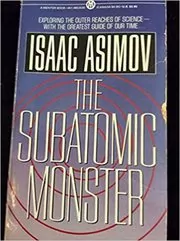
The Subatomic Monster
by Isaac Asimov
1981
This collection gathers seventeen science essays first published in a magazine column. Asimov moves among astronomy, matter and the measurement of time, including discussions of satellites, stellar environments and ideas about the workings of the universe.
Venus
by Isaac Asimov
1981
Asimov introduces Venus through its physical characteristics and the discoveries that revealed them. Written for young readers, the book follows efforts to understand a nearby planet whose obscured surface makes observation and explanation a particular challenge.
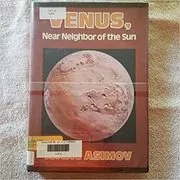
Venus, Near Neighbor of the Sun
by Isaac Asimov
1981
Asimov follows understanding of Venus from ancient skywatching to spectroscopy and planetary probes. He also covers Mercury, asteroids and comets, using the history of discovery to explain the properties of these neighbors of the Sun.

Would You Believe?
by Isaac Asimov
1981
Illustrations accompany a selection of little-known facts from human and natural history, drawn from Asimov's earlier Book of Facts. The short entries present curiosities across different subjects, offering a compact collection for readers to browse.