
Gore Vidal Books in Order
This page gathers the historical and political novels of Gore Vidal in order, with summaries, context for his Narratives of Empire, and guidance on how to begin exploring his work.
Last updated: 2 new books added
As an Amazon Associate, we earn from qualifying purchases (at no extra cost to you).
Gore Vidal books in publication order
62 books

Williwaw
by Gore Vidal
1946
Aboard an army transport ship, strained relationships among the crew threaten discipline and safety. As a violent williwaw storm approaches, personal rivalries become inseparable from the practical challenge of keeping the vessel and its passengers alive.

In a Yellow Wood
by Gore Vidal
1947
Robert Holton returns from wartime Europe to a solitary life and an uninspiring stockbroking job in New York. When Carla, a woman he knew in Florence, reappears, he must reconsider the security and ambitions shaping his future.

The City and the Pillar and Seven Early Stories
by Gore Vidal
1948
Jim's youthful relationship with his friend Bob becomes an ideal he pursues into adulthood, even as other men complicate his desires. This volume pairs Vidal's novel about male love and identity with seven early stories.

The Season of Comfort
by Gore Vidal
1949
Young Bill Hawkins grows up under the influence of his ambitious mother, Charlotte, whose marriages and expectations shape his childhood. His interest in art and first experiences of love offer possible paths toward independence from a troubled family.

A Search for the King
by Gore Vidal
1950
After Richard the Lionheart disappears on his journey home from the Crusades, his troubadour Blondel sets out to find him. The search carries Blondel through a medieval world of competing rulers, dangerous encounters, and uncertain loyalties.

Cry Shame!
by Gore Vidal
1950
Graziella Serrano pursues a dancing career that carries her from New Orleans toward Hollywood. Marriage, romantic entanglements, and the pursuit of stardom complicate her ambitions in this novel originally published under Vidal's Katherine Everard pseudonym.

Dark Green, Bright Red
by Gore Vidal
1950
A deposed dictator plans his return to power in a Central American republic, aided by foreign advisers and an American fruit company. The attempted coup exposes the competing personal, commercial, and political interests behind revolutionary promises.

Death in the Fifth Position
by Gore Vidal
1952
Publicist Peter Sargent is working for a ballet company when a leading dancer plunges to her death during a performance. Suspecting murder, he investigates a backstage world where professional jealousy and personal relationships complicate every clue.

Death Before Bedtime
by Gore Vidal
1953
Peter Sargent takes a campaign job with a senator preparing to seek the presidency, only to find himself investigating the politician's murder. Family members, political associates, and household guests offer competing explanations and reasons for suspicion.

The Judgment Of Paris
by Gore Vidal
1953
Young American Phillip Warren travels through Europe after graduating from Harvard, encountering people whose competing ideals challenge his assumptions. Love affairs and philosophical conversations turn his journey through Italy and beyond into an exploration of possible ways to live.
Recommended by
1 person Christopher Hitchens recommended this book
Christopher Hitchens
"I winced with recognition when I first read the expression 'British teeth' in [this book]." - Christopher Hitchens
Christopher Hitchens's recommendation of this book

Thieves Fall Out
by Gore Vidal
1953
An American stranded in Egypt accepts a smuggling job involving an ancient relic. What looks like a chance to recover his fortunes draws him into a dangerous network of criminals, romantic intrigue, and a country approaching revolution.

Death Likes It Hot
by Gore Vidal
1954
Peter Sargent attends a wealthy socialite's seaside gathering, where a drowning and suspicious circumstances interrupt the festivities. His investigation moves through the guests' secrets and rivalries as a fashionable summer party becomes the setting for murder.

Messiah
by Gore Vidal
1954
Eugene Luther recounts the rise of a new religion centered on John Cave, a former undertaker whose teachings welcome death. The narrative examines the creation of belief and the unsettling implications of a faith that reverses familiar spiritual hopes.

Visit to a Small Planet and Other Television Plays
by Gore Vidal
1957
This collection brings together eight of Vidal's television plays, including the title comedy, The Death of Billy the Kid, and The Turn of the Screw. The scripts span comic, historical, and dramatic material written for television.

The Best Man
by Gore Vidal
1960
At a presidential convention, principled William Russell competes with ruthless Joseph Cantwell for their party’s nomination. A former president’s influence turns the contest into a test of ambition, political tactics, and the price of integrity.

Rocking the Boat
by Gore Vidal
1962
Vidal's first essay collection brings his argumentative voice to literature and public affairs. Political commentary sits alongside literary criticism, introducing the judgments and observations through which he questions American institutions and the culture surrounding them.

Julian
by Gore Vidal
1964
Julian, the Roman emperor remembered as the Apostate, attempts to restore pagan religion in an increasingly Christian empire. Vidal follows his intellectual convictions, military ambitions, and political struggles through a fictional reconstruction of the fourth-century Roman world.

Washington, D.C.
by Gore Vidal
1967
Senator James Burden Day, ambitious aide Clay Overbury, and media magnate Blaise Sanford navigate Washington from the New Deal through the McCarthy era. Their competing ambitions reveal the relationships between political advancement, wealth, publicity, and personal compromise.

Myra Breckinridge
by Gore Vidal
1968
Myra arrives at Buck Loner's Academy of Drama and Modeling with strong opinions about Hollywood and an ambitious plan for its students. Vidal's satire uses her disruptive presence to explore gender, sexual power, and American popular culture.

Sex, death, and money
by Gore Vidal
1968

Reflections Upon a Sinking Ship
by Gore Vidal
1969
These essays combine Vidal's literary criticism with reflections on American politics and national decline. Writers, public figures, and institutions become subjects for an examination of cultural authority and the stories Americans tell about their country's direction.

Two Sisters
by Gore Vidal
1970
Vidal combines autobiographical reflection and fiction in a narrative that moves among love, sexuality, death, and artistic creation. The book's shifting form invites readers to consider the uncertain boundary between a novelist's personal memories and imagined lives.

Collected Essays
by Gore Vidal
1972
This collection gathers essays from two decades of Vidal's writing about literature and government. His discussions of fellow writers and contemporary public life connect questions of literary judgment with the political assumptions shaping American culture.

Burr
by Gore Vidal
1973
An elderly Aaron Burr tells his story to a young journalist, offering an alternative view of America's founding figures. His recollections challenge established reputations while revisiting the ambitions, rivalries, and accusations that shaped his own controversial career.
Recommended by
2 people David Sabatini recommended this book
David Sabatini
"I tend to like historical fiction, so some of the books I’ve liked a lot and given to others have been Gore Vidal books. Like [this one]." - David Sabatini
David Sabatini's recommendation of this book - Christopher Hitchens recommended this book
Christopher Hitchens
"The best fictional re-creation of the period." - Christopher Hitchens
Christopher Hitchens's recommendation of this book

Homage to Daniel Shays
by Gore Vidal
1973
Vidal assembles essays on American politics and literature, considering writers such as Norman Mailer and Susan Sontag alongside questions of government. The collection connects his judgments about books with arguments about power and public life.

Myron
by Gore Vidal
1974
Myron is pulled from his ordinary life into the world of a 1948 Hollywood film, where Myra reappears with a competing agenda. Their struggle turns classic movie conventions into a satire of sexual politics and cultural nostalgia.

1876
by Gore Vidal
1976
Charles Schuyler returns to America after decades in Europe, bringing his widowed daughter Emma and hopes of restoring their fortunes. His journal records Washington society and political maneuvering during the contested presidential election of the nation's centennial year.

Kalki
by Gore Vidal
1976
Aviator Teddy Ottinger becomes involved with a religious leader in Kathmandu who claims to be Kalki, the final incarnation of Vishnu. His prediction of an approaching apocalypse draws her into a movement where spirituality, money, and power converge.

Matters of Fact and of Fiction
by Gore Vidal
1977
These essays consider literature and political history while questioning the boundary between fact and invention. Vidal examines the changing place of the novel and the public's appetite for accounts that claim to explain historical reality.

Views from a Window
by Gore Vidal
1980
This volume gathers interviews conducted over two decades, presenting Vidal in conversation about his writing and personal life. Discussions of American politics, cultural values, and sexuality offer a complementary view of the concerns found throughout his books.

Creation
by Gore Vidal
1981
Cyrus Spitama, a Persian diplomat, travels across the ancient world during an age of competing empires and emerging philosophies. His encounters with different religious and political traditions frame an inquiry into creation, belief, and the organization of human society.

The Decline and Fall of the American Empire
by Gore Vidal
1981
Vidal examines the economic decline of the United States and its consequences for political power and military policy. These essays connect national finances with the institutions and priorities through which America maintains its role as an empire.

The Second American Revolution and Other Essays, 1976-1982
by Gore Vidal
1982
These essays range from portraits of literary and political figures to arguments about constitutional change and prejudice. Vidal considers subjects including Fitzgerald, filmmaking, and relations between gay people and Jews while questioning established American attitudes.

Duluth
by Gore Vidal
1983
A fictional Duluth becomes the setting for intersecting crime stories, television plots, and romantic fantasies. As characters move between competing versions of reality, Vidal satirizes popular entertainment and the conventions through which it organizes American experience.

Lincoln
by Gore Vidal
1984
Lincoln arrives in Washington under threat of assassination and takes office as the nation moves toward civil war. Vidal follows the next four years through political conflict, wartime decisions, and the effort to preserve the Union.
Recommended by
3 people- David Sabatini recommended this book
David Sabatini
"I tend to like historical fiction, so some of the books I’ve liked a lot and given to others have been Gore Vidal books. Like [this one]." - David Sabatini
David Sabatini's recommendation of this book - Christopher Hitchens recommended this book
Christopher Hitchens
"[The author's] finest novel." - Christopher Hitchens
Christopher Hitchens's recommendation of this book  Tom Keene recommended this book
Tom Keene
"Such an important book." - Tom Keene
Tom Keene's recommendation of this book

Vidal in Venice
by Gore Vidal
1985
Gore Vidal explores Venice through personal reflections on its history and cultural life. His account considers the city's paintings, sculpture, and architecture, connecting its artistic achievements with the impressions formed by an attentive visitor.

Armageddon?
by Gore Vidal
1987
This essay collection brings together Vidal's writing on the politics and culture of the Reagan years. Critiques of public figures and apocalyptic religious thinking appear alongside childhood recollections and assessments of writers including Calvino and Henry James.

At Home
by Gore Vidal
1987
Vidal's essays move between contemporary politics, literary figures, Hollywood, and memories of childhood. Subjects including Nancy Reagan, Oliver North, Oscar Wilde, and Henry James provide occasions to examine the relationship between public image, cultural authority, and private experience.

Empire
by Gore Vidal
1987
As the United States emerges as a world power at the turn of the twentieth century, Caroline Sanford struggles to direct her own future. Her ambitions unfold within a newspaper dynasty and an expanding culture of political influence.

Hollywood
by Gore Vidal
1989
Beginning as America enters the First World War, Vidal connects Washington politics with the growing influence of Hollywood. Politicians, performers, and media figures inhabit a society increasingly shaped by moving pictures and the public images they create.

Paths of Resistance
by Marge Piercy, Isabel Allende, Gore Vidal & Charles McCarry
1989
Paths of Resistance collects talks by writers including Isabel Allende, Charles McCarry, Gore Vidal, and others, reflecting on how political history, ideology, and personal conviction shape the modern novel and the risks of turning outrage into art.

A View from the Diners Club
by Gore Vidal
1991
This collection gathers Vidal's literary essays from 1987 through 1991, with discussions of writers including Mencken, Oscar Wilde, Henry Miller, and Dawn Powell. His reviews examine reputations, artistic choices, and the cultural assumptions surrounding literary judgment.

Live from Golgotha
by Gore Vidal
1992
Saint Timothy must preserve the story of Christianity when a hacker from the future begins erasing its records. Meanwhile, television crews travel back to broadcast the Crucifixion, turning sacred history into a struggle over media and spectacle.

Screening History
by Gore Vidal
1992
Recalling the films he watched as a boy in Washington, Vidal examines how cinema shaped his understanding of the past. Family memories and political observations accompany his argument that screen history can replace experience with persuasive fiction.

United States 1952-1992
by Gore Vidal
1993
These essays from four decades examine literature, politics, and Vidal’s personal encounters. Organized around art, public life, and individual experience, the collection ranges from literary criticism and presidential power to religion, sexuality, and memories of fellow writers.

Palimpsest
by Gore Vidal
1995
Vidal recalls the first forty years of his life, from childhood in Senator T. P. Gore’s Washington household through military service and literary success. Personal relationships, famous acquaintances, and his congressional campaign intersect with the wider political world.

The Smithsonian Institution
by Gore Vidal
1998
Summoned to the Smithsonian in 1939, thirteen-year-old T. encounters nuclear physicists and museum exhibits that come alive. His discovery of time travel offers a chance to intervene in history and confront the approaching catastrophe of another world war.

Virgin Islands
by Gore Vidal
1998
Essays written between 1992 and 1997 move between literary portraits and political criticism. Vidal considers writers such as Dawn Powell and John Updike alongside the CIA, American power, Bill Clinton, and disputes over national identity.

Sexually Speaking
by Gore Vidal
1999
This collection gathers Vidal’s writing on sex, sexuality, and the social rules surrounding them. Literary criticism and political essays examine sexual labels, anti-sodomy laws, religious morality, and the ways public institutions regulate private desire and behavior.

The Golden Age
by Gore Vidal
2000
Newspaper publisher Caroline Sanford and her nephew Peter observe American power from 1939 to 1954. Their lives intersect with Roosevelt, Truman, Hollywood, and intellectual circles as World War II and the Cold War transform the nation.

The Last Empire
by Gore Vidal
2001
Written during the Clinton years and the 2000 election crisis, these essays combine literary criticism, political analysis, and personal portraits. Vidal considers civil liberties, terrorism, the CIA, contemporary leaders, and writers including Mark Twain and John Updike.

Dreaming War
by Gore Vidal
2002
Vidal challenges the Bush administration’s case for war in essays linking contemporary American ambitions to World War II and the Truman doctrine. He questions preemptive warfare, official accounts of Afghanistan, and the interests served by expansion abroad.

Perpetual War for Perpetual Peace
by Gore Vidal
2002
In these essays, Vidal examines American military interventions and challenges prevailing responses to September 11. His discussion also returns to the Oklahoma City bombing, questioning official explanations of political violence and the consequences of national security policies.

Inventing a Nation
by Gore Vidal
2003
Vidal examines Washington, Adams, and Jefferson as people confronting the practical task of building a republic. Their rivalries, financial worries, political arguments, and decisive choices illuminate the documents and institutions through which the new nation took shape.

Imperial America
by Gore Vidal
2004
Vidal argues that defending constitutional rights and questioning secretive government are essential acts of patriotism. These reflections criticize American imperial ambitions and political amnesia, asking how citizens can preserve republican principles against expanding state power.

Clouds and Eclipses
by Gore Vidal
2006
Vidal’s early short fiction explores adolescence, desire, memory, and the tensions surrounding gay life. Comic and unsettling encounters expose social conventions, from a troubled school athlete to an older man seeking companionship while on holiday.

Point to Point Navigation
by Gore Vidal
2006
Continuing the memories begun in Palimpsest, Vidal revisits his experiences in literature, Hollywood, theater, and politics. Encounters with public figures mingle with reflections on aging, departed friends, and the loss of his longtime companion Howard Austen.
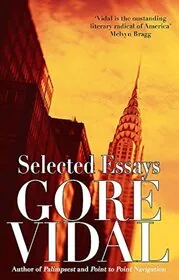
Selected Essays
by Gore Vidal
2007
Selected and introduced by Jay Parini, these essays bring together Vidal’s literary criticism and political commentary. Portraits of writers, reflections on public affairs, and autobiographical pieces show how his interests in language and power informed one another.

The Selected Essays of Gore Vidal
by Gore Vidal
2007
Jay Parini selects essays spanning literary criticism, political argument, memoir, and personal portraiture. Vidal assesses writers and public figures while exploring the connections between American culture and government, bringing private recollection into discussions of public life.
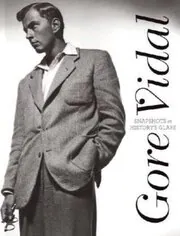
Snapshots in History's Glare
by Gore Vidal
2009
Photographs, letters, manuscripts, and Vidal’s commentary form a visual account of his life. The collection follows military service, literary work, Hollywood, political campaigns, friendships, and public feuds, drawing on the archive preserved by his companion Howard Austen.
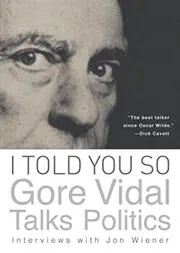
I Told You So
by Gore Vidal
2012
Four interviews with Jon Wiener, conducted between 1988 and 2008, capture Vidal discussing American history and politics. He considers empire, the national security state, and his own experiences as both a political commentator and a candidate.

United States
by Gore Vidal
Drawing on essays written from 1952 to 1992, Vidal surveys American intellectual and political life. Literary criticism, portraits of public figures, and personal reminiscences examine subjects including presidential politics, religion, sexuality, and the work of fellow authors.
Gore Vidal sub-series and character series
Myra and Myron books in order
Explore this seriesNarratives of Empire books in order
Explore this seriesStandalone Gore Vidal books













Edited by
Software engineer whose passion for tracking book recommendations from podcasts inspired the creation of MRB.
Lead investor at 3one4 Capital whose startup expertise and love for books helped shape MRB and its growth.
Comments
Did we miss something? Have feedback?
Help us improve this page by sharing your thoughts