
William F Buckley Jr Books in Order
Explore William F Buckley Jr books in order, from Blackford Oakes to the essays and memoirs, with summaries, series notes, and help on where to start.
Last updated:
As an Amazon Associate, we earn from qualifying purchases (at no extra cost to you).
William F Buckley Jr books in publication order
55 books
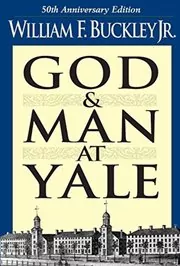
God and Man at Yale
by William F Buckley Jr
1951
Buckley's first book argues that Yale had drifted away from religious faith and individualist economics. Written in his twenties, it launched him into public debate and remains his clearest early statement of intellectual combat.
McCarthy and His Enemies
by William F Buckley Jr
1954
Coauthored with L. Brent Bozell Jr., this is a sustained argument about Joseph McCarthy, anti-Communism, and the political meaning of the 1950s. It reads as both a defense brief and a document of its moment.
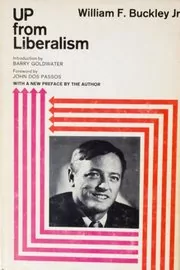
Up from Liberalism
by William F Buckley Jr
1959
A brisk set of essays in which Buckley argues against the liberal consensus of midcentury America. It is sharp, youthful, and useful for seeing the themes he would keep returning to for the rest of his career.
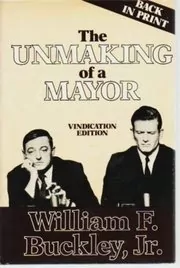
The Unmaking of a Mayor
by William F Buckley Jr
1966
Buckley recounts his 1965 run for mayor of New York City with candor, irony, and a campaign insider's eye. The book is part political memoir, part urban snapshot, and part reflection on why races are won or lost.
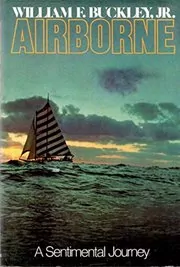
Airborne
by William F Buckley Jr
1970
Buckley tells the story of a long-planned Atlantic crossing from Miami to Spain with his son and friends. It is full of navigation, mishaps, boredom, humor, and the special exhilaration that comes with open water.
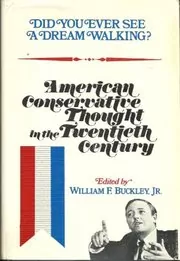
Did You Ever See A Dream Walking
by William F Buckley Jr
1970
Buckley surveys twentieth-century American conservative thought through key writers and arguments. It is a map of the movement's roots, divisions, and recurring concerns, assembled for readers who want the ideas as well as the slogans.
The governor listeth;
by William F Buckley Jr
1970
A collection of political commentary from a restless American moment, with Buckley observing elected officials, campaigns, and the changing tone of government. The pleasure is in the argument, the wit, and the speed of the prose.
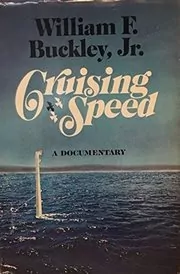
Cruising Speed--A Documentary
by William F Buckley Jr
1971
Part diary and part self-portrait, this book follows Buckley through the motion of his public life. Politics, travel, work, and reflection pile up quickly, giving the reader a sense of how crowded his days really were.

Inveighing We Will Go
by William F Buckley Jr
1972
A collection of Buckley pieces, sharp and argumentative, on the political and cultural disputes of the early 1970s. If you like him best in short bursts of combat, this book gives you plenty of them.
Four Reforms--A Guide for the Seventies
by William F Buckley Jr
1973
Buckley lays out a compact reform agenda for the 1970s, thinking through policy, political incentives, and the practical limits of government. It is a short book with the feel of a public argument meant to provoke action.

Essays on Hayek
by William F Buckley Jr
1976
A collection of essays on Friedrich Hayek that looks at his economics, political philosophy, and defense of a free society. It serves as a useful doorway into one of the thinkers Buckley and many conservatives took seriously.
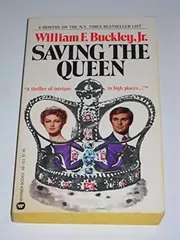
Saving the Queen
by William F Buckley Jr
1976
In 1952, newly recruited CIA man Blackford Oakes is sent to Britain to uncover a dangerous leak near the young Queen Caroline. It is a polished first mission, full of court intrigue, divided loyalties, and Cold War nerves.
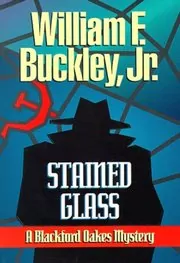
Stained Glass
by William F Buckley Jr
1978
Oakes heads to West Germany to penetrate the circle of Count Wintergrin, a magnetic politician whose push for reunification could upset the balance of Europe. The novel mixes espionage, romance, and the fear that one election might start a war.
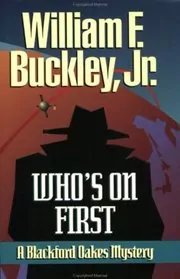
Who's on First
by William F Buckley Jr
1980
Set against the Hungarian uprising of 1956, this Blackford Oakes mission drops its hero into a volatile contest of revolt, repression, and superpower calculation. The pressure is not just personal, it is historical.
Marco Polo, If You Can
by William F Buckley Jr
1981
Blackford Oakes ends up in Soviet hands after a U-2 flight goes disastrously wrong. Behind the prison walls sits a deeper problem, a mole high inside the American system, and Oakes has to understand it before time runs out.
Atlantic High
by William F Buckley Jr
1982
Buckley turns from politics to the sea in this buoyant sailing book, celebrating offshore passages, seamanship, and the odd mix of freedom and discipline that life under sail demands. It is part travel writing, part love letter to blue water.
Overdrive
by William F Buckley Jr
1983
This personal documentary gathers Buckley in motion, debating, traveling, writing, and reflecting on the pace of his own career. It is less a single story than a vivid collage of a public life lived at full tilt.
The Story of Henri Tod
by William F Buckley Jr
1983
As Berlin edges toward the Wall in 1961, Oakes is sent to move inside the orbit of resistance hero Henri Tod. Personal history, divided Germany, and covert maneuvering all tighten at once in one of the series' darkest settings.
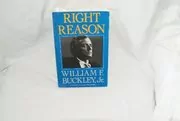
Right Reason
by William F Buckley Jr
1985
A broad collection of Buckley essays and speeches on politics, culture, and language. It is a good sampler of his habits as a writer, quick with a phrase, eager for dispute, and always alert to an opening.
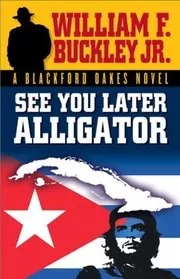
See You Later Alligator
by William F Buckley Jr
1985
Oakes goes to Cuba in 1961 on a secret mission that involves Che Guevara and a last, fragile hope of easing tensions with Washington. Diplomacy, deception, and the shadow of Soviet missiles make every conversation dangerous.
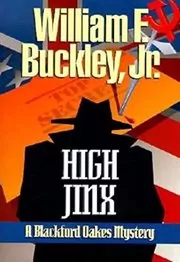
High Jinx
by William F Buckley Jr
1986
After Stalin's death, Oakes is drawn into a dangerous struggle over who will control the Kremlin. The mission turns on hidden loyalties, broken intelligence channels, and the fear that one internal Soviet fight could spill outward.
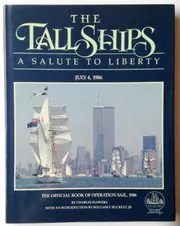
Tall Ships
by William F Buckley Jr
1986
A handsome maritime book celebrating the great sailing vessels gathered in New York Harbor in 1986. Along with images and ship lore, it conveys Buckley's delight in nautical history and the beauty of working sail.
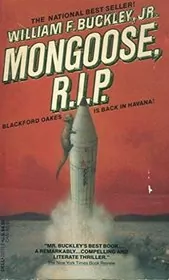
Mongoose, R.I.P.
by William F Buckley Jr
1987
In the aftermath of the Cuban Missile Crisis, Oakes is sent back toward Cuba to assess whether Castro can be toppled. The book turns real CIA plots and real Cold War anxieties into a fast, uneasy espionage story.
Racing Through Paradise
by William F Buckley Jr
1987
Buckley chronicles a four-thousand-mile Pacific sailing passage with friends, his son Christopher, and a photographer. The trip brings together technical seamanship, onboard comedy, and the old attraction of disappearing into blue water.
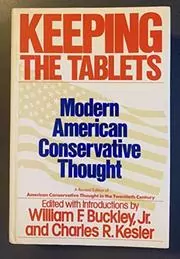
Keeping the Tablets
by William F Buckley Jr
1988
Coedited with Charles R. Kesler, this anthology gathers major conservative writers and arguments into one substantial volume. It is designed less as a manifesto than as a working map of modern American conservative thought.
On the Firing Line
by William F Buckley Jr
1989
Drawn from Buckley's television program, this book revisits public figures in their own words and under his questioning. It captures the rhythm of *Firing Line*, where ideas, ego, and performance usually met in the same room.
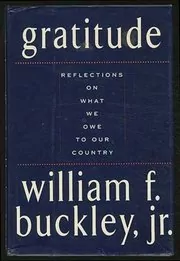
Gratitude
by William F Buckley Jr
1990
A short reflection on what citizens owe their country and what inheritance means in public life. Buckley writes here about duty, memory, and civic feeling in a quieter register than his usual polemics.
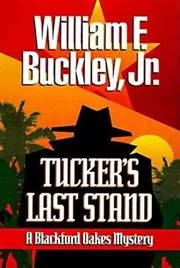
Tucker's Last Stand
by William F Buckley Jr
1990
Oakes heads into Southeast Asia in 1964, teaming with the hard-driving Tucker Montana to disrupt Viet Cong supply lines. It is a jungle mission with military stakes, murky politics, and a sense that the wider war is just beginning.
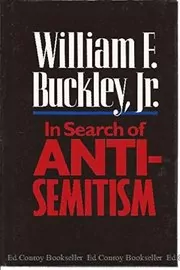
In Search of Anti-Semitism
by William F Buckley Jr
1992
Buckley examines accusations, rhetoric, and the uneasy boundary between political criticism and prejudice. The book is part investigation, part argument, and part meditation on how language can carry more than speakers admit.
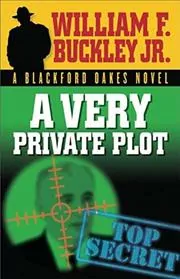
A Very Private Plot
by William F Buckley Jr
1993
Called before Congress in 1995, Blackford Oakes is forced to revisit an earlier covert operation tied to a plot against Mikhail Gorbachev. The story moves between testimony and secret history, showing how old missions refuse to stay buried.
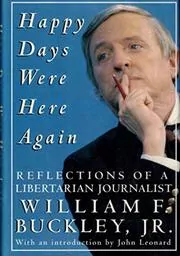
Happy Days Were Here Again
by William F Buckley Jr
1993
A gathering of reflections from Buckley's life in journalism, politics, and public argument. It offers memoir, opinion, and scene-setting all at once, with plenty of the dry wit that kept his columns moving.

Speedlearning Selected Works of W.A. Mozart
by William F Buckley Jr
1993
A music-learning volume built around the Buckley Notation System, meant to help readers follow and absorb selected Mozart works more easily. It sits at the intersection of Buckley's love of music and his taste for method.
WindFall
by William F Buckley Jr
1994
A reflective late memoir that moves through music, family, friendship, and sailing. Buckley is taking stock here, looking at old passions and old losses with a steadier, more inward gaze than in his overtly political books.
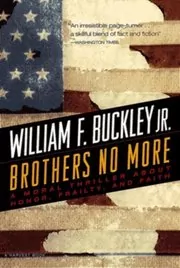
Brothers No More
by William F Buckley Jr
1995
This novel follows the long, bruised friendship between Henry Chafee and Danny O'Hara from World War II into the worlds of Yale, journalism, and politics. Guilt, ambition, and old secrets keep pulling them toward a final reckoning.
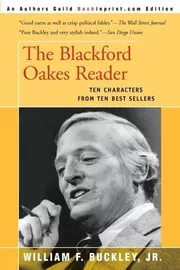
The Blackford Oakes Reader
by William F Buckley Jr
1995
Buckley steps away from the cloak-and-dagger action to explain where Blackford Oakes came from and how the series was made. It works as both a companion to the novels and a window into Buckley's imagination.
The Right Word
by William F Buckley Jr
1996
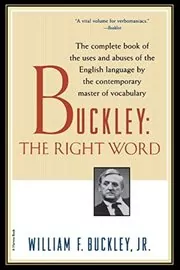
Part anthology and part handbook for word lovers, this book gathers Buckley on vocabulary, usage, style, and the pleasures of exact expression. It is one of the clearest views of how much he cared about the sentence itself.
Nearer, My God
by William F Buckley Jr
1997
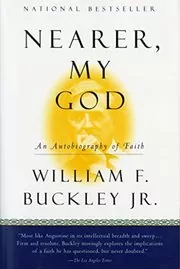
Buckley writes about Catholic belief, childhood, prayer, doctrine, and the way faith shaped his adult life. It is a searching, personal book, less combative than much of his work and more openly vulnerable.
The Lexicon
by William F Buckley Jr
1998
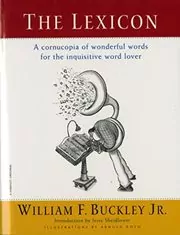
A playful treasury for readers who enjoy unusual, exact, and vivid English words. Buckley turns vocabulary into both entertainment and invitation, reminding you that language can be practical, comic, and gloriously excessive all at once.
Let Us Talk of Many Things
by William F Buckley Jr
2000
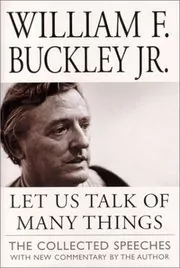
A collected speeches volume that shows Buckley in one of his natural forms, onstage, ranging across politics, culture, faith, and public life. It lets readers hear the cadence and theater that made him such a memorable speaker.
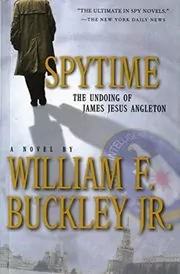
Spytime
by William F Buckley Jr
2000
Buckley fictionalizes the unraveling of CIA counterintelligence chief James Jesus Angleton, turning mole-hunting into a story of obsession and institutional paranoia. The deeper the search goes, the less stable the searcher becomes.
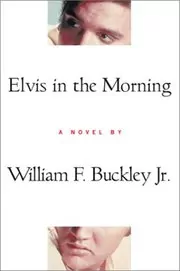
Elvis in the Morning
by William F Buckley Jr
2001
A teenage Elvis fan on a U.S. Army base in West Germany unexpectedly crosses paths with the singer and carries that connection into adulthood. It is a coming-of-age novel about fandom, friendship, and the changing mood of America.
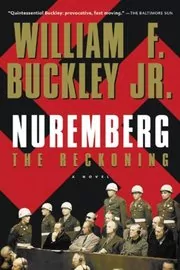
Nuremberg
by William F Buckley Jr
2002
At the Nuremberg trials, a young German American translator finds himself confronting both Nazi crimes and a mystery inside his own family history. Buckley uses the courtroom setting to explore justice, memory, and aftermath.
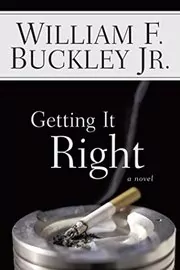
Getting It Right
by William F Buckley Jr
2003
Using fictional characters moving through the 1950s and 1960s, Buckley revisits the early conservative movement and its fights with the John Birch Society and Ayn Rand's circle. It is political history retold as a novel of ideas.
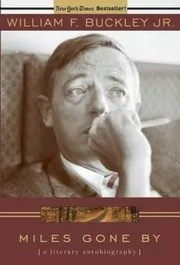
Miles Gone By
by William F Buckley Jr
2004
A literary autobiography made from autobiographical essays, memories, and portraits gathered across Buckley's life. Politics, sailing, language, faith, family, and youth all appear, giving a rounded picture of the man behind the public voice.
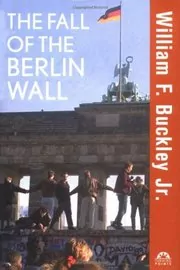
The Fall of the Berlin Wall
by William F Buckley Jr
2004
Buckley retells one of the defining events of the late twentieth century, tracing the pressure, symbolism, and political consequences of the Wall's collapse. It is a concise history written by someone who had lived the Cold War argument.
Last Call for Blackford Oakes
by William F Buckley Jr
2005
For his final outing, Oakes goes to Moscow in 1987 and comes face to face with Kim Philby. Age, memory, betrayal, and one more geopolitical crisis give the series an elegiac but still dangerous finish.
The Redhunter
by William F Buckley Jr
2006
A historical novel based on the life of Senator Joseph McCarthy, this book follows ambition, anti-Communism, and the atmosphere of fear that defined an era. Buckley is interested in both the man and the machinery around him.
Cancel Your Own Goddam Subscription
by William F Buckley Jr
2007
A lively book of letters between Buckley and his readers, critics, admirers, and enemies. It shows how argument really worked around him, not as abstract theory, but as an endless and often funny exchange.
The Rake
by William F Buckley Jr
2007
Senator Reuben Castle looks like a natural presidential contender, but his past is littered with secrets he thought he had outrun. Buckley turns the campaign trail into a story of charm, exposure, and desperate self-protection.
Flying High
by William F Buckley Jr
2008
Buckley remembers Barry Goldwater as friend, political ally, and emblem of a certain kind of American conservatism. The book is affectionate, personal, and useful as a sketch of a movement through one of its most recognizable figures.
The Reagan I Knew
by William F Buckley Jr
2008
Rather than a full formal biography, this is Buckley's personal portrait of Ronald Reagan. It is built from memory, admiration, and firsthand observation, and it works best as a close-up view of character.

Conversations with William F. Buckley Jr.
by William F Buckley Jr
2009
This interview collection brings together decades of conversations about politics, literature, sailing, culture, and religion. It is a good way to hear Buckley thinking aloud, responding in real time rather than polishing an essay.
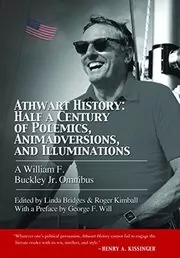
Athwart History
by William F Buckley Jr
2010
An omnibus of Buckley essays and columns spanning more than half a century, moving from campaigns and foreign policy to culture and language. It is a large, varied sampler of the fights he chose and the style he brought to them.
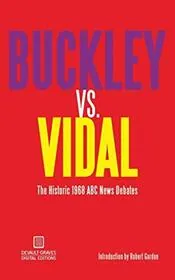
Buckley vs. Vidal
by William F Buckley Jr
2015
This volume collects the famous 1968 television debates between William F. Buckley Jr. and Gore Vidal. It is a front-row seat to their clashes over protest, war, party politics, and the limits of televised civility.
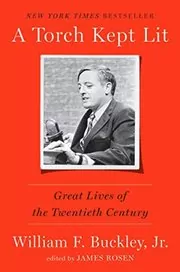
A Torch Kept Lit
by William F Buckley Jr
2016
This collection gathers Buckley's memorial pieces and eulogies for notable twentieth-century figures. Read straight through, it becomes both a set of portraits and a sideways history of the age he moved through.
Where to start with William F Buckley Jr
If you want the spy novels first: Saving the Queen → Stained Glass → Who's on First → Marco Polo, If You Can
If you want Buckley the public polemicist: God and Man at Yale → Up from Liberalism → On the Firing Line
If you want memoir, faith, and the man offstage: Miles Gone By → Nearer, My God → Gratitude
If you want later historical fiction: Nuremberg → The Rake
William F Buckley Jr sub-series and character series
William F Buckley Jr collections, short stories, and related book types
Non-Fiction
Standalone William F Buckley Jr books
Author bio
William F. Buckley Jr. was born in New York City in 1925, but his childhood did not stay in one place for long. He grew up between Mexico, France, England, and Connecticut, in a large Catholic family with strong opinions and a serious interest in language. Spanish came first, then French, then English, and that early mix helps explain the unusual cadence and verbal play that later became part of his public persona.
His education moved across borders too. He attended school in England and New York, served in the U.S. Army during World War II, and then went to Yale, where he studied history, economics, and political science. At Yale he taught Spanish, debated eagerly, and chaired the Yale Daily News. He liked an argument, but he also liked the stage on which the argument happened.
That combination showed up early. In 1951, while still in his twenties, he published God and Man at Yale, a sharp critique of his alma mater that pushed him into national debate almost overnight. A few years later he worked briefly for the CIA, including a stint in Mexico City, and then moved into journalism and editing.
He never really stopped building new platforms for conversation.
In 1955 he founded National Review, the magazine most closely linked with his name. It became a meeting place for different strains of postwar conservatism and helped turn scattered ideas into a durable movement. Later came the syndicated column "On the Right," and then Firing Line, the long-running television program where Buckley debated, interviewed, provoked, and occasionally needled an extraordinary range of guests for more than three decades.
Buckley liked ideas, but he also liked performance.
Readers coming to his books for the first time usually meet different sides of him depending on where they begin. Saving the Queen opens the Blackford Oakes spy novels and shows how comfortably he could work inside Cold War intrigue. Miles Gone By is more personal, drawing together family memories, politics, language, and sailing. Nearer, My God reveals the importance of Catholic faith in his life, while The Lexicon shows the pleasure he took in words simply for their own sake.
Certain subjects kept returning. Freedom and power. Institutions and their drift. The Cold War. Public speech. Faith. Friendship. And the sea. Buckley loved sailing enough to make it a second literary life, and books such as Airborne, Atlantic High, and Racing Through Paradise are as central to understanding him as the more openly political titles.
His later years were divided mainly between Connecticut and New York. He had married Patricia Taylor in 1950, and they had one son, Christopher, who became a writer himself. After decades of books, columns, television, speeches, memoirs, anthologies, and novels, Buckley died in Stamford, Connecticut, in 2008. What remains is a body of work that is large, varied, and often surprisingly restless, always looking for the next argument, the next sentence, or the next horizon.





Edited by
Software engineer whose passion for tracking book recommendations from podcasts inspired the creation of MRB.
Lead investor at 3one4 Capital whose startup expertise and love for books helped shape MRB and its growth.
Comments
Did we miss something? Have feedback?
Help us improve this page by sharing your thoughts