
Arthur C Clarke Books in Order
See all Arthur C Clarke books in order, with series lists, short summaries, reading order notes, and guidance on where to start with his science fiction and essays.
Last updated:
As an Amazon Associate, we earn from qualifying purchases (at no extra cost to you).
Arthur C Clarke books in publication order
67 books

The Collected Stories of Arthur C. Clarke
by Arthur C. Clarke
1938
Spanning decades of work, this omnibus gathers nearly all of Clarke’s short fiction, from early magazine pieces to later, more reflective tales. It’s the best single volume for tracing how his ideas, concerns, and storytelling style evolved over time.

Rescue Party
by Arthur C. Clarke
1946
In one of Clarke’s classic early stories, an alien survey team arrives to evacuate the last humans from a doomed Earth—only to discover we may already have escaped. This standalone edition presents a tale that neatly captures his fascination with perspective and surprise.
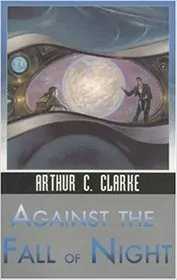
Against the Fall of Night
by Arthur C. Clarke
1948
On a far‑future Earth, the city of Diaspar has survived for eons as humanity’s last refuge, content and inward‑looking. Alvin, a rare child among immortals, refuses to accept that nothing lies beyond its walls and sets out to rediscover the wider universe and mankind’s forgotten history.
Interplanetary Flight
by Arthur C. Clarke
1950
This nonfiction classic explains the real physics of rocketry, orbital mechanics, and space travel in clear, accessible prose. Clarke walks readers through how we might leave Earth, travel between planets, and build a practical space age from mid‑twentieth‑century technology.
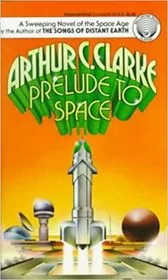
Prelude to Space
by Arthur C. Clarke
1950
As the world prepares for the first crewed mission to the Moon, a historian follows engineers, pilots, and planners through the final weeks before launch. The novel reads like a near‑future documentary, detailing how a lunar flight might actually be designed, funded, and flown.
The Exploration of Space
by Arthur C. Clarke
1951
Clarke surveys the prospects of spaceflight—from Earth orbit to the outer planets—explaining rockets, trajectories, and future missions in everyday language. Written before real missions flew, it lays out how humanity could reach space and why doing so might transform life on Earth.
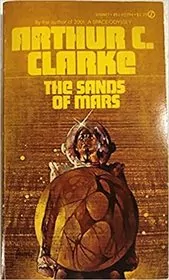
The Sands of Mars
by Arthur C. Clarke
1951
Science‑fiction writer Martin Gibson joins a transport to humanity’s fledgling colony on Mars, expecting a research trip and finding political tensions, a secret terraforming project, and a personal connection he never suspected. His journey forces him to rethink both the Red Planet and his own past.

The Sentinel
by Arthur C. Clarke
1951
Named for the short story that helped inspire *2001: A Space Odyssey*, this collection brings together key Clarke pieces about alien artefacts, exploration, and the quiet moment when humanity realises it is not alone. It offers a compact introduction to his core themes.
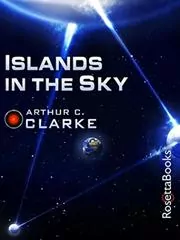
Islands in the Sky
by Arthur C. Clarke
1952
Teenager Roy Malcolm wins a trip to an orbital space station and spends two weeks exploring life in low Earth orbit. His adventures with the station apprentices double as a tour of near‑future space technology, from obsolete Venus rockets to nascent satellite relays.

Across the Sea of Stars
by Arthur C. Clarke
1953
An omnibus volume that combines *Childhood’s End*, *Earthlight*, and a generous selection of short stories. It showcases Clarke’s range, from planetary adventure to philosophical speculation about humanity’s next evolutionary step.
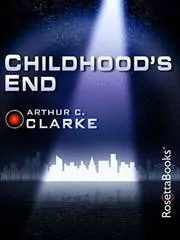
Childhood's End
by Arthur C. Clarke
1953
When mysterious Overlords arrive and quietly usher in a global golden age, humanity seems to have everything it ever wanted—at the cost of its independence. As generations pass, the true purpose of their guidance leads to a final, unsettling transformation.
Recommended by
2 people Ben Shapiro recommended this book
Ben Shapiro
"The best science fiction book probably ever." - Ben Shapiro
Ben Shapiro's recommendation of this book  Kevin Kelly recommended this book
Kevin Kelly
"This story of a singularity always stuck with me as something to prepare for." - Kevin Kelly
Kevin Kelly's recommendation of this book
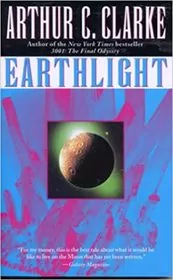
Earthlight
by Arthur C. Clarke
1955
A mild‑mannered accountant turned secret agent travels to a lunar observatory to hunt a suspected spy amid growing tension between Earth and the outer‑planet colonies. When conflict finally erupts over scarce minerals, he witnesses a brief but pivotal battle played out across the Moon’s stark landscape.
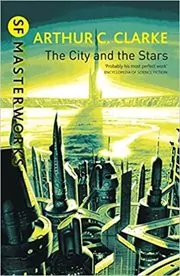
City and the Stars
by Arthur C. Clarke
1956
In the sealed city of Diaspar, people are effectively immortal and nothing ever changes—except for Alvin, the only true child born in millions of years. His need to see what lies beyond the city walls uncovers forgotten truths about humanity’s past and future.
Recommended by
1 person Peter Thiel recommended this book
Peter Thiel
"One of [Peter Thiel's] favorite novels." - Ryan Holiday
Peter Thiel's recommendation of this book
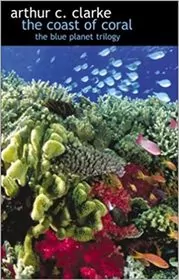
The Coast of the Coral
by Arthur C. Clarke
1956
Clarke’s first major diving book follows his expeditions along Australia’s Great Barrier Reef, combining practical notes on skin‑diving with vivid sketches of coral landscapes, shipwrecks, and the people who live and work around them. It captures his early love affair with the underwater world.
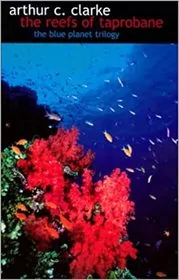
The Reefs of Taprobane
by Arthur C. Clarke
1956
Moving to Ceylon (Sri Lanka), Clarke and photographer Mike Wilson join local divers to explore reefs, wrecks, and the newly discovered ruins of the Koneswaram temple. Part travelogue, part dive log, it chronicles the early days of recreational scuba in the Indian Ocean.
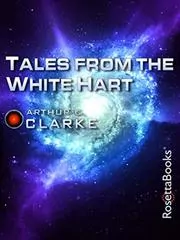
Tales From The White Hart
by Arthur C. Clarke
1957
In a London pub frequented by scientists and writers, master storyteller Harry Purvis spins outrageous yarns about lethal orchids, runaway special‑effects weapons, and impossible inventions. This linked collection uses tall tales and dry humour to poke fun at both pulp SF clichés and real‑world research.
The Deep Range
by Arthur C. Clarke
1957
Once an astronaut, Walter Franklin now works beneath the waves, piloting single‑person subs to herd whales and manage plankton farms that feed much of Earth. His career in undersea mariculture gradually pulls him into debates over hunting, conservation, and humanity’s proper relationship with the ocean.

Boy Beneath the Sea
by Arthur C. Clarke
1958
Aimed at younger readers, this nonfiction book follows a boy experiencing the underwater world around Sri Lanka and the Great Barrier Reef. Clarke’s text and accompanying photographs introduce coral, wrecks, and marine life while conveying the sheer pleasure and occasional danger of diving.

The Other Side of the Sky
by Arthur C. Clarke
1958
A short‑story collection that ranges from lunar tourism to strange encounters in deep space, often with a wry twist. Many tales share a loose setting of early space stations and Moon bases, showcasing Clarke’s knack for blending technical plausibility with playful ideas.
Voice Across The Sea
by Arthur C. Clarke
1958
Clarke traces the story of long‑distance communication—from the first undersea telegraph cables to microwave relays and early satellites—explaining how engineers learned to send voices and signals beneath oceans and through space, and what that shrinking of distance means for everyday life.
A Fall of Moondust
by Arthur C. Clarke
1961
A tourist cruiser skimming a "sea" of fine lunar dust is swallowed by a sudden subsurface collapse, trapping its passengers deep below the surface. With air and time running out, rescuers must first locate the buried craft and then devise a way to reach it through treacherous, shifting regolith.
Profiles of the Future
by Arthur C. Clarke
1962
In this essay collection, Clarke examines possible and impossible technologies—from space elevators to faster‑than‑light travel—and tries to sort sober prediction from wishful thinking. Updated over the years, it offers a clear view of how he thought about the limits of the possible.

Tales of Ten Worlds
by Arthur C. Clarke
1962
This story collection hops from Mercury to the outer planets and beyond, offering compact vignettes of explorers, colonists, and odd phenomena. The pieces are brisk and idea‑driven, often ending with a neat twist or a wry comment on human nature.
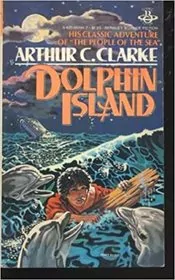
Dolphin Island
by Arthur C. Clarke
1963
After stowing away on a giant cargo hovercraft and surviving a crash in the Pacific, teenager Johnny Clinton is rescued by dolphins and brought to a research community on Australia’s Great Barrier Reef. There he joins experiments in dolphin communication and must face storms and hard choices.
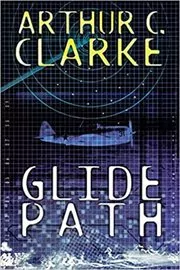
Glide Path
by Arthur C. Clarke
1963
Drawing on Clarke’s own wartime service, this near‑documentary novel follows a British radar unit in World War II as it develops a groundbreaking landing system that can guide aircraft safely down in bad weather. The story focuses on engineers, test pilots, and the quiet pressures of innovation under fire.

Man And Space
by Arthur C. Clarke
1964
Written for the Life Science Library, this heavily illustrated volume introduces the history and technology of spaceflight, from early rocketry to planetary probes. Clarke explains how we reach orbit, what living in space entails, and why exploring beyond Earth matters.
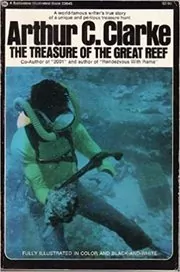
The Treasure of the Great Reef
by Arthur C. Clarke
1964
Clarke recounts the real discovery of a wreck on Sri Lanka’s Great Basses Reef, where he and Mike Wilson helped document a hoard of silver rupees from a Mughal ship. The book mixes adventure, legal wrangling, and day‑to‑day diving work on a hazardous, wave‑swept reef.
Voices from the Sky
by Arthur C. Clarke
1966
This collection of essays looks ahead to the coming “space age,” discussing satellites, planetary exploration, and how global communications might reshape politics and culture. Clarke writes as both engineer and enthusiast, arguing that orbiting hardware will change how humanity talks and thinks.
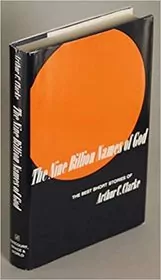
The Nine Billion Names of God
by Arthur C. Clarke
1967
Collecting one of Clarke’s most famous short stories and many companions, this volume blends cosmic awe with dry irony. From monks using computers to complete a sacred task to engineers confronting unexpected consequences, the tales are brief but memorable thought experiments.

2001: A Space Odyssey
by Arthur C. Clarke
1968
From a prehistoric encounter with a mysterious monolith to a crewed mission to Jupiter controlled by the HAL 9000 computer, this novel traces key steps in human evolution. When HAL begins to malfunction, astronaut Dave Bowman must survive—and face whatever intelligence planted the monoliths.
Recommended by
1 person Lex Fridman recommended this book
Lex Fridman
Lex Fridman mentioned this book on Instagram.
Lex Fridman's recommendation of this book

Expedition to Earth
by Arthur C. Clarke
1968
One of Clarke’s earliest collections, *Expedition to Earth* gathers stories about alien visitors, time travel, and strange futures. The pieces are short, sharp explorations of single ideas, already showing his preference for clean prose and scientifically grounded speculation.

The Lion Of Comarre
by Arthur C. Clarke
1968
Set in a distant future of automated comfort, this novella follows a restless young man who seeks out the legendary hidden city of Comarre. What he finds forces him to question whether a perfectly managed utopia is worth the price it demands from human curiosity and freedom.
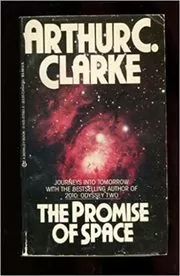
The Promise of Space
by Arthur C. Clarke
1968
Gathering lectures and articles from the 1950s and 60s, Clarke explores what sustained spaceflight could mean for science, industry, and ordinary people. He moves from launch vehicles to space stations and beyond, always tying technical possibilities to their human consequences.
Into Space
by Arthur C. Clarke
1971
Co‑written with Robert Silverberg, this illustrated guide introduces young readers to rockets, orbits, and life in space. Short chapters, diagrams, and photos explain how spacecraft work and what early missions are teaching us about the Solar System.

The Lost Worlds Of 2001
by Arthur C. Clarke
1971
Clarke opens his notebooks for *2001: A Space Odyssey*, presenting early drafts, alternate scenes, and behind‑the‑scenes commentary on how the novel and film evolved. It’s part making‑of, part companion volume for readers curious about paths not taken in the finished story.

Beyond Jupiter: The Worlds of Tomorrow
by Arthur C. Clarke
1972
Pairing Clarke’s text with Chesley Bonestell’s paintings, this book tours the outer Solar System as it was imagined in the early 1970s. It describes giant planets, moons, and comets, sketching the missions and discoveries that might await future explorers beyond Jupiter.

Of Time and Stars
by Arthur C. Clarke
1972
This retrospective collection mixes some of Clarke’s best‑known stories with lesser‑known favourites. Arranged by theme, it moves from space exploration to time travel and philosophical fables, offering a concise survey of his short‑form imagination.

Report on Planet Three
by Arthur C. Clarke
1972
This essay collection gathers Clarke’s speculative pieces on astronomy, planetary science, and the future of humanity. Written with dry humour, the articles treat Earth as just one interesting world among many and ask how intelligent life might fare elsewhere in the cosmos.

The Wind From The Sun
by Arthur C. Clarke
1972
Named for Clarke’s classic solar‑sail race story, this collection features tales of engineering challenges, odd discoveries, and quiet human dramas in space. Several pieces highlight how small technical details—like sail area or orbital timing—can drive high‑stakes adventure.
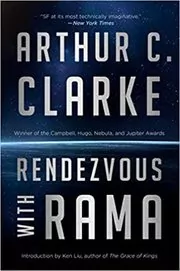
Rendezvous with Rama
by Arthur C. Clarke
1973
In the 22nd century, astronomers detect an immense cylindrical object falling through the Solar System. A hastily assembled crew boards the silent starship, mapping its gravity‑bent interior landscapes and strange structures before Rama swings around the Sun and disappears into deep space.
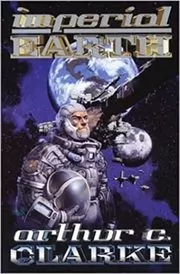
Imperial Earth
by Arthur C. Clarke
1975
On Saturn’s moon Titan, the Makenzie family has built a thriving colony by exporting hydrogen to the inner worlds. In 2276, Duncan Makenzie travels to Earth for its quincentennial celebrations—and for a more secret mission involving cloning, politics, and the future of Titan’s independence.
The View from Serendip
by Arthur C. Clarke
1977
A collection of essays and anecdotes, this book blends Clarke’s musings on science and the future with warm sketches of life in Sri Lanka and his diving adventures. It offers an informal, often funny self‑portrait alongside serious speculation about technology and society.
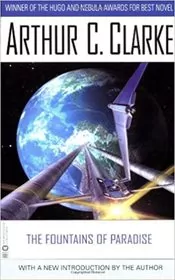
The Fountains of Paradise
by Arthur C. Clarke
1979
Engineer Vannevar Morgan dreams of building a space elevator—a cable stretching from an equatorial mountaintop to geostationary orbit. As he fights politics, religion, and engineering nightmares to realise it, the novel weaves together ancient myths of the mountain with a very practical future for space access.
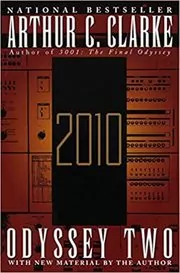
2010: Odyssey Two
by Arthur C. Clarke
1982
Nine years after Discovery One’s mission failed, a joint Soviet‑American crew travels to Jupiter aboard the Alexei Leonov to investigate the derelict ship and the enormous monolith orbiting the planet. Reviving HAL and probing Europa, they discover that the intelligence behind the monoliths is still at work.
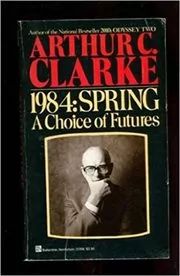
1984: Spring - A Choice of Futures
by Arthur C. Clarke
1984
In these essays Clarke looks ahead from the early 1980s, sketching possible futures for computing, communications, and spaceflight. He weighs optimistic and pessimistic scenarios, asking which choices might lead toward a humane, technologically rich global society.
July 20, 2019
by Arthur C. Clarke
1986
Written in the 1980s, this nonfiction book imagines daily life on the fiftieth anniversary of the Apollo 11 landing. Clarke extrapolates trends in computing, spaceflight, and communications to sketch a plausible 2019 and reflect on how far the space age might have come.
The Songs of Distant Earth
by Arthur C. Clarke
1986
Centuries after Earth’s destruction, the starship Magellan stops at the ocean world Thalassa to rebuild its ice shield, meeting a small, peaceful human colony seeded there long before. The visitors and locals grapple with love, duty, and what it means to leave or stay when worlds are ending.
2061: Odyssey Three
by Arthur C. Clarke
1987
Seventy years after the Discovery mission, Heywood Floyd joins a luxury voyage to Halley’s Comet that is diverted toward Jupiter’s moons. As political tensions and old mysteries resurface, the travellers confront the long shadow of the monoliths’ warning about Europa.
Cradle
by Arthur C. Clarke
1987
Off the Florida coast, a search for a lost U.S. Navy missile instead uncovers a buried alien artefact on the seabed. Journalists, scientists, and the military converge on the site, forcing hard choices about secrecy, first contact, and what to do with technology we barely understand.

A Meeting With Medusa
by Arthur C. Clarke
1988
In this Nebula‑winning novella, veteran airship pilot Howard Falcon descends into Jupiter’s atmosphere to study its colossal floating lifeforms. The mission pushes both his heavily augmented body and his nerve, raising questions about what it means to be human in an inhuman environment.
Rama II
by Arthur C. Clarke
1989
Seventy years after the first Rama encounter, a second cylindrical starship enters the Solar System—this time expected. A new crew boards it with better equipment and far more political baggage, and their personal ambitions and secrets become as dangerous as the mysteries inside Rama itself.
Astounding Days
by Arthur C. Clarke
1990
Part memoir, part history of a magazine, this book traces Clarke’s lifelong relationship with *Astounding Stories* (later *Analog*). He recalls his early reading, wartime years, friendships with other writers, and how the magazine’s stories and editors shaped both his imagination and modern SF.
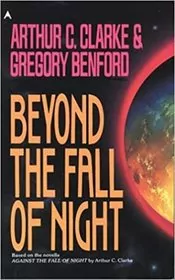
Beyond the Fall of Night
by Arthur C. Clarke
1990
This volume pairs Clarke’s original novel *Against the Fall of Night* with Gregory Benford’s authorised sequel. After Alvin frees humanity from its long isolation, Benford carries the story into an even more distant future where new intelligences and cosmic forces reshape what “destiny” might mean.

Tales from Planet Earth
by Arthur C. Clarke
1990
A later collection that gathers stories about humanity’s relationship with its home world and the wider cosmos. The pieces range from playful to melancholy but repeatedly return to the idea that Earth is both cradle and launching pad for intelligent life.
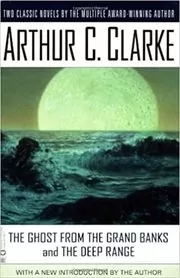
The Ghost from the Grand Banks
by Arthur C. Clarke
1990
Two rival high‑tech consortia race to raise different halves of the Titanic in time for the centenary of its sinking. As engineering challenges mount and media spectacle grows, Clarke uses fractals, financial games, and human hubris to question whether the ship should be disturbed at all.
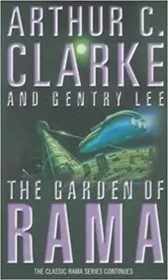
The Garden of Rama
by Arthur C. Clarke
1991
Continuing the Rama saga, this novel follows a small group of humans who have settled inside the vast starship as it travels between the stars. Their children and grandchildren grow up in a closed world whose alien purpose remains obscure, and human conflicts begin to reshape Rama’s interior societies.
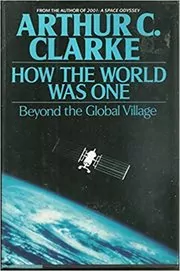
How the World Was One
by Arthur C. Clarke
1992
Clarke offers a personal history of global communications, from telegraph cables and radio links to satellites and fibre optics. Drawing on his own role in popularising satellite relays, he explains how the planet has been “wired” together and what that connectivity might mean for culture and politics.
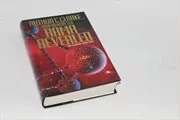
Rama Revealed
by Arthur C. Clarke
1993
The final Rama novel brings the long journey of the starship and its human passengers to a conclusion. As the truth about the Ramans and their agenda finally emerges, the surviving characters must decide what sort of future they want inside a machine built on truly cosmic scales.
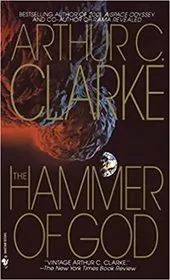
The Hammer of God
by Arthur C. Clarke
1993
When astronomers discover that an asteroid named Kali is on a collision course with Earth, Captain Robert Singh leads a spacecraft mission to deflect it. Clarke builds a tense, tightly focused story around impact physics, space engineering, and the clash between technological optimism and religious fatalism.
Richter 10
by Arthur C. Clarke
1996
Crippled as a child by a massive earthquake, seismologist Lewis Crane dedicates his life to understanding and ultimately taming tectonic forces. As he and his team develop predictive systems and radical geo‑engineering schemes, they must weigh the risks of trying to switch Earth’s quakes off forever.
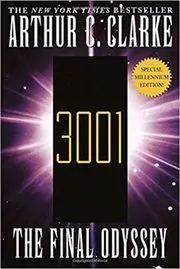
3001: The Final Odyssey
by Arthur C. Clarke
1997
A thousand years after he vanished, astronaut Frank Poole is found, revived, and thrust into a far‑future human civilisation that has learned to live with the monoliths’ legacy. As a new judgement on Earth looms, Poole and HAL must work together to challenge their makers’ plans.
Greetings, Carbon-Based Bipeds!
by Arthur C. Clarke
1999
This hefty collection gathers Clarke’s essays, reviews, and speeches from across his career. Topics range from space travel and communications to favourite books, colleagues, and everyday life in Sri Lanka, offering a conversational companion piece to his more formal nonfiction works.
The Trigger
by Arthur C. Clarke
1999
A research team accidentally invents a device that can detonate explosives at a distance—and later, one that can render them inert. Governments, criminals, and activists scramble to control or suppress the technology as society wrestles with what a world without conventional guns or bombs might look like.

From Narnia To Space Odyssey
by Arthur C. Clarke
2003
This volume collects correspondence and essays tracing the long conversation between C. S. Lewis and Arthur C Clarke about space travel, theology, and the purpose of science fiction. It offers a rare look at how two very different writers debated the hopes and dangers of exploring other worlds.

The Shining Ones
by Arthur C. Clarke
2004
Part of the "Arthur C. Clarke’s Venus Prime" sequence, this novel expands on Clarke’s short story "The Shining Ones" as reimagined by another writer with Clarke’s blessing. It follows an enhanced investigator through a web of corporate intrigue and alien mystery linked to his original tale.
The Last Theorem
by Arthur C. Clarke
2008
Sri Lankan prodigy Ranjit Subramanian discovers a short proof of Fermat’s Last Theorem, gaining sudden fame just as distant aliens begin to worry about humanity’s nuclear testing. His mathematical breakthrough entangles him in global politics, secret agencies, and a looming decision about Earth’s fate.
The Exploration of the Moon
by Arthur C. Clarke
2020
Lavishly illustrated and written for general readers, this early nonfiction book explains what scientists then knew about the Moon and how they expected to explore it. Clarke describes possible bases, vehicles, and missions long before real astronauts set foot on the lunar surface.
Where to start with Arthur C Clarke
If you want a single, mind-bending classic: Childhood's End.
If you want to read along with the films: 2001: A Space Odyssey → 2010: Odyssey Two → 2061: Odyssey Three → 3001: The Final Odyssey.
If you're drawn to mysterious alien artifacts: Rendezvous with Rama → Rama II → The Garden of Rama → Rama Revealed.
If you like big-idea collaborations: The Light of Other Days → Time's Eye → Sunstorm → Firstborn → The Last Theorem.
Arthur C Clarke sub-series and character series
Frederik Pohl (Arthur C Clarke) books in order
Explore this seriesGregory Benford (Arthur C Clarke) books in order
Explore this seriesRobert Silverberg (Arthur C Clarke) books in order
Explore this seriesArthur C Clarke collections, short stories, and related book types
Non-Fiction
Short Stories/Novellas
Short Story Collections
Standalone Arthur C. Clarke books
Author bio
Arthur C. Clarke was born in Minehead, Somerset, in 1917 and grew up on a West Country farm, looking up at the night sky, collecting fossils, and devouring American pulp magazines. That mix of stargazing and cheap paperbacks nudged him toward a life as both a working scientist and one of the twentieth century’s most widely read science‑fiction and popular‑science writers.
In 1936 Clarke moved to London to work as a civil servant, but the Second World War soon pulled him into technical work. He served in the Royal Air Force as a radar specialist, helping develop ground‑controlled approach systems that guided aircraft to safe landings, an experience he later reworked in his only non‑science‑fiction novel, Glide Path.
After the war he studied mathematics and physics at King’s College London, graduating with first‑class honours, then edited abstracts in physics while pouring his energy into the British Interplanetary Society. In 1945 he circulated and then published a paper describing how satellites in geostationary orbit could relay radio and television signals around the globe, an idea so influential that the orbit is now casually called the Clarke belt.
By the early 1950s Clarke was publishing both speculative non‑fiction such as Interplanetary Flight and a run of striking novels. Childhood’s End imagined a peaceful alien occupation that shepherds humanity toward a strange, collective evolution, while The City and the Stars and its earlier version Against the Fall of Night pushed his favourite themes of far‑future civilization, memory, and the longing to break out of a static utopia.
His international breakthrough came when he and filmmaker Stanley Kubrick developed 2001: A Space Odyssey together in the 1960s, conceiving the film and novel side by side. The story of the enigmatic monoliths, the HAL 9000 computer, and astronaut Dave Bowman turned Clarke’s blend of rigorous physics and cosmic mystery into one of the most discussed science‑fiction projects of the century.
Across his fiction, Clarke kept returning to certain questions. In Rendezvous with Rama a survey vessel explores a silent alien cylinder passing through the Solar System, while The Fountains of Paradise turns his fascination with geostationary orbits into a story about building a space elevator on an equatorial mountain. Later he revisited the Odyssey universe in 2010, 2061, and 3001, and co‑wrote projects such as The Light of Other Days, the A Time Odyssey trilogy, and The Last Theorem. Underneath the hardware, he kept circling ideas about very long timescales, first contact, and the sense that humanity might be one stage in a larger evolutionary story.
Alongside the space epics, Clarke nurtured a second life underwater. After moving permanently to Ceylon (now Sri Lanka) in 1956, he co‑founded diving ventures, explored coral reefs, and helped document the sunken Koneswaram temple and the treasure‑laden Great Basses wreck. Books like The Coast of Coral, The Reefs of Taprobane, The Treasure of the Great Reef, and essay collections such as The View from Serendip fold those expeditions and friendships into relaxed, observant narratives about the sea and about everyday life in his adopted home.
In later decades Clarke became a familiar voice on television through series like Arthur C. Clarke’s Mysterious World, while his non‑fiction books—Profiles of the Future, How the World Was One, and others—kept translating new technology for general readers. Honours followed, from the UNESCO Kalinga Prize to a knighthood and Sri Lanka’s highest civilian award. He died in Colombo in 2008, but his quietly optimistic view of spacefaring humanity still underpins much of today’s conversation about the future.


Edited by
Software engineer whose passion for tracking book recommendations from podcasts inspired the creation of MRB.
Lead investor at 3one4 Capital whose startup expertise and love for books helped shape MRB and its growth.
Comments
Did we miss something? Have feedback?
Help us improve this page by sharing your thoughts