
Rama Books in Order
Part ofArthur C Clarke Books in OrderSee the Rama series by Arthur C Clarke in order, from Rendezvous with Rama through the later Gentry Lee collaborations, with plot summaries, background, and reading order tips.
Last updated:
As an Amazon Associate, we earn from qualifying purchases (at no extra cost to you).
Rama books in publication order
6 books
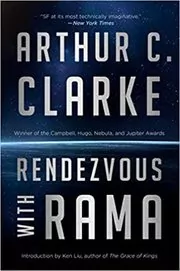
Rendezvous with Rama
by Arthur C. Clarke
1973
In the 22nd century, astronomers detect an immense cylindrical object falling through the Solar System. A hastily assembled crew boards the silent starship, mapping its gravity‑bent interior landscapes and strange structures before Rama swings around the Sun and disappears into deep space.
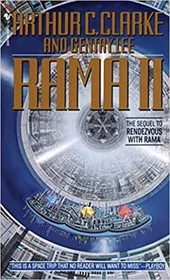
Rama II
by Arthur C. Clarke
1989
Seventy years after the first Rama encounter, a second cylindrical starship enters the Solar System—this time expected. A new crew boards it with better equipment and far more political baggage, and their personal ambitions and secrets become as dangerous as the mysteries inside Rama itself.
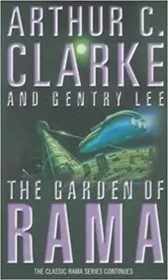
The Garden of Rama
by Arthur C. Clarke
1991
Continuing the Rama saga, this novel follows a small group of humans who have settled inside the vast starship as it travels between the stars. Their children and grandchildren grow up in a closed world whose alien purpose remains obscure, and human conflicts begin to reshape Rama’s interior societies.
Rama Revealed
by Arthur C. Clarke
1993
The final Rama novel brings the long journey of the starship and its human passengers to a conclusion. As the truth about the Ramans and their agenda finally emerges, the surviving characters must decide what sort of future they want inside a machine built on truly cosmic scales.
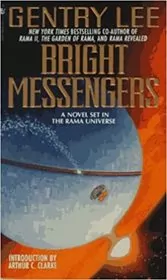
Bright Messengers
by Gentry Lee
1996
Mysterious luminous particles mean divine communication to Sister Beatrice and a scientific anomaly to engineer Johann Eberhardt. Their search brings them to Mars, where economic collapse threatens the colony and competing beliefs shape their response to the unknown.
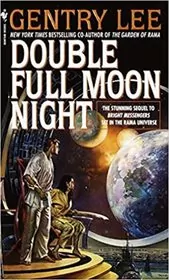
Double Full Moon Night
by Gentry Lee
2000
Johann Eberhardt and his daughter live on an island inside an immense alien sphere. When a violent life-form invades their refuge, they journey across the water to seek other colonists, confronting unfamiliar creatures and threats to their survival.
Rama books in chronological order
Series background & context
The Rama books all begin with the same jolt: something impossibly large and obviously artificial drifts into the Solar System, and humanity scrambles to investigate before it vanishes again into deep space. In Rendezvous with Rama, that object is a fifty‑kilometre‑long, perfectly smooth cylinder that gives up almost no information until a survey ship manages to match its orbit and slip inside.
Commander Norton and his crew find a world turned in on itself – plains curving overhead, a frozen “Cylindrical Sea,” and city‑like clusters of structures with no doors or windows. As Rama warms in the sun, the interior slowly comes to life, but the explorers never truly meet its makers. The book leans into awe and restraint: plenty of precise engineering detail, almost no explanations, and a strong sense that humans are only getting a brief, partial glimpse of something far beyond them.
Decades later in story time, Rama II, The Garden of Rama, and Rama Revealed pick up the thread. Written with Gentry Lee, they follow a second expedition that enters another Raman craft with more time to explore – and far more complicated motives and conflicts among the human crew. Where the first book was spare and almost documentary in tone, the sequels are more character‑driven, tracing family lines, political tensions, and religious reactions as humans begin to treat the interior of Rama as a place they might actually live.
Across the series, a few big questions keep surfacing. Are the Ramans indifferent cosmic engineers, distant custodians, or something closer to gardeners of intelligent life? What does it mean to build a habitat that is constantly moving on, never settling in one star system? And how do ordinary people cope when they realise that their home – or even their whole civilisation – is just one compartment in a machine built for purposes they may never fully understand?
A Rama‑focused page will usually outline each novel, note the shift from Clarke’s terse original to Lee’s more expansive sequels, and offer guidance on whether to stop with Rendezvous with Rama or read the entire cycle. It’s the place to come if you like slow, meticulous exploration stories where the biggest mysteries are never completely solved.






Edited by
Software engineer whose passion for tracking book recommendations from podcasts inspired the creation of MRB.
Lead investor at 3one4 Capital whose startup expertise and love for books helped shape MRB and its growth.
Comments
Did we miss something? Have feedback?
Help us improve this page by sharing your thoughts