
Stephen Baxter (Arthur C Clarke) Books in Order
Part ofArthur C Clarke Books in OrderExplore the Stephen Baxter and Arthur C Clarke collaborations in order, with book lists, summaries, background on the partnership, and guidance on how they connect to Clarke’s other series.
Last updated:
As an Amazon Associate, we earn from qualifying purchases (at no extra cost to you).
Stephen Baxter (Arthur C Clarke) books in publication order
2 books
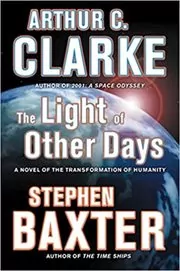
The Light of Other Days
by Stephen Baxter
2000
A breakthrough in wormhole physics creates the “WormCam,” a device that can look anywhere in space and back along the stream of time. As a media empire races to control it, the end of privacy forces people and governments to confront buried secrets and history itself.
Recommended by
1 person David Friedberg recommended this book
David Friedberg
"One of my favorite sci-fi books." - David Friedberg
David Friedberg's recommendation of this book
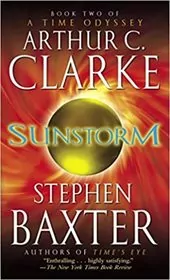
Sunstorm
by Stephen Baxter
2005
Bisesa Dutt returns from Mir with warnings about the Firstborn, just as scientists discover an artificial disturbance in the Sun that will bathe Earth in lethal radiation. The novel follows the race to build a colossal shield and the political turmoil that such a project inevitably sparks.
Series background & context
This strand brings together the books Stephen Baxter wrote with Arthur C Clarke or from Clarke’s outlines, so you can treat them as a loose shared project rather than separate one‑offs. The tone is recognisably Clarke’s – big questions, clean prose, careful science – but filtered through Baxter’s taste for elaborate cosmology and alternate timelines.
The starting point for most readers is The Light of Other Days. Working from a detailed synopsis by Clarke, Baxter imagines wormhole technology that first cracks instantaneous communication and then becomes a “time viewer,” able to look anywhere in the past. Once anyone can spy on anyone, or replay any historical event, privacy and even personal mythmaking collapse. The book spends as much time on the social and ethical fallout as it does on the physics.
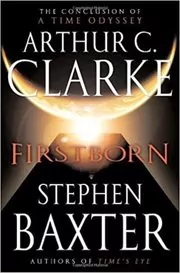
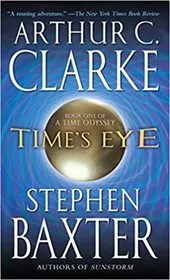
The A Time Odyssey trilogy – Time’s Eye, Sunstorm, and Firstborn – takes a different tack. Here an ancient species known as the Firstborn intervenes in human history on a grand scale. Earth is sliced into patches from different eras and reassembled into a stitched‑together world called Mir; later, a solar catastrophe threatens all life on the original Earth. Across the trilogy, characters shuttle between altered timelines, alternate Earths, Mars, and deep space while trying to understand what the Firstborn want and whether humanity has any say in its own fate.
Baxter and Clarke frame these books as a kind of “counterpoint” to the original Space Odyssey sequence. Where the Odyssey novels turn on enigmatic monoliths and a largely unseen guiding intelligence, the Time books deal more directly with intervention, consequence, and the possibility that not all advanced civilisations are benign. They also bring in Baxter’s favourite tools: detailed orbital mechanics, speculative cosmology, and a willingness to follow an idea across centuries.
On this page you can expect reading order help, short summaries of each collaboration, and some context on how they sit alongside Clarke’s solo work. It’s a good route if you’ve read the classic Clarke novels and want to see how his style meshes with a later hard‑SF writer who shares his fascination with the very long view of humanity.




Edited by
Software engineer whose passion for tracking book recommendations from podcasts inspired the creation of MRB.
Lead investor at 3one4 Capital whose startup expertise and love for books helped shape MRB and its growth.
Comments
Did we miss something? Have feedback?
Help us improve this page by sharing your thoughts