
Blue Planet Books in Order
Part ofArthur C Clarke Books in OrderDiscover Arthur C Clarke’s Blue Planet books in order, tracing his diving adventures and ocean essays with summaries, background on each volume, and guidance on where to start.
Last updated:
As an Amazon Associate, we earn from qualifying purchases (at no extra cost to you).
Blue Planet books in publication order
3 books
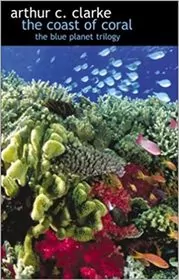
The Coast of the Coral
by Arthur C. Clarke
1956
Clarke’s first major diving book follows his expeditions along Australia’s Great Barrier Reef, combining practical notes on skin‑diving with vivid sketches of coral landscapes, shipwrecks, and the people who live and work around them. It captures his early love affair with the underwater world.
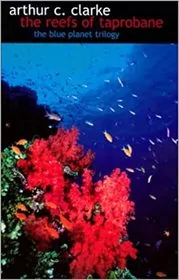
The Reefs of Taprobane
by Arthur C. Clarke
1956
Moving to Ceylon (Sri Lanka), Clarke and photographer Mike Wilson join local divers to explore reefs, wrecks, and the newly discovered ruins of the Koneswaram temple. Part travelogue, part dive log, it chronicles the early days of recreational scuba in the Indian Ocean.
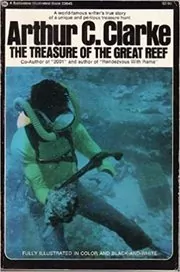
The Treasure of the Great Reef
by Arthur C. Clarke
1964
Clarke recounts the real discovery of a wreck on Sri Lanka’s Great Basses Reef, where he and Mike Wilson helped document a hoard of silver rupees from a Mughal ship. The book mixes adventure, legal wrangling, and day‑to‑day diving work on a hazardous, wave‑swept reef.
Blue Planet books in chronological order
Series background & context
“Blue Planet” gathers Arthur C Clarke’s nonfiction about the oceans, especially the mid‑century diving books he wrote around Sri Lanka and the Great Barrier Reef. These volumes sit alongside the space travel essays but look downward instead of upward, treating the sea as another frontier full of unknowns.
The core is the Blue Planet Trilogy: The Coast of Coral, The Reefs of Taprobane, and The Treasure of the Great Reef. In the first, Clarke and photographer Mike Wilson explore the coral waters off Queensland, mixing practical notes on skin‑diving with relaxed sketches of life on and under the reef. The second moves to Ceylon (now Sri Lanka), following a loose circle of local divers as they hunt for shipwrecks, map reef systems, and stumble on the submerged ruins of the Koneswaram temple at Trincomalee. The third book chronicles the discovery and salvage of the Great Basses wreck, a silver‑laden Mughal ship found smashed on a remote reef.
Clarke writes these books in the first person, but with the same clear, low‑key style he uses for his science writing. He’s interested in how new equipment – a better aqualung, an underwater camera housing, a small launch – opens fresh possibilities, but he’s just as keen to record the personalities of local boatmen, fellow divers, and village officials. There is a gentle thread of advocacy running through the stories as he rails against dynamite fishing, careless tourism, and the casual destruction of reefs that took millennia to form.
Around the trilogy sit shorter books aimed at younger readers, such as Boy Beneath the Sea, which rework some of the same dives with more photos and less technical detail. Taken together, the Blue Planet titles show another side of Clarke: still a technologist, but also a man genuinely in love with the underwater world he made his home. A page focused on this sequence will usually walk through each volume, explain how they connect, and suggest a reading order if you want to follow his journeys from the Great Barrier Reef to Sri Lanka’s treacherous offshore banks.








Edited by
Software engineer whose passion for tracking book recommendations from podcasts inspired the creation of MRB.
Lead investor at 3one4 Capital whose startup expertise and love for books helped shape MRB and its growth.
Comments
Did we miss something? Have feedback?
Help us improve this page by sharing your thoughts