
15 Best Rust Books
The best Rust books, ranked by how many expert sources recommend each, with notes to help beginners, systems programmers, and web developers choose where to start.
Our take
Rust books take several routes through the same central challenge: learning to express ownership and borrowing while building useful programs. Some explain the language systematically; others make those concepts concrete through games, computer systems, or web services. Your previous programming experience matters, but so does the kind of application that will keep you practicing when the compiler demands a different approach.
Start with The Rust Programming Language for a structured foundation, or choose Hands-on Rust if games make learning more engaging. Programming Rust gives experienced programmers a broader, detailed treatment, while Rust in Action connects the language with systems concepts. After the basics, Effective Rust helps refine everyday code and Rust for Rustaceans examines deeper design decisions. Rust Atomics and Locks suits a specific interest in low-level concurrency; Zero To Production In Rust follows a backend service into operation. For older framework-based books, expect to consult current library documentation as you work through their examples.
15 books · 9 sources · Last updated
As an Amazon Associate, we earn from qualifying purchases (at no extra cost to you).
How to choose from this list
Skip to the full rankingIf you're learning the language: The Rust Programming Language → Effective Rust
If you prefer learning through games: Hands-on Rust
If you want detailed systems instruction: Programming Rust → Rust in Action
If you already write Rust: Rust for Rustaceans
If you need low-level concurrency: Rust Atomics and Locks
If you want to build a backend service: Zero To Production In Rust
The 15 books, ranked
Ranked by how many expert sources name each book. Ties go to the book more people recommend.

For experienced programmers who want a substantial account of Rust's design and systems applications. Its detailed explanations reward careful study, though the breadth and technical depth make it a heavier starting point than a short introductory course.
What it's about
Jim Blandy, Jason Orendorff, and Leonora F. S. Tindall explain Rust for systems programmers. Examples develop ownership, borrowing, types, traits, and concurrency, showing how these mechanisms support efficient applications while addressing memory management and safe parallel execution.

The Rust Programming Language
For programmers learning Rust's ownership model and core language features for the first time. The structured progression provides a dependable foundation, though readers who learn mainly through large projects may want a practical companion.
What it's about
Steve Klabnik and Carol Nichols introduce Rust through language fundamentals, ownership, borrowing, lifetimes, and traits. Examples and complete projects, including a command-line tool and multithreaded server, connect memory management, error handling, testing, and concurrency.
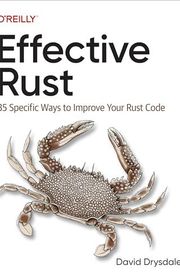
Effective Rust: 35 Specific Ways to Improve Your Rust Code
For developers who know Rust's syntax but want to make better everyday implementation choices. The focused items suit selective reading and code review, though they supplement foundational instruction rather than provide a continuous beginner course.
What it's about
David Drysdale organizes Rust guidance into thirty-five items covering types, traits, ownership, error handling, dependencies, tooling, and interoperability. Examples explain common implementation choices and the tradeoffs involved in writing and maintaining Rust programs.

Rust in Action
For programmers who want learning Rust to illuminate how computers work. Its systems-oriented projects give memory, storage, and networking concrete context, though readers seeking a compact language reference will find the exploratory route less direct.
What it's about
Tim McNamara introduces Rust by exploring how computer systems work. Practical projects connect ownership and borrowing with memory, persistent storage, networking, processes, and operating-system concepts, giving programmers experience beyond language syntax alone.
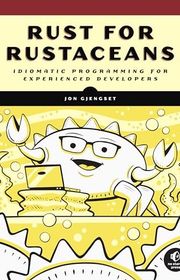
Rust for Rustaceans: Idiomatic Programming for Experienced Developers
For programmers who can already write Rust and want to understand deeper design choices. Its treatment of traits, ownership, and API design rewards conceptual study, though it assumes fluency and offers fewer guided projects than an introductory text.
What it's about
Jon Gjengset examines idiomatic Rust beyond introductory syntax, covering types, traits, ownership, error handling, testing, concurrency, asynchronous programming, and unsafe code. Discussions of design decisions connect language mechanisms with the construction of reusable libraries and applications.

For readers who prefer small, incremental examples before attempting a substantial application. Its gradual treatment makes individual language features easier to isolate, though experienced systems programmers may find the early material slow.
What it's about
Carlo Milanesi introduces Rust through incremental examples for programmers with some prior experience. Chapters move from arithmetic, control flow, and primitive types to memory allocation, iterators, input and output, error handling, closures, traits, and lifetimes.

For learners who want visible progress through small games and a dungeon crawler. The playful projects make programming decisions concrete, though game-specific tools occupy space that a general language course would devote to other applications.
What it's about
Herbert Wolverson teaches Rust through a sequence of game projects, progressing from basic programs to a dungeon crawler. Readers develop a Flappy Bird-style game, generate dungeons, add monsters and items, and explore concurrent systems, graphics, and debugging.
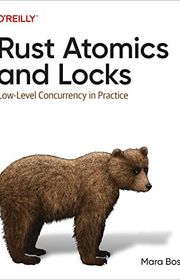
Rust Atomics and Locks: Low-Level Concurrency in Practice
For experienced Rust programmers who need to understand concurrent code below high-level abstractions. Building synchronization primitives makes memory ordering concrete, though the narrow technical focus assumes comfort with Rust and careful reasoning about threads.
What it's about
Mara Bos explains atomic operations, memory ordering, and low-level concurrency in Rust. Readers implement synchronization primitives such as mutexes and condition variables while examining how processor architectures and operating-system facilities affect their behavior.

Rust Web Programming
A Hands-On Guide to Developing Fast and Secure Web Apps With the Rust Programming Language
For programmers who want to connect Rust with databases, authentication, and application deployment. Its complete web-app perspective supplies practical context, though framework and dependency changes mean the older edition's examples need checking against current documentation.
What it's about
Maxwell Flitton follows the development of Rust web applications from project structure to deployment. Examples cover web frameworks, PostgreSQL persistence, authentication, serving front-end assets, testing, and packaging an application with Docker for deployment behind NGINX.
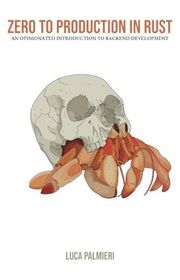
For programmers who want to carry one Rust web service through testing and deployment. The sustained project gives operational decisions context, though its backend focus is narrower than a general systems-programming book and benefits from language study alongside it.
What it's about
Luca Palmieri develops an email newsletter API in Rust, moving from project setup to a deployed service. Chapters cover application structure, testing, authentication, error handling, structured logging, and continuous integration and deployment.

Hands-On Data Structures and Algorithms with Rust
Learn Programming Techniques to Build Effective, Maintainable, and Readable Code in Rust
For programmers who want to implement familiar data structures while practicing Rust. The algorithm focus helps connect ownership decisions with concrete designs, though it works best alongside language fundamentals and may need dependency updates.
What it's about
Claus Matzinger demonstrates classic data structures and algorithms in Rust. Examples cover lists, arrays, stacks, queues, trees, graphs, searching, and sorting, while algorithm analysis, testing, and benchmarking help readers assess implementation choices and build reusable components.

Hands-On Microservices with Rust
Build, Test, and Deploy Scalable and Reactive Microservices With Rust
For readers studying the architecture of Rust services through a broad collection of examples. Its coverage connects networking with deployment, though the older asynchronous ecosystem means reproducing examples can require substantial library and API adjustments.
What it's about
Denis Kolodin explains how to build, test, and deploy microservices using Rust. Examples introduce asynchronous networking and frameworks such as Tokio, hyper, and Actix, then connect REST services with reactive design, Docker containers, and cloud deployment.

Mastering Rust
Learn About Memory Safety, Type System, Concurrency, and the New Features of Rust
For programmers who know the basics and want to connect advanced features with practical applications. The range includes macros and networking, though older library examples may require adaptation and the breadth limits depth in individual specialties.
What it's about
Rahul Sharma and Vesa Kaihlavirta explore Rust's ownership model, type system, concurrency, and advanced language features. Practical examples connect memory-safe programming with library design, asynchronous networking, macros, testing, documentation, and applications including command-line tools and WebAssembly.

The Complete Rust Programming Reference Guide
Design, Develop, and Deploy Effective Software Systems Using the Advanced Constructs of Rust
For readers who want language instruction and algorithm implementations in one substantial volume. The combined scope supports broad study, though its overlap with separate Rust and data-structure books makes it less useful if you already own those treatments.
What it's about
This reference combines Rust language instruction with practical data structures and algorithms. It develops ownership, types, concurrency, and advanced constructs alongside searching, sorting, and reusable components, helping readers connect language design with effective software implementation.

Beginning Rust Programming
For readers who learn language concepts by developing practical programs. The Game of Life starting point gives the instruction a tangible focus, though its varied later applications offer less sustained specialization than a dedicated systems or web book.
What it's about
Ric Messier teaches Rust through practical programming projects, beginning with a Game of Life implementation. Examples introduce types, ownership, memory safety, concurrency, interoperability, and device programming, with exercises that connect language features to real computing problems.
Sources
- 1
The best Rust books for 2026, reviewed
bitfieldconsulting.com
- 2
8 Best Rust Books in 2023
josipmisko.com
- 3
Best Rust Books for 2026: Beginner to Advanced
computingforgeeks.com
- 4
10 Best Rust Programming Books: Experts' Recommendation
ubuntupit.com
- 5
Best Rust Books
careerkarma.com
- 6
List of Rust books
github.com
- 7
Rust Books
goodreads.com
- 8
Learning Rust
reddit.com
- 9
Need a book but the Rust Book is a bit not enough
reddit.com






Edited by
Software engineer whose passion for tracking book recommendations from podcasts inspired the creation of MRB.
Lead investor at 3one4 Capital whose startup expertise and love for books helped shape MRB and its growth.
Comments
Spotted a missing book, a wrong order or a mistake? Tell us and we'll fix this page.
We're a reading guide, not the author or publisher, so we can't send books or pass on messages.