
23 Best Holocaust Books
The best Holocaust books, ranked by how many expert sources recommend each one, with guidance for choosing survivor testimony, historical studies, and fiction.
Our take
Books about the Holocaust serve different purposes. Diaries and survivor memoirs preserve individual experiences of persecution, imprisonment, and loss. Historical studies explain policies, institutions, local participation, and resistance. Family investigations consider how lives can be recovered from fragments, while fiction explores questions of memory and responsibility through invented situations. These forms can complement one another, but they should not be treated as interchangeable evidence.
Anne Frank: The Diary of a Young Girl records life in hiding, while Night and Five Chimneys bring different survivor perspectives to imprisonment. The Complete Maus also examines the transmission of memory within a family. For historical context, Martin Gilbert’s The Holocaust offers a broad account, and Ordinary Men concentrates on the actions of perpetrators. The Lost follows the difficult work of recovering particular lives.
Begin with a personal account and a historical overview, then choose a focused study that helps you understand an aspect those books leave open.
23 books · 9 sources · Last updated
As an Amazon Associate, we earn from qualifying purchases (at no extra cost to you).
How to choose from this list
Skip to the full rankingIf you're beginning: Night → The Holocaust
If you want a diary from life in hiding: Anne Frank
If you want to study perpetrators: Ordinary Men → The Destruction of the European Jews
If you want to understand resistance: Escape from Sobibor
If you want family memory and recovery: The Complete Maus → The Lost
If you're ready for a detailed wartime history: Nazi Germany and the Jews, 1939-1945
The 23 books, ranked
Ranked by how many expert sources name each book. Ties go to the book more people recommend.
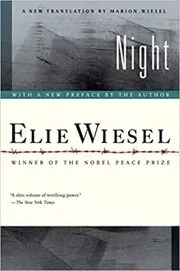
For readers beginning with survivor testimony who can give a short account sustained attention. Its concentrated personal voice conveys rupture and loss, though its brevity means a wider history is needed to understand the surrounding events.
What it's about
Wiesel's memoir follows his teenage self from Sighet to Auschwitz and Buchenwald alongside his father. In stark, unsentimental prose, it records the destruction of family, faith, and ordinary human life.
Also recommended by
1 person Oprah Winfrey recommended this book
Oprah Winfrey
"Required reading for all of humanity." - Oprah Winfrey
Oprah Winfrey's recommendation of this book

For readers beginning with an individual voice from life under persecution. Its attention to adolescence and family makes a person visible beyond historical categories, though the diary documents hiding rather than the camps or Anne’s final months.
What it's about
Anne Frank records life in hiding with her family during the Nazi occupation of the Netherlands. Her diary combines fears of discovery and the strains of confinement with reflections on adolescence, relationships, and hopes for the future.
Also recommended by
1 person Alice Little recommended this book
Alice Little
"I remember being a fourth grader [and] going so far as to have my parents take it to the school board and petition for me to be allowed to read this book." - Alice Little
Alice Little's recommendation of this book
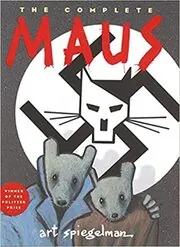
The Complete Maus
For readers interested in both a survivor’s experience and how that experience passes between generations. Its graphic form makes memory and storytelling visible, though the layered family narrative and animal imagery demand careful interpretation rather than simplifying the history.
What it's about
This collected graphic memoir recounts Vladek Spiegelman's survival during the Holocaust alongside his son's efforts to record it. Drawing Jews as mice and Nazis as cats, it examines family tensions and the lasting effects of trauma.

Man's Search for Meaning
For readers interested in one survivor’s reflections on meaning as well as his account of imprisonment. Its philosophical focus distinguishes it from a chronological history, though it should never imply that survival depended on finding sufficient purpose.
What it's about
Viktor Frankl combines his account of imprisonment in Nazi concentration camps with an introduction to logotherapy. He explores the search for meaning, arguing that purpose and one's response to suffering can remain significant even under extreme circumstances.
Also recommended by
36 people Jordan Peterson recommended this book
Jordan Peterson
Recommended on Jordan Peterson's website.
Jordan Peterson's recommendation of this book  Jocko Willink recommended this book
Jocko Willink
Jocko Willink covered this book in "Jocko Podcast" Ep. 78
Jocko Willink's recommendation of this book  Esther Perel recommended this book
Esther Perel
"The book I’ve probably gifted the most is [this book], since I’m 16." - Esther Perel
Esther Perel's recommendation of this book  Emma Watson recommended this book
Emma Watson
"Loved it. Really loved it." - Emma Watson
Emma Watson's recommendation of this book  Naval Ravikant recommended this book
Naval Ravikant
"Wow it's dark." - Naval Ravikant
Naval Ravikant's recommendation of this book  David Blaine recommended this book
David Blaine
"One of my favorite books." - David Blaine
David Blaine's recommendation of this book +30
More recommendations
- Terry Crews
"Incredible." - Terry Crews
- Jimmy Fallon
"Talks about the meaning of life, and I believe you come out a better person from reading it." - Jimmy Fallon
- Tony Robbins
"Taught me that if you change the meaning, you change everything." - Tony Robbins
- Simon Sinek
"Single most important book you can read." - Simon Sinek
- Michael Gervais
"Outlines methods to discover deep meaning and purpose in life." - Michael Gervais
- Daniel Pink
"A hugely important book for me." - Daniel Pink
- Ev Williams
On the "books read" section of Ev Williams' GoodReads profile.
- Bryan Johnson
"His basic point is no matter the conditions we surround ourselves in, we can author our life." - Bryan Johnson
- Dustin Moskovitz
Dustin Moskovitz recommended this book on Twitter.
- Sam Altman
This book was on Sam Altman's bookshelf.
- Chelsea Handler
"One of those beautiful accounts of a terrible time in our history. His calm and sagaciousness, while witnessing one horror after another played out during his time in three separate concentration camps, is awe inspiring." - Chelsea Handler
- Ryan Holiday
"Looks at how we find purpose by dedicating ourselves to a cause, learning to love and finding a meaning to our suffering." - Ryan Holiday
- Maria Popova
"A meditation on what the gruesome experience of Auschwitz taught [the author] about the primary purpose of life: the quest for meaning, which sustained those who survived." - Maria Popova
- Aniela Gregorek
"A book I have gifted to many people because it changed the way I think about human suffering and grace in life." - Aniela Gregorek
- Fedor Holz
"[From it] I interpreted that we cannot avoid suffering, but we can choose how to cope with it, and that having meaning in our life is essential." - Fedor Holz
- Turia Pitt
"[If people are] doing a bit of soul searching, hands down [I give them this book]." - Turia Pitt
- Chip Conley
"If I were to take the meaning of [this book], and turn it into an equation, it would be despair equals suffering minus meaning." - Chip Conley
- Dave Elitch
Dave Elitch mentioned this book on "The Tim Ferriss Show" podcast.
- PewDiePie
"A great tool to help people. [...] In case something really bad happens, I feel like, from reading this book, I'm better equipped to handle it." - PewDiePie
- Shane Parrish
"As hard as you think your life is, it pales in comparison to Auschwitz." - Shane Parrish
- Phil Jackson
"An important book for me." - Phil Jackson
- Tom Bilyeu
Tom Bilyeu recommended this book on his website.
- Lex Fridman
"I reread [this book] quite often." - Lex Fridman
- Mark Manson
Mark Manson recommended this book on his website.
- Alastair Humphreys
"Slim but packed with wisdom that I often come back to. I really recommend you read it." - Alastair Humphreys
- Steve Kerr
"Incredibly inspiring." - Steve Kerr
- Robin Black
"One of the great books ever written exists because of one of the worst times in human history. From suffering comes beauty." - Robin Black
- Jim Kwik
"Illustrates that it’s not our circumstances but the decisions we make that diminish or develop us." - Jim Kwik
- Michael Hyatt
Michael Hyatt recommended this book on his website.
- Patrick Bet-David
Patrick Bet-David recommended this book on his website.
- Terry Crews

For readers examining responsibility, judgment, and the relationship between bureaucracy and mass murder. Its argument remains influential in discussions of perpetration, though its interpretation of Eichmann and treatment of Jewish leadership require critical engagement with later scholarship.
What it's about
Hannah Arendt reports on Adolf Eichmann's trial in Jerusalem and examines the mentality underlying his participation in the Holocaust. Her analysis raises questions about responsibility, judgment, and the relationship between bureaucratic obedience and mass violence.
Also recommended by
2 people Dr. Phil Zimbardo recommended this book
Dr. Phil Zimbardo
"[Talks] about Eichmann as illustrating the banality of evil." - Dr. Phil Zimbardo
Dr. Phil Zimbardo's recommendation of this book  Mark Manson recommended this book
Mark Manson
"Overall an incredibly important book, imo." - Mark Manson
Mark Manson's recommendation of this book

For readers who want to understand historical recovery through the search for particular family members. Its attention to fragments and conflicting memories restores individual lives, though the reflective structure and extended investigation require patience.
What it's about
Daniel Mendelsohn investigates what happened to six relatives murdered in the Holocaust. His search leads through family memories, archives, and interviews with survivors around the world, examining how fragments of testimony can recover individual lives.

For readers asking how perpetrators participated in mass murder outside the camp system. Its focused study examines choices, pressure, and institutional circumstances, though the disturbing evidence and narrow unit of analysis need broader historical context.
What it's about
Christopher Browning examines how members of a German reserve police battalion participated in the murder and deportation of Jews in occupied Poland. Testimony and records inform his analysis of obedience, group pressure, and involvement in mass killing.
Also recommended by
2 people- Jocko Willink recommended this book
Jocko Willink
Jocko Willink covered this book in "Jocko Podcast" Ep. 85
Jocko Willink's recommendation of this book - Jordan Peterson recommended this book
Jordan Peterson
"The best book of its type." - Jordan Peterson
Jordan Peterson's recommendation of this book

This Way for the Gas, Ladies and Gentlemen
For readers ready for literary stories shaped by a survivor’s experience of concentration camp life. Its unsentimental narrators expose the pressures placed on prisoners, though the deliberate detachment and fictional form require careful distinction from straightforward memoir.
What it's about
Drawing on his imprisonment in Auschwitz and Dachau, Tadeusz Borowski depicts concentration camp life through short stories. Hunger, forced labor, violence, and compromised survival shape narrators whose detachment exposes the moral pressures of the camps.

For readers who want the Holocaust placed within the overlapping violence of Nazi and Soviet rule in Eastern Europe. Its regional approach connects histories often treated separately, though its wider scope makes a dedicated Holocaust history an important companion.
What it's about
Timothy Snyder examines the mass killings committed by Nazi Germany and the Soviet Union in the lands between them. Connecting political decisions with individual lives, he presents famine, terror, and genocide as parts of an intertwined European history.
Also recommended by
2 people Eric Weinstein recommended this book
Eric Weinstein
Eric Weinstein tweet about books that mattered enough to him.
Eric Weinstein's recommendation of this book  Peter Thiel recommended this book
Peter Thiel
"Tells how the Nazis and the Soviets drove each other to ever more murderous atrocities as they fought to dominate Eastern Europe." - Peter Thiel
Peter Thiel's recommendation of this book

Badenheim 1939
For readers interested in how fiction can portray denial and the gradual normalization of exclusion. Its restrained, unsettling atmosphere makes bureaucratic menace palpable, though its allegorical approach needs factual history alongside it rather than being read as documentation.
What it's about
In an Austrian resort town, Jewish vacationers arrive for a summer of music and leisure as mysterious sanitation officials impose new restrictions. Aharon Appelfeld's novel follows mounting unease, denial, and bureaucratic menace on the eve of catastrophe.

For readers seeking a woman’s early testimony about Auschwitz, including the destruction of family life and prisoner resistance. Its direct witness gives institutional brutality a human scale, though graphic suffering and the limits of an individual viewpoint demand attentive reading.
What it's about
Olga Lengyel recounts her deportation to Auschwitz, the destruction of her family, and her struggle to survive. Her memoir describes camp conditions, work in the infirmary, and participation in prisoner resistance amid systematic brutality and deprivation.

For younger readers, with suitable guidance, or adults seeking a childhood survivor’s memoir. Its personal scale makes persecution and rescue understandable, though the clarity of the narration does not make the violence and family losses easy material.
What it's about
Leon Leyson recounts his childhood under Nazi occupation, from displacement into the Krakow ghetto to imprisonment and work in Oskar Schindler's factory. His memoir follows a boy's struggle for survival and the protection Schindler provided.
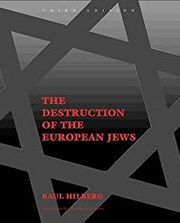
The Destruction of the European Jews
For readers undertaking a detailed study of how persecution became an organized process of destruction. Its institutional analysis provides a foundational framework, though the scale, administrative detail, and emphasis on perpetrators make it demanding and require complementary victim testimony.
What it's about
Raul Hilberg traces the administrative and institutional processes through which Nazi Germany and its collaborators persecuted and murdered European Jews. His extensive history examines officials, agencies, and successive policies, showing how many organizations participated in the machinery of destruction.
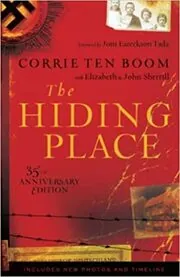
The Hiding Place
For readers interested in a Dutch rescuer’s experience and a specifically Christian response to imprisonment. Its emphasis on faith and forgiveness gives it a clear personal perspective, though it cannot substitute for Jewish testimony or a wider historical account.
What it's about
Corrie ten Boom's classic memoir tells how her Dutch family hid Jews in a secret room above their watch shop, endured arrest and Ravensbrück concentration camp, and discovered that God's presence and forgiveness can reach even the darkest places.

For readers seeking a substantial overview that connects events with eyewitness accounts and resistance. Its broad chronological reach helps establish context, though the accumulation of detail and its older publication make later scholarship a useful companion.
What it's about
Martin Gilbert combines historical research with eyewitness accounts and survivors' testimony to document the Holocaust. He traces European antisemitism and Nazi persecution alongside Jewish resistance and the actions of people who risked their lives to offer aid.

For readers who want to understand survival through bereavement and an enduring bond with a lost parent. Its letter form gives memory an intimate focus, though it offers reflection across a life rather than a systematic camp history.
What it's about
Marceline Loridan-Ivens addresses her father, who died after their deportation, in a memoir written as a letter. Memories of Birkenau and separation connect with the lasting effects of grief, survival, and rebuilding her postwar life.

Escape from Sobibor
For readers seeking a detailed account of organized prisoner resistance. Its reconstruction from survivor interviews makes collective action central, though the many people and movements require attention and the violence remains difficult to read.
What it's about
Richard Rashke reconstructs the prisoner revolt and mass escape from Sobibor in October 1943. Based on survivor interviews, the account traces life inside the extermination camp, preparations for rebellion, and the dangers facing those who fled.

Irena's Children
The Extraordinary Story of the Woman Who Saved 2,500 Children from the Warsaw Ghetto
For readers interested in rescue through an underground network rather than an account centered on camp imprisonment. Its narrative focus makes the practical risks tangible, though one rescuer’s story should be placed within the wider history of persecution.
What it's about
Tilar J. Mazzeo recounts Irena Sendler's efforts to rescue Jewish children from the Warsaw ghetto during World War II. The narrative follows her underground network, dangerous smuggling operations, and secret records preserving the children's identities.

For readers prepared to examine ghetto leadership through morally difficult historical fiction. Its attention to authority and compromised choices provokes questions about responsibility, though invented characters and heightened literary treatment must be distinguished from historical evidence.
What it's about
In a Jewish ghetto in Nazi-occupied Poland, I. C. Trumpelman becomes head of the Judenrat. Leslie Epstein's novel follows this charismatic, authoritarian figure as persecution forces the community into devastating choices about power, survival, and responsibility.

For readers ready for a substantial history of persecution and extermination during the war years. Its integration of policy with victims’ voices offers unusual breadth, though the length and detail make it a sustained study rather than a brief introduction.
What it's about
Saul Friedländer's second volume follows the Holocaust through the war years, integrating Nazi policy with events across occupied Europe. Diaries, letters, and memoirs preserve victims' perspectives within an account of persecution, deportation, and systematic mass murder.

For readers who want a contemporary eyewitness record of killings outside the concentration camp system. Its dated observations preserve the local mechanics of mass murder, though the fragmentary viewpoint and graphic details need contextual historical reading.
What it's about
Polish journalist Kazimierz Sakowicz recorded killings near his home in Ponary outside Vilnius. His diary documents the daily mechanics of mass murder, providing an eyewitness account of German and Lithuanian participation in the destruction of local Jews.

For readers interested in how a community confronts, disputes, or suppresses responsibility for mass violence. Its combination of investigation and later memory gives the history continuing relevance, though the local detail and conflicting accounts require careful attention.
What it's about
Anna Bikont investigates the 1941 massacre of Jews in Jedwabne through archival research and interviews. Her account follows both the killings and the later struggle over responsibility, memory, denial, and public discussion in contemporary Poland.

For readers interested in refugees’ attempts to escape persecution and the governments that controlled their passage. Its focused narrative makes international refusal concrete, though a single voyage offers one part of the broader history of displacement and exclusion.
What it's about
Gordon Thomas and Max Morgan-Witts recount the 1939 voyage of the St. Louis, carrying Jewish refugees from Hamburg toward Cuba. Their account follows the passengers' search for safety and the political maneuvering that threatens their escape from Nazi persecution.
Sources
- 1
10 Holocaust Books You Should Read | My Jewish Learning
myjewishlearning.com
- 2
Approved 9-12 Holocaust Literary/Print Materials | THGAAC
thgaac.texas.gov
- 3
The Best Books on The Holocaust - Five Books Expert Recommendations
fivebooks.com
- 4
Essential Books on the Holocaust (201 books)
goodreads.com
- 5
Eye-Opening Books About the Holocaust Every Reader Should Explore
explorethearchive.com
- 6
Any book recommendations on the holocaust? : r/booksuggestions
reddit.com
- 7
Holocaust Books : r/booksuggestions
reddit.com
- 8
13 Important Books About the Holocaust | Hachette Book Group
hachettebookgroup.com
- 9
10 Best Holocaust Books
addall.com




Edited by
Software engineer whose passion for tracking book recommendations from podcasts inspired the creation of MRB.
Lead investor at 3one4 Capital whose startup expertise and love for books helped shape MRB and its growth.
Comments
Spotted a missing book, a wrong order or a mistake? Tell us and we'll fix this page.
We're a reading guide, not the author or publisher, so we can't send books or pass on messages.