
30 Best Military History Books
The best military history books, ranked by expert-source recommendations, with notes to help readers choose campaign histories, firsthand accounts and surveys.
Our take
Military history asks how wars are fought, how decisions shape campaigns and what fighting does to the people involved. No single viewpoint covers all three. A soldier’s memoir can make fear and exhaustion immediate, while a campaign study explains movements and command choices. Broad histories and strategic texts help place those experiences within larger arguments.
Band of Brothers: E Company, 506th Regiment, 101st Airborne from Normandy to Hitler's Eagle's Nest follows one company through Europe. With the Old Breed: At Peleliu and Okinawa gives a firsthand Pacific perspective, while Black Hawk Down: A Story of Modern War reconstructs a concentrated urban battle. The Face of Battle compares combat across three periods. For a wider frame, The Second World War connects theaters, and A History of Warfare explores military cultures. On War supplies theory rather than a continuous historical narrative.
Begin with The Second World War for context, then choose a focused account of the campaign or combat experience that interests you most.
30 books · 12 sources · Last updated
As an Amazon Associate, we earn from qualifying purchases (at no extra cost to you).
How to choose from this list
Skip to the full rankingIf you want a broad historical framework: The Second World War → A History of Warfare
If you want the experience of combat: The Face of Battle → With the Old Breed: At Peleliu and Okinawa
If you want a modern battle reconstruction: Black Hawk Down: A Story of Modern War → Red Platoon: A True Story of American Valor
If you want to connect planning with theory: The Guns of August: The Pulitzer Prize-Winning Classic About the Outbreak of World War I → On War
If you want early American military history: 1776 → Six Frigates: The Epic History of the Founding of the U.S. Navy
If you want a concentrated Eastern Front campaign: Stalingrad
The 30 books, ranked
Ranked by how many expert sources name each book. Ties go to the book more people recommend.

For readers who want the physical and emotional experience of infantry combat. Sledge’s firsthand account provides an intimacy broader histories cannot, but the brutality is graphic and his view is necessarily limited to his own service.
What it's about
Marine Eugene Sledge recounts fighting at Peleliu and Okinawa during World War II. Drawing on notes kept during his service, he describes combat’s brutality, fear, exhaustion, and the bonds formed among men struggling to survive.
Also recommended by
3 people Jocko Willink recommended this book
Jocko Willink
Jocko Willink covered this book in "Jocko Podcast" Ep. 10
Jocko Willink's recommendation of this book  Paul Graham recommended this book
Paul Graham
"Read this book." - Paul Graham
Paul Graham's recommendation of this book  Howard Stern recommended this book
Howard Stern
"I didn’t understand the full impact of what these guys did at Okinawa fighting the Japanese. That had a big impact on me." - Howard Stern
Howard Stern's recommendation of this book
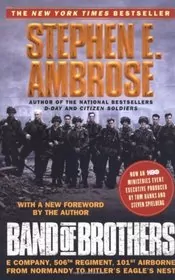
Band of Brothers
E Company, 506th Regiment, 101st Airborne from Normandy to Hitler's Eagle's Nest
For readers who want to follow one infantry company across a campaign. Its interviews and focus on comradeship make the European war personal, but the close American unit perspective offers less explanation of wider strategy or civilian experience.
What it's about
Here Ambrose tells the story of Easy Company of the 506th Parachute Infantry Regiment, from training in Georgia through D-Day, the Ardennes, and into Germany, following a single group of soldiers as they endure combat, loss, and unexpected moments of camaraderie.

For readers who want to understand what combat felt like to ordinary soldiers. Its comparison of three battles shifts attention away from commanders alone, but its selective Western cases cannot represent warfare across all cultures and periods.
What it's about
John Keegan examines combat through the experiences of ordinary soldiers at Agincourt, Waterloo, and the Somme. Comparing these battles, he explores the physical conditions, weapons, pressures, and human responses that conventional accounts of military strategy can overlook.

The Art Of War
For readers interested in military ideas as a historical primary text. Its concise principles invite reflection on planning and adaptation, but it is a strategic treatise rather than a narrative history and translation choices strongly affect interpretation.
What it's about
Sun Tzu's military treatise examines planning, leadership, deception, terrain, and adapting to an opponent. Its thirteen chapters consider how preparation and strategic judgment can secure an advantage while limiting the costs and dangers of warfare.
Also recommended by
12 people- Jocko Willink recommended this book
Jocko Willink
Jocko Willink covered this book in "Jocko Podcast" Ep. 23
Jocko Willink's recommendation of this book  Neil deGrasse Tyson recommended this book
Neil deGrasse Tyson
"To learn that the act of killing fellow humans can be raised to an art." - Neil deGrasse Tyson
Neil deGrasse Tyson's recommendation of this book  Marc Benioff recommended this book
Marc Benioff
"Served me well. [...] Advocates keeping one’s cool at all times." - Marc Benioff
Marc Benioff's recommendation of this book  Evan Spiegel recommended this book
Evan Spiegel
"After meeting Mark Zuckerberg, [Evan Spiegel] immediately bought every [Snapchat] employee a copy of 'The Art Of War'." - Business Insider
Evan Spiegel's recommendation of this book  Dave Camarillo recommended this book
Dave Camarillo
"Another [book] I have to mention." - Dave Camarillo
Dave Camarillo's recommendation of this book  Ryan Petersen recommended this book
Ryan Petersen
Ryan Petersen mentioned this book on Twitter.
Ryan Petersen's recommendation of this book +6
More recommendations
- Travis Kalanick
"It became [Travis Kalanick's bible]." - Mike Isaac
- Vlad Tenev
"I like the classics such as The Republic by Plato and The Art of War by Sun Tzu." - Vlad Tenev
- Fred Wilson
"Has to get onto my list." - Fred Wilson
- Lex Fridman
Lex Fridman mentioned this book on Instagram.
- Elon Musk
"I've read [this book] many times." - Elon Musk
- Patrick Bet-David
Patrick Bet-David recommended this book on his website.
- Travis Kalanick

For readers who want a detailed campaign history that connects strategy with human suffering. Its German and Soviet perspectives broaden the view beyond a single unit memoir, but the relentless destruction and military detail make this a demanding read.
What it's about
Antony Beevor reconstructs the battle of Stalingrad using German and Soviet sources, moving between military strategy and individual experience. His account follows the brutal fighting, civilian suffering, encirclement, and collapse of the German forces during the 1942-1943 campaign.
Also recommended by
1 person Richard Branson recommended this book
Richard Branson
Richard Branson recommended this book on his "70 must-read books" blog post.
Richard Branson's recommendation of this book

The Guns of August
The Pulitzer Prize-Winning Classic About the Outbreak of World War I
For readers who want a vivid account of how decisions shaped the opening of a major war. Its personalities and narrative pace make a strong entry point, but its older interpretation needs comparison with later scholarship.
What it's about
Barbara W. Tuchman recounts the opening month of World War I and the decisions that brought European powers into conflict. Beginning with Edward VII's funeral, she traces preparations, personalities, and events that shaped the war's course.
Also recommended by
1 person Doris Kearns Goodwin recommended this book
Doris Kearns Goodwin
"So beautifully written. But more importantly, for me, she was writing about battles and military stuff and things that you don’t imagine that sometimes a woman might be so adept at." - Doris Kearns Goodwin
Doris Kearns Goodwin's recommendation of this book

We Were Soldiers Once . . . and Young
Ia Drang—The Battle That Changed the War in Vietnam
For readers interested in combat leadership through a closely examined Vietnam battle. The authors connect command decisions with participants’ experiences, but the focus on Ia Drang gives a concentrated American-centered account rather than a full history of the war.
What it's about
Harold Moore and Joseph Galloway recount the 1965 fighting at Ia Drang, drawing on their experiences and interviews with participants. Their history examines the battles at X-Ray and Albany through command decisions, individual actions, and the experiences of opposing forces.
Also recommended by
1 person- Jocko Willink recommended this book
Jocko Willink
Jocko Willink covered this book in "Jocko Podcast" Ep. 105
Jocko Willink's recommendation of this book

For readers who want a tightly reconstructed modern battle rather than a broad war survey. Its reporting makes confusion and split-second decisions tangible, but the intense focus on one raid provides limited coverage of Somalia’s longer history.
What it's about
Bowden reconstructs the 1993 American military raid in Mogadishu that became a prolonged urban battle after helicopters were shot down. Soldiers' experiences reveal the confusion and danger of a mission that rapidly outgrew its original objectives.

For readers who want naval warfare connected with the creation of American institutions. Its ships, politics and sea battles provide a broader frame than a single engagement narrative, but the early US focus offers limited comparison with other navies.
What it's about
Ian Toll traces the founding of the United States Navy through the decision to construct six frigates. Political disagreements, life at sea, the campaign against Tripoli, and the War of 1812 connect the ships with the young republic's ambitions.

On War
For readers ready to study the relationship between war, politics and uncertainty. Its theoretical depth offers a framework beyond campaign narration, but the unfinished, demanding text benefits from historical context and a reliable scholarly translation.
What it's about
Carl von Clausewitz examines war's nature, internal dynamics, and relationship to political policy. His treatise considers the theory and practice of military conflict, including strategy, uncertainty, and the demands placed on those conducting it.
Also recommended by
4 people Ryan Holiday recommended this book
Ryan Holiday
Ryan Holiday recommended this book on his blog.
Ryan Holiday's recommendation of this book - Dave Camarillo recommended this book
Dave Camarillo
Dave Camarillo left this book at Tim Ferriss' house.
Dave Camarillo's recommendation of this book  Nelson Mandela recommended this book
Nelson Mandela
"[The author's] central thesis, that war was a continuation of diplomacy by other means, dovetailed with my own instincts." - Nelson Mandela
Nelson Mandela's recommendation of this book  Elon Musk recommended this book
Elon Musk
"There should be a chapter saying 'if you have a decisive technology advantage, you can actually win with minimal casualties.'" - Elon Musk
Elon Musk's recommendation of this book

History of the Peloponnesian War
For readers who want a contemporary ancient account of conflict, power, and political judgment. The close attention to argument gives it a different texture from modern campaign histories, though reconstructed speeches and dense names need contextual reading.
What it's about
Thucydides records the conflict between Athens and Sparta through military campaigns, political decisions, and speeches. His contemporary history examines power, ambition, and the pressures of war, offering an account grounded in inquiry rather than myth.
Also recommended by
3 people Steven Pressfield recommended this book
Steven Pressfield
"It is loaded with hardcore, timeless truths and the story it tells ought to be required reading for every citizen in a democracy." - Steven Pressfield
Steven Pressfield's recommendation of this book - Ryan Holiday recommended this book
Ryan Holiday
"An obligation for every student of history." - Ryan Holiday
Ryan Holiday's recommendation of this book  Matt Mullenweg recommended this book
Matt Mullenweg
Matt Mullenweg recommended this book in the "Tools of Titans" book.
Matt Mullenweg's recommendation of this book

The Storm of Steel
For readers who want a German combatant’s perspective on the First World War. The detailed attention to action offers a different voice from British memoirs, though the author’s relationship to combat can unsettle readers expecting straightforward denunciation.
What it's about
This edition presents Basil Creighton's 1929 translation of Ernst Jünger's account of First World War service. Drawn from his wartime diaries, the memoir follows a young German infantryman's development into an officer amid repeated engagements and trench combat.
Also recommended by
2 people Dan Carlin recommended this book
Dan Carlin
"The reason you don't read [this book] in highschool is because [the author] made the critical mistake, from a literary standpoint, of feeling like he got something out of [World War I]." - Dan Carlin
Dan Carlin's recommendation of this book  Austen Allred recommended this book
Austen Allred
"If you’re ever feeling sorry for yourself pick up [this book]." - Austen Allred
Austen Allred's recommendation of this book
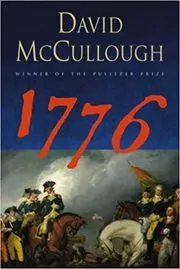
1776
For readers who want an accessible campaign narrative centered on Washington’s army. Its portraits make uncertainty and leadership concrete, but the narrow year and military focus leave much of the Revolution’s social and political history outside the frame.
What it's about
In 1776 McCullough focuses on the year America’s fate hung in the balance, following George Washington and his ragged army through early victories, crushing defeats around New York, and the surprise attacks at Trenton and Princeton. It offers a ground‑level view of the Revolution’s most precarious months.
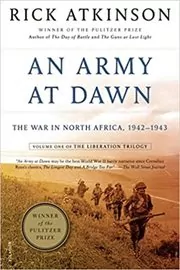
For readers who want to see an army learning through a difficult campaign. The North African focus connects command failures with soldiers’ experiences, though it is an opening volume rather than a complete history of the Allied advance.
What it's about
Atkinson traces the American and British campaigns in North Africa during 1942 and 1943, beginning with the landings in Morocco and Algeria. Battlefield setbacks, commanders' decisions, and soldiers' experiences show how an inexperienced Allied force developed under pressure.

Dispatches
For readers who want the atmosphere of Vietnam through a correspondent’s literary voice. Its fragmented scenes capture disorientation more directly than a chronological campaign history, but that style makes it a subjective account rather than a comprehensive reference.
What it's about
Michael Herr recounts his experiences reporting from Vietnam, focusing on combat and the soldiers living through it. Fragmented scenes, conversations, and reflections convey fear, dark humor, and the disorienting culture of war rather than a conventional campaign history.
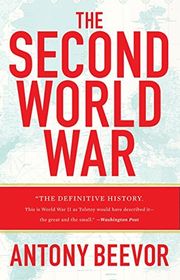
The Second World War
For readers who want a single-volume global framework before choosing individual campaigns. Its links across theaters provide context missing from personal accounts, but the scale requires compression and some operations receive only brief treatment.
What it's about
Antony Beevor traces the Second World War across its major theaters, connecting military operations with political decisions and human experience. The single-volume narrative places campaigns in a wider global sequence, helping readers understand how events in different regions interacted.

Battle Cry of Freedom
For readers seeking a substantial single-volume introduction to the American Civil War. The connection between slavery, politics, and campaigns provides wider context than a battle account, though its breadth and length require sustained reading.
What it's about
James McPherson traces the political, social, and military developments that led to the American Civil War and shaped its course. His narrative connects slavery, sectional conflict, leadership, and battlefield campaigns to the struggles over the Union and emancipation.
Also recommended by
2 people Ta-Nehisi Coates recommended this book
Ta-Nehisi Coates
"The definitive history of the Civil War. One of the greatest works of history I've ever read and arguably the best one volume history in existence." - Ta-Nehisi Coates
Ta-Nehisi Coates's recommendation of this book  Saagar Enjeti recommended this book
Saagar Enjeti
"Reading it in the midst of social and political chaos in America gave me profound hope that America at its best can overcome even its worst challenges." - Saagar Enjeti
Saagar Enjeti's recommendation of this book
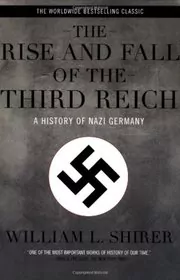
For readers who want Nazi Germany’s political development connected to its wars. The documentary narrative provides a wider regime history than a campaign account, though its length and some older interpretations call for comparison with later scholarship.
What it's about
Shirer's best-known history tracks the rise, rule, and destruction of Nazi Germany, from Hitler's climb to the regime's collapse in 1945. It combines captured documents with the perspective of a reporter who watched much of the story unfold.
Also recommended by
2 people Jordan Peterson recommended this book
Jordan Peterson
Recommended on Jordan Peterson's website.
Jordan Peterson's recommendation of this book  Lex Fridman recommended this book
Lex Fridman
"I've read it twice." - Lex Fridman
Lex Fridman's recommendation of this book

For readers interested in modern military leadership from inside the Marine Corps. Fick connects training with responsibility in Afghanistan and Iraq, but the memoir offers one officer’s perspective rather than a comprehensive history of those wars.
What it's about
Nathaniel Fick recounts his training as a Marine officer and his service in Afghanistan and Iraq. His memoir follows the demands of reconnaissance work and combat leadership, including the responsibility of protecting his men while questioning the missions assigned to them.
Also recommended by
1 person Peter Attia recommended this book
Peter Attia
One of Peter Attia's answers to "is there a book that you’ve read more than once?"
Peter Attia's recommendation of this book

The Fall of Berlin 1945
For readers who want the final European campaign connected to civilian experience. Beevor moves between command decisions and survival on the ground, though the accounts of reprisals and sexual violence make this exceptionally difficult material.
What it's about
Antony Beevor traces the Soviet advance into Germany and the final struggle for Berlin in 1945. Military decisions and accounts from soldiers and civilians reveal the destruction, fear, reprisals, and daily efforts to survive as the Third Reich collapses.
Also recommended by
1 person Christopher Hitchens recommended this book
Christopher Hitchens
"[The author's] heart-freezing account [...] of the rape and murder and humiliation that fell on Germans in the territory taken by the Soviet army in 1945." - Christopher Hitchens
Christopher Hitchens's recommendation of this book

A Higher Call
An Incredible True Story of Combat and Chivalry in the War-Torn Skies of World War II
For readers who want an aviation history built around a personal encounter across enemy lines. Its biographical focus gives choices and memory emotional weight, but the concentrated story offers less operational context than a broad air-war history.
What it's about
In December 1943, American bomber pilot Charlie Brown meets German ace Franz Stigler in a moment that should end in death but does not. Makos turns their unlikely connection into a moving story about mercy, duty, and memory.
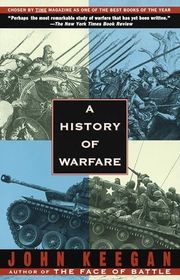
A History of Warfare
For readers who want a large historical argument about how societies wage war. Its cultural comparisons broaden the frame beyond particular campaigns, but its sweeping thesis is interpretive and should be read alongside more specialized histories.
What it's about
John Keegan surveys warfare across societies and periods, examining how culture, technology and social organization shape fighting. His broad account questions a purely political explanation of war and compares different military traditions through a sustained historical argument.

For readers interested in colonial conflict and the political consequences of military force. Horne connects violence, nationalism, and crises of government more broadly than a battle narrative, though the long account reflects its period of scholarship.
What it's about
Alistair Horne examines the Algerian War of 1954 to 1962 and its effects on France and Algeria. His account explores nationalism, colonial rule, political crises, revolutionary violence, and repression within a complicated struggle for independence.
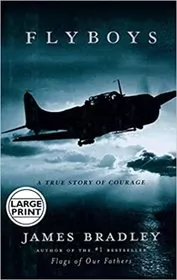
For readers interested in captured airmen and the darker history of the Pacific war. Its investigation brings individual fates into focus, but the disturbing material and concentrated subject make it less suitable as a first overview of the conflict.
What it's about
Bradley investigates the fate of American airmen captured near Chichi Jima during World War II. Drawing on formerly secret records, this nonfiction account places their experiences alongside George H. W. Bush's rescue and the wider Pacific conflict.

Generation Kill
For readers who want reporting from inside a reconnaissance unit during the Iraq invasion. The close attention to personalities makes the military culture immediate, though the abrasive language and limited unit perspective leave wider strategy less fully examined.
What it's about
Evan Wright reports from his time embedded with Marine reconnaissance troops during the 2003 invasion of Iraq. Close portraits of the young servicemen follow combat, camaraderie, command decisions, and the physical and moral pressures encountered during the invasion.

For readers interested in the relationship between rapid military events and diplomacy. The concentrated account gives the 1967 war a clear narrative frame, though the compressed focus and author’s interpretations benefit from comparison with other perspectives.
What it's about
Michael Oren reconstructs the 1967 Six-Day War through its military campaigns and diplomatic struggles. The history examines the leaders, decisions, and rapidly changing events that shaped the conflict, tracing its consequences for borders and power in the Middle East.

For readers who want one battle examined as a test of leadership and endurance. The sustained Verdun focus gives attrition a clearer human and institutional setting, though the older narrative needs supplementing for newer research.
What it's about
Alistair Horne examines the 1916 battle of Verdun through the men who fought it and the traditions that shaped their decisions. The narrative considers attrition, military leadership, and the battle's place in Franco-German rivalry.

For readers who want a major urban battle reconstructed from several sides. The combination of interviews and campaign detail offers a broader view than a single memoir, though the many participants and locations require careful attention.
What it's about
Bowden reconstructs the battle for Huế during the 1968 Tet Offensive using archival material and interviews with participants on both sides. The account follows prolonged urban combat and its impact on perceptions of the Vietnam War.

For readers who want a participant’s account of a modern outpost battle. Its close focus makes small-unit decisions and survival immediate, but the intense combat narrative gives less space to Afghanistan’s wider political and historical context.
What it's about
Clinton Romesha recounts the 2009 Taliban assault on Combat Outpost Keating in Afghanistan. Drawing on his experience defending the isolated position, he describes the soldiers' struggle to withstand the attack and protect their comrades.
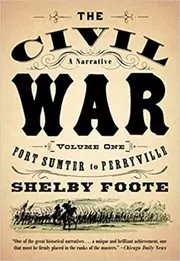
For readers who want an expansive narrative of the Civil War’s opening campaigns. The emphasis on personalities and battlefield movement makes the scale vivid, though the first volume requires continuation and gives less weight to slavery’s social history.
What it's about
Foote opens with secession and Fort Sumter, then follows the war through First Bull Run, Shiloh, Antietam, and Perryville. It is the start of his sweeping three-volume history, rich in politics, personality, and battlefield detail.
Sources
- 1
Military History - History, Reading Lists
guides.pnw.edu
- 2
The Best Books on Battles
fivebooks.com
- 3
100 Best Military History Books of All Time (Updated for 2026)
shortform.com
- 4
Military History Books
goodreads.com
- 5
Best Military Books: The Complete Guide (2026)
militarymachine.com
- 6
19 of the Best Military Non-Fiction Books Everyone Should Read
mybaseguide.com
- 7
5 of the Best Military History Books to Read
bookriot.com
- 8
Any book recommendation for a military history overview?
reddit.com
- 9
How do I get into WW2 history as a complete beginner?
reddit.com
- 10
What are some military history books that are *not* fast food for the brain?
reddit.com
- 11
Military History Books Every History Buff Should Have on Their Bookshelves
explorethearchive.com
- 12
Best Military History Books
librarything.com



Edited by
Software engineer whose passion for tracking book recommendations from podcasts inspired the creation of MRB.
Lead investor at 3one4 Capital whose startup expertise and love for books helped shape MRB and its growth.
Comments
Did we miss something? Have feedback?
Help us improve this page by sharing your thoughts