
13 Best Venture Capital Books
The best venture capital books, ranked by how many expert sources recommend each one, with notes on who each suits, from fundraising founders to investors.
Our take
Venture capital books serve founders, aspiring investors, and people interested in how startup financing developed. Those audiences overlap, but a guide to negotiating a term sheet won't explain everything involved in running a fund or judging an uncertain opportunity.
Venture Deals concentrates on deal terms, while Secrets of Sand Hill Road explains the incentives connecting fund investors, venture firms, and founders. The Business of Venture Capital looks more closely at operating a fund. Strategy and management books add another perspective: Zero to One asks what makes a company distinctive, and The Hard Thing About Hard Things explores difficult operating decisions. For historical context, VC traces a long institutional development, while eBoys examines one partnership during a particular boom. Many examples come from the United States and need interpreting within their legal and market setting.
Start with Secrets of Sand Hill Road for orientation, then choose Venture Deals for fundraising or The Business of Venture Capital for fund operations.
13 books · 8 sources · Last updated
As an Amazon Associate, we earn from qualifying purchases (at no extra cost to you).
How to choose from this list
Skip to the full rankingIf you're new to the venture ecosystem: Secrets of Sand Hill Road
If you're preparing to raise funding: Venture Deals → Raising Venture Capital for the Serious Entrepreneur
If you want to understand fund operations: The Business of Venture Capital
If you want to study investment judgment: The Venture Mindset → Zero to One
If you prefer industry history: The Power Law → VC
If you want the founder's operating perspective: The Hard Thing About Hard Things
The 13 books, ranked
Ranked by how many expert sources name each book. Ties go to the book more people recommend.

For founders who want to understand the incentives behind an investor's decisions, Kupor explains the business connecting fund backers and startups. The accessible inside perspective adds useful context, though it reflects a particular US venture ecosystem.
What it's about
Scott Kupor explains how venture capital works from the perspective of both investors and startup founders. He examines investment decisions, fundraising, term sheets, boards, and relationships with potential acquirers, drawing on his experience to illuminate negotiations and expectations.
Also recommended by
5 people Eric Schmidt recommended this book
Eric Schmidt
"As someone who’s helped a small company become a huge, valuable company, I know firsthand the power of the startup ecosystem and entrepreneurship. This book is the definitive book on navigating VC as part of that." - Eric Schmidt
Eric Schmidt's recommendation of this book  Elad Gil recommended this book
Elad Gil
"[This book] is great." - Elad Gil
Elad Gil's recommendation of this book  Ryan Hoover recommended this book
Ryan Hoover
Ryan Hoover mentioned this book on Twitter.
Ryan Hoover's recommendation of this book  Sam Altman recommended this book
Sam Altman
"A valuable resource for any founder who wants to work with VCs." - Sam Altman
Sam Altman's recommendation of this book  Michael Mauboussin recommended this book
Michael Mauboussin
"Great!" - Michael Mauboussin
Michael Mauboussin's recommendation of this book

For founders who want to understand what a financing agreement actually changes, Feld and Mendelson provide a practical vocabulary for negotiations. The focus on economics and control is valuable, though US deal conventions need adapting to other jurisdictions.
What it's about
Brad Feld and Jason Mendelson explain the mechanics of venture capital financing from the entrepreneur's perspective. They examine term sheets, valuation, ownership, investor incentives, and negotiation, helping founders understand the economic and control provisions that shape funding agreements.
Also recommended by
1 person Sophia Amoruso recommended this book
Sophia Amoruso
"When I went to raise venture capital [I read this book]. And I was like, you know, I've raised $70 million so I guess I figured that out." - Sophia Amoruso
Sophia Amoruso's recommendation of this book

The Business of Venture Capital
The Art of Raising a Fund, Structuring Investments, Portfolio Management, and Exits
For aspiring fund managers who need the operating picture beyond individual deals, Ramsinghani offers a substantial practitioner reference. The breadth connects fundraising with portfolio work, though the detailed treatment is demanding for readers seeking a short introduction.
What it's about
Mahendra Ramsinghani examines venture capital from the fund manager's perspective, covering firm formation, fundraising, and investment structuring. The guide follows portfolio construction, supporting company value creation, and planning exits, connecting the stages involved in operating a venture capital business.

For founders and investors who want provocative questions about differentiation, Thiel offers a compact strategic argument. Its emphasis on distinctive opportunities can sharpen discussion, though the contrarian claims need scrutiny and don't explain fundraising mechanics.
What it's about
Peter Thiel examines how startups can create something new rather than imitate existing businesses. Written with Blake Masters, the book explores independent thinking, technological progress, and the search for opportunities that produce distinctive value in any industry.
Also recommended by
22 people Andrew Ng recommended this book
Andrew Ng
"Gives an overview of entrepreneurship and innovation." - Andrew Ng
Andrew Ng's recommendation of this book  Ben Horowitz recommended this book
Ben Horowitz
"I learned a lot reading it." - Ben Horowitz
Ben Horowitz's recommendation of this book  Bryan Johnson recommended this book
Bryan Johnson
"A must read." - Bryan Johnson
Bryan Johnson's recommendation of this book  Chris Dixon recommended this book
Chris Dixon
Chris Dixon recommended this book on Twitter.
Chris Dixon's recommendation of this book  Dustin Moskovitz recommended this book
Dustin Moskovitz
Dustin Moskovitz recommended this book during a Stanford lecture in 2014.
Dustin Moskovitz's recommendation of this book  Elon Musk recommended this book
Elon Musk
"[This author] has built multiple breakthrough companies, and [this book] shows how." - Elon Musk
Elon Musk's recommendation of this book +16
More recommendations
- Eric Weinstein
"If you really understand something that the rest of the world is confused about, and it’s an important truth, [this book] says here are all the ways you might want to make that work." - Eric Weinstein
- Keith Rabois
Keith Rabois recommended this book on a Medium blog post.
- Kishore Biyani
"Captures some interesting perspectives and insights on the way the world and the business organisations are changing and challenging the status quo." - Kishore Biyani
- Lee Stranahan
"A great business book." - Lee Stranahan
- Luis von Ahn
"I love [this book]." - Luis von Ahn
- Marc Andreessen
"The first book any working or aspiring entrepreneur must read—period." - Marc Andreessen
- Mark Zuckerberg
"This book delivers completely new and refreshing ideas on how to create value in the world." - Mark Zuckerberg
- Matt Mullenweg
"[This book] was excellent." - Matt Mullenweg
- Max Levchin
One of Max Levchin's answers to "what's your favourite business book you'd advise to young entrepreneurs?"
- Nassim Taleb
"When a risk taker writes a book, read it. In the case of [this author], read it twice. Or, to be safe, three times. This is a classic." - Nassim Taleb
- Sam Altman
This book was on Sam Altman's bookshelf.
- Patrick O'Shaughnessy
"An obvious suggestion, because [this book] is the talk of the town and sits at the top of bestseller lists everywhere." - Patrick O'Shaughnessy
- Tom Bilyeu
Tom Bilyeu recommended this book on his website.
- Ryan Petersen
"[Part of] my biz book canon." - Ryan Petersen
- Brian Dean
"Business classic that lives up to the hype. Completely reframes what a startup should do with their product and positioning." - Brian Dean
- Rupert Murdoch
"Brilliant, often provocative." - Rupert Murdoch
- Eric Weinstein

Mastering the VC Game
A Venture Capital Insider Reveals How to Get from Start-up to IPO on Your Terms
For entrepreneurs trying to understand the relationship behind a financing round, Bussgang draws on experience from both sides. The emphasis on investor selection and communication is useful, though the examples reflect an earlier market environment.
What it's about
Jeffrey Bussgang explains venture capital from the perspectives of both investor and entrepreneur. Drawing on his experience and interviews, he discusses attracting investors, refining a pitch, and negotiating partnerships that support a founder's business ambitions.

The Hard Thing About Hard Things
Building a Business When There Are No Easy Answers
For investors who want a clearer sense of the pressure founders face, Horowitz gives difficult operating decisions a personal voice. Its management perspective builds context for supporting companies, though it teaches little about fund structure or valuation mechanics.
What it's about
Ben Horowitz draws on his experiences leading technology companies to discuss the difficult decisions involved in running a business. His advice covers leadership under pressure, personnel problems, competition, and the responsibilities that accompany the role of chief executive.
Also recommended by
22 people Peter Thiel recommended this book
Peter Thiel
"[The author] has written the first true guide for protecting a startup from self-sabotage." - Peter Thiel
Peter Thiel's recommendation of this book  Mark Zuckerberg recommended this book
Mark Zuckerberg
"For anyone insterested in building, growing, or leading a great company, this book is an incredibly valuable resource." - Mark Zuckerberg
Mark Zuckerberg's recommendation of this book  Peter Attia recommended this book
Peter Attia
One of Peter Attia's answers to "any books you feel would make your reading list?"
Peter Attia's recommendation of this book  Marc Andreessen recommended this book
Marc Andreessen
"Let’s just say, we started out relationship with vigorous disagreement, and we’ve continued that to this day." - Marc Andreessen
Marc Andreessen's recommendation of this book  Larry Page recommended this book
Larry Page
"An inspiring story of a business rebirth through sheer willpower." - Larry Page
Larry Page's recommendation of this book  Matt Mullenweg recommended this book
Matt Mullenweg
"Entertaining more than anything. I read [this book], I was like: I would never work for this guy. But entertaining and some good lessons." - Matt Mullenweg
Matt Mullenweg's recommendation of this book +16
More recommendations
- Andrew Ng
"A bit dark but it does cover a lot of useful territory on what building an organization is like." - Andrew Ng
- Drew Houston
"One of the great things that [the author] wrote in [this book] is the hardest part of being a CEO is managing your psychology." - Drew Houston
- Keith Rabois
"Reflects 2000-2003." - Keith Rabois
- Dustin Moskovitz
Dustin Moskovitz recommended this book during a Stanford lecture in 2014.
- Max Levchin
One of Max Levchin's answers to "what's your favourite business book you'd advise to young entrepreneurs?"
- Luis von Ahn
"I like this one, but it’s not for very new entrepreneurs." - Luis von Ahn
- Kathryn Minshew
Most Recommended Books reached out to Kathryn Minshew directly.
- Andrew Wilkinson
"One of the best business books I've picked up in years." - Andrew Wilkinson
- Tim Ferriss
"A great book." - Tim Ferriss
- Blake Scholl
"Good." - Blake Scholl
- Chris Dixon
Chris Dixon recommended this book on Twitter.
- Fred Wilson
"Chapter five in [this book] is possibly the best thing I've read about leading a tech company." - Fred Wilson
- Raoul Pal
"By far, the best, most brutally honest and incredibly useful book about the realities of starting and running a company." - Raoul Pal
- Jodie Cook
"Reframes your mind: hard doesn’t mean bad. Seeking the easy route is a trap." - Jodie Cook
- Michael Dell
"Candidly talks about the very real thrills and perils of starting a business."- Michael Dell
- Marty Cagan
"Trust me: if you're a leader in tech, the best thing you can do in 2014 for your company is to read [this book]." - Marty Cagan
- Andrew Ng

For readers who want venture capital's incentives explained through institutional history and major investments, Mallaby offers a readable narrative. Its attention to outsized outcomes provides context, though prominent successes can overshadow the ordinary experience of unsuccessful funds.
What it's about
Sebastian Mallaby examines venture capital through the investors and entrepreneurs who financed major technology companies. Their stories show an industry shaped by unusually large successes, frequent failures, personal networks, and the pursuit of transformative business ideas.
Also recommended by
4 people Patrick Collison recommended this book
Patrick Collison
"By far the best book I've read on the sector." - Patrick Collison
Patrick Collison's recommendation of this book  Paul Graham recommended this book
Paul Graham
"If you want to understand how venture capital works and the effect it has had on the US economy, this is the book to read." - Paul Graham
Paul Graham's recommendation of this book  Trung Phan recommended this book
Trung Phan
"About the Venture Capital industry." - Trung Phan
Trung Phan's recommendation of this book  Barry Ritholtz recommended this book
Barry Ritholtz
"Excellent." - Barry Ritholtz
Barry Ritholtz's recommendation of this book

The Entrepreneurial Bible to Venture Capital
Inside Secrets From the Leaders in the Startup Game
For founders who like learning from industry participants' experiences, Romans brings multiple perspectives to financing and exits. The conversational range helps reveal practical concerns, though the advice is less systematic than a dedicated term-sheet or fund-management text.
What it's about
Andrew Romans gathers advice from venture capitalists on financing and developing startup businesses. The guide examines angel investment, venture funding, building company value, and exits, using industry participants' experiences to explain decisions facing founders and their investors.
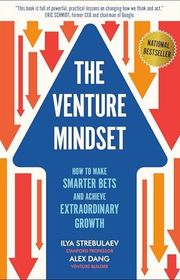
The Venture Mindset: How to Make Smarter Bets and Achieve Extraordinary Growth
For readers who want to examine decisions under uncertainty, Strebulaev and Dang turn venture investing into a broader framework for judgment. The focus complements technical deal guides, though applying VC habits outside investing requires attention to context.
What it's about
Ilya Strebulaev and Alex Dang explore decision-making practices associated with venture capital, including evaluating opportunities, handling uncertainty, and learning from failure. Their framework draws on research and business examples to discuss how organizations make bets on new ideas.

For readers who want to understand where venture capital's institutions came from, Nicholas supplies a longer economic perspective than startup memoirs. Its historical depth challenges a purely Silicon Valley story, though it isn't a guide to raising a round.
What it's about
Tom Nicholas traces American venture capital from nineteenth-century whaling investments to Silicon Valley startups. His economic history follows the development of financing institutions and investment practices, examining how risk-taking, experimentation, and the pursuit of exceptional returns shaped the industry.

Venture Capital For Dummies
For newcomers who need fundraising terminology explained without assuming industry experience, Gravagna and Adams provide an approachable route. The step-by-step framing supports initial orientation, though serious negotiations require more detail and current professional context.
What it's about
Nicole Gravagna and Peter K. Adams introduce the process of finding and pursuing venture capital for a business. Their step-by-step guide addresses entrepreneurs seeking startup funding or bringing a product to market, explaining the financing path in accessible terms.

For readers curious about how a venture partnership behaved during the internet boom, Stross provides an observational historical account. The personalities make the institution tangible, though the exceptional market period limits how readily its stories generalize.
What it's about
Randall Stross follows the partners of Benchmark during the internet investment boom, observing their meetings, deals, and relationships with startups. His account explores the judgments, risks, and personalities behind venture capital investments in companies such as eBay and Webvan.
Also recommended by
1 person Bill Gurley recommended this book
Bill Gurley
"[The author] got sucked into writing more of a Hollywood gossip story." - Bill Gurley
Bill Gurley's recommendation of this book

Raising Venture Capital for the Serious Entrepreneur
For founders who want to work through financing questions with cases and exercises, Berkery offers a structured analytical approach. The focus on negotiations and funding logic rewards practice, though readers should check older deal examples against current terms.
What it's about
Dermot Berkery explains venture financing from the entrepreneur's perspective, examining how investors assess businesses, arrange funding, and value early-stage ventures. Case studies, charts, and term-sheet exercises illustrate fundraising strategy, investment structures, and the negotiations that shape a deal.
Sources
- 1
12 Best Venture Capital Books: What to Read First | Venture Capital Careers
venturecapitalcareers.com
- 2
Best Venture Capital Books for Investors: 10 Titles by Job | 1752vc
1752.vc
- 3
Recommended Books - Change Ventures
changeventures.com
- 4
Venture Capital Books
goodreads.com
- 5
15 Best Books on Venture Capital - Bigger Investing
biggerinvesting.com
- 6
Book Recommendations?
reddit.com
- 7
Best Venture Capital Books and Courses 2026 | VC Beast
vcbeast.com
- 8
Venture Capital Books - 10 Best VC Investing Books [2026]
wallstreetmojo.com




Edited by
Software engineer whose passion for tracking book recommendations from podcasts inspired the creation of MRB.
Lead investor at 3one4 Capital whose startup expertise and love for books helped shape MRB and its growth.
Comments
Spotted a missing book, a wrong order or a mistake? Tell us and we'll fix this page.
We're a reading guide, not the author or publisher, so we can't send books or pass on messages.