
11 Best Tom Wolfe Books
The best Tom Wolfe books, ranked by how many expert sources recommend each one, with notes on his reporting, social satire, cultural criticism, and novels.
Our take
Tom Wolfe writes about people competing to belong, stand out, or protect their position. His reporting turns clothes, speech, gestures, and surroundings into evidence of status, while his novels build larger collisions between social worlds. The voice is conspicuous: energetic punctuation, repeated phrases, and sharp caricature can be as much a part of the experience as the subject itself.
The Right Stuff provides a focused introduction to his narrative nonfiction, and The Electric Kool-Aid Acid Test takes a more immersive, fragmented route into counterculture. The Kandy-Kolored Tangerine-Flake Streamline Baby and The Pump House Gang let you sample shorter reporting. For fiction, begin with The Bonfire of the Vanities before considering the longer social panorama of A Man in Full. Readers who want a brief taste of his argumentative side can choose The Painted Word or From Bauhaus to Our House. Start with the subject that interests you and decide how much of Wolfe's forceful style you enjoy.
11 books · 9 sources · Last updated
As an Amazon Associate, we earn from qualifying purchases (at no extra cost to you).
Reading Tom Wolfe in order? See all Tom Wolfe books in order
How to choose from this list
Skip to the full rankingIf you are new to his nonfiction: The Right Stuff
If you want his social novels: The Bonfire of the Vanities → A Man in Full
If you want 1960s reporting: The Kandy-Kolored Tangerine-Flake Streamline Baby → The Pump House Gang → The Electric Kool-Aid Acid Test
If you want short cultural arguments: The Painted Word → From Bauhaus to Our House
If you want provocative social commentary: Radical Chic
The 11 books, ranked
Ranked by how many expert sources name each book. Ties go to the book more people recommend.
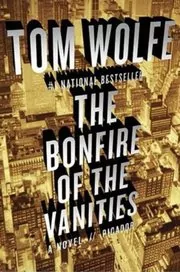
For readers who want Wolfe's social observation stretched across a large novel. The collision of money, publicity, and status gives the satire scope, though the heightened voices and relentless caricature can overwhelm subtler character development.
What it's about
In 1980s New York, bond trader Sherman McCoy’s comfortable life unravels after a late‑night wrong turn to the Bronx leads to a scandalous hit‑and‑run. As tabloids, prosecutors, and activists circle, the story lays bare race, class, and greed.
Also recommended by
3 people Ev Williams recommended this book
Ev Williams
On the "books read" section of Ev Williams' GoodReads profile.
Ev Williams's recommendation of this book  Christopher Hitchens recommended this book
Christopher Hitchens
"Shortly after I arrived in New York, [this author] claimed to have diagnosed the same syndrome in [this book]." - Christopher Hitchens
Christopher Hitchens's recommendation of this book  Charles Koch recommended this book
Charles Koch
"[One of four books] where I learned how the world works." - Charles Koch
Charles Koch's recommendation of this book
The Right Stuff
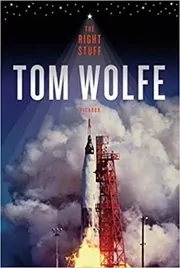
For newcomers who prefer narrative nonfiction with a strong human subject. Wolfe's attention to competitive courage and public image gives the space program a distinctive perspective, though this is a selective cultural portrait rather than a technical history.
What it's about
Wolfe tells the intertwined stories of postwar test pilots and NASA’s original Mercury Seven astronauts, digging into the danger, ego, and family strain behind the space race. It asks what unseen “right stuff” makes people volunteer for such perilous missions.
Also recommended by
3 people Richard Branson recommended this book
Richard Branson
Richard Branson recommended this book on his "70 must-read books" blog post.
Richard Branson's recommendation of this book  Patrick O'Shaughnessy recommended this book
Patrick O'Shaughnessy
"If you like American History and/or stories of pushing the limits of human capability and endurance, this book is for you." - Patrick O'Shaughnessy
Patrick O'Shaughnessy's recommendation of this book  Ben Shapiro recommended this book
Ben Shapiro
"FAR better than the movie, which is still good." - Ben Shapiro
Ben Shapiro's recommendation of this book
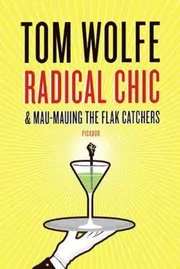
For readers who want short, confrontational social satire. The two pieces expose performances of status across very different settings, though Wolfe's provocative framing and racial language can be abrasive and demand historical context.
What it's about
This slim volume pairs Wolfe’s account of a Park Avenue party for Black Panthers with his report on San Francisco anti‑poverty programs. Together, the pieces dissect the uneasy mix of white guilt, militant anger, bureaucracy, and status performance.
Also recommended by
2 people Marc Andreessen recommended this book
Marc Andreessen
Marc Andreessen recommended this book on Twitter.
Marc Andreessen's recommendation of this book  Douglas Murray recommended this book
Douglas Murray
"The master of observational writing dissects the meeting point of Manhattan’s elites with the Black Panthers." - Douglas Murray
Douglas Murray's recommendation of this book
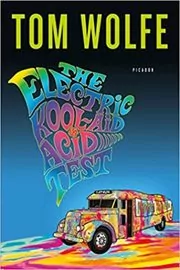
The Electric Kool-Aid Acid Test
For readers curious about counterculture through an intensely stylized account. The shifting voices and sensory language immerse you in a social world, though the fragmented narration and drug-centered material are far from a detached historical survey.
What it's about
This nonfiction chronicle follows novelist Ken Kesey and the Merry Pranksters as they crisscross America in a wildly painted bus, staging LSD‑fueled “Acid Tests” and colliding with musicians, bikers, and Beats in a vivid portrait of 1960s counterculture.
Also recommended by
2 people Jordan Peterson recommended this book
Jordan Peterson
"A great book." - Jordan Peterson
Jordan Peterson's recommendation of this book  Tim O’Reilly recommended this book
Tim O’Reilly
"[Gets you] into the world of psychedelia and that era of the ‘70s." - Tim O’Reilly
Tim O’Reilly's recommendation of this book
For readers who enjoyed Bonfire's panoramic treatment of ambition and want another city under scrutiny. The broad ensemble connects social rank with personal humiliation, though the length and rhetorical intensity make this a substantial commitment.
What it's about
Set in booming Atlanta and California’s East Bay, this novel tracks real‑estate titan Charlie Croker’s looming bankruptcy, a young warehouse worker’s crisis, and a racially charged rape allegation, as money, politics, and pride push lives toward very public reckonings.
Also recommended by
1 person- Charles Koch recommended this book
Charles Koch
Charles Koch recommended this book on his website.
Charles Koch's recommendation of this book
The Kandy-Kolored Tangerine-Flake Streamline Baby
For readers who want to sample Wolfe's early reporting in separate pieces. The range of subcultures shows his eye for revealing detail, though the exuberant punctuation and period slang require more tolerance than conventional magazine prose.
What it's about
Wolfe’s first essay collection dives into custom‑car fanatics, Las Vegas spectacle, teen idols, stock‑car racers, and more. Written in an exuberant, detail‑rich style, it shows how new kinds of status and pop culture were transforming America in the 1960s.
The Painted Word
For readers who enjoy a short argument about cultural authority. Wolfe attacks the power of theory in the art world with concentrated wit, though the polemical approach favors provocation over a balanced account of modern painting.
What it's about
In this brief, punchy critique of modern art, Wolfe argues that painting has become an illustration of theory, controlled by a small circle of critics, collectors, and curators. He questions what happens when ideas matter more than looking.
From Bauhaus to Our House
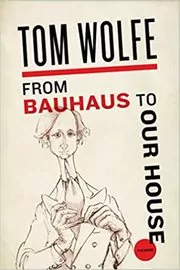
For readers interested in architecture as a contest over taste and prestige. The compact critique extends Wolfe's art-world arguments into the built environment, though the satire is deliberately partisan and offers little neutral architectural history.
What it's about
Wolfe’s brisk history of modern architecture traces how European avant‑garde ideals about glass, steel, and stark forms migrated to American campuses and skylines. With wit and skepticism, he asks why power brokers embraced buildings many users found alienating.
I Am Charlotte Simmons
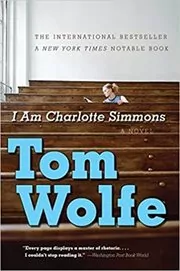
For readers who want a satirical view of campus hierarchies rather than an academic coming-of-age story. Wolfe makes status competition conspicuous, though the sexual explicitness and outsider perspective can feel heavy-handed or unconvincing.
What it's about
At elite Dupont University, brilliant freshman Charlotte Simmons leaves her rural North Carolina town expecting a world of ideas and instead finds a campus ruled by sex, alcohol, and basketball fame. The novel follows her faltering efforts to stay herself.
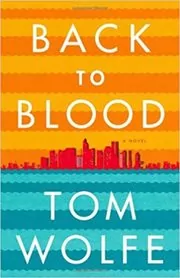
For readers interested in Wolfe's late treatment of ethnic identity and urban status. Miami gives his social panorama a different set of loyalties and tensions, though the sweeping caricatures can flatten the communities he sets out to describe.
What it's about
Set in contemporary Miami, this sprawling novel follows Cuban‑American cop Nestor Camacho, his status‑conscious ex‑girlfriend, and a swirl of immigrants, socialites, journalists, and hustlers. Their intersecting stories reveal a city where class, ethnicity, and loyalty are always on display.
The Pump House Gang
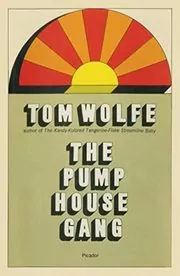
For readers who want more early reporting on people inventing their own social hierarchies. The linked concern with status gives the varied pieces coherence, though readers familiar with Wolfe's first collection will encounter a closely related style.
What it's about
These essays roam from a tight‑knit surf crew at a La Jolla pump house to London mods, Playboy insiders, and New York socialites, using vivid scenes to explore 1960s subcultures and how people invent new leagues when old hierarchies crumble.
Sources
- 1
5 Best Tom Wolfe Books - Essential Tom Wolfe Books You Should Read
esquire.com
- 2
10 Best Tom Wolfe Books (2025) - Are They Worth Reading?
ereads.com
- 3
The First Reviews of Tom Wolfe’s 5 Most Iconic Books ‹ Book Marks
bookmarks.reviews
- 4
Tom Wolfe
fantasticfiction.com
- 5
Books by Tom Wolfe (Author of The Bonfire of the Vanities)
goodreads.com
- 6
Tom Wolfe | Authors | Macmillan
academic.macmillan.com
- 7
Books - Tom Wolfe
contemporarythinkers.org
- 8
Tom Wolfe | Kirkus Reviews
kirkusreviews.com
- 9
Where should I start with Tom Wolfe? : r/suggestmeabook
reddit.com




Edited by
Software engineer whose passion for tracking book recommendations from podcasts inspired the creation of MRB.
Lead investor at 3one4 Capital whose startup expertise and love for books helped shape MRB and its growth.
Comments
Spotted a missing book, a wrong order or a mistake? Tell us and we'll fix this page.
We're a reading guide, not the author or publisher, so we can't send books or pass on messages.