
16 Best Conservative Books
The best conservative books, ranked by expert source recommendations, with notes to help you choose political philosophy, economic arguments, memoirs, and fiction.
Our take
Conservative writing contains several traditions rather than a single settled position. These books address inherited institutions, economic liberty, constitutional government, religion, and the experience of political change. Some defend a set of principles, while others trace how a movement developed or explore political questions through fiction. Reading them together makes the differences between traditionalism, free-market thought, and individualism easier to see.
The Conscience of a Conservative offers a short entry into postwar American politics. The Conservative Intellectual Movement in America supplies a broader historical framework, while The Conservative Mind presents a sympathetic account of an intellectual inheritance. For economics, Economics in One Lesson is a compact starting point before Capitalism and Freedom or The Road to Serfdom. Animal Farm and the Rand novels approach political power through different fictional forms and should not be treated as interchangeable statements. Start with Goldwater for a brief historical introduction or Nash for the movement’s competing strands.
16 books · 9 sources · Last updated
As an Amazon Associate, we earn from qualifying purchases (at no extra cost to you).
How to choose from this list
Skip to the full rankingIf you want a short American introduction: The Conscience of a Conservative
If you want the movement’s intellectual history: The Conservative Intellectual Movement in America → The Conservative Mind
If you want to study tradition and change: Reflections on the Revolution in France → Ideas Have Consequences
If you want free-market arguments: Economics in One Lesson → Capitalism and Freedom → The Road to Serfdom
If you want constitutional foundations: The Federalist Papers → Democracy in America
If you prefer political fiction: Animal Farm → The Fountainhead → Atlas Shrugged
The 16 books, ranked
Ranked by how many expert sources name each book. Ties go to the book more people recommend.

For readers interested in conservatism as an inherited intellectual tradition. Kirk links British and American thinkers around questions of order and continuity, though his sympathetic interpretation is an argument for that tradition rather than a neutral map.
What it's about
Russell Kirk traces an intellectual tradition of conservatism through British and American thinkers, from Edmund Burke to George Santayana. His study explores their ideas about inherited institutions, moral order, and social change while defending conservative political thought.

Democracy in America
For readers who want to examine democracy’s social habits as well as its institutions. The attention to associations and majority power offers a broad framework, though the nineteenth-century context and substantial length call for an annotated edition and patience.
What it's about
Alexis de Tocqueville examines American society and democratic institutions through observations from his travels. His analysis considers equality, majority power, civil associations, religion, and individualism, exploring both the opportunities of democratic life and the dangers it poses to liberty.
Also recommended by
2 people Patrick Collison recommended this book
Patrick Collison
Patrick Collison labeled this book "particularly great."
Patrick Collison's recommendation of this book  Patrick Bet-David recommended this book
Patrick Bet-David
Patrick Bet-David recommended this book on his website.
Patrick Bet-David's recommendation of this book

The Road to Serfdom
For readers interested in how economic arrangements can affect political freedom. Hayek develops a focused warning about centralized planning, though its wartime setting and specific target require care when applying the argument to present-day policies.
What it's about
Hayek argues that comprehensive economic planning threatens political freedom by concentrating decisions in government hands. Written during World War II, the book examines socialism, coercion, the rule of law, and the relationship between markets and liberty.
Also recommended by
4 people Charles Koch recommended this book
Charles Koch
Charles Koch recommended this book on his website.
Charles Koch's recommendation of this book  Rand Paul recommended this book
Rand Paul
On Rand Paul's website's "reading suggestions for students" section.
Rand Paul's recommendation of this book  Brad Delong recommended this book
Brad Delong
Brad Delong recommended this book in his website.
Brad Delong's recommendation of this book - Patrick Bet-David recommended this book
Patrick Bet-David
Patrick Bet-David recommended this book on his website.
Patrick Bet-David's recommendation of this book

The Conscience of a Conservative
For readers who want a compact statement from the postwar American conservative movement. Its direct positions make an accessible historical starting point, though its treatment of civil rights and Cold War policy needs to be read in context.
What it's about
Barry Goldwater presents conservative positions on political and economic questions, including education, unions, taxation and welfare. The book also addresses civil rights and agricultural policy, outlining the principles that informed his account of the proper role of government.
Also recommended by
1 person- Rand Paul recommended this book
Rand Paul
On Rand Paul's website's "reading suggestions for students" section.
Rand Paul's recommendation of this book

For readers studying how postwar conservatives challenged universities. Buckley makes culture and education central to the argument, though the book is a polemic rooted in one institution rather than a neutral account of academic life.
What it's about
William F. Buckley criticizes Yale's approach to religion and economics based on his undergraduate experience. He argues that secularism and collectivism undermine the university's stated commitments, challenging academic freedom and making a case for Christian individualism.

The Federalist Papers
For readers who want the constitutional arguments behind American government. The essays explain proposed institutions in the founders’ own political setting, though their eighteenth-century prose and ratification purpose make them demanding for readers without historical context.
What it's about
Alexander Hamilton, James Madison, and John Jay argue for ratifying the United States Constitution in essays originally published under a shared pseudonym. They examine federal authority, representation, divided powers, and safeguards against tyranny in the proposed government.
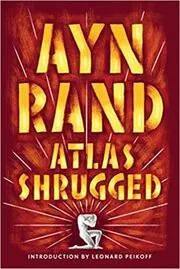
Atlas Shrugged
For readers who want a sustained fictional statement of radical individualism. The industrial setting gives Rand’s ideas a larger economic canvas than The Fountainhead, though the length, speeches, and stark moral divisions demand considerable patience.
What it's about
As the economy buckles under political controls, railroad executive Dagny Taggart and steelmaker Hank Rearden try to keep the country running while its best minds vanish. The mystery of John Galt hangs over every crisis.
Also recommended by
23 people Elon Musk recommended this book
Elon Musk
"A counterpoint to communism and useful as such, but should be tempered with kindness." - Elon Musk
Elon Musk's recommendation of this book  Steve Jobs recommended this book
Steve Jobs
Steve Wozniak said he thinks Steve Jobs mentioned this book and it really was a guide in his life.
Steve Jobs's recommendation of this book  Peter Thiel recommended this book
Peter Thiel
"When I first read [Ayn Rand's books] in the late 80s, it felt pretty crazy. And in the last decades, it's in many ways felt much more correct." - Peter Thiel
Peter Thiel's recommendation of this book  Shah Rukh Khan recommended this book
Shah Rukh Khan
One of Shah Rukh Khan's favorite novels.
Shah Rukh Khan's recommendation of this book  Joe De Sena recommended this book
Joe De Sena
"Loved [this book]. Read often." - Joe De Sena
Joe De Sena's recommendation of this book  Peter Diamandis recommended this book
Peter Diamandis
"Something I’ve read multiple times to get me in the mindset of not letting anything stand in my way" - Peter Diamandis
Peter Diamandis's recommendation of this book +17
More recommendations
- Ev Williams
On the "books read" section of Ev Williams' GoodReads profile.
- Gabby Reece
"[I read this book when] I was 15, and I gave [it] to a lot of people because it shifted how I looked at certain things." - Gabby Reece
- Travis Kalanick
Travis Kalanick mentioned this book in a Washington Post interview.
- Brian Armstrong
"Celebrate the creators in the world (even when they struggle). They may be more valuable than we think." - Brian Armstrong
- Amelia Boone
"When I read [this book] in my teens, Dagny Taggart’s character spoke to me on a level I’d never experienced with any other novel." - Amelia Boone
- Bob Metcalfe
"My favorite book." - Bob Metcalfe
- Blake Scholl
"Far and away my favorite book." - Blake Scholl
- Fred Wilson
Fred Wilson recommended this book on his blog.
- Phil Jackson
"I consider it philosophical." - Phil Jackson
- John Carmack
"If you can't see its archetypes in the world around you, you aren't paying attention." - John Carmack
- Mark Cuban
"I'll read it again. So there goes another 3 weeks of me reading it for the tenth time." - Mark Cuban
- Ray Dalio
"Regarding economics, if you haven’t read [this author] lately, I suggest that you do." - Ray Dalio
- Austen Allred
"I really liked it." - Austen Allred
- Russell Brunson
"It is so good!!!" - Russell Brunson
- Paul Krugman
"About a fantasy world whose unrealism can seriously warp your personality and outlook." - Paul Krugman
- Rand Paul
On Rand Paul's website's "reading suggestions for students" section.
- Patrick Bet-David
Patrick Bet-David recommended this book on his website.
- Ev Williams

For readers who want a concise introduction to free-market arguments about policy. Its focus on overlooked consequences gives the examples a clear organizing idea, though it is an argumentative primer rather than a balanced survey of economic schools.
What it's about
Henry Hazlitt introduces economic ideas through critiques of policies and common assumptions. Writing from a free-market perspective, he examines government intervention and argues for considering the wider consequences of economic decisions.
Also recommended by
7 people Naval Ravikant recommended this book
Naval Ravikant
"Great book. Required reading." - Naval Ravikant
Naval Ravikant's recommendation of this book  Ben Shapiro recommended this book
Ben Shapiro
"[If you read this book and "Basic Economics"] you'll know more than all or your classmates combined about the basic workings of free markets and economics." - Ben Shapiro
Ben Shapiro's recommendation of this book  Ryan Petersen recommended this book
Ryan Petersen
Ryan Petersen mentioned this book on Twitter.
Ryan Petersen's recommendation of this book  Mark Spitznagel recommended this book
Mark Spitznagel
"If I am able to get my children to read only one economics text in their lifetime, God forbid, it would be [this book]." - Mark Spitznagel
Mark Spitznagel's recommendation of this book  Changpeng Zhao recommended this book
Changpeng Zhao
"There are few books that better encapsulate the inner workings of economics than this one." - Changpeng Zhao
Changpeng Zhao's recommendation of this book  Peter Schiff recommended this book
Peter Schiff
Peter Schiff recommended this book on his website.
Peter Schiff's recommendation of this book +1
More recommendations
- Rand Paul
On Rand Paul's website's "reading suggestions for students" section.
- Rand Paul
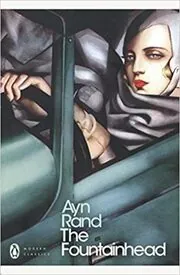
The Fountainhead
For readers interested in artistic independence and resistance to social approval. The focus on creative work makes Rand’s individualism more personal than in Atlas Shrugged, though the characters often serve arguments rather than psychological complexity.
What it's about
Howard Roark is a fiercely independent architect who refuses to copy the past or flatter public taste. As rivals, critics, and power brokers close in, his work and his relationship with Dominique Francon become a test of principle.
Also recommended by
14 people Mark Cuban recommended this book
Mark Cuban
"I'll pick it up when I need motivation." - Mark Cuban
Mark Cuban's recommendation of this book  Tim Urban recommended this book
Tim Urban
"I absolutely loved the book. Sure, the characters are extreme and one-dimensional - but to me, that was the point." - Tim Urban
Tim Urban's recommendation of this book  Larry Ellison recommended this book
Larry Ellison
"As a kid, I wanted to be an architect. That's before I read [this book]. I mean it is hard to find a profession that pays worse than architecture." - Larry Ellison
Larry Ellison's recommendation of this book  Emma Watson recommended this book
Emma Watson
"I know, it's a cult. I'm not going to take it too far, but I did enjoy it." - Emma Watson
Emma Watson's recommendation of this book  Kevin Kelly recommended this book
Kevin Kelly
"By the end of the book, I decided to drop out of school. I never returned. It was the best decision of my life." - Kevin Kelly
Kevin Kelly's recommendation of this book  Travis Kalanick recommended this book
Travis Kalanick
"It’s one of my favorite books." - Travis Kalanick
Travis Kalanick's recommendation of this book +8
More recommendations
- Vince Vaughn
"Defiant in its pursuit of one’s artistic goals, meaning you don’t compromise; you stay truthful to what you’re exploring." - Vince Vaughn
- Ev Williams
On the "books read" section of Ev Williams' GoodReads profile.
- Jesse Williams
"The protagonist’s audacious self-confidence and refusal to compromise his artistic vision—which was to say, himself—was a fascinating thing to survey." - Jesse Williams
- Noah Kagan
"Healthy selfishness is a great thing." - Noah Kagan
- Fred Wilson
"I do love [this book]." - Fred Wilson
- Jim Carrey
"I would be Howard Roark and not Peter Keating in [this book]." - Jim Carrey
- Ray Dalio
"Regarding economics, if you haven’t read [this author] lately, I suggest that you do." - Ray Dalio
- Shah Rukh Khan
"[This book] is good a difficult long read though..." - Shah Rukh Khan
- Vince Vaughn
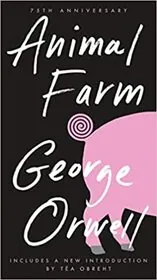
Animal Farm
For readers seeking a short entry into the language and mechanics of authoritarian power. Its animal fable makes political betrayal easy to follow, though it attacks Stalinism from a socialist author’s perspective rather than presenting a conservative program.
What it's about
On a small farm, the animals overthrow their human master and promise equality, only to see new rulers rise in their place. This short, biting fable exposes how revolutions can be twisted into tyranny through fear, slogans, and lies.
Also recommended by
8 people Jordan Peterson recommended this book
Jordan Peterson
Recommended on Jordan Peterson's website.
Jordan Peterson's recommendation of this book  J. Cole recommended this book
J. Cole
J. Cole mentioned reading this book on The Fayetteville Observer.
J. Cole's recommendation of this book  Whitney Cummings recommended this book
Whitney Cummings
Whitney Cummings mentioned this book on "The Tim Ferriss Show" podcast.
Whitney Cummings's recommendation of this book  Daniel Pink recommended this book
Daniel Pink
"I think that [this book] should be in every organizational behavior class in an MBA program." - Daniel Pink
Daniel Pink's recommendation of this book  Vlad Tenev recommended this book
Vlad Tenev
"When I was in sixth grade I remember being very upset by the ending of [this book]." - Vlad Tenev
Vlad Tenev's recommendation of this book  Christopher Hitchens recommended this book
Christopher Hitchens
"There is a timeless, even transcendent, quality to this little story." - Christopher Hitchens
Christopher Hitchens's recommendation of this book +2
More recommendations
- Sahil Lavingia
Sahil Lavingia recommended this book on Notion.
- Lex Fridman
Lex Fridman mentioned this book on Instagram.
- Sahil Lavingia

Reflections on the Revolution in France
For readers who want to examine the conservative case for inherited institutions and gradual change. Burke argues from a particular revolutionary moment, though the long sentences, historical references, and polemical setting make an annotated edition helpful.
What it's about
Edmund Burke criticizes the French Revolution and the political ideas driving it. Written in 1790, his argument defends inherited institutions and gradual change while examining the dangers he sees in remaking society according to abstract principles.
Also recommended by
2 people- Christopher Hitchens recommended this book
Christopher Hitchens
"Imperishable book." - Christopher Hitchens
Christopher Hitchens's recommendation of this book  Douglas Murray recommended this book
Douglas Murray
"The wisest and most important view on the situation in Europe immediately following the French revolution." - Douglas Murray
Douglas Murray's recommendation of this book

Capitalism and Freedom
For readers who want the connection between market arrangements and political liberty argued through specific policies. Friedman moves beyond introductory economic examples, though the proposals reflect a committed perspective and need comparison with competing accounts.
What it's about
Milton Friedman argues that competitive capitalism supports economic freedom and is necessary for political freedom. He examines the relationship between markets, government, and individual liberty, asking how public institutions can function without undermining personal choice.
Also recommended by
1 person- Patrick Bet-David recommended this book
Patrick Bet-David
Patrick Bet-David recommended this book on his website.
Patrick Bet-David's recommendation of this book

Witness
For readers interested in the personal and religious dimensions of anti-communism. Chambers’s memoir connects political conviction with a consequential public conflict, though its length and strongly committed viewpoint require separating testimony from a detached historical account.
What it's about
Whittaker Chambers recounts his commitment to communism, work in the Soviet underground, and eventual break with the movement. His memoir follows the personal and political choices that led to his congressional testimony and the controversy surrounding Alger Hiss.
Also recommended by
1 person Marc Andreessen recommended this book
Marc Andreessen
Marc Andreessen recommended this book on Twitter.
Marc Andreessen's recommendation of this book
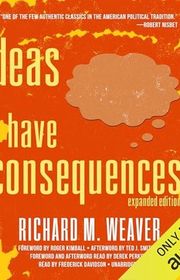
Ideas Have Consequences
For readers interested in the philosophical and cultural side of traditionalist conservatism. Weaver traces social problems to underlying ideas about reality and value, though the sweeping diagnosis and abstract argument leave less room for practical policy detail.
What it's about
Richard Weaver argues that modern Western society’s troubles arise from abandoning shared standards of truth and value. His critique connects philosophy with language, education, culture, and social order, proposing that recovery requires a change in underlying beliefs.
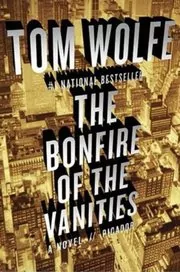
For readers who prefer social criticism through a crowded comic novel. Its competing New York institutions give status and self-interest a vivid setting, though the abrasive racial language and broad caricatures can make uncomfortable reading.
What it's about
In 1980s New York, bond trader Sherman McCoy’s comfortable life unravels after a late‑night wrong turn to the Bronx leads to a scandalous hit‑and‑run. As tabloids, prosecutors, and activists circle, the story lays bare race, class, and greed.
Also recommended by
3 people Ev Williams recommended this book
Ev Williams
On the "books read" section of Ev Williams' GoodReads profile.
Ev Williams's recommendation of this book - Christopher Hitchens recommended this book
Christopher Hitchens
"Shortly after I arrived in New York, [this author] claimed to have diagnosed the same syndrome in [this book]." - Christopher Hitchens
Christopher Hitchens's recommendation of this book - Charles Koch recommended this book
Charles Koch
"[One of four books] where I learned how the world works." - Charles Koch
Charles Koch's recommendation of this book

For readers who want to understand how several conservative traditions formed a movement. Nash provides historical connections among thinkers and institutions, though the detailed intellectual history is less immediately accessible than a short statement of principles.
What it's about
George Nash traces the development of American conservative thought after World War II. His history follows influential writers, institutions, and competing intellectual strands, exploring how libertarians, traditionalists, and anti-Communists contributed to an evolving political movement.
Sources
- 1
The 13 Books That Every Young Conservative Must Read
businessinsider.com
- 2
Best Conservative Books
goodreads.com
- 3
Eight Essential Books and Articles to Better Understand American Conservatism
reddit.com
- 4
The Ultimate Conservative Reading List
conservativebooksociety.com
- 5
Recommended Reading
maibachfund.us
- 6
Reading the Right Books
principlesofgovernment.org
- 7
The best books on Conservatism and Culture
fivebooks.com
- 8
10 Books Every Conservative Should Read To Combat Leftist Misinformation
thefederalist.com
- 9
Top Conservative Novels
thoughtco.com




Edited by
Software engineer whose passion for tracking book recommendations from podcasts inspired the creation of MRB.
Lead investor at 3one4 Capital whose startup expertise and love for books helped shape MRB and its growth.
Comments
Spotted a missing book, a wrong order or a mistake? Tell us and we'll fix this page.
We're a reading guide, not the author or publisher, so we can't send books or pass on messages.