
Tom Wolfe Books in Order
See Tom Wolfe’s books in order, with quick summaries, background on his journalism and novels, plus clear guidance on where to start with most important titles.
Last updated:
As an Amazon Associate, we earn from qualifying purchases (at no extra cost to you).
Tom Wolfe books in publication order
18 books
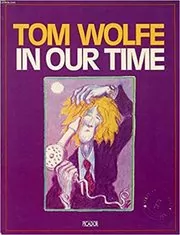
In Our Time
by Tom Wolfe
1961
A compact collection of essays and satirical drawings, this book captures 1970s American life through sharp sketches of status games, fashion, and public figures. Wolfe’s collages of text and image skewer the decade’s emerging archetypes and nervous energy.
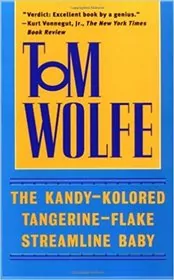
The Kandy-Kolored Tangerine-Flake Streamline Baby
by Tom Wolfe
1965
Wolfe’s first essay collection dives into custom‑car fanatics, Las Vegas spectacle, teen idols, stock‑car racers, and more. Written in an exuberant, detail‑rich style, it shows how new kinds of status and pop culture were transforming America in the 1960s.
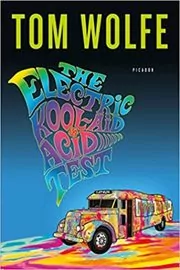
The Electric Kool-Aid Acid Test
by Tom Wolfe
1968
This nonfiction chronicle follows novelist Ken Kesey and the Merry Pranksters as they crisscross America in a wildly painted bus, staging LSD‑fueled “Acid Tests” and colliding with musicians, bikers, and Beats in a vivid portrait of 1960s counterculture.
Recommended by
2 people Jordan Peterson recommended this book
Jordan Peterson
"A great book." - Jordan Peterson
Jordan Peterson's recommendation of this book  Tim O’Reilly recommended this book
Tim O’Reilly
"[Gets you] into the world of psychedelia and that era of the ‘70s." - Tim O’Reilly
Tim O’Reilly's recommendation of this book
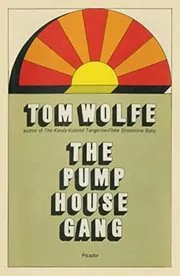
The Pump House Gang
by Tom Wolfe
1968
These essays roam from a tight‑knit surf crew at a La Jolla pump house to London mods, Playboy insiders, and New York socialites, using vivid scenes to explore 1960s subcultures and how people invent new leagues when old hierarchies crumble.
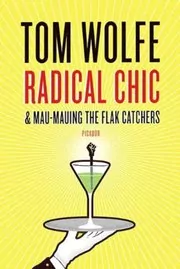
Radical Chic
by Tom Wolfe
1970
This slim volume pairs Wolfe’s account of a Park Avenue party for Black Panthers with his report on San Francisco anti‑poverty programs. Together, the pieces dissect the uneasy mix of white guilt, militant anger, bureaucracy, and status performance.
Recommended by
2 people Marc Andreessen recommended this book
Marc Andreessen
Marc Andreessen recommended this book on Twitter.
Marc Andreessen's recommendation of this book  Douglas Murray recommended this book
Douglas Murray
"The master of observational writing dissects the meeting point of Manhattan’s elites with the Black Panthers." - Douglas Murray
Douglas Murray's recommendation of this book
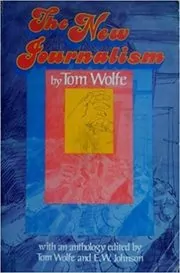
The New Journalism
by Tom Wolfe
1973
Part manifesto, part anthology, this book lays out Wolfe’s case for New Journalism and showcases long narrative pieces by him and others. Scenes, dialogue, and shifting viewpoints demonstrate how nonfiction can carry the drive of a novel.
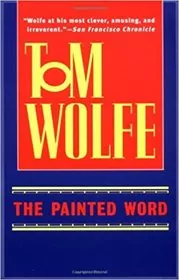
The Painted Word
by Tom Wolfe
1975
In this brief, punchy critique of modern art, Wolfe argues that painting has become an illustration of theory, controlled by a small circle of critics, collectors, and curators. He questions what happens when ideas matter more than looking.
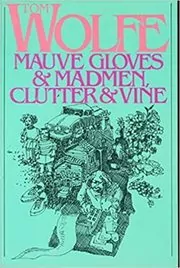
Mauve Gloves and Madman, Clutter and Vine
by Tom Wolfe
1977
A wide‑ranging collection of essays plus one short story, this book looks at 1970s America as the so‑called “Me Decade,” from suburban striving to aircraft‑carrier life. Again and again, Wolfe traces how obsession with status shapes everyday choices.
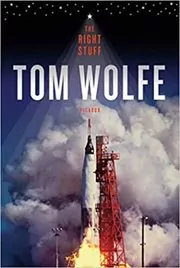
The Right Stuff
by Tom Wolfe
1979
Wolfe tells the intertwined stories of postwar test pilots and NASA’s original Mercury Seven astronauts, digging into the danger, ego, and family strain behind the space race. It asks what unseen “right stuff” makes people volunteer for such perilous missions.
Recommended by
3 people Richard Branson recommended this book
Richard Branson
Richard Branson recommended this book on his "70 must-read books" blog post.
Richard Branson's recommendation of this book  Patrick O'Shaughnessy recommended this book
Patrick O'Shaughnessy
"If you like American History and/or stories of pushing the limits of human capability and endurance, this book is for you." - Patrick O'Shaughnessy
Patrick O'Shaughnessy's recommendation of this book  Ben Shapiro recommended this book
Ben Shapiro
"FAR better than the movie, which is still good." - Ben Shapiro
Ben Shapiro's recommendation of this book
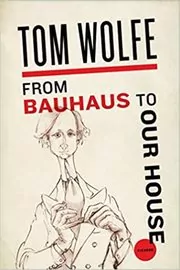
From Bauhaus to Our House
by Tom Wolfe
1981
Wolfe’s brisk history of modern architecture traces how European avant‑garde ideals about glass, steel, and stark forms migrated to American campuses and skylines. With wit and skepticism, he asks why power brokers embraced buildings many users found alienating.
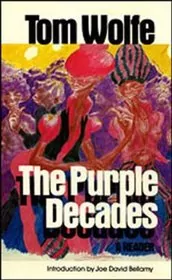
The Purple Decades
by Tom Wolfe
1982
Gathering essays from across his early career, this reader showcases Wolfe on race programs, the space program, Vietnam‑era pilots, stock‑car heroes, art, architecture, and more. It’s an accessible way to sample his high‑voltage nonfiction from those years.
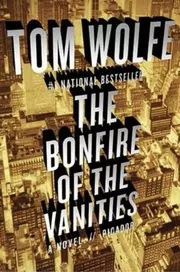
The Bonfire of the Vanities
by Tom Wolfe
1987
In 1980s New York, bond trader Sherman McCoy’s comfortable life unravels after a late‑night wrong turn to the Bronx leads to a scandalous hit‑and‑run. As tabloids, prosecutors, and activists circle, the story lays bare race, class, and greed.
Recommended by
3 people Ev Williams recommended this book
Ev Williams
On the "books read" section of Ev Williams' GoodReads profile.
Ev Williams's recommendation of this book  Christopher Hitchens recommended this book
Christopher Hitchens
"Shortly after I arrived in New York, [this author] claimed to have diagnosed the same syndrome in [this book]." - Christopher Hitchens
Christopher Hitchens's recommendation of this book  Charles Koch recommended this book
Charles Koch
"[One of four books] where I learned how the world works." - Charles Koch
Charles Koch's recommendation of this book
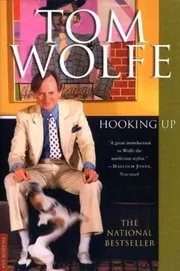
Hooking Up
by Tom Wolfe
1989
This collection mixes essays and a novella on teenage sexuality, Silicon Valley pioneers, brain science, art, and literary grudges. Written across several decades, it captures Wolfe watching technology, media, and status anxiety reshape American life at century’s end.
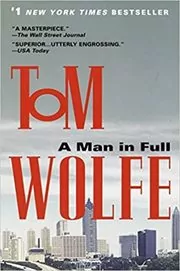
A Man in Full
by Tom Wolfe
1998
Set in booming Atlanta and California’s East Bay, this novel tracks real‑estate titan Charlie Croker’s looming bankruptcy, a young warehouse worker’s crisis, and a racially charged rape allegation, as money, politics, and pride push lives toward very public reckonings.
Recommended by
1 person- Charles Koch recommended this book
Charles Koch
Charles Koch recommended this book on his website.
Charles Koch's recommendation of this book

Ambush at Fort Bragg
by Tom Wolfe
2000
In this media‑driven novella, a television news producer sets out to expose soldiers accused of killing a gay man outside Fort Bragg. His elaborate undercover sting spirals into a tense confrontation over ambition, exploitation, and what counts as truth on camera.
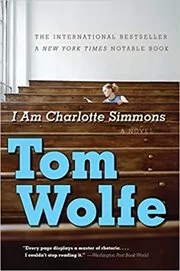
I Am Charlotte Simmons
by Tom Wolfe
2004
At elite Dupont University, brilliant freshman Charlotte Simmons leaves her rural North Carolina town expecting a world of ideas and instead finds a campus ruled by sex, alcohol, and basketball fame. The novel follows her faltering efforts to stay herself.
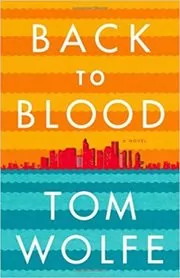
Back to Blood
by Tom Wolfe
2012
Set in contemporary Miami, this sprawling novel follows Cuban‑American cop Nestor Camacho, his status‑conscious ex‑girlfriend, and a swirl of immigrants, socialites, journalists, and hustlers. Their intersecting stories reveal a city where class, ethnicity, and loyalty are always on display.
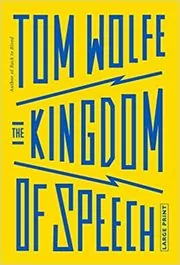
The Kingdom of Speech
by Tom Wolfe
2016
This provocative nonfiction book questions how language evolved and challenges theories linked to Charles Darwin and Noam Chomsky. Wolfe argues that human speech, shaped by culture and imitation, is the key force separating people from other animals.
Where to start with Tom Wolfe
If you’re new to Tom Wolfe’s nonfiction: The Electric Kool-Aid Acid Test → The Kandy-Kolored Tangerine-Flake Streamline Baby → The Pump House Gang
If you want his big social novels: The Bonfire of the Vanities → A Man in Full → I Am Charlotte Simmons → Back to Blood
If you love space history and test pilots: The Right Stuff → The Purple Decades
If you’re here for sharp cultural essays: In Our Time → Radical Chic → Mauve Gloves and Madman, Clutter and Vine → From Bauhaus to Our House
Tom Wolfe collections, short stories, and related book types
Short Stories/Novellas
Short Story Collections
Non-Fiction
Standalone Tom Wolfe books
Author bio
Tom Wolfe was born Thomas Kennerly Wolfe Jr. in 1930 in Richmond, Virginia, where he grew up in the Sherwood Park neighborhood on the city’s North Side. His father worked as an agronomist and editor, his mother as a garden designer, and their house was filled with talk about soil, seasons, and stories. At St. Christopher’s School, an Episcopal boys’ school, he threw fastballs, edited the student newspaper, and was elected student council president.
Baseball was his first big dream. After graduating from Washington and Lee University in 1951, he even tried out as a pitcher for the New York Giants. When that didn’t pan out, he headed to Yale for a PhD in American studies, writing about radical politics while slowly realizing that what he really loved was reporting on the world right in front of him.
In the mid-1950s Wolfe turned down the safer route of academic jobs and went to work in small-city newsrooms instead. He reported for the Springfield Union in Massachusetts and then for The Washington Post, where he covered everything from City Hall to foreign stories in Cuba and picked up awards for both humor and feature writing. On deadline and in cramped offices, he began slipping the tools of fiction—scenes, dialogue, and interior monologue—into straight newspaper pieces.
Everything opened up when he moved to New York in 1962 to write for the New York Herald Tribune and its Sunday magazine. There he found editors who encouraged experiments on the page, and he settled into the white three‑piece suits and high‑collared shirts that became his public armor. The reporting trips got longer, the notebooks thicker, and the prose stranger and more electric.
Those years produced the early books that made his name. The Kandy-Kolored Tangerine-Flake Streamline Baby and The Pump House Gang dove into custom‑car culture, surfers, socialites, and other corners of 1960s America, while The Electric Kool-Aid Acid Test followed Ken Kesey and the Merry Pranksters through the heart of the counterculture. As one of the key figures in what came to be called New Journalism, Wolfe showed that nonfiction could read like a novel without giving up the facts.
In 1979 he turned to the space race with The Right Stuff, his deeply reported account of test pilots and the Mercury Seven astronauts. The book traced the mix of risk, bravado, and domestic strain behind the public heroics and won major literary awards, along with a film adaptation that carried his title into everyday speech.
Then Wolfe did the thing many reporters talk about and almost none attempt: he set out to write big, door‑stopping novels built on years of reporting. The Bonfire of the Vanities skewered Wall Street, city politics, and tabloid media in 1980s New York. A Man in Full, I Am Charlotte Simmons, and Back to Blood pushed the same method into Atlanta boardrooms, elite college campuses, and the tangled ethnic landscape of Miami.
Along the way he also published sharp, slim books of criticism and commentary—The Painted Word, From Bauhaus to Our House, The Kingdom of Speech—arguing with modern art, modern architecture, and modern theories of language in the same high‑octane style he brought to his reporting.
Wolfe spent most of his adult life in New York City with his wife, art director Sheila Berger, and their two children. He wrote on a manual typewriter in long daily shifts, revising heavily in ink, and kept wearing those white suits until his death in 2018. His journalism and novels still draw readers who want to understand how status, ambition, and spectacle shape American life.








Edited by
Software engineer whose passion for tracking book recommendations from podcasts inspired the creation of MRB.
Lead investor at 3one4 Capital whose startup expertise and love for books helped shape MRB and its growth.
Comments
Did we miss something? Have feedback?
Help us improve this page by sharing your thoughts