
14 Best Theoretical Physics Books
The best theoretical physics books, ranked by how many expert sources recommend each one, with notes on accessible introductions, textbooks, and prerequisites.
Our take
Theoretical physics uses mathematical models to explain how the physical world behaves, from motion and fields to quantum systems and the universe. Books about it serve very different purposes. A popular account can introduce a question and its significance, while a textbook teaches the equations, assumptions, and calculations needed to examine that question yourself. Neither replaces the other.
Seven Brief Lessons on Physics and A Brief History of Time suit readers exploring the ideas without a full mathematical course. The Elegant Universe: Superstrings, Hidden Dimensions, and the Quest for the Ultimate Theory focuses on the search for unification, including proposals that remain unconfirmed. To begin doing calculations, consider The Theoretical Minimum, then choose a text that matches your background. Introduction to Electrodynamics is an undergraduate route into fields, while Classical Electrodynamics expects much more preparation. The Feynman volumes offer another perspective on foundations and quantum behavior. Start with your current level of mathematics, and work problems before moving to the more advanced books.
14 books · 8 sources · Last updated
As an Amazon Associate, we earn from qualifying purchases (at no extra cost to you).
How to choose from this list
Skip to the full rankingIf you want a first conceptual introduction: Seven Brief Lessons on Physics → A Brief History of Time
If you're curious about quantum ideas: QED → In Search of Schrodinger's Cat
If you're ready to use mathematics: The Theoretical Minimum → Mechanics
If you're studying electromagnetic fields: Introduction to Electrodynamics → Classical Electrodynamics
If you have the mathematical foundations for quantum theory: Principles of Quantum Mechanics
The 14 books, ranked
Ranked by how many expert sources name each book. Ties go to the book more people recommend.

For curious readers who want a focused explanation of quantum behavior without a formal textbook. Its diagrams and probability-based reasoning offer conceptual depth, though it does not train you to carry out a full technical calculation.
What it's about
Richard Feynman introduces quantum electrodynamics, the theory describing how light and matter interact. Using diagrams, visual reasoning, and everyday language, he explains its central ideas for readers without relying on advanced mathematics.
Also recommended by
1 person Larry Page recommended this book
Larry Page
Larry Page mentioned this book in an Entrepreneur.com article.
Larry Page's recommendation of this book

For readers who want to move from popular physics into actual mathematical reasoning. Its focused path through classical mechanics makes a useful bridge, though working with the equations takes effort beyond simply following the prose.
What it's about
Leonard Susskind and George Hrabovsky introduce classical mechanics and the mathematics needed to study physics. Their primer uses explanations and exercises to build a foundation for further learning, emphasizing the equations behind physical ideas rather than analogy alone.
Also recommended by
1 person Eric Weinstein recommended this book
Eric Weinstein
Eric Weinstein tweet about books that mattered enough to him.
Eric Weinstein's recommendation of this book
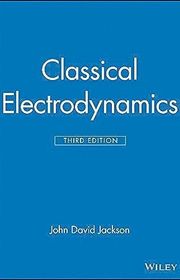
Classical Electrodynamics
For graduate students who need a demanding treatment of electromagnetic theory and its mathematical methods. Its depth makes a substantial reference, though the difficult problems and assumed background make it unsuitable as an introduction.
What it's about
John David Jackson develops advanced electromagnetic theory through mathematical analysis and extensive problems. The text treats electrostatics, boundary-value methods, radiation, relativity, and related topics, connecting classical fields with techniques used in graduate physics and research.

Introduction to Electrodynamics
For undergraduates ready to study electric and magnetic fields with calculus and vector methods. Its explanatory style provides a more approachable entry than Jackson, though the exercises still require substantial mathematical work.
What it's about
Griffiths introduces electromagnetic theory for undergraduate physics students, connecting mathematical methods with physical reasoning. Worked examples and exercises develop the subject while applications show its relevance to antennas, transmission lines, plasmas and optics.
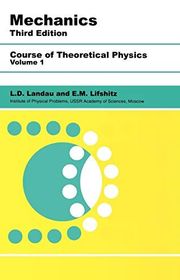
Mechanics: Volume 1
For readers who already know introductory mechanics and want a concise theoretical treatment. Its emphasis on general principles gives the subject a unified structure, though the compressed derivations require mathematical fluency and careful reconstruction.
What it's about
Landau and Lifshitz develop classical mechanics from the principle of least action. Their compact treatment covers conservation laws, motion, oscillations, rigid bodies, canonical equations, and adiabatic invariants, connecting physical principles with mathematical methods for analyzing mechanical systems.
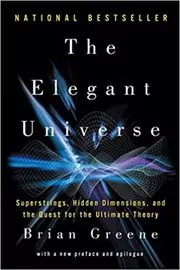
The Elegant Universe
Superstrings, Hidden Dimensions, and the Quest for the Ultimate Theory
For general readers who want to understand the motivation behind string theory and unification. Its analogies connect difficult ideas across physics, though the proposed framework should be read as a research program rather than established experimental fact.
What it's about
The Elegant Universe introduces string theory to general readers, explaining how tiny vibrating strings and extra dimensions might unify gravity with quantum physics. Greene uses everyday analogies and a historical tour of physics to make deep ideas feel approachable.

A Brief History of Time
For general readers curious about black holes, cosmic origins, and time. Its sustained explanation gives more context than a collection of short lessons, though some cosmological discussions reflect the period in which it was written.
What it's about
Stephen Hawking introduces questions about the universe's beginning, its possible fate, and the nature of time. He explains black holes, relativity, and quantum ideas for general readers, connecting familiar physical concepts with the puzzles of cosmology.
Also recommended by
2 people Richard Branson recommended this book
Richard Branson
Richard Branson recommended this book on his "70 must-read books" blog post.
Richard Branson's recommendation of this book  James Clear recommended this book
James Clear
"[One of] the 10 best nonfiction books of all-time." - James Clear
James Clear's recommendation of this book

Physics of the Impossible
A Scientific Exploration into the World of Phasers, Force Fields, Teleportation, and Time Travel
For readers whose curiosity starts with technologies imagined in science fiction. Its possibility-based approach makes physical limits engaging, though the speculative outlook offers less systematic grounding than a course in theoretical physics.
What it's about
Michio Kaku examines technologies familiar from science fiction, including teleportation, force fields, time machines, and interstellar travel. Using physical laws as his guide, he considers which possibilities might become achievable and which face more fundamental obstacles.
Also recommended by
1 person Mark Zuckerberg recommended this book
Mark Zuckerberg
On the "books read" section of Mark Zuckerberg's Facebook profile.
Mark Zuckerberg's recommendation of this book

Principles of Quantum Mechanics
For students who want the mathematical foundations of quantum mechanics developed alongside its physical ideas. Its opening groundwork supports a systematic course, though the pace and length require more commitment than a conceptual introduction.
What it's about
R. Shankar develops quantum mechanics from its mathematical foundations and physical postulates. Intended for advanced students, the textbook reviews classical mechanics and examines quantum theory through detailed derivations, exercises, and treatments of methods including path integrals.
Also recommended by
1 person- Eric Weinstein recommended this book
Eric Weinstein
Eric Weinstein tweet about books that mattered enough to him.
Eric Weinstein's recommendation of this book

Astrophysics for People in a Hurry
For readers who want short introductions to the universe without committing to a textbook. Its brief chapters make a manageable first encounter, though they cannot develop the mathematics needed to work with physical theories.
What it's about
Neil deGrasse Tyson introduces central ideas in astrophysics through short chapters intended for busy readers. Topics range from the Big Bang and quantum mechanics to black holes, planets and the search for life elsewhere in the universe.
Also recommended by
2 people Vinod Khosla recommended this book
Vinod Khosla
"Great, very quick overview of astrophysics." - Vinod Khosla
Vinod Khosla's recommendation of this book  Richard Dawkins recommended this book
Richard Dawkins
"Lovely book. Last chapter worthy of Carl Sagan himself." - Richard Dawkins
Richard Dawkins's recommendation of this book

Seven Brief Lessons on Physics
For readers who want a brief, reflective introduction to modern physics before choosing a deeper subject. Its spare explanations emphasize ideas and perspective, though the short format leaves little room for detailed argument or calculation.
What it's about
Carlo Rovelli introduces modern physics through seven short explorations of relativity, quantum mechanics, particles, cosmology, and related questions. He connects the scientific picture of the universe with the limits of human knowledge and our place within it.
Also recommended by
1 person Naval Ravikant recommended this book
Naval Ravikant
"Terrific." - Naval Ravikant
Naval Ravikant's recommendation of this book

For readers who want quantum ideas explained through the development of the subject. Its historical narrative provides more continuity than a short overview, though it offers neither a mathematical course nor a survey of the latest research.
What it's about
John Gribbin traces quantum physics through its major discoveries and the scientists who made them. He explains phenomena involving atoms and radiation while exploring the unsettling questions quantum mechanics raises about the nature of reality.

Mainly Mechanics, Radiation, and Heat
The Feynman Lectures on Physics, Book 1
For readers with calculus who want to revisit foundational physics through unusually searching explanations. Its connections between topics reward close reading, though it is more demanding as a first textbook than its conversational style suggests.
What it's about
The first volume introduces physics through mechanics, relativity, radiation, and thermal phenomena. Feynman's lectures connect foundational laws with examples from motion, optics, statistical mechanics, and thermodynamics, emphasizing how physical ideas explain the behavior of the natural world.

For readers ready to reason with probability amplitudes and unfamiliar quantum principles. Its attention to simple systems builds physical insight, though it works best alongside mathematical preparation and a more conventional problem-based course.
What it's about
The third volume explores quantum behavior through probability amplitudes, interference, and atomic systems. Topics include the double-slit experiment, spin, two-state systems, and hydrogen, using these examples to develop the mathematical framework and unfamiliar physical principles of quantum mechanics.
Sources
- 1
Reading List for Physics & Mathematics Majors: R. L. Herman, UNCW
people.uncw.edu
- 2
A Physics Booklist
math.ucr.edu
- 3
Theoretical Physics Books
goodreads.com
- 4
physics book recommendations
reddit.com
- 5
Physics: Susan Rigetti
susanrigetti.com
- 6
what books are best for self teaching theoretical physics?
reddit.com
- 7
How to become a GOOD Theoretical Physicist
goodtheorist.science
- 8
The Best Books on String Theory - Five Books Expert Recommendations
fivebooks.com





Edited by
Software engineer whose passion for tracking book recommendations from podcasts inspired the creation of MRB.
Lead investor at 3one4 Capital whose startup expertise and love for books helped shape MRB and its growth.
Comments
Spotted a missing book, a wrong order or a mistake? Tell us and we'll fix this page.
We're a reading guide, not the author or publisher, so we can't send books or pass on messages.