
16 Best Survival Story Books
The best survival story books, ranked by how many expert sources recommend each, with notes on firsthand accounts, group ordeals, and where readers should start.
Our take
Survival stories turn attention toward decisions made when familiar support disappears. Hunger, exposure, injury, isolation, and uncertainty can matter as much as the original accident. Some books follow an individual closely, while others reconstruct an expedition or examine the institutions and relationships surrounding a disaster. These accounts offer compelling reading, but they are narratives of particular events rather than substitutes for practical training.
Touching the Void and Between a Rock and a Hard Place bring a participant's perspective to mountain and canyon emergencies. Alive and Endurance place cooperation within a group at the center, while Adrift and 438 Days focus on prolonged isolation at sea. Into Thin Air and After The Wind offer different viewpoints on the same Everest disaster. Deep Survival compares cases to explore judgment, and Unbroken follows the lasting consequences across a larger life. Start with Endurance for a group account or Touching the Void for a concentrated personal ordeal.
16 books · 9 sources · Last updated
As an Amazon Associate, we earn from qualifying purchases (at no extra cost to you).
How to choose from this list
Skip to the full rankingIf you want group survival: Endurance → Alive
If you prefer a close personal account: Touching the Void → Between a Rock and a Hard Place
If you want survival at sea: Adrift → 438 Days
If you want contrasting Everest perspectives: Into Thin Air → After The Wind
If you want to explore judgment under pressure: Deep Survival
If you want a wider wartime biography: Unbroken
The 16 books, ranked
Ranked by how many expert sources name each book. Ties go to the book more people recommend.
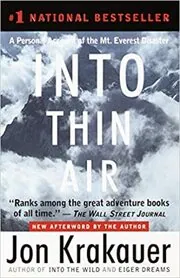
For readers interested in commercial mountaineering and decisions made under extreme altitude. The participant-reporter perspective joins personal experience with scrutiny of the expedition, though interpretations remain contested and this account benefits from comparison with other climbers' versions.
What it's about
Krakauer's firsthand account of the 1996 Mount Everest disaster follows a commercial expedition caught in a deadly storm. It examines the climbers' decisions, the brutal effects of altitude, and the guilt carried by those who survived.
Also recommended by
2 people Richard Branson recommended this book
Richard Branson
Richard Branson recommended this book on his "70 must-read books" blog post.
Richard Branson's recommendation of this book  James Clear recommended this book
James Clear
"[One of] the 10 best nonfiction books of all-time." - James Clear
James Clear's recommendation of this book
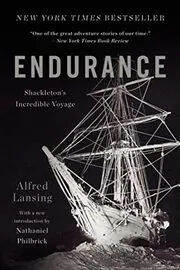
For readers who want group survival shaped by leadership, cooperation, and prolonged uncertainty. Its reconstruction draws together a whole expedition's experience, though the many crew members and extended logistical struggle offer a different pace from a lone-survivor memoir.
What it's about
Drawing on accounts from Shackleton's crew, Alfred Lansing chronicles an Antarctic expedition brought to disaster by moving pack ice. The stranded men confront exposure and isolation as their leader attempts a perilous journey to obtain rescue.
Also recommended by
2 people Andrew Klavan recommended this book
Andrew Klavan
"A fun fictionalization of the genre." - Andrew Klavan
Andrew Klavan's recommendation of this book  Barry Ritholtz recommended this book
Barry Ritholtz
"Just a fantastic read, all the more remarkable because it is a true story." - Barry Ritholtz
Barry Ritholtz's recommendation of this book
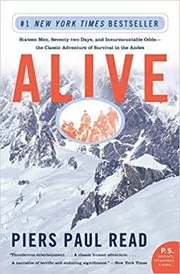
For readers interested in group survival, cooperation, and morally difficult choices. Its reconstruction gives several perspectives weight, though the circumstances involve graphic suffering and the outside narrator provides less immediate intimacy than a participant's own memoir.
What it's about
Piers Paul Read reconstructs the ordeal of a Uruguayan rugby team and other passengers after their plane crashes in the Andes. Stranded in snow and extreme cold, the survivors face starvation and decisions that test their relationships, beliefs, and determination.
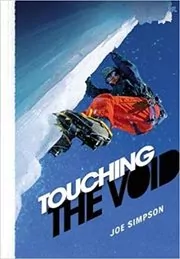
Touching the Void
For readers who want an intimate account of mountaineering judgment and the obligations between partners. Its concentrated first-person perspective makes decisions immediate, though the physical suffering is intense and climbing details require attention from newcomers.
What it's about
Joe Simpson recounts climbing Siula Grande in the Peruvian Andes with Simon Yates and the disastrous descent that followed. A broken leg turns their expedition into a struggle for survival, testing endurance, judgment, and the bonds between climbing partners.
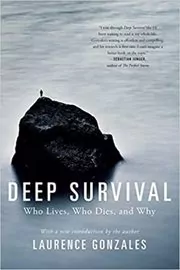
For readers more interested in judgment under pressure than in following one continuous ordeal. Its comparisons invite reflection on behavior and preparation, though the movement between stories and explanations can interrupt the immersion of a straightforward adventure narrative.
What it's about
Laurence Gonzales combines survival narratives with science to examine how people respond to dangerous situations. He explores stress, risk assessment, and decision-making under pressure, considering why some responses support survival while others can worsen a crisis.
Also recommended by
5 people Laird Hamilton recommended this book
Laird Hamilton
"An incredible book." - Laird Hamilton
Laird Hamilton's recommendation of this book  Kelly Starrett recommended this book
Kelly Starrett
Kelly Starrett recommended this book in the "Tools of Titans" book.
Kelly Starrett's recommendation of this book  Joel McHale recommended this book
Joel McHale
"I read this book 13 years ago, and I still think about it almost every week." - Joel McHale
Joel McHale's recommendation of this book  Michael Mauboussin recommended this book
Michael Mauboussin
"An awesome book - and especially relevant in these times." - Michael Mauboussin
Michael Mauboussin's recommendation of this book  Patrick O'Shaughnessy recommended this book
Patrick O'Shaughnessy
"Incredible book." - Patrick O'Shaughnessy
Patrick O'Shaughnessy's recommendation of this book
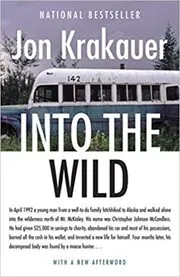
Into the Wild
For readers interested in idealism, independence, and the motives behind taking wilderness risks. Its investigative approach gives a life context beyond the final journey, though it is an inquiry into a fatal venture rather than a successful-survival memoir.
What it's about
Jon Krakauer retraces the path of Christopher McCandless, who gave up his savings, adopted the name Alexander Supertramp, and headed west. It follows his search for freedom, the people he met, and the choices that took him into Alaska's backcountry.
Also recommended by
1 person Gretchen Rubin recommended this book
Gretchen Rubin
Gretchen Rubin mentioned this book on "The Tim Ferriss Show" podcast.
Gretchen Rubin's recommendation of this book
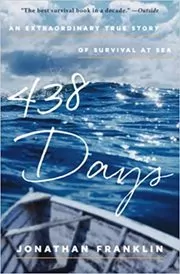
For readers who want a detailed account of prolonged isolation at sea. The attention to daily improvisation and psychological endurance distinguishes it from a brief rescue drama, though its reconstruction depends heavily on survivor testimony.
What it's about
Jonathan Franklin recounts fisherman Salvador Alvarenga's prolonged ordeal after a storm carried his boat away from Mexico into the Pacific. Interviews reconstruct the improvisation, physical hardships, and psychological struggle involved in remaining alive during more than a year at sea.
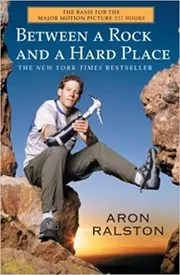
For readers who want to examine self-reliance and decision-making during an isolated emergency. Its close first-person account gives practical choices unusual weight, though graphic injury descriptions and extended reflections on earlier adventures may interrupt the central tension.
What it's about
Aron Ralston recounts a hike in Utah's remote Blue John Canyon that becomes a struggle for survival when a boulder traps his arm. Reflections on earlier outdoor adventures accompany his account of confinement, limited supplies, and the choices before him.
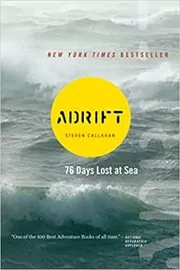
For readers interested in the small technical decisions behind survival alone at sea. Its firsthand attention to equipment and daily routines provides practical texture, though nautical detail and repeated setbacks make the ordeal deliberately narrow and repetitive.
What it's about
Steven Callahan recounts being stranded alone in an inflatable life raft after his yacht sinks during an Atlantic crossing. His account of 76 days at sea follows the physical and psychological demands of enduring hunger, dehydration, storms, and isolation.
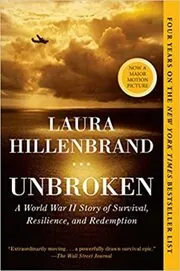
For readers who want a survival ordeal placed within a full life and wartime history. Its biographical scope connects endurance with lasting psychological consequences, though captivity, abuse, and the extended aftermath make it broader and harsher than a wilderness adventure.
What it's about
Laura Hillenbrand follows Olympic runner Louis Zamperini from a rough California boyhood to a plane crash, 47 days adrift in the Pacific, and brutal POW camps. It is a tense, deeply human survival story about endurance, trauma, and forgiveness.
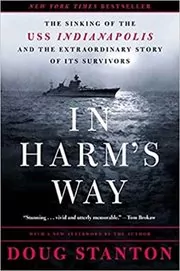
In Harm's Way
The Sinking of the U.S.S. Indianapolis and the Extraordinary Story of Its Survivors
For readers who want collective survival connected to naval history and institutional responsibility. Its reconstruction follows the disaster beyond the men in the water, though the large cast and military context make it less intimate than a single survivor's memoir.
What it's about
Doug Stanton reconstructs the sinking of the USS Indianapolis in 1945 and the ordeal of sailors left adrift in the Pacific. Drawing on survivors' accounts, he explores their struggle with thirst, exposure, and sharks, alongside the disaster's naval aftermath.

For readers who want an ocean expedition chosen deliberately rather than imposed by an accident. The crew's practical ingenuity gives the journey momentum, though the voyage itself does not establish the author's broader theory about Polynesian settlement.
What it's about
Thor Heyerdahl recounts crossing the Pacific on a balsa-wood raft with five companions. The expedition was intended to test whether ancient South Americans could have reached Polynesia by similar means, combining the crew's ocean experiences with the reasoning behind the voyage.
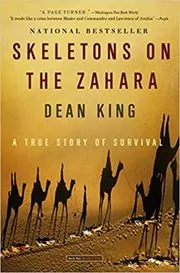
For readers who want survival embedded in maritime history and enslavement. Its attention to historical context broadens the ordeal beyond individual endurance, though the reconstructed narrative and unfamiliar geography make it denser than a modern first-person memoir.
What it's about
Dean King reconstructs the experiences of twelve American sailors shipwrecked off Africa in 1815. Captured and enslaved by desert nomads, Captain James Riley and his crew face dehydration, hunger, and a journey through the Sahara in search of a chance of freedom.
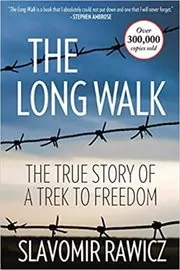
For readers interested in an influential escape narrative and the controversy around its factual basis. The scale makes it compelling adventure reading, though documentary challenges to the author's account mean it should not be treated as verified personal history.
What it's about
Slavomir Rawicz tells of escaping a Soviet labor camp with six fellow prisoners and attempting an overland journey to British India. The narrative follows their passage through Siberia, the Gobi Desert, Tibet, and the Himalayas amid hunger and exhaustion.
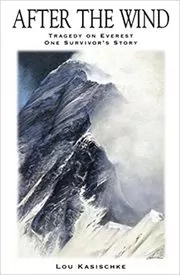
For readers comparing perspectives on the 1996 Everest disaster. Its attention to turnaround decisions and personal obligations adds a specific survivor's viewpoint, though it is a partial account best read alongside other participants' narratives.
What it's about
Lou Kasischke revisits the disastrous 1996 Everest expedition led by Rob Hall from his perspective as a surviving climber. His account examines decisions near the summit, the pressures of the expedition, and the personal resolve connected to his wife, Sandy.
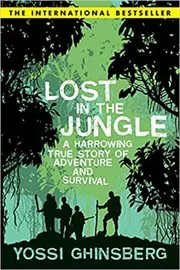
For readers drawn to rainforest travel and the consequences of trust within a small group. The personal viewpoint gives fear and isolation immediacy, though its subjective account leaves less room for the perspectives of other participants.
What it's about
Yossi Ghinsberg recounts an expedition into Bolivia's Amazon rainforest with three fellow travelers. As their planned adventure deteriorates and the group splits, the journey becomes a struggle against the jungle's dangers, testing friendship, judgment, and his ability to endure.
Sources
- 1
Books about survival?
reddit.com
- 2
Need SURVIVAL / UNIMAGINABLE MEMOIRS recs: (just finished 1 on a volcano eruption survivor!)
reddit.com
- 3
25 Best Survival Stories Books Based on True Stories
paulinaontheroad.com
- 4
14 Riveting Survival Books To Read
theuncorkedlibrarian.com
- 5
Best Survival Stories
goodreads.com
- 6
Adventure and Survival Books
berlinpeck.org
- 7
Survival Stories
thenextpage.co.uk
- 8
5 Books That Tell Edge-of-Your-Seat True Survival Tales
history.com
- 9
The Best Survival Stories Based On True Events
techwriteredc.com

Edited by
Software engineer whose passion for tracking book recommendations from podcasts inspired the creation of MRB.
Lead investor at 3one4 Capital whose startup expertise and love for books helped shape MRB and its growth.
Comments
Spotted a missing book, a wrong order or a mistake? Tell us and we'll fix this page.
We're a reading guide, not the author or publisher, so we can't send books or pass on messages.