
24 Best Non-Fiction Adventure Books
The best nonfiction adventure books, ranked by how many expert sources recommend each one, with notes to help you choose a journey or survival story.
Our take
Nonfiction adventure books put you alongside people facing rough seas, remote landscapes, and decisions with consequences they cannot easily undo. Some writers lived through the events they describe. Others reconstruct expeditions from diaries, interviews, and historical records. That difference matters: a survivor’s close view can be powerful but partial, while a reported account can show more of the surrounding world without knowing every private moment.
The mountain books range from the concentrated ordeal of Touching the Void to the crowded expedition in Into Thin Air. At sea, Adrift follows solitary survival, while Endurance depends on a crew’s cooperation. The Lost City of Z blends exploration with historical mystery, and Wild makes a long walk part of an emotional reckoning. These are stories to read for experience and reflection, rather than instruction manuals. Start with Endurance for a group survival account, or A Walk in the Woods if you would prefer humor to disaster.
24 books · 10 sources · Last updated
As an Amazon Associate, we earn from qualifying purchases (at no extra cost to you).
How to choose from this list
Skip to the full rankingIf you want a first survival story: Endurance
If you want mountaineering under pressure: Into Thin Air → Touching the Void
If you want solitary survival at sea: Adrift
If you want an exploration mystery: The Lost City of Z
If you want hiking and personal reflection: Wild
If you want a lighter outdoor read: A Walk in the Woods
The 24 books, ranked
Ranked by how many expert sources name each book. Ties go to the book more people recommend.

For readers who want a close account of how ambition and judgment interact on a crowded mountain. Krakauer combines personal involvement with reporting, though his perspective is one participant’s account of events that remain disputed.
What it's about
Krakauer's firsthand account of the 1996 Mount Everest disaster follows a commercial expedition caught in a deadly storm. It examines the climbers' decisions, the brutal effects of altitude, and the guilt carried by those who survived.
Also recommended by
2 people Richard Branson recommended this book
Richard Branson
Richard Branson recommended this book on his "70 must-read books" blog post.
Richard Branson's recommendation of this book  James Clear recommended this book
James Clear
"[One of] the 10 best nonfiction books of all-time." - James Clear
James Clear's recommendation of this book

Into the Wild
For readers interested in the motives behind rejecting ordinary life. Its interviews and reconstruction complicate easy judgments about McCandless, though the author’s personal parallels and incomplete evidence leave room for disagreement about his interpretation.
What it's about
Jon Krakauer retraces the path of Christopher McCandless, who gave up his savings, adopted the name Alexander Supertramp, and headed west. It follows his search for freedom, the people he met, and the choices that took him into Alaska's backcountry.
Also recommended by
1 person Gretchen Rubin recommended this book
Gretchen Rubin
Gretchen Rubin mentioned this book on "The Tim Ferriss Show" podcast.
Gretchen Rubin's recommendation of this book

For readers who enjoy historical investigation as much as wilderness travel. The search for an explorer and his vanished city gives it a mystery structure, though it cannot provide a complete answer to Fawcett’s disappearance.
What it's about
David Grann follows the trail of British explorer Percy Fawcett, who vanished in the Amazon in 1925 while searching for an ancient city. It is part biography, part historical mystery, and part firsthand journey into the jungle that consumed him.
Also recommended by
1 person Saagar Enjeti recommended this book
Saagar Enjeti
"The RIVETING tale of Percy Fawcett’s obsession with the Amazon." - Saagar Enjeti
Saagar Enjeti's recommendation of this book

Touching the Void
For readers who want a concentrated survival memoir with a difficult question of responsibility at its center. Its close physical detail makes the ordeal immediate, though climbing terminology and descriptions of injury can be demanding.
What it's about
Joe Simpson recounts climbing Siula Grande in the Peruvian Andes with Simon Yates and the disastrous descent that followed. A broken leg turns their expedition into a struggle for survival, testing endurance, judgment, and the bonds between climbing partners.

For readers who want group survival and leadership under sustained pressure. Its reconstruction keeps the crew’s shared predicament in focus, though the emphasis on determination gives less space to questioning the expedition’s original ambitions.
What it's about
Alfred Lansing recounts the Antarctic expedition that left Shackleton and his crew stranded when their ship was crushed by ice. Their survival depends on endurance, leadership, and a dangerous voyage across the Southern Ocean in search of help.
Also recommended by
10 people Ray Dalio recommended this book
Ray Dalio
Ray Dalio can be seen reading this book on the article's main image.
Ray Dalio's recommendation of this book  Sam Altman recommended this book
Sam Altman
One of Sam Altman's answers to "What are some of the best books you recommend for a young startup founder?"
Sam Altman's recommendation of this book  Bryan Johnson recommended this book
Bryan Johnson
"How I want to behave in life." - Bryan Johnson
Bryan Johnson's recommendation of this book  Ryan Holiday recommended this book
Ryan Holiday
"This book (and his life) were living proof of his family motto: 'Fortitudine vincimus' (By endurance we conquer)." - Ryan Holiday
Ryan Holiday's recommendation of this book  Scott Belsky recommended this book
Scott Belsky
"Just a phenomenal story." - Scott Belsky
Scott Belsky's recommendation of this book  Max Levchin recommended this book
Max Levchin
Max Levchin recommended this book on LinkedIn.
Max Levchin's recommendation of this book +4
More recommendations
- Fred Wilson
"An insipring story!" - Fred Wilson
- Jason Fried
"Amazing story of perseverance and leadership against all odds. Riveting book." - Jason Fried
- Dominic D'Agostino
"Great book!" - Dominic D'Agostino
- Jordan Peterson
"Read [this] book." - Jordan Peterson
- Fred Wilson
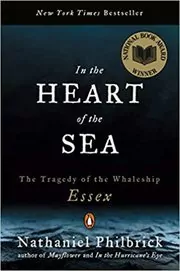
For readers who want maritime history woven into an ordeal at sea. The whaling industry and Nantucket community give the disaster context, though the account of starvation and cannibalism makes it an especially difficult read.
What it's about
This National Book Award winner tells the true story of the whaleship Essex, sunk by a furious sperm whale in 1820, and follows the stranded crew's three-month struggle in open boats, connecting their ordeal to the world that produced Moby-Dick.
Also recommended by
1 person- Richard Branson recommended this book
Richard Branson
Richard Branson recommended this book on his "70 must-read books" blog post.
Richard Branson's recommendation of this book

For readers who want an ocean voyage shaped by an unusual experiment. The improvised raft and daily life aboard distinguish it from disaster accounts, though a successful crossing does not establish the migration theory behind the expedition.
What it's about
Thor Heyerdahl recounts crossing the Pacific on a balsa-wood raft with five companions. The expedition was intended to test whether ancient South Americans could have reached Polynesia by similar means, combining the crew's ocean experiences with the reasoning behind the voyage.

For readers who want the practical and psychological detail of surviving alone at sea. Callahan’s direct experience makes small tasks consequential, though the repeated struggle for food, water, and repairs can feel relentless.
What it's about
Steven Callahan recounts being stranded alone in an inflatable life raft after his yacht sinks during an Atlantic crossing. His account of 76 days at sea follows the physical and psychological demands of enduring hunger, dehydration, storms, and isolation.
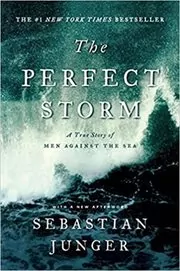
For readers interested in the work, weather, and rescue efforts surrounding a maritime disaster. It builds a wider social picture than a lone survivor’s memoir, though events aboard the lost vessel necessarily involve reconstruction and uncertainty.
What it's about
Junger reconstructs the 1991 storm that swallowed the Andrea Gail and the six men aboard her. He follows the fishermen, their families, and the rescue crews, building a tense account of work, weather, and disaster at sea.

The Worst Journey in the World
For readers willing to spend time inside an early scientific expedition. Its firsthand attention to companions, work, and suffering gives the Antarctic journey depth, though the long, detailed account moves slowly by modern adventure standards.
What it's about
Apsley Cherry-Garrard recounts his experiences on Robert Falcon Scott's Antarctic expedition. His account documents scientific exploration, punishing weather, and the demands of life in the polar wilderness, while reflecting on the courage and suffering of his companions.

Wind, Sand and Stars
For readers who prefer reflective travel writing to a continuous disaster narrative. Its aviation experiences open into questions of friendship and purpose, though the lyrical, episodic structure offers less straightforward momentum than the survival memoirs.
What it's about
Antoine de Saint-Exupéry draws on pioneering airmail flights across the Sahara and Andes in this autobiographical reflection. Adventures and a desert crash become occasions to examine danger, companionship, and the meaning of human experience.
Also recommended by
3 people Naval Ravikant recommended this book
Naval Ravikant
"One of my all time favorite books. I quote it all the time." - Naval Ravikant
Naval Ravikant's recommendation of this book  Edward Norton recommended this book
Edward Norton
"A great [book]." - Edward Norton
Edward Norton's recommendation of this book  Patrick Collison recommended this book
Patrick Collison
Patrick Collison labeled this book "substantially above average."
Patrick Collison's recommendation of this book

For readers who want humor, companionship, and background on the Appalachian Trail. The mishaps make this an approachable outdoor book, though its digressions and partial hike differ from a continuous account of completing the trail.
What it's about
Bryson attempts to hike the Appalachian Trail with his out-of-shape and recovering alcoholic friend, Stephen Katz. Facing bears, bugs, and difficult terrain, the duo delivers a hilarious account of friendship and the American wilderness.
Also recommended by
1 person Tim Ferriss recommended this book
Tim Ferriss
"A great way to invigorate." - Tim Ferriss
Tim Ferriss's recommendation of this book

For readers who want collective survival and the moral decisions extreme hunger creates. The group perspective sets it apart from solitary ordeals, though its direct treatment of death and cannibalism can be hard to absorb.
What it's about
Piers Paul Read reconstructs the ordeal of a Uruguayan rugby team and other passengers after their plane crashes in the Andes. Stranded in snow and extreme cold, the survivors face starvation and decisions that test their relationships, beliefs, and determination.

For readers who want a personal reckoning alongside a long hike. Grief and memory give the physical journey its emotional weight, though those reflections occupy substantial space if you mainly want trail description or outdoor technique.
What it's about
After her mother's death and the collapse of her marriage, Cheryl Strayed impulsively sets out to hike the Pacific Crest Trail alone. With little preparation, she confronts the physical demands of the journey alongside the losses she carries.
Also recommended by
5 people Emma Watson recommended this book
Emma Watson
"I have devoured [this book]." - Emma Watson
Emma Watson's recommendation of this book - Tim Ferriss recommended this book
Tim Ferriss
"One of my favorites." - Tim Ferriss
Tim Ferriss's recommendation of this book  Oprah Winfrey recommended this book
Oprah Winfrey
"About the difference between deciding to do something and really having to do it." - Oprah Winfrey
Oprah Winfrey's recommendation of this book  Liz Lambert recommended this book
Liz Lambert
Liz Lambert mentioned this book on "The Tim Ferriss Show" podcast.
Liz Lambert's recommendation of this book  Shane Parrish recommended this book
Shane Parrish
"Ran me through the range of emotions from happy to crying." - Shane Parrish
Shane Parrish's recommendation of this book

For readers who want exploration tied to a public figure’s private ambitions. Its combination of Roosevelt’s biography and the expedition’s practical failures gives the journey context, though natural history and background sometimes slow the river narrative.
What it's about
Following his election defeat, Theodore Roosevelt joins an expedition down an unmapped Amazon tributary with his son Kermit and explorer Cândido Rondon. Candice Millard chronicles the journey's dangerous terrain, failing supplies, illness, and mounting tensions among the men.
Also recommended by
3 people- Ryan Holiday recommended this book
Ryan Holiday
"I thought I knew about Theodore Roosevelt." - Ryan Holiday
Ryan Holiday's recommendation of this book  Patrick O'Shaughnessy recommended this book
Patrick O'Shaughnessy
"[This book] reads more like Indiana Jones that non-fiction." - Patrick O'Shaughnessy
Patrick O'Shaughnessy's recommendation of this book - Saagar Enjeti recommended this book
Saagar Enjeti
"Our own former President Theodore Roosevelt’s journey down [the Amazon] river." - Saagar Enjeti
Saagar Enjeti's recommendation of this book

For readers who want a first person account of a crisis narrowed to one trapped body. Its reflections connect the emergency to a wider outdoor life, though the graphic injury and interruptions to the immediate ordeal may unsettle readers.
What it's about
Aron Ralston recounts a hike in Utah's remote Blue John Canyon that becomes a struggle for survival when a boulder traps his arm. Reflections on earlier outdoor adventures accompany his account of confinement, limited supplies, and the choices before him.

For readers who want jungle survival told from inside a deteriorating journey. Its attention to trust and isolation gives the setting a human tension, though the intensely personal viewpoint leaves less room for the companions’ perspectives.
What it's about
Yossi Ghinsberg recounts an expedition into Bolivia's Amazon rainforest with three fellow travelers. As their planned adventure deteriorates and the group splits, the journey becomes a struggle against the jungle's dangers, testing friendship, judgment, and his ability to endure.

For readers who want a historical survival story beyond mountains and polar ice. Enslavement and desert travel bring different pressures into view, though the suffering and historical accounts’ cultural assumptions make it a difficult narrative.
What it's about
Dean King reconstructs the experiences of twelve American sailors shipwrecked off Africa in 1815. Captured and enslaved by desert nomads, Captain James Riley and his crew face dehydration, hunger, and a journey through the Sahara in search of a chance of freedom.

For readers more interested in why people survive than in following one expedition. It connects several emergencies through psychology and decision making, though its broad explanations offer interpretation rather than a reliable formula for surviving danger.
What it's about
Laurence Gonzales combines survival narratives with science to examine how people respond to dangerous situations. He explores stress, risk assessment, and decision-making under pressure, considering why some responses support survival while others can worsen a crisis.
Also recommended by
5 people Laird Hamilton recommended this book
Laird Hamilton
"An incredible book." - Laird Hamilton
Laird Hamilton's recommendation of this book  Kelly Starrett recommended this book
Kelly Starrett
Kelly Starrett recommended this book in the "Tools of Titans" book.
Kelly Starrett's recommendation of this book  Joel McHale recommended this book
Joel McHale
"I read this book 13 years ago, and I still think about it almost every week." - Joel McHale
Joel McHale's recommendation of this book  Michael Mauboussin recommended this book
Michael Mauboussin
"An awesome book - and especially relevant in these times." - Michael Mauboussin
Michael Mauboussin's recommendation of this book - Patrick O'Shaughnessy recommended this book
Patrick O'Shaughnessy
"Incredible book." - Patrick O'Shaughnessy
Patrick O'Shaughnessy's recommendation of this book

K2, The Savage Mountain
The Classic True Story Of Disaster And Survival On The World's Second-Highest Mountain
For readers who value responsibility to climbing partners more than a successful summit. The expedition’s retreat makes teamwork central, though the older mountaineering style and technical detail require patience from readers unfamiliar with high altitude climbing.
What it's about
Charles Houston and Robert Bates recount the 1953 American expedition to K2. Severe storms and illness turn the attempt into a struggle to get the team down the mountain, revealing the pressures of high-altitude climbing and the importance of mutual responsibility.

The Wager
For readers who want survival history with conflicting testimony and a question of justice. Its competing accounts make the aftermath as important as the shipwreck, though the naval background and large cast take time to establish.
What it's about
An 18th-century British warship wrecks off Patagonia, leaving starving survivors to fight over leadership, loyalty, and the truth of what happened. Grann rebuilds the disaster from firsthand accounts, then follows the scandal into a high-stakes court martial.

For readers interested in expedition leadership and women’s place in mountaineering. The team’s organization and relationships broaden the climbing story, though internal tensions and the expedition’s losses make it more complicated than a celebratory summit account.
What it's about
Arlene Blum recounts leading the 1978 American Women's Himalayan Expedition to Annapurna. Logistics, difficult climbing, storms, avalanches, and tensions within the team form an account of ambition and cooperation, examining the human demands of attempting a major Himalayan peak.

Seven Years in Tibet
For readers who want an arduous journey that develops into years of life in another society. Its sustained attention to Lhasa distinguishes it from shorter expeditions, though this remains one outsider’s historical perspective on Tibet.
What it's about
Heinrich Harrer recounts his journey into Tibet and the years he spent living there. Descriptions of the difficult trek and daily life in Lhasa lead into his encounters with the young Dalai Lama, presenting his perspective on Tibet before Chinese Communist rule.

For readers who want a solitary journey attentive to preparation, animals, and the people met along the way. Its reflective desert travel differs from a single emergency, though the pace is slower than the disaster narratives.
What it's about
Robyn Davidson recounts a journey across 1,700 miles of Australian desert with four camels and a dog. Her memoir follows the preparations and demands of traveling toward the sea, recording the experience of confronting an unfamiliar landscape largely on her own.
Sources
- 1
21 Best Non-Fiction Adventure Books to Read
territorysupply.com
- 2
22 of the Best Adventure Nonfiction Books Ever Written
foxintheforest.net
- 3
14 Riveting Survival Books To Read
theuncorkedlibrarian.com
- 4
50 Best Non-fiction Adventure Books
artofmanliness.com
- 5
22 Best Adventure Books (2026): True Stories of Survival, Exploration, Mountains & the Sea
joinhikes.com
- 6
100 Best Adventure Books of All Time
reedsy.com
- 7
50 Best Non-Fiction Adventure Books: The Essential Man's Library
goodreads.com
- 8
18 Best Nonfiction Adventure Books to Read in 2026
nonfictioned.com
- 9
good non-fiction books about adventure?
reddit.com
- 10
The best non-fiction adventure books
fivebooks.com








Edited by
Software engineer whose passion for tracking book recommendations from podcasts inspired the creation of MRB.
Lead investor at 3one4 Capital whose startup expertise and love for books helped shape MRB and its growth.
Comments
Spotted a missing book, a wrong order or a mistake? Tell us and we'll fix this page.
We're a reading guide, not the author or publisher, so we can't send books or pass on messages.