
12 Best Software Testing Books
The best software testing books, ranked by how many expert sources recommend each one, with notes on test design, agile teams, automation, and where to start.
Our take
Software testing involves choosing what to investigate, designing checks that reveal useful information, and helping a team respond to what it learns. These books address different parts of that work: beginner practice, systematic test design, agile collaboration, and the construction and maintenance of automated tests. A useful reading path depends on whether you are testing a product, writing code, or coordinating a team.
Ron Patton’s Software Testing gives newcomers an accessible professional overview. A Practitioner's Guide to Software Test Design focuses on choosing cases, while Agile Testing makes collaboration central. Developers can begin with Test-Driven Development: By Example, then use Unit Testing Principles, Practices, and Patterns or xUnit Test Patterns to examine the quality of their own tests. Several older books retain useful principles even when the tools have changed. Start with Patton for the role, Copeland for test design, or Beck if you learn by writing code.
12 books · 7 sources · Last updated
As an Amazon Associate, we earn from qualifying purchases (at no extra cost to you).
How to choose from this list
Skip to the full rankingIf you're new to testing: Software Testing → The Art of Software Testing
If you want to design stronger test cases: A Practitioner's Guide to Software Test Design
If you work in an agile team: Agile Testing → More Agile Testing
If you want to learn through coding: Test-Driven Development → Unit Testing Principles, Practices, and Patterns
If your automated tests are hard to maintain: xUnit Test Patterns
If you want to develop testing judgment: Lessons Learned in Software Testing
The 12 books, ranked
Ranked by how many expert sources name each book. Ties go to the book more people recommend.
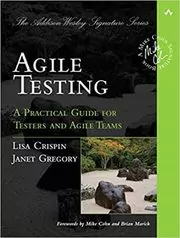
For testers and developers who need testing to work as a whole-team activity. Its practical collaboration framework connects different testing needs across short iterations, though it is broader than a guide to implementing automated tests.
What it's about
Lisa Crispin and Janet Gregory explain testing within agile teams through practical examples. They use testing quadrants to identify needed activities, follow an iteration from a tester's perspective, and address collaboration, short development cycles, and barriers to automation.
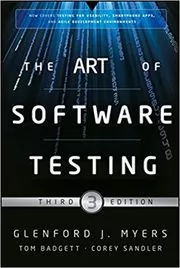
The Art of Software Testing
For readers who want enduring principles for designing tests and challenging assumptions about quality. Its concentrated focus on testing fundamentals remains useful, though the older examples provide less help with current delivery pipelines and frameworks.
What it's about
Glenford Myers, Tom Badgett, and Corey Sandler explain enduring principles of software testing. The book presents testing approaches alongside applications to mobile devices, internet systems, e-commerce, collaborative programming, and agile development environments.
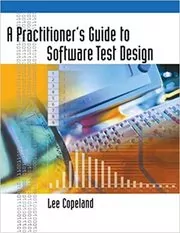
A Practitioner's Guide to Software Test Design
For testers who need a repeatable way to choose useful cases from many possibilities. Its focused explanations make classical design techniques usable, though the examples emphasize test design more than contemporary automation tooling.
What it's about
Lee Copeland presents techniques for designing software tests and choosing appropriate test cases. The guide covers equivalence classes, boundary values, decision tables, state transitions, use cases, pairwise testing, and exploratory testing, alongside considerations of testing effort and cost.
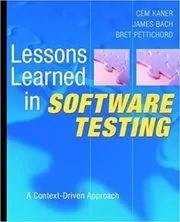
For working testers who want judgment and practical lessons rather than a single universal process. Its context-sensitive observations reward revisiting as experience grows, though the collection is less linear than a beginner’s course.
What it's about
Cem Kaner, James Bach, and Bret Pettichord collect lessons from their software-testing experience. Explanations and examples address test design, management, strategy, and bug reporting, emphasizing how context shapes decisions and highlighting pitfalls that testers may encounter.
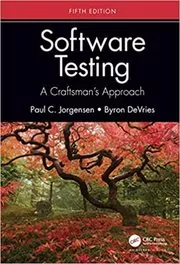
For students and technically minded testers who want test techniques grounded in formal reasoning. Its structured examples support systematic analysis, though the mathematical emphasis demands more effort than the introductory professional guides.
What it's about
Paul Jorgensen and Byron DeVries connect mathematical foundations with practical software testing. The book covers model-based development, feature interactions, test-driven development, and testing across waterfall, iterative, and agile projects, illustrating its techniques with Java examples.
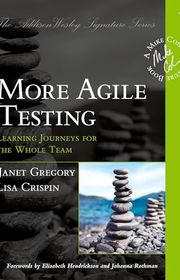
More Agile Testing: Learning Journeys for the Whole Team
For teams that understand agile testing basics and want to improve the practice across their organization. Its varied experiences broaden the original book’s framework, though the range makes it less direct than a first introductory course.
What it's about
Janet Gregory and Lisa Crispin extend their discussion of agile testing through practical experiences from software teams. Topics include collaboration, learning, automation, exploratory work, and adapting testing approaches to the needs and constraints of different organizations.
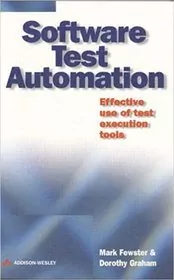
For test leads who want to understand why automation succeeds or becomes expensive to maintain. Its organizational lessons and case studies extend beyond writing scripts, though the tooling reflects a much earlier generation of testing systems.
What it's about
Mark Fewster and Dorothy Graham explain how to build and sustain automated software testing. They cover tool selection, implementation, and the organization of test execution, using case studies and guest contributions to examine both successful practices and common difficulties.
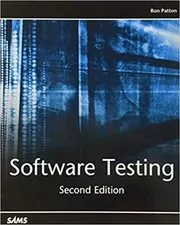
Software Testing
For newcomers who want the everyday work of finding and reporting defects explained clearly. Its accessible professional overview provides a useful foundation, though older examples and tools need translating to current development environments.
What it's about
Ron Patton introduces the technical and professional skills involved in software testing. Aimed at new and aspiring testers, the book explains a disciplined approach to finding and reporting defects, with this edition also addressing testing for security problems.
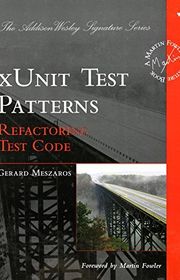
xUnit Test Patterns: Refactoring Test Code
For developers maintaining an automated suite that has become brittle, repetitive, or hard to understand. Its catalog of smells and patterns gives problems useful names, though the reference format is better for consultation than an introductory read.
What it's about
Gerard Meszaros catalogs patterns for organizing automated tests and improving test code. The book examines fixtures, test doubles, recurring test smells, and refactoring approaches, helping developers build suites that remain understandable and maintainable as software changes.
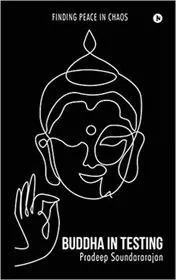
For testers who want to reflect on attention, pressure, and professional uncertainty. Its focus on the person doing the work complements technical manuals, though it provides fewer concrete test-design techniques or automation examples.
What it's about
Pradeep Soundararajan examines the restlessness and confusion that software testers can experience at work. He explores information overload, shifting contexts, and conflicting expectations from colleagues, connecting these pressures with learning, professional practice, and the search for calm.
Test-Driven Development: By Example
For developers who want to learn the rhythm of writing a failing test, making it pass, and refactoring. Its worked examples make the practice concrete, though the deliberately small problems do not cover an entire testing strategy.
What it's about
Kent Beck introduces test-driven development through worked examples, showing how tests and production code evolve together in small steps. The book develops habits for feedback, incremental design, and refactoring while discussing recurring patterns in the practice.
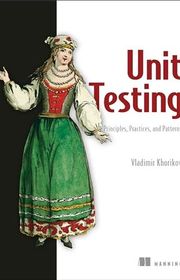
Unit Testing Principles, Practices, and Patterns
For developers who want tests that provide confidence without making change expensive. Its attention to isolation, mocks, and maintainability offers a decision framework, though the C# examples and strong design preferences require judgment when applying it elsewhere.
What it's about
Vladimir Khorikov explains how to design and evaluate unit and integration tests, with attention to useful feedback and resistance to maintenance problems. Examples explore test doubles, collaboration boundaries, and the relationship between test quality and software design.
Sources
- 1
Top Software Testing Books Every Tester Should Read
artoftesting.com
- 2
Top 10+ Best Software Testing Books (Manual and Automation Books)
softwaretestinghelp.com
- 3
24 Best Software Testing Books
softwaretestingmaterial.com
- 4
Recommended Reading for Software Testers
testingexperience.com
- 5
Software Testing Books
goodreads.com
- 6
The best software testing books, by role and by problem
qable.io
- 7
Software testing books
reddit.com
Edited by
Software engineer whose passion for tracking book recommendations from podcasts inspired the creation of MRB.
Lead investor at 3one4 Capital whose startup expertise and love for books helped shape MRB and its growth.
Comments
Spotted a missing book, a wrong order or a mistake? Tell us and we'll fix this page.
We're a reading guide, not the author or publisher, so we can't send books or pass on messages.