
17 Best Programming Books
The best programming books, ranked by how many expert sources recommend each one, with notes on experience level, algorithms, code design and where to start.
Our take
Programming books can teach a first language, explain how computers work or help experienced developers make better decisions. Those are different starting points. A beginner needs exercises and feedback from running programs, while a working developer may benefit more from reasoning about complexity, testing or the way a team changes an existing system. Mathematical references ask for another kind of preparation again.
Python Crash Course offers a practical first-language route, and Grokking Algorithms gives a gentler introduction to algorithmic thinking than Introduction to Algorithms. For professional practice, The Pragmatic Programmer covers habits across technologies, while Code Complete supplies a broad construction reference. Refactoring and Working Effectively with Legacy Code address improving software already in use. Readers seeking deeper computational ideas can turn to Structure and Interpretation of Computer Programs or Knuth's foundational volume. Start with a book that matches what you can already build, then apply each idea to a small program or a real codebase before moving on.
17 books · 8 sources · Last updated
As an Amazon Associate, we earn from qualifying purchases (at no extra cost to you).
How to choose from this list
Skip to the full rankingIf you're learning your first language: Python Crash Course → Grokking Algorithms
If you want stronger everyday programming habits: The Pragmatic Programmer → Code Complete
If you want to improve software structure: A Philosophy of Software Design → Refactoring
If you're changing a difficult existing system: Working Effectively with Legacy Code → Refactoring
If you want to understand object-oriented patterns: Head First Design Patterns → Design Patterns
If you want rigorous algorithm study: Grokking Algorithms → Introduction to Algorithms
The 17 books, ranked
Ranked by how many expert sources name each book. Ties go to the book more people recommend.
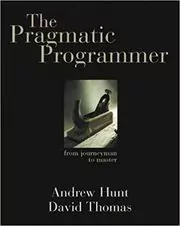
For programmers who want practical habits that extend beyond one language. Hunt and Thomas connect technical choices with communication and responsibility, though the linked first edition contains older tools and examples than the later anniversary revision.
What it's about
Andrew Hunt and David Thomas present practical guidance on programming as a craft. They explore making informed choices, understanding requirements, communicating clearly, and producing software that others can maintain and build upon across different technologies.
Also recommended by
2 people Ev Williams recommended this book
Ev Williams
On the "books read" section of Ev Williams' GoodReads profile.
Ev Williams's recommendation of this book  Jeff Atwood recommended this book
Jeff Atwood
"Instead of worrying about code, the authors boiled down all the practical approaches that they've found to work in the real world into this one book." - Jeff Atwood
Jeff Atwood's recommendation of this book
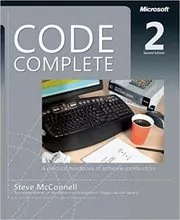
For working programmers who want a substantial reference on constructing software. McConnell combines design, correctness and practical habits more broadly than a style guide, though the older examples and sheer size reward selective reading rather than a quick pass.
What it's about
Steve McConnell assembles practical guidance on software construction from research and commercial programming experience. Using code examples and design principles, he explores how developers can reduce complexity and approach the work of building software across different projects and environments.
Also recommended by
1 person- Jeff Atwood recommended this book
Jeff Atwood
"The very act of reading this book already sets you apart from probably ninety percent of your fellow developers. In a good way." - Jeff Atwood
Jeff Atwood's recommendation of this book
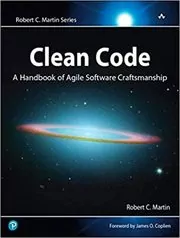
For developers who want concrete language for discussing readability and maintainability. Martin's naming and function examples make code review easier to debate, though the linked older Java-focused edition presents strong preferences that need judgment rather than automatic acceptance.
What it's about
Martin presents principles and practices for writing understandable, maintainable code. Examples and case studies examine naming, functions, classes, formatting, error handling, and testing, while a catalog of heuristics and code smells helps readers recognize and improve troublesome code.

For developers and managers who want to understand why software coordination becomes difficult. Brooks's essays make communication and planning central to the problem, though the mainframe-era setting requires translation to the tools and teams of today.
What it's about
Frederick Brooks examines the difficulties of managing software projects in a collection of essays. He considers team organization, system design, planning, and communication, offering reflections on the limits and complexities of large-scale programming work.
Also recommended by
5 people Jeff Bezos recommended this book
Jeff Bezos
Part of "Jeff's Reading List."
Jeff Bezos's recommendation of this book  Larry Ellison recommended this book
Larry Ellison
"Larry [Ellison] had given this book to every software executive whom he met within the company." - Marc Benioff
Larry Ellison's recommendation of this book  Marc Benioff recommended this book
Marc Benioff
"Had a huge impact on me." - Marc Benioff
Marc Benioff's recommendation of this book  Alan Kay recommended this book
Alan Kay
"An early look and experience with timeless truths (and gotchas) from systems building with teams" - Alan Kay
Alan Kay's recommendation of this book - Jeff Atwood recommended this book
Jeff Atwood
"Arguably the only classic book in our field. If you haven't read it, shame on you." - Jeff Atwood
Jeff Atwood's recommendation of this book

Structure and Interpretation of Computer Programs
For programmers who want to understand abstraction, interpreters and computation more deeply. The Scheme-based exercises connect ideas across several programming models, though the conceptual pace and substantial problem solving make this challenging without some prior coding experience.
What it's about
Harold Abelson and Gerald Jay Sussman introduce computational ideas through programs written in Scheme. The textbook explores abstraction, data, state, interpreters, and compilers, using exercises and progressively richer models to explain how programs are constructed.
Also recommended by
3 people Patrick Collison recommended this book
Patrick Collison
"In the aggregate [with other programming books] hugely shaped me." - Patrick Collison
Patrick Collison's recommendation of this book  Paul Graham recommended this book
Paul Graham
"This is one of the great classics of computer science. I bought my first copy 15 years ago, and I still don't feel I have learned everything the book has to teach." - Paul Graham
Paul Graham's recommendation of this book  Max Levchin recommended this book
Max Levchin
"Easier to read [than "The Art of Computer Programming"] end-to-end quickly." - Max Levchin
Max Levchin's recommendation of this book

Introduction to Algorithms
For students and experienced programmers ready to analyze algorithms rigorously. The textbook's pseudocode, proofs and exercises provide substantial depth, though the mathematical workload makes it a demanding first encounter compared with an illustrated introduction.
What it's about
This textbook develops algorithm design and analysis through mathematical explanations, pseudocode, and exercises. Chapters cover data structures, sorting, graphs, and broader design techniques, presenting individual topics as units that can support coursework or professional reference.

For developers who need to improve existing code while preserving behavior. Fowler's catalog makes small structural changes easier to recognize and discuss, though applying them well requires supporting tests and an understanding of the surrounding system.
What it's about
Fowler explains how to improve the internal structure of existing code through refactoring. This revised edition uses JavaScript examples and extends its attention beyond class-based designs, presenting techniques for continually reshaping code as a software system evolves.

Head First Design Patterns
Building Extensible and Maintainable Object-Oriented Software
For programmers who know basic object-oriented code but find the original patterns catalog too abstract. Freeman and Robson use visual explanations and repeated examples, though the playful format and Java emphasis will not suit every reader.
What it's about
Eric Freeman and Elisabeth Robson teach object-oriented design patterns through Java examples, visual explanations, and exercises. The second edition connects recurring design solutions with underlying principles, emphasizing understanding and applying patterns to extensible, maintainable software.

Programming Pearls
For programmers who enjoy reasoning carefully about small but consequential problems. Bentley's essays connect efficiency, correctness and representation through concrete examples, though the older constraints and code need adaptation before applying the lessons to current systems.
What it's about
Jon Bentley uses concrete programming problems to explain algorithms, data structures, and design principles. His essays and examples explore correctness, performance, sorting, searching, and memory use, showing how careful reasoning can lead to workable solutions.
Also recommended by
1 person- Jeff Atwood recommended this book
Jeff Atwood
"The collective wisdom of many journeyman coders distilled into succinct, digestible columns." - Jeff Atwood
Jeff Atwood's recommendation of this book

For programmers comfortable with object-oriented design who want a reference vocabulary for recurring structures. The patterns emphasize consequences and tradeoffs, though the older C++ and Smalltalk examples need interpretation in languages with different built-in abstractions.
What it's about
Erich Gamma and his coauthors catalog reusable solutions to recurring object-oriented design problems. Organized into creational, structural, and behavioral patterns, the book explains when each approach applies, its consequences, and trade-offs within a larger software design.

A Philosophy of Software Design
For developers who want a compact framework for reducing complexity in larger programs. Ousterhout connects interfaces, modules and design habits with cognitive burden, though the opinionated principles require testing against the constraints of your own codebase.
What it's about
John Ousterhout examines software design as a problem of managing complexity. He explains how to divide systems into modules, presents principles for making design decisions, and identifies warning signs that reveal problems in the structure of a growing codebase.

For readers curious about what happens beneath a program's surface. Petzold builds explanations from simple communication systems toward computing machinery, though the linked older edition is a conceptual tour rather than an introduction to writing applications.
What it's about
Charles Petzold explains how computers work by building from familiar communication systems, including Morse code and Braille. Everyday examples lead into bits, bytes, and hardware, tracing how simple mechanisms combine to support complex information processing.

For developers preparing for interviews built around algorithms and coding problems. McDowell combines worked questions with preparation and communication advice, though the older edition's company-specific material needs checking against the interview process you actually face.
What it's about
Gayle Laakmann McDowell prepares software developers for technical interviews through 189 programming questions and worked solutions. The guide explains approaches to solving problems, reviews computer science concepts, and discusses interview evaluation, preparation, and communicating a solution.
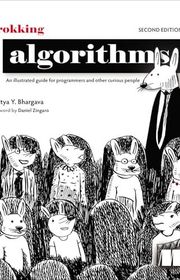
Grokking Algorithms
For programmers new to algorithms who want pictures and approachable explanations before formal proofs. Bhargava makes common techniques easier to visualize, though the selective coverage and gentle pace provide less depth than a full algorithms textbook.
What it's about
Bhargava introduces algorithms through illustrations, explanations and Python examples. Sorting, searching, recursion, graphs and other techniques develop into discussions of efficiency and tradeoffs, with the second edition adding material on trees and updating examples for Python 3.
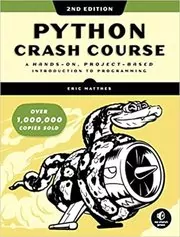
For readers who want to learn a first programming language through explanation and projects. Matthes moves from Python basics into working applications, though the project libraries evolve and the third edition's setup instructions may need occasional updating.
What it's about
Eric Matthes introduces Python through short lessons and exercises covering variables, collections, functions, classes, and testing. The second half applies those foundations to larger projects, including a game, data visualizations, and a Django web application.

Working Effectively with Legacy Code
For developers changing established systems without dependable tests. Feathers focuses on creating places to test and breaking difficult dependencies, though the older Java and C++ examples require adaptation to modern languages, frameworks and build tools.
What it's about
Michael Feathers explains how to change existing software when tests and clear structure are missing. Examples develop techniques for breaking dependencies, introducing test seams, and gaining feedback before altering code that is difficult to understand or isolate.

For readers who want mathematical depth in the foundations of algorithms and information structures. Knuth's detailed analysis and exercises reward sustained study, though the notation and low-level examples are demanding and unlike modern application programming tutorials.
What it's about
Knuth establishes the mathematical and conceptual foundations for studying algorithms, then examines basic information structures. Through detailed analysis, programs, and exercises, the volume develops methods for understanding efficiency and organizing data that support the later books in the series.
Sources
- 1
20 Best Programming Books 2026, Ranked by Level
computingforgeeks.com
- 2
The 9 Best Programming Books for Coders in 2021
codingdojo.com
- 3
10 Programming Books That Every Programmer Must Read Once in 2025
geeksforgeeks.org
- 4
Programming Books
goodreads.com
- 5
The most recommended programming books of all-time. A data-backed list.
reddit.com
- 6
Want To Learn Programming? Check Out These Programming Books
hackr.io
- 7
What programming book actually changed how you think?
reddit.com
- 8
Teach Yourself Computer Science
teachyourselfcs.com



Edited by
Software engineer whose passion for tracking book recommendations from podcasts inspired the creation of MRB.
Lead investor at 3one4 Capital whose startup expertise and love for books helped shape MRB and its growth.
Comments
Did we miss something? Have feedback?
Help us improve this page by sharing your thoughts