
19 Best Software Engineering Books
The best software engineering books, ranked by how many expert sources recommend each one, with notes on coding, design, maintenance and working in teams.
Our take
Software engineering involves more than writing a function that works today. It includes making code understandable, changing existing systems safely, choosing structures that fit a problem and coordinating work with other people. The books here approach those responsibilities from different angles. Some are practical catalogs of techniques, while others develop design principles or examine how teams and systems evolve. Most assume you already have some programming experience.
The Pragmatic Programmer offers broad guidance on professional craft, and Code Complete is a larger construction reference. Clean Code focuses closely on readability, while A Philosophy of Software Design asks how to keep complexity under control. For existing systems, Working Effectively with Legacy Code helps establish safer conditions for change before the techniques in Refactoring. Software Engineering at Google expands the discussion to maintaining software across time and teams. Cracking the Coding Interview serves a separate goal: preparing for technical hiring exercises. Start with a broad craft book, then choose the design, maintenance or collaboration title that addresses a problem in your current work.
19 books · 13 sources · Last updated
As an Amazon Associate, we earn from qualifying purchases (at no extra cost to you).
How to choose from this list
Skip to the full rankingIf you want broader professional habits: The Pragmatic Programmer → The Clean Coder
If you want to reason about design: A Philosophy of Software Design → Head First Design Patterns
If you need to change difficult existing code: Working Effectively with Legacy Code → Refactoring
If you work on data-heavy systems: Patterns of Enterprise Application Architecture → Designing Data-Intensive Applications
If you're thinking about teams and longevity: The Mythical Man-Month → Software Engineering at Google
If you're preparing for technical interviews: Cracking the Coding Interview
The 19 books, ranked
Ranked by how many expert sources name each book. Ties go to the book more people recommend.
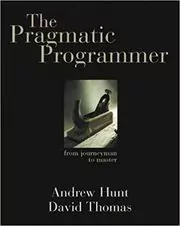
For developers who want guidance on judgment, communication and everyday craft across technologies. Its short lessons offer broad professional orientation, though the linked original edition has older examples and less updated coverage than the anniversary revision.
What it's about
Andrew Hunt and David Thomas present practical guidance on programming as a craft. They explore making informed choices, understanding requirements, communicating clearly, and producing software that others can maintain and build upon across different technologies.
Also recommended by
2 people Ev Williams recommended this book
Ev Williams
On the "books read" section of Ev Williams' GoodReads profile.
Ev Williams's recommendation of this book  Jeff Atwood recommended this book
Jeff Atwood
"Instead of worrying about code, the authors boiled down all the practical approaches that they've found to work in the real world into this one book." - Jeff Atwood
Jeff Atwood's recommendation of this book
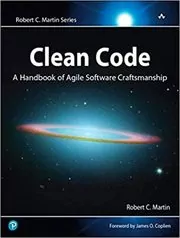
For developers who want a concrete vocabulary for discussing naming, functions and readability. The detailed examples make code review ideas tangible, though the linked first edition's Java-centered rules work best as judgments to examine rather than universal prescriptions.
What it's about
Martin presents principles and practices for writing understandable, maintainable code. Examples and case studies examine naming, functions, classes, formatting, error handling, and testing, while a catalog of heuristics and code smells helps readers recognize and improve troublesome code.
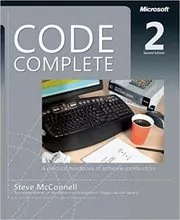
For developers who want a substantial reference on software construction rather than one narrow technique. Its breadth connects design, debugging and maintainability, though the size and older examples make selective reading more useful than expecting a quick course.
What it's about
Steve McConnell assembles practical guidance on software construction from research and commercial programming experience. Using code examples and design principles, he explores how developers can reduce complexity and approach the work of building software across different projects and environments.
Also recommended by
1 person- Jeff Atwood recommended this book
Jeff Atwood
"The very act of reading this book already sets you apart from probably ninety percent of your fellow developers. In a good way." - Jeff Atwood
Jeff Atwood's recommendation of this book

A Philosophy of Software Design
For developers who want to reason about complexity rather than memorize a catalog of patterns. Ousterhout's principles make module boundaries and design choices easier to examine, though the compact, opinionated argument benefits from comparison with real code and alternative views.
What it's about
John Ousterhout examines software design as a problem of managing complexity. He explains how to divide systems into modules, presents principles for making design decisions, and identifies warning signs that reveal problems in the structure of a growing codebase.

For developers improving code that already works and needs to keep working. The catalog turns structural changes into small, named steps, though the JavaScript examples require translation in other languages and safe use depends on reliable behavioral checks.
What it's about
Fowler explains how to improve the internal structure of existing code through refactoring. This revised edition uses JavaScript examples and extends its attention beyond class-based designs, presenting techniques for continually reshaping code as a software system evolves.

For developers and managers trying to understand why large software projects become difficult to coordinate. Brooks makes communication and planning constraints memorable, though the historical project setting offers enduring questions rather than a ready-made process for today's teams.
What it's about
Frederick Brooks examines the difficulties of managing software projects in a collection of essays. He considers team organization, system design, planning, and communication, offering reflections on the limits and complexities of large-scale programming work.
Also recommended by
5 people Jeff Bezos recommended this book
Jeff Bezos
Part of "Jeff's Reading List."
Jeff Bezos's recommendation of this book  Larry Ellison recommended this book
Larry Ellison
"Larry [Ellison] had given this book to every software executive whom he met within the company." - Marc Benioff
Larry Ellison's recommendation of this book  Marc Benioff recommended this book
Marc Benioff
"Had a huge impact on me." - Marc Benioff
Marc Benioff's recommendation of this book  Alan Kay recommended this book
Alan Kay
"An early look and experience with timeless truths (and gotchas) from systems building with teams" - Alan Kay
Alan Kay's recommendation of this book - Jeff Atwood recommended this book
Jeff Atwood
"Arguably the only classic book in our field. If you haven't read it, shame on you." - Jeff Atwood
Jeff Atwood's recommendation of this book

For programmers who already know object-oriented design and want a shared pattern vocabulary. Its catalog explains consequences as well as structure, though the older examples and reference style make Head First Design Patterns a gentler starting point.
What it's about
Erich Gamma and his coauthors catalog reusable solutions to recurring object-oriented design problems. Organized into creational, structural, and behavioral patterns, the book explains when each approach applies, its consequences, and trade-offs within a larger software design.

For developers who want to think more carefully about commitments, estimates and communication under pressure. Martin treats professionalism as a daily responsibility, though his strongly stated personal standards invite judgment rather than automatic adoption in every workplace.
What it's about
Martin describes the professional responsibilities of software developers, from making commitments and estimating work to communicating under pressure. The book discusses coding, testing, refactoring, time management, and difficult decisions, including when to say yes and when to say no.

Working Effectively with Legacy Code
For developers changing code that lacks dependable tests or has difficult dependencies. Feathers explains how to create safer places to intervene before larger refactoring, though the older Java and C++ examples require translation for other stacks.
What it's about
Michael Feathers explains how to change existing software when tests and clear structure are missing. Examples develop techniques for breaking dependencies, introducing test seams, and gaining feedback before altering code that is difficult to understand or isolate.

Head First Design Patterns
Building Extensible and Maintainable Object-Oriented Software
For programmers learning object-oriented patterns who prefer diagrams, exercises and a conversational teaching style. The Java examples make recurring designs concrete, though the deliberately playful presentation and language focus may not suit readers seeking a concise reference.
What it's about
Eric Freeman and Elisabeth Robson teach object-oriented design patterns through Java examples, visual explanations, and exercises. The second edition connects recurring design solutions with underlying principles, emphasizing understanding and applying patterns to extensible, maintainable software.
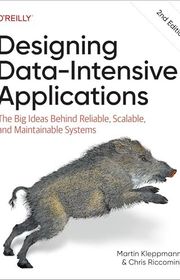
Designing Data-Intensive Applications: The Big Ideas Behind Reliable, Scalable, and Maintainable Systems
For engineers making decisions about databases and distributed systems. The second edition connects reliability, consistency and scalability through explicit tradeoffs, though it is a substantial conceptual study rather than a tutorial for implementing one particular technology.
What it's about
Martin Kleppmann and Chris Riccomini explain the principles behind reliable data systems. The book compares data models, storage, replication, partitioning, transactions, and processing approaches, connecting technical choices with the requirements and tradeoffs involved in building applications.

Patterns of Enterprise Application Architecture
For developers designing business applications with substantial domain logic and database interaction. Fowler's pattern catalog makes structural choices and tradeoffs easier to discuss, though its older enterprise setting needs translation into the frameworks and deployment model you use.
What it's about
Fowler catalogs recurring design patterns for enterprise software, explaining their uses and tradeoffs. The book addresses layered architecture, domain logic, database access, object-relational mapping, web presentation, concurrency, and distributed systems, helping developers choose structures suited to their applications.

For self-taught developers curious about what sits beneath their code, Petzold builds understanding from simple mechanisms. The gradual explanations make hardware approachable, though this is background knowledge rather than instruction for building a first application.
What it's about
Charles Petzold explains how computers work by building from familiar communication systems, including Morse code and Braille. Everyday examples lead into bits, bytes, and hardware, tracing how simple mechanisms combine to support complex information processing.

Introduction to Algorithms
For readers ready to study algorithms rigorously, this textbook supplies mathematical analysis and a broad reference. Its depth suits coursework or sustained self-study, though comfort with proofs matters more than familiarity with a particular programming language.
What it's about
This textbook develops algorithm design and analysis through mathematical explanations, pseudocode, and exercises. Chapters cover data structures, sorting, graphs, and broader design techniques, presenting individual topics as units that can support coursework or professional reference.
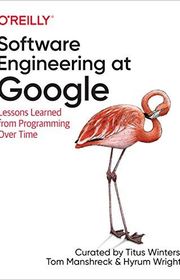
Software Engineering at Google
For engineers thinking about how code survives years of change and many contributors. The focus on culture, processes and tooling extends beyond individual coding habits, though practices shaped by Google's scale need adapting to a smaller organization.
What it's about
Titus Winters, Tom Manshreck and Hyrum Wright examine how Google builds and maintains software over time. The book connects engineering culture, development processes and tools with the challenges of changing requirements, large codebases and growing organizations.

For developers trying to separate business rules from technical details, Martin offers an accessible argument about architectural boundaries. Its dependency principles encourage discussion, though the strongly opinionated approach needs adapting to a system's actual constraints.
What it's about
Martin explains the principles behind software architecture and the decisions that shape maintainable systems. Drawing on different application types, he examines architectural responsibilities, design disciplines, and common failures, showing how structure can support software as its requirements change.

Programming Pearls
For programmers who enjoy learning through compact problems, Bentley demonstrates how careful reasoning can simplify algorithms and improve performance. The essays reward active problem-solving, though their older systems context offers little guidance on modern application frameworks.
What it's about
Jon Bentley uses concrete programming problems to explain algorithms, data structures, and design principles. His essays and examples explore correctness, performance, sorting, searching, and memory use, showing how careful reasoning can lead to workable solutions.
Also recommended by
1 person- Jeff Atwood recommended this book
Jeff Atwood
"The collective wisdom of many journeyman coders distilled into succinct, digestible columns." - Jeff Atwood
Jeff Atwood's recommendation of this book

For developers deciding how to divide services and manage their relationships, Newman connects architecture with deployment and team responsibilities. Its broad treatment helps frame decisions, though operating a distributed system still requires substantial practical experience.
What it's about
Sam Newman introduces the design and operation of systems built from small, autonomous services. He examines microservices' benefits and drawbacks, covering modeling, integration, testing, deployment, and monitoring through practical examples and the experience of a fictional company.

For developers preparing for algorithm-heavy technical interviews. The problems and worked solutions support deliberate practice and explaining a solution aloud, though interview performance covers only one part of the skills needed to build and maintain production software.
What it's about
Gayle Laakmann McDowell prepares software developers for technical interviews through 189 programming questions and worked solutions. The guide explains approaches to solving problems, reviews computer science concepts, and discusses interview evaluation, preparation, and communicating a solution.
Sources
- 1
20 Best Programming Books 2026, Ranked by Level
computingforgeeks.com
- 2
12 Best Software Engineering Books for Developers in 2024
daily.dev
- 3
Must-Read Software Engineering Books for Excellence
educba.com
- 4
What's the hands down best book for a mid level start up software engineer that wants to become a great senior engineer.
reddit.com
- 5
Software Engineering Books
goodreads.com
- 6
10 Best Software Development Books for Becoming a Better Developer in 2026
itechguides.com
- 7
Influential books on software engineering | pearpages by Pere Pages
pearpages.com
- 8
7 Must Read Books for Becoming a Better Software Developer | Serverless Framework
serverless.com
- 9
18 Best Software Engineering Books | Built In
builtin.com
- 10
Best Software Development Books: 20 Most-Recommended Books for Software Developers - DEV Community
dev.to
- 11
Software Development Books
goodreads.com
- 12
What are good literature to recommend senior and junior devs?
reddit.com
- 13
swe-essential-books
github.com




Edited by
Software engineer whose passion for tracking book recommendations from podcasts inspired the creation of MRB.
Lead investor at 3one4 Capital whose startup expertise and love for books helped shape MRB and its growth.
Comments
Did we miss something? Have feedback?
Help us improve this page by sharing your thoughts